A Coruña
GaliciaClimate
Daily budget
Imagine strolling through a fine drizzle that doesn’t bother you, sheltered by the iconic glass galleries reflecting the gray of the Atlantic, while the scent of sea salt and freshly brewed coffee leads you to the world’s oldest Roman lighthouse. A Coruña is not just a stopover; it’s a place where history mingles with the sea breeze, and every corner, from Plaza de María Pita to Monte de San Pedro, invites you to pause and take a deep breath.
The must-seesWhat to See in A Coruña: The Essentials
Torre de Hércules (Tower of Hercules)
This monument is the oldest operating Roman lighthouse in the world, a UNESCO World Heritage Site since 2009 that has guided sailors since the 1st century. When visiting, you can climb to the top to enjoy impressive ocean views and explore the sculptural park surrounding it. Please note that admission is required and opening hours vary by season: from 10:00 to 18:00 in winter, extending until 21:00 in summer.
Domus (House of Man)
This is a unique interactive museum dedicated to humankind, housed in a distinctive building designed by the renowned architect Arata Isozaki. Here you can explore exhibitions inviting reflection on our species within a modern architectural setting. Opening hours are from 10:00 to 19:00, and admission is required.
Aquarium Finisterrae
Affectionately known as the ‘House of Fish’, this attraction focuses specifically on the marine ecosystems of the Galician coast. It is the perfect place to understand the richness of the ocean bathing the city through spectacular aquariums. It opens from 10:00 to 19:00 and also requires an entrance ticket.
Riazor Beach
This urban beach is adjacent to the Riazor area and features 900 meters of golden sand facing the sea. It is very popular among surf lovers due to its consistent waves and is fully equipped with showers, restrooms, and lifeguard services during the summer. Access is free for all visitors.
Museum of Fine Arts of A Coruña
Founded in 1968, this museum houses an important collection of Galician art spanning from the 16th century to the present day. Works by renowned artists such as Sorolla, Regoyos, and Lugrís stand out particularly and should not be missed. Admission is free, and it remains open from Tuesday to Saturday from 10:00 to 20:00.
Plaza de María Pita
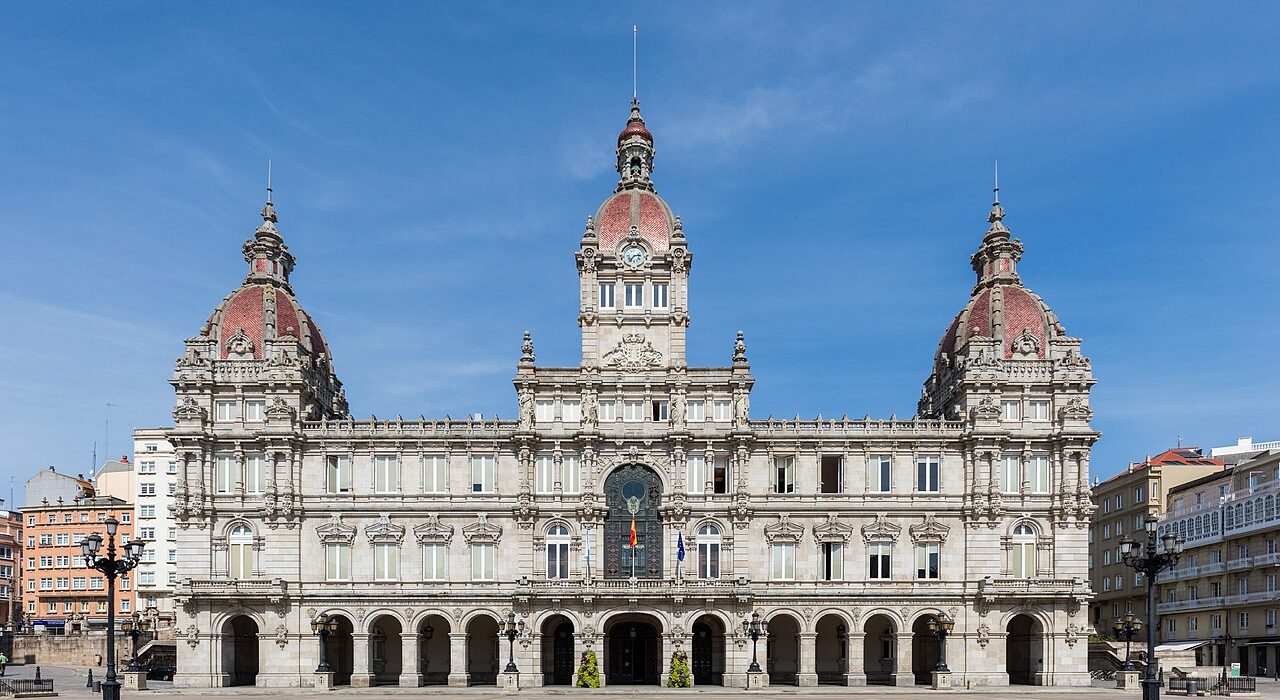
This is the city’s main square, a majestic space surrounded by arcades and presided over by the City Hall and the statue of the local heroine.
Paseo Marítimo
This is one of the longest urban seaside promenades in Europe, ideal for walking, running, or cycling along the sea.
Jardines de Méndez Núñez
These are 19th-century public gardens located opposite the marina, featuring a modernist music kiosk from 1912 and serving as a traditional meeting point.
Monte de San Pedro
This former military battery has been transformed into a park offering panoramic views, a maze, and a spherical glass elevator.
Iglesia de Santiago
This is a 12th-century Romanesque temple, the oldest church in A Coruña, historically linked to the English Way of Saint James and featuring Gothic elements.
Obelisco de los Cantones
This is a 32-meter-high monument inaugurated in 1895 in Plaza de los Cantones, dedicated to the heroes of the defense against the English in 1589.
Castillo de San Antón
This is a former 16th-century fortress situated on a small island that now houses the Archaeological and Historical Museum of A Coruña.
Ciudad Vieja
This is the city’s historic quarter, characterized by its cobblestone streets, charming squares, and medieval churches.
Palacio de la Ópera
This is a cultural complex inaugurated in 1987, designed by architect César Portela, which houses the Galician Symphony Orchestra with a capacity for 1,500 spectators.
Teatro Colón
This is the city’s main theater, inaugurated in 1868 in Neoclassical style. It has been renovated while preserving its original façade and offers an opera and ballet program.
🍂 Otoño
Si visitas A Coruña en otoño, prepárate para más lluvia y vientos mientras los colores cambian. Es un momento excelente para probar la gastronomía local en bares acogedores. Lleva siempre un paraguas plegable en tu mochila para los chaparrones sorpresa.
What to do in A Coruña
A Coruña offers vibrant activities ranging from celebrating the magical night of the Hogueras de San Juan (Bonfires of Saint John) on June 23 to enjoying the concerts and fairs of the Fiestas de María Pita in August. You can get lost in the Marina Zone and Calle de la Franja to enjoy the nightlife in its tapas bars, or simply stroll along the more than 13 kilometers of the Paseo Marítimo, the longest in Europe, to exercise or relax facing the ocean.
A Coruña in one day: express itinerary
If you are short on time, this itinerary will allow you to see the essentials of the city in 24 hours, combining history, views, and gastronomy.
- 10:00 – Torre de Hércules: Start the morning with energy by climbing the oldest Roman lighthouse in the world for the best panoramic views of the coast.
- 12:30 – Paseo Marítimo and Domus: Walk towards the Casa del Hombre (House of Man) to enjoy Isozaki’s architecture and continue strolling along the coast.
- 14:30 – Lunch at Mercado de la Plaza de Lugo: Head to the most famous market to try fresh fish and seafood in an authentic atmosphere.
- 16:30 – Ciudad Vieja and Plaza de María Pita: Explore the cobblestone historic center and finish at the main square to see the Palacio Municipal (City Hall).
- 19:00 – Obelisco de los Cantones and Jardines de Méndez Núñez: Stroll among the modernist buildings and relax in the gardens facing the port before dinner.
Where to eat in A Coruña: local gastronomy
Where to stay in A Coruña
Ciudad Vieja
El corazón histórico, ideal para pasear y descubrir la historia de la ciudad.
Zona de la Marina y Calle de la Franja
Área animada con muchos bares de tapas, restaurantes y pubs, especialmente concurrida por la noche.
Riazor y Orzán
Barrios situados junto a las principales playas urbanas, con un largo paseo marítimo.
How to get to A Coruña
The city is well connected by land and air, with Alvedro Airport being the fastest entry point for international and national travelers.
| Medio | Detalles | Compañías / Notas |
|---|---|---|
| Avión | Aeropuerto de A Coruña (Alvedro) (LCG) a 8 km del centro. | Vuelos nacionales e internacionales. |
| Tren | Estación de tren A Coruna-Turistico. | Sin AVE directo en la estación principal según datos actuales. |
| Autobús | Estación de Autobuses de A Coruña. | Compañías: Alsa, Monbus, Arriva, FlixBus. |
| Coche | Acceso mediante autopistas y carreteras nacionales. | Carreteras: AP-9, A-6, N-VI. |
Getting around A Coruña
Once in the city, urban transport is efficient and features a bus network covering the entire metropolitan area. Furthermore, much of the city center is pedestrianized, making walking the best option to enjoy the cobblestone streets of the Ciudad Vieja and the seaside promenades.
Weather in A Coruña
Best time to visit A Coruña
Day trips from A Coruña
If you want to explore beyond the city, you have several nearby options ideal for a getaway. Santiago de Compostela is a must-visit destination for its cathedral and university atmosphere, while Vigo offers another perspective on the Rías Baixas (coastal inlets). It is also possible to organize trips to Madrid, although this requires more travel time.
Facts about A Coruña you didn’t know
Did you know that the Tower of Hercules (Torre de Hércules), built in the 1st century, is the only Roman-era lighthouse in the world still in operation and was declared a UNESCO World Heritage Site in 2009?
The city boasts the longest urban seafront promenade in Europe, with a total length of over 13 kilometers bordering almost the entire city.
Local heroine María Pita led the city’s defense in 1589 against the English ‘Counter-Armada’ commanded by Sir Francis Drake, with her famous cry: ‘Whoever has honor, follow me!’.
It is known as the ‘Crystal City’ (Ciudad de Cristal) for its distinctive galleries: enclosed balconies with wood and glass carpentry that became popular in the 19th century to protect facades from rain and wind.
Luis Suárez Miramontes, born in A Coruña in 1935, remains to date the only Spanish male footballer to have won the Ballon d’Or, an award he received in 1960.
The Night of San Juan (June 23) is celebrated with hundreds of bonfires on Riazor and Orzán beaches, a festival declared a Festival of International Tourist Interest.
The local fried potatoes ‘Bonilla a la Vista’ achieved worldwide fame after appearing prominently in a scene from the South Korean film ‘Parasite’, winner of the Oscar for Best Picture in 2020.
The first same-sex marriage registered in Spain took place at the church of San Jorge in A Coruña in 1901, when Elisa Sánchez disguised herself as a man to marry her partner, Marcela Gracia.
Who is A Coruña for
A Coruña is a versatile destination ideal for couples seeking romantic walks by the sea, families who enjoy safe urban beaches like Riazor, and history lovers fascinated by its Roman and medieval past. It is also perfect for foodies wanting to try the best Galician cuisine and backpackers who find good value for money in hostels and lively atmospheres.
💡 ¿Sabías que...?
- ● La Torre de Hércules, construida en el siglo I, es el único faro de origen romano del mundo que sigue en funcionamiento. Fue declarada Patrimonio de la Humanidad por la UNESCO en 2009. (UNESCO)
- ● A Coruña cuenta con el paseo marítimo urbano más largo de Europa, con una longitud total de más de 13 kilómetros que bordean casi toda la ciudad. (Ayuntamiento de A Coruña)
- ● La heroína local María Pita lideró la defensa de la ciudad en 1589 contra la 'Contra-Armada' inglesa dirigida por Sir Francis Drake, con su famoso grito: '¡Quien tenga honra, que me siga!'. (Historia de España, crónicas de la época)
- ● Se la conoce como la 'Ciudad de Cristal' por sus características galerías: balcones cerrados con carpintería de madera y cristal que se popularizaron en el siglo XIX para proteger las fachadas de la lluvia y el viento. (Turismo de A Coruña)
- ● Luis Suárez Miramontes, nacido en A Coruña en 1935, es hasta la fecha el único futbolista masculino español en haber ganado el Balón de Oro, galardón que obtuvo en 1960. (France Football)
- ● La noche de San Juan (23 de junio) se celebra con cientos de hogueras en las playas de Riazor y Orzán. Esta festividad está declarada Fiesta de Interés Turístico Internacional. (Boletín Oficial del Estado (BOE))
- ● Las patatas fritas locales 'Bonilla a la Vista' alcanzaron fama mundial al aparecer prominentemente en una escena de la película surcoreana 'Parásitos', ganadora del Oscar a la Mejor Película en 2020. (Prensa internacional, The Guardian, etc.)
- ● El primer matrimonio entre personas del mismo sexo registrado en España tuvo lugar en la iglesia de San Jorge de A Coruña en 1901. Elisa Sánchez se hizo pasar por un hombre para casarse con su pareja, Marcela Gracia. (Registros históricos, libro 'Elisa e Marcela – Alén dos homes')
Frequently asked questions about A Coruña
How many days do I need to see A Coruña?
With an average stay of 2.03 nights according to the INE, you can see the essentials in 2 days, but it is recommended to add one more day to enjoy the gastronomy and the city’s relaxed pace.
Is A Coruña expensive?
Not excessively; an average meal costs between €12–20, and you can find accommodation from €25–50 in hostels or €60–100 in 3-star hotels, making it accessible for different budgets.
What is the best time to visit A Coruña?
The best time is from June to September, when temperatures are more pleasant (average of 19.0°C in summer), avoiding the months with the highest precipitation between November and February.
How do I get to A Coruña from Madrid?
You can arrive by car via the A-6 or N-VI highways, or by bus with companies like ALSA or FlixBus from the Bus Station, although there is no direct AVE connection to the main station.
🗺️ Rutas desde A Coruña
- How to Get from Vigo to A Coruña: Distance, Train, Bus and Car
- How to Get from A Coruña to Vigo: Distance, Train, Bus and Car
- How to Get from A Coruña to Madrid: Distance, Train, Bus & Car
- How to Get from Madrid to A Coruña: Distance, Train, Bus & Car
- How to Get from Santiago de Compostela to A Coruña: Distance, Train, Bus & Car
- How to Get from A Coruña to Santiago de Compostela: Distance, Train, Bus & Car