Zaragoza
AragónClimate
Daily budget
What to see in Zaragoza: the must-sees
Basílica de Nuestra Señora del Pilar (Basilica of Our Lady of the Pillar)
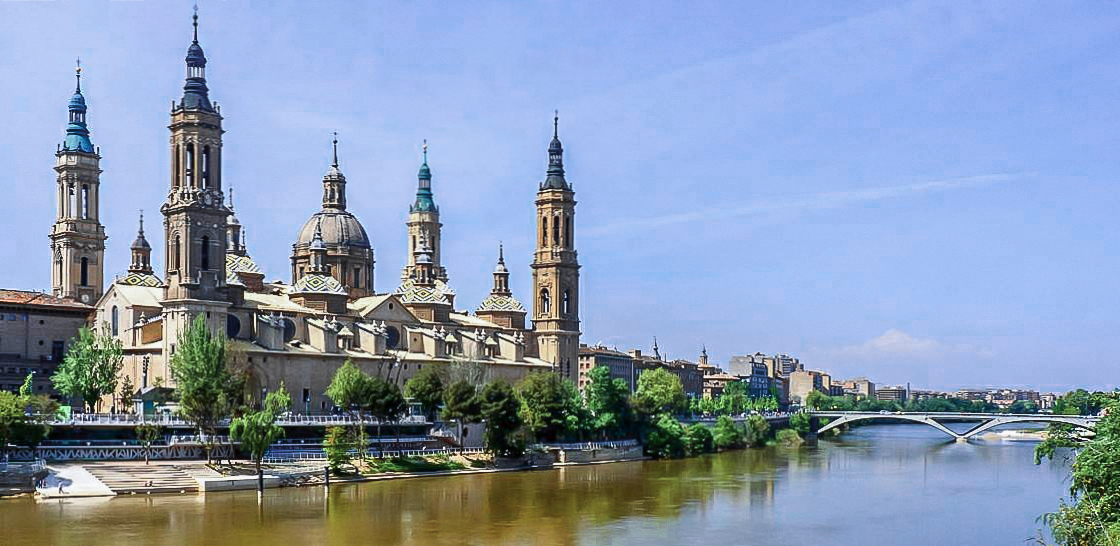
This world-renowned Marian sanctuary, set on the banks of the Ebro River, is the city’s absolute icon and probably the first image that comes to mind when someone says “Zaragoza.” The façade you see today is the result of 280 years of construction: work began in 1681 and didn’t finish until 1961, so every niche, every capital, and every brushstroke of Goya’s murals speaks of several generations. Don’t miss the Santa Capilla (Holy Chapel), the dome painted in fresco by Francisco de Goya, and the mantle of the Virgin, which is displayed on special dates. If you visit in October, get ready for the Fiestas del Pilar: it’s a completely different experience from the usual visit. Before you go, check opening hours and possible mass schedules on the official Zaragoza tourism website.Catedral del Salvador (La Seo)
La Seo is, no less, the first Christian cathedral built in Zaragoza, constructed over the remains of the Roman forum of Caesaraugusta and the former main mosque, which turns the ground beneath your feet into a walking documentary. Declared a World Heritage Site as part of the Mudéjar Architecture of Aragon (UNESCO), it blends Gothic, Mudéjar, Renaissance, and Baroque styles like layers of a historical onion. Inside, look for the Tapestry Museum, with extraordinary pieces that justify the admission price on their own. A tip: go up to the cloister and, if you can, to the tower, because the views over Plaza del Pilar are a postcard no one can take away from you.Palacio de la Aljafería (Aljafería Palace)
If someone tells you that the most important Islamic building in Spain is not in Andalusia but in Aragon, you probably wouldn’t believe it: well, the Aljafería Palace, built in the 11th century by Ahmad Abu Ya’far ibn Hud al-Muqtadir, king of the taifa of Saraqusta, is the proof. It is also the northernmost surviving inhabited Arab palace in the world, and it forms part of the UNESCO Mudéjar World Heritage Site. Walk through the Salón Dorado (Golden Hall), the Patio de Santa Isabel (Courtyard of Saint Isabel), and the oratory, and pay attention to the plasterwork and horseshoe arches that seem transported from another era. It also serves as the seat of the Cortes de Aragón (Parliament of Aragon), so some areas may have limited hours: book ahead if you’re interested in taking the guided tour.Plaza del Pilar
A rectangular arcaded square in the old town, it is one of the largest pedestrian squares in Europe and, according to data held by the city council itself, the largest in the EU. It’s called “the square of the cathedrals” because along its perimeter stand the Basilica of Pilar, La Seo, and other temples, but its role as the city’s center goes back much further: the Roman forum of Caesaraugusta once stood on this very site. In front of the basilica, look for the monument to Goya: a simple cylindrical cenotaph dedicated to the city’s most illustrious painter, accompanied by plaques alluding to his work.Teatro Romano de Caesaraugusta (Roman Theatre of Caesaraugusta)
Right in the historic center, next to Calle Verónica, you can visit the remains of the theatre that the Romans built here in the 1st century AD, which had a capacity of around 6,000 spectators in a city with very few inhabitants. It’s a great place to get a sense of the size of the original Caesaraugusta before continuing your route through the forum, the river port, and the thermal baths.🍂 Otoño
Si visitas Zaragoza en otoño, disfrutarás de temperaturas agradables y una atmósfera tranquila perfecta para visitar la Basílica de Nuestra Señora del Pilar y la Catedral del Salvador sin las aglomeraciones de otras épocas. Los tonos cálidos del entorno combinan genial con la piedra dorada de la Arquitectura Mudéjar de Aragón y el Patio de los Naranjos del Palacio de la Aljafería. Consejo práctico: lleva un paraguas y un jersey, porque los cambios de tiempo son frecuentes, y aprovecha para entra
Other points of interest worth discovering
- Mudéjar Architecture of Aragon (UNESCO): La Seo stands on the site of the ancient Roman forum of Caesaraugusta, bearing witness to the layering of cultures over the centuries in the city.
- Church of San Pablo: A key temple of Aragonese Mudéjar architecture, declared a UNESCO World Heritage Site.
- La Misericordia Bullring: A unique Zaragoza building worth a look even when there is no bullfight.
- Royal Church of Santa Engracia: A church housing relics and early Christian sarcophagi, listed as a tourist point of interest.
- Museum of Zaragoza: One of the benchmark museums for learning about the history and art of Aragon, with other branches such as the Ethnology Section in the Casa Pirenaica at José Antonio Labordeta Park.
- Lonja de Zaragoza: A 16th-century Renaissance building that housed the city’s former trade exchange and market.
- Parque Grande José Antonio Labordeta: The city’s main green lung, cited as one of the best European spots for a stroll.
- Museum of Tapestries of La Seo: An outstanding collection of tapestries housed inside the Cathedral of the Savior.
- Convent of the Holy Sepulchre: A religious convent featured on lists of the city’s top tourist attractions.
- Third Millennium Bridge: A modern bridge and iconic piece of architecture, a legacy of Expo 2008 over the Ebro River.
What to do in Zaragoza
Zaragoza offers a well-rounded plan that goes far beyond monuments: tapas-hopping in El Tubo, fresh produce at the modernist Mercado Central de Lanuza, and long walks through Parque Grande José Antonio Labordeta. If you visit in October, drop by the Fiestas del Pilar, the city’s big week of concerts, fairs, and processions in honor of the Virgin. The Casco Histórico (Old Town) —perfect for getting lost— concentrates a good share of the plans, and in the El Tubo neighborhood the city’s best tapas route awaits, with bars galore in a maze of narrow alleyways. For a quiet afternoon, the Ebro area around the Third Millennium Bridge is perfect for walking and snapping photos of the skyline.Zaragoza in one day: express itinerary
- 9:00 — Plaza del Pilar: Arrive early to see the basilica and La Seo without the crowds, and take the chance to photograph the Goya monument in soft light.
- 10:30 — Cathedral of the Savior (La Seo): Tour the temple, the cloister, and above all the Museum of Tapestries, one of the city’s best-kept surprises.
- 12:00 — Aljafería Palace: Guided visit to the world’s northernmost Islamic palace, with time for the Golden Hall and the courtyard.
- 14:00 — Tapas in El Tubo: Lunch of migas a la aragonesa (Aragonese-style fried breadcrumbs), borrajas con patatas (borage with potatoes), and a good Ternasco de Aragón (roast lamb), all washed down with local wine.
- 17:00 — Roman Theater and Lonja: End the afternoon with a walk through the old town, passing the remains of the theater and the 16th-century Renaissance Lonja.
- 20:00 — Ebro promenade and Third Millennium Bridge: Close the day with the silhouette of the illuminated basilica over the river and an ice cream or a drink on the terraces of the left bank.
Where to eat in Zaragoza: local gastronomy
Where to stay in Zaragoza
El Tubo
A maze of narrow streets in the Historic Center, famous for being the city's main tapas area.
Centro District
A commercial and central area surrounding the Historic Center, with all services and monuments within reach.
How to get to Zaragoza
| Medio | Duración | Precio aprox. | Frecuencia |
|---|---|---|---|
| Tren AVE (Zaragoza-Delicias) | Madrid-Zaragoza: ~1h 15min (según Renfe) | Variable según tarifa | Trenes AVE diarios desde Madrid, Barcelona, Sevilla, Málaga y Bilbao |
| Autobús | Variable según origen | Económico | Estación Central de Autobuses de Zaragoza con Alsa, Hife y Samar |
| Avión | — | Variable | Aeropuerto de Zaragoza (ZAZ), a 16 km del centro |
| Coche | — | — | Acceso por A-2, AP-2, A-23, A-68, N-330 y N-232 |
How to get around Zaragoza
Zaragoza’s city center is largely pedestrianized, so the best way to get around the monumental area is on foot and at a leisurely pace. For longer journeys you have a fairly dense urban bus network, and the tram line connecting the historic quarter with Actur and the business district. For day-to-day travel, the combination of bus + tram + comfortable shoes will get you to practically anywhere. If you arrive by AVE at Zaragoza-Delicias station, the city bus drops you at Plaza del Pilar in just a few minutes.Weather in Zaragoza
Best time to visit Zaragoza
Day trips from Zaragoza
- Huesca: Capital of the province of the same name just over an hour away, with its Gothic-Mudéjar cathedral and a perfectly preserved old town. Perfect for a cultural morning.
- Lleida: A Catalan city with the Seu Vella as its icon, a fortress monastery perched above the city that can be visited in a morning.
- Logroño: Capital of La Rioja and a tapas paradise on Calle Laurel, ideal for combining with visits to the region’s wineries.
Curious facts about Zaragoza you probably didn’t know
You’re going to be blown away when someone tells you that Plaza del Pilar, where you’ll take the trip’s signature photo, is the largest pedestrian square in the European Union and the second largest in Europe, behind only Moscow’s Red Square. The next surprise is just a few meters away: the Palacio de la Aljafería, built in the 11th century by the ruler of the taifa of Saraqusta, Ahmad Abu Ya’far ibn Hud al-Muqtadir, is the northernmost surviving Arab palace in the world. And if you find yourself staring at the façade of the Basílica del Pilar wondering why so many styles are mixed together, it’s because the current temple took exactly 280 years to complete: work began in 1681 and didn’t finish until 1961. The city’s Roman wall once stretched for 3,000 meters with 120 towers, though today only about 80 original meters remain next to the Torreón de la Zuda. Finally, the Roman Theater you visit in the historic center could seat around 6,000 spectators in the 1st century AD, when Caesaraugusta had very few inhabitants: a striking demonstration of Rome’s power in a frontier city.Who Zaragoza is for
Zaragoza works very well for almost every type of traveler, but it has one very clear strength: it’s an affordable city for the level of what it offers. A couple looking to combine history, tapas hopping, and a Michelin star will have an easy time. Families appreciate the reasonable prices and the large parks where kids can run around safely. Backpackers find hostels for €20–35 a night and a public transport network that covers the essentials. History lovers are in luck: layers of cultures, three UNESCO World Heritage sites, and a river with scenic walks. And foodies, honestly, should arrive on an empty stomach: there’s a modernist market, two Michelin stars, a Bib Gourmand, and the best tapas area in Aragon.💡 ¿Sabías que...?
- ● La Plaza del Pilar es la plaza peatonal más grande de la Unión Europea, y la segunda de Europa solo por detrás de la Plaza Roja de Moscú. (https://www.enjoyzaragoza.es/la-zaragoza-inesperada-siete-lugares-no-esperarias-encontrarte/)
- ● El Palacio de la Aljafería, mandado construir en el siglo XI por el rey de la taifa de Saraqusta Ahmad Abú Ya´far ibn Hud al-Muqtadir, es el palacio árabe situado más al norte del mundo que sigue en pie. (https://www.enjoyzaragoza.es/la-zaragoza-inesperada-siete-lugares-no-esperarias-encontrarte/)
- ● La Basílica del Pilar tardó 280 años en construirse tal como se conoce hoy: las obras del templo actual comenzaron en 1681 y no terminaron hasta 1961. (https://zaragozafieles.es/curiosidades-de-zaragoza-no-sabias/)
- ● La muralla romana de Zaragoza, construida entre los siglos I y III d.C., llegó a tener 3.000 metros y 120 torreones, aunque hoy apenas quedan 80 metros originales junto al Torreón de la Zuda. (https://zaragozafieles.es/datos-curiosos-de-zaragoza-no-conocias/)
- ● El Teatro Romano de Caesaraugusta, construido en el siglo I d.C., tenía capacidad para unos 6.000 espectadores, en una época en la que la ciudad contaba con muy pocos habitantes. (https://zaragozafieles.es/20-curiosidades-sobre-zaragoza-que-casi-nadie-conoce/)
Frequently asked questions about Zaragoza
How many days do I need to see Zaragoza?
With a long weekend (2–3 days) you can see the must-sees at a relaxed pace: Basílica del Pilar, La Seo, Aljafería, El Tubo, and a stroll along the Ebro. In one day you’ll get the essence, but you’ll have to skip things. If you want to add a day trip to Huesca or Lleida, it’s better to set aside 3–4 days.
Is Zaragoza expensive?
For a capital city of this caliber, no. A set lunch or tapas outing runs around €12–20, hostels are between €20–35 a night, a 3-star hotel between €60–100, and a 4–5-star between €100–220 a night. The bill only goes up if you head into one of the city’s Michelin-starred restaurants.
What’s the best time of year to visit Zaragoza?
Spring and fall, without a doubt. Summer reaches an average of 25°C (AEMET data) but with much higher peaks, and winter, with an average of 7°C, comes with the cierzo, the wind from the Ebro that you can really feel. May, June, September, and October bring the best weather and also a strong cultural calendar.
How do I get to Zaragoza from Madrid?
The most convenient option is the AVE from Zaragoza-Delicias station, with direct services according to Renfe. Alsa buses also arrive at Zaragoza’s Central Bus Station, and Zaragoza Airport (ZAZ) is 16 km from the center, connected by road via the A-2.
Is Zaragoza a safe city and easy to visit on foot?
Yes. The center is largely pedestrianized, which makes the monumental area a pleasure to walk around. The city, with its roughly 680,000 inhabitants, has one of the lowest crime rates among Spain’s large cities according to INE data, and public transport (city bus and tram) covers the rest. That said, the historic center has cobblestone streets, so closed shoes are a better bet than flip-flops.
🗺️ Rutas desde Zaragoza
- How to Get from Zaragoza to Lleida: Distance, Train, Bus and Car
- How to Get from Lleida to Zaragoza: Distance, Train, Bus and Car
- How to Get from Huesca to Zaragoza: Distance, Train, Bus and Car
- How to Get from Zaragoza to Huesca: Distance, Train, Bus and Car
- How to Get from Logroño to Zaragoza: Distance, Train, Bus and Car
- How to Get from Zaragoza to Logroño: Distance, Train, Bus and Car
- How to Get from Pamplona to Zaragoza: Distance, Train, Bus and Car
- How to Get from Zaragoza to Pamplona: Distance, Train, Bus and Car