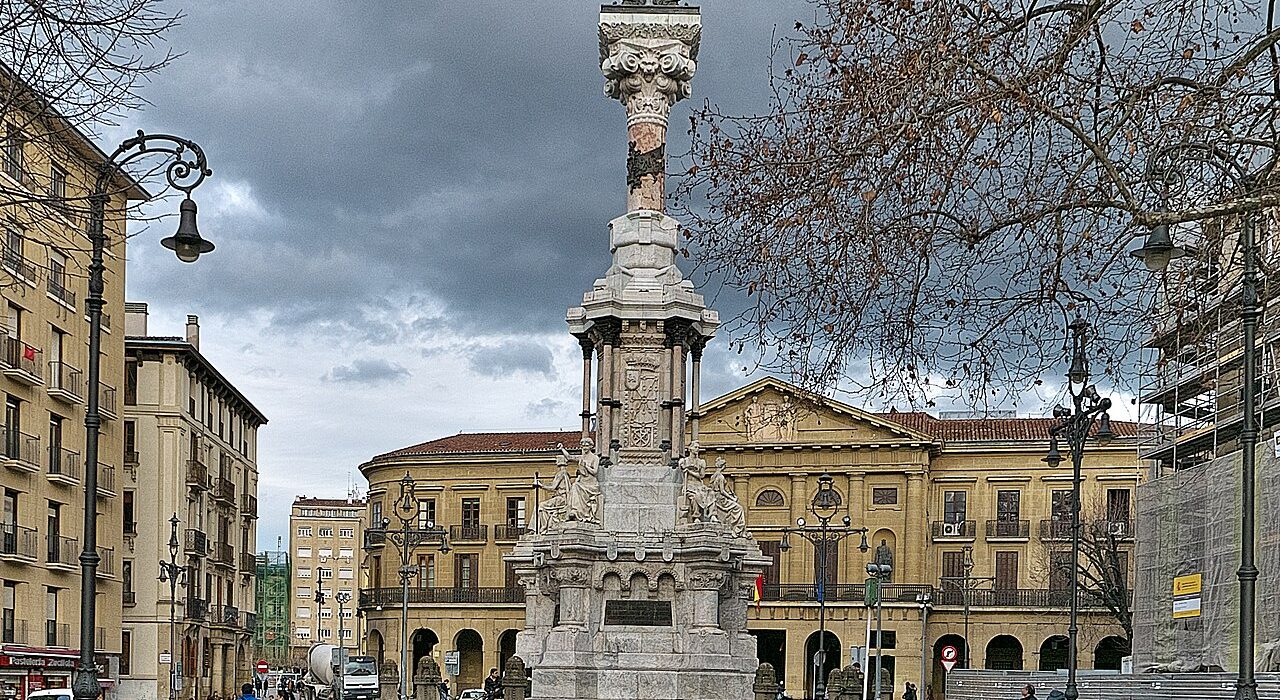
Zaragoza → Pamplona
177 kmLeaving Zaragoza for Pamplona means embarking on a journey that transforms the arid landscape of the Ebro Valley into the green valleys of Navarre in under two hours — a perfect route for discovering the essence of northern Spain without wasting time on endless travel.
How to get from Zaragoza to Pamplona: quick overview
The most balanced option for most travelers is the train, which combines comfort and speed, although driving offers the ultimate freedom to explore along the way.
If you prioritize speed and comfort without worrying about traffic, the Renfe train is your best ally, connecting the two cities in just under two hours with regular departures throughout the day. On the other hand, if your plan involves traveling with bulky luggage or doing a road trip with stops in intermediate towns, driving is the undisputed choice, covering the 177 kilometers that separate the two capitals in a record time of 1 hour and 50 minutes. Finally, for travelers on a tighter budget who don’t mind sacrificing a bit of schedule flexibility, the bus is a solid and economical alternative, with prices around 17 euros and a very competitive travel time.
Driving from Zaragoza to Pamplona
Driving from Zaragoza to Pamplona means covering 177 kilometers of completely toll-free highways and national roads in an estimated time of 1 hour and 50 minutes.
The road network connecting these two cities is excellent and, best of all, you won’t have to pay tolls on any stretch, which makes this option very attractive financially. The main route usually combines several vital arteries of northern Spain. You’ll start by taking the A-2 (Autovía del Nordeste), a fast highway that will get you out of the Aragonese capital smoothly. Along the way, you’ll most likely drive on sections of the A-68 (Autovía del Ebro), which follows the course of the river and offers panoramic views of the agricultural landscape, or on the A-23 (Autovía Mudéjar), known for being well maintained.
As you approach the natural border between Aragon and Navarre, you’ll be able to use roads such as the N-122 or the N-232, which, although they are conventional roads, are usually in good condition for connecting with the main highways. Once you enter Navarrese territory, the A-12 (Donejakue Bidearen autobia) and the A-21 (Pirinioetako autobia) are responsible for taking you to the outskirts of the city. Finally, to enter Pamplona, you’ll use the A-15 (Iruñeko mendebaldeko sahiesbidea), a ring road that allows you to access the city’s different neighborhoods without having to cross all the urban traffic. Since the entire route is toll-free, the only variable cost will be fuel, which for the 177 km distance will be moderate.
By train from Zaragoza to Pamplona
The train is the fastest and most comfortable means of transport, with a single operator, Renfe, offering up to 9 direct daily connections.
The experience of traveling by train between these two cities is very positive thanks to the variety of services available. All trains depart from the modern Zaragoza-Delicias station and arrive at Pamplona/Iruña station, both strategically located for connecting with urban transport in both cities. According to Renfe data, you have a range of options depending on your urgency and budget. If you are looking for maximum speed, the Intercity service is the king of the route, completing the journey in just 115 minutes, although there is only one daily departure of this type. You also have the ALVIA and MD trains, which complete the trip in 119 minutes, offering a perfect balance between time and comfort.
For travelers who prefer to save money or have more flexible schedules, the REG.EXP. (Regional Exprés) trains are the most frequent option, with 5 departures a day and a travel time of 133 minutes. The total frequency is 9 trains a day, giving you coverage from first thing in the morning, with the first train leaving at 5:55, until well into the afternoon, with the last service at 20:00. This allows you to plan round trips on the same day if necessary, or arrive with enough time to enjoy dinner in Pamplona.
By bus from Zaragoza to Pamplona
The bus is the most economical option, with fares ranging from 16.10€ to 18.50€ and a journey duration of approximately 120 minutes.
If budget is your number one priority, the bus companies offer a very competitive direct service. The main operating companies on this route are Interbus and Lineas Regulares De Navarra, which guarantee a regular and reliable service. The journey duration is 120 minutes, which means that, in terms of door-to-door time, it competes very closely with the train and even with the car if there is traffic at the entrances to the cities. The advantage of the bus is that you forget about driving and looking for parking, being able to rest or work during the two hours of travel. The prices, in the range of 16.10€ to 18.50€, make it the cheapest verified alternative, ideal for students or travelers looking to optimize every euro of their itinerary.
Recommended stops along the way
Stopping in the towns along the route turns the journey into a sightseeing trip full of gastronomic and scenic discoveries.
If you decide to drive, you have the perfect opportunity to break up the trip and discover the richness of the Ebro riverbanks and the middle zone of Navarre. Here are the verified strategic stops for your route:
- Utebo: Located just on the outskirts of Zaragoza, it is the first logical stop if you need to stretch your legs right after starting your journey. It is a large town that serves as a transition between the city and the open road, ideal for a quick coffee before getting on the highway.
- Borja: A little further into the province, Borja is a stop with plenty of historic charm. It is a perfect place to break up the monotony of driving and enjoy the area’s traditional architecture, as well as being known for its local gastronomy.
- Ejea de los Caballeros: This town is a key hub on the route. Known as the “Capital of the Cinco Villas” (Five Towns), it offers complete services for travelers, from gas stations to restaurants where you can make a longer technical stop or even have lunch before crossing into Navarre.
- Tudela: Probably the most important stop before reaching Pamplona. Tudela is the second-largest city in Navarre and its location on the banks of the Ebro makes it a beautiful place. It is worth stopping here to see its cathedral or simply stroll through its streets before tackling the final stretch of the A-15.
- Sarriguren: Already very close to the destination, Sarriguren represents the modernity of the area. It is a technology and residential park that showcases Pamplona’s growth. Stopping here gives you a sense of the urban expansion of the Navarrese capital.
- Villava / Atarrabia: This town is internationally famous for being the starting point of the San Fermín bull runs. If you travel in July, it is a must-stop to soak up the festive atmosphere, but even outside of peak dates, its town center is very pleasant for a short walk.
- Berriozar: Located in the Pamplona metropolitan area, Berriozar is the final gateway. It is a quiet place, surrounded by green areas, perfect for arriving in the city calmly without the stress of downtown traffic.
Where to stay in Pamplona
To stay in Pamplona, the ideal is to look for central areas such as the Casco Viejo (Old Town) or the Primer Ensanche (First Expansion District) to have everything within walking distance, with options ranging from budget hostels to four-star hotels.
Pamplona’s accommodation offer is varied and suits different budgets, although prices can fluctuate significantly during the San Fermín festival. If you are looking for atmosphere and history, the Casco Viejo is the recommended area; here you will find charming hotels in old buildings and a vibrant nightlife right at your doorstep. For a more business or family-oriented profile that prefers wider streets and tranquility, the Primer Ensanche is the perfect area, located near the train station and the shopping center, with chain hotels and tourist apartments.
As for price ranges, you can find double rooms in basic hostels or guesthouses from €40-50 per night, while mid-range and high-end hotels usually range between €80 and €150, depending on the season. It is advisable to book in advance, especially if your visit coincides with weekends or sporting events, as the city has a constant high tourist demand.
Frequently asked questions about the Zaragoza-Pamplona route
How long does it take to get from Zaragoza to Pamplona?
Travel time varies depending on the mode of transport: by car it takes 1 hour and 50 minutes, by train the fastest journey is 115 minutes with the Intercity, and by bus the trip takes 120 minutes.
Which is cheaper, the train or the bus?
The bus is generally cheaper, with fixed prices between €16.10 and €18.50, while the train price can vary depending on how far in advance you book and the type of ticket (Intercity, Alvia, etc.), although it tends to be higher than the base bus fare.
Is it worth renting a car?
Yes, it is worth it if you plan to go sightseeing in intermediate stops such as Tudela, Ejea de los Caballeros, or Borja, since public transport will not allow you to visit these places freely; in addition, the 177 km route is fast and toll-free.
When is the best time to travel?
The best season depends on your interests: avoid July if you are looking for peace and quiet because of the San Fermín festival, but if you want a festive atmosphere it is the ideal time; for cultural and food tourism, spring and autumn offer perfect weather for exploring the route.
📍 También te puede interesar
Qué ver en Zaragoza →
Qué ver en Pamplona →