Girona
CataluñaClimate
Daily budget
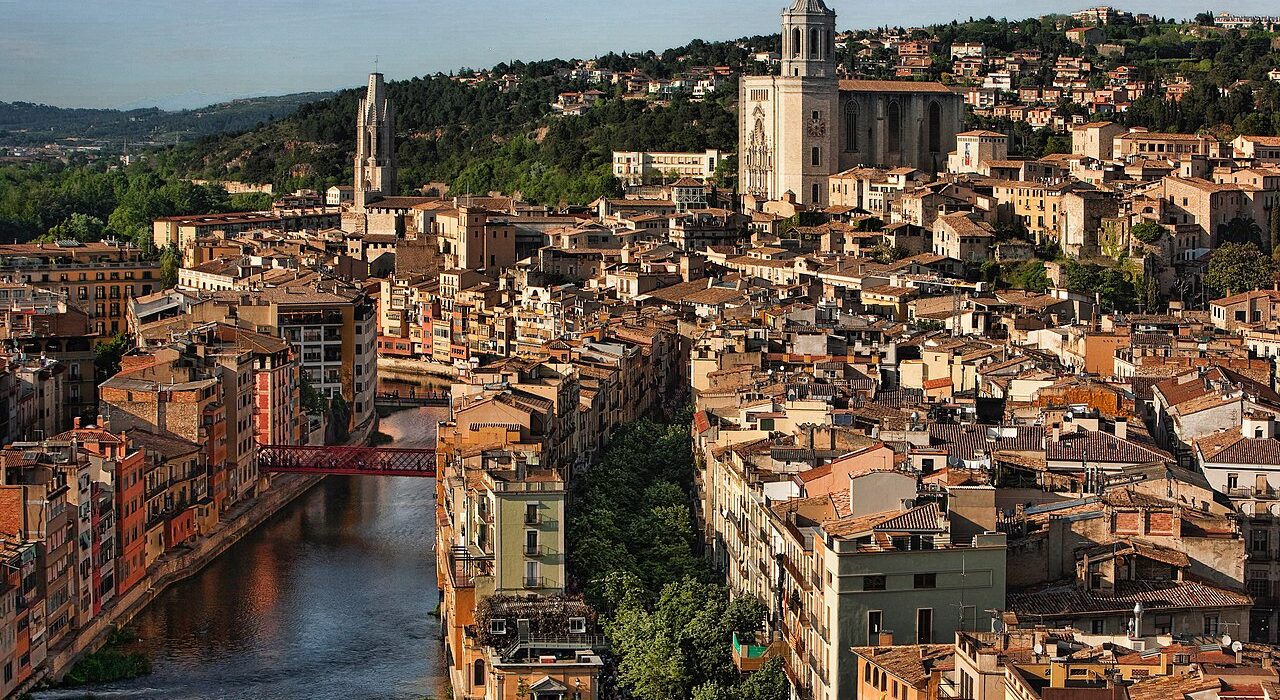
Climb up to the Mirador del Congost (Congost Viewpoint) just as the sun begins to paint the red and ochre facades of the Casas del Río Onyar (Houses on the Onyar River) in orange, and you will understand why Girona is much more than a stopover. With a population of 99,000 inhabitants, this Catalan city offers an intimacy lost in major metropolises, allowing you to stroll through its medieval old town at a leisurely pace. Here, history is not locked away in display cases; it is breathed while walking through the labyrinthine streets of the Call or sitting under the arcades of the Plaza de la Independencia.
The must-seesWhat to see in Girona: the essentials
Girona concentrates its heritage in a perfectly preserved old town where Romanesque and Gothic architecture coexist on every corner.
Girona Cathedral (Catedral de Santa Maria de Girona)
This is the crown jewel, built mainly in the 14th and 15th centuries during the medieval expansion of the Eixample. Its Gothic nave is one of the widest in the world and is well worth entering to appreciate its immensity. The highlight is the access to the city walls from here, allowing you to tour the old town offering unique panoramic views over the urban fabric and the river. It is one of the best-preserved fortified enclosures in Catalonia with pedestrian access, ideal for sunset photos.
Jewish Quarter (El Call)
One of the best-preserved Jewish quarters in Spain with documented medieval origins, the Call is a fascinating labyrinth. The narrow streets maintain their original structure and historical atmosphere, transporting you directly to the Middle Ages. Do not miss the Museum of Jewish History (Museu d’Història dels Jueus), dedicated to the history of Jewish communities in medieval Catalonia and located in the space of Girona’s last synagogue (1492) within the Call precinct near the Cathedral, featuring documentary exhibitions.
Houses on the Onyar River (Casas del Río Onyar)
It is impossible not to stop before these colorful facades designed by Enric Ansesa and the Bassó brothers in 1997 on buildings of various historical styles. They line the Onyar River, forming the iconic visual image of the city that everyone recognizes. The best place to view them is from the Eiffel Bridge (Pont de les Peixateries Velles), an iron metal structure designed by Gustave Eiffel in 1877 to replace a previous bridge connecting the historic center with the Mercadal neighborhood.
Basilica of Sant Feliu
Located near the Cathedral within the monumental complex, this basilica contains Paleochristian sarcophagi dating from the 4th century, visible embedded in the exterior walls of the temple. The current facade is Baroque in style and its nave is Gothic, creating an interesting architectural contrast. It is a building dedicated to Catholic worship with high-value historical cultural heritage that you cannot ignore.
Arab Baths (Baños Árabes)
This 12th-century Romanesque building is inspired by Muslim and Roman baths, offering an oasis of tranquility. It features a central pool surrounded by columns and perfectly preserved rooms such as the apodyterium, frigidarium, tepidarium, and caldarium. It is a quick but essential visit to understand the cultural diversity of medieval Girona.
Plaza de la Independencia
A public square included in the Inventory of Architectural Heritage of Catalonia, whose name refers to the War of Independence against Napoleon. It follows models of 19th-century neoclassical squares with a unified facade, arcades 6.70 m high, and 50 columns. Originally, the two lateral facades were built with semicircular arches, three floors with balconies and attics; today, it is the nerve center of social and commercial life with porticoed arcades.
Other points of interest
- Monastery of Sant Pere de Galligants: A 12th-century Benedictine monastery considered one of the most important Romanesque monuments, currently housing the Archaeology Museum of Catalonia.
- Devesa Park: The largest urban park in Catalonia, featuring century-old trees along the Ter River. Declared a Cultural Asset of National Interest, it boasts over 2,500 plane trees planted around 1850.
- Carrer de la Força: The best-known street of the old Jewish Quarter, with cobblestone paving that runs through the heart of the Old Town towards the Cathedral.
- Fuerza Vieja: A fortified enclosure corresponding to the original Roman foundation of the city of Gerunda, constituting the oldest nucleus of the historic center.
- Museums: Highlights include the Cathedral Treasury Museum with the Tapestry of Creation, the Art Museum, the City History Museum, and CaixaForum Girona.
🍂 Otoño
Si visitas Girona en otoño, los colores de los árboles enamoran aunque las lluvias aumentan progresivamente. Es una estación encantadora para la gastronomía local, solo recuerda llevar siempre un paraguas plegable en tu mochila.
What to do in Girona
Girona offers cultural and leisure activities centered on its floral heritage, traditional markets, and seasonal festivals.
If you visit the city in May, you cannot miss Temps de Flors (Time of Flowers), an annual festival that transforms the streets and monuments of Girona into a floral art spectacle. In October, the city comes alive with the Fiestas de Sant Narcís, the main festival honoring its patron saint, featuring music, parades, and traditional events. For a more local experience, visit the Mercat del Lleó, the main municipal market and hub for fresh produce, or the Mercado de la Devesa, a weekly open-air market held on Tuesdays and Saturdays in the park.
Girona in one day: express itinerary
If you only have 24 hours, this optimized route allows you to see the essentials without rushing too much, taking advantage of the fact that the average traveler stay is 1.6 nights (INE).
- 09:00 – Santa Maria Cathedral: Start early to avoid crowds in the Gothic nave and access the walls for the best morning views.
- 11:00 – El Call and Jewish History Museum: Get lost in the cobblestone streets and visit the ancient synagogue to understand medieval history.
- 13:30 – Lunch at Plaza del Vi: Head to this bustling historic space located in the heart of the Old Town, surrounded by restaurants representing the center of nightlife and culinary life.
- 16:00 – Basilica of Sant Feliu and Arab Baths: Visit the exterior sarcophagi and the interior of the Romanesque baths before they close.
- 18:00 – Walk along the Onyar River: End the day by crossing the Eiffel Bridge and admiring the colorful facades in the evening light.
Where to eat in Girona: local gastronomy
Where to sleep in Girona
Barri Vell
El corazón histórico de Girona, que alberga la Catedral, las murallas medievales y las icónicas casas de colores sobre el río Onyar.
El Call Jueu
Uno de los barrios judíos mejor conservados del mundo, con un laberinto de estrechas calles empedradas llenas de historia.
Mercadal
Animado barrio comercial situado al oeste del casco antiguo, perfecto para ir de compras y disfrutar de la gastronomía local.
Eixample
Distrito modernista con elegantes edificios, amplias avenidas y una gran oferta de tiendas, convenientemente cerca de la estación de tren.
How to get to Girona
The city has efficient land connections, although it is important to note that the train station does not have direct AVE service according to current data.
| Medio | Estación | Detalles |
|---|---|---|
| Tren | Estación de Girona | Conexiones regionales y nacionales (sin AVE directo en esta estación según datos proporcionados). |
| Autobús | Estación de Bus de Girona | Conexiones con otras ciudades catalanas y nacionales. |
Getting around Girona
Urban transport relies mainly on the city bus, which covers the different areas of the city. However, given the compactness of the historic center and verified attractions such as the Casco Antiguo (Old Town) and the Barrio Judío (Jewish Quarter), the best way to get around is on foot. Distances between the Cathedral, the Call, and the Onyar River are minimal, making cars unnecessary and uncomfortable within the walls.
Weather in Girona
Live webcam — Bescano*
Girona* The nearest webcam to Girona is in Bescano, 7.2 km away.
Source: Windy Webcams
Best time to visit Girona
Day trips from Girona
If you have extra time, Girona is a perfect base for exploring the province. Recommended nearby towns for day trips include Figueres, famous for its Dalí Theatre-Museum, and Cadaqués, a beautiful coastal village. You also have Barcelona within easy reach, ideal for combining urban culture with Girona’s tranquility.
Who is Girona for?
Girona is ideal for couples seeking romance in medieval streets, history lovers wanting to see an authentic Jewish Quarter (Call), and foodies eager to try everything from traditional cuisine to 3-Michelin-star restaurants. It is also suitable for families thanks to its parks and interactive museums, as well as backpackers due to its budget hostels and university atmosphere.
Frequently asked questions about Girona
How many days do I need to see Girona?
With an average stay of 1.6 nights according to INE, 2 days are enough to see main attractions like the Cathedral, the Call, and the City Walls (Murallas) without rushing. A third day would allow you to enjoy the museums or take a day trip to Figueres.
Is Girona expensive?
Girona offers options for all budgets. You can eat for €15–25 at traditional spots or spend more on haute cuisine. Accommodation ranges from hostels at €20–35 to luxury hotels at €220, generally being more affordable than Barcelona.
What is the best time to visit Girona?
The best time is from May to September, coinciding with average summer temperatures of 23.0°C and events such as Temps de Flors in May. Winter is colder, with an average of 7.9°C.
How do I get to Girona from Madrid?
You can arrive by train at Girona station (though there is no direct AVE service according to current data, requiring a connection) or by bus from Girona’s bus station, connecting to the national transport network.
🗺️ Rutas desde Girona
- How to Get from Figueres to Girona: Distance, Train, Bus and Car
- How to Get from Girona to Figueres: Distance, Train, Bus and Car
- How to Get from Girona to Barcelona: Train, Bus and Car
- How to Get from Barcelona to Girona: Distance, Train, Bus and Car
- How to Get from Cadaqués to Girona: Distance, Train, Bus & Car
- How to Get from Girona to Cadaqués: Distance, Train, Bus & Car