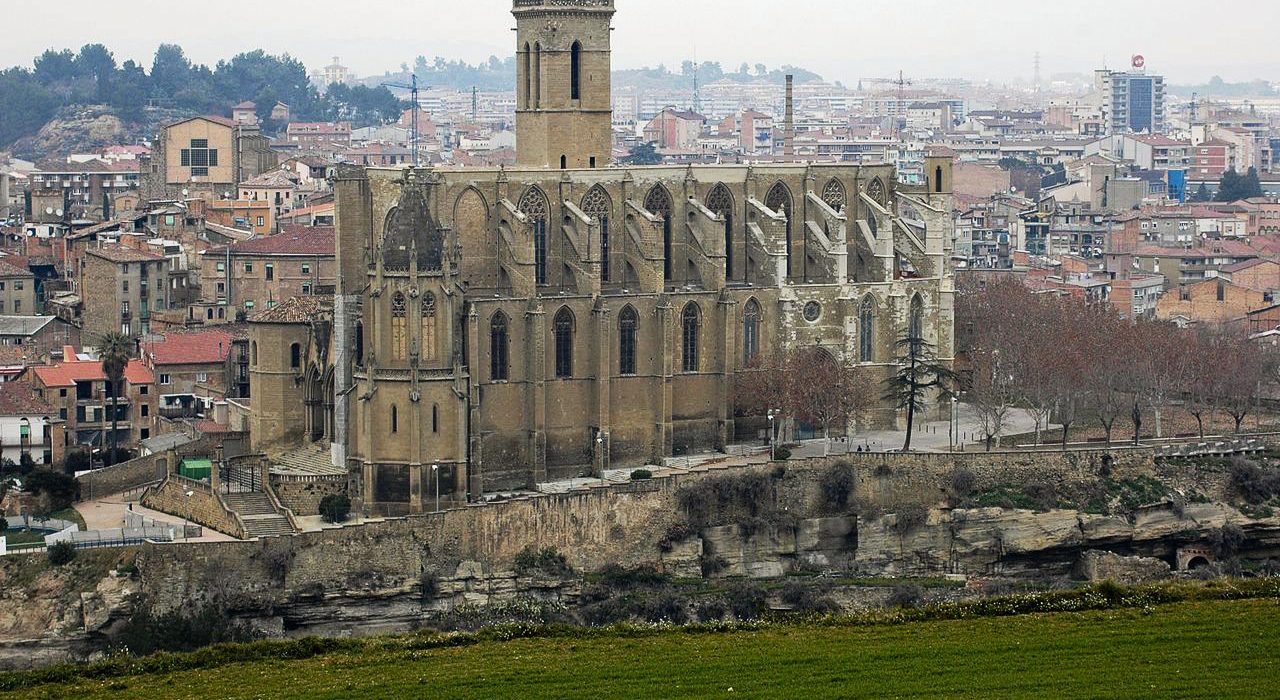
Manresa
CataluñaClimate
Did you know that Manresa was the first city in the world to launch a regular motor bus service in 1905, beating even major European capitals to the punch? This city of 78,000 inhabitants, located at the confluence of the Llobregat and Cardener rivers, is not just a key communications hub in Central Catalonia, but also the place where Antoni Gaudí found the structural inspiration for the Sagrada Familia after his retreat in 1886. Forget the overwhelming crowds; here you have room to breathe in Gothic history, enjoy rooted, authentic cuisine, and walk streets that have witnessed centuries of history without losing their genuine essence.
The must-seesWhat to see in Manresa: the must-sees
Manresa offers a concentrated and accessible cultural heritage that combines medieval history with contemporary memory in a compact route.
Museu Comarcal de Manresa (Manresa Regional Museum)
This museum is the guardian of local memory, housing a collection that spans from prehistory to the present day of the Bages region. It stands out for its temporary exhibitions, which often focus on local artists or specific historical milestones of the city. It is the ideal starting point for understanding the context of what you will see later in the streets, with opening hours that usually adapt to the standard tourist visit.
Museu de geologia Valentí Masachs (Valentí Masachs Geology Museum)
Housed in a building with history, this space pays tribute to geologist Valentí Masachs and features an impressive collection of minerals and fossils. The most notable aspect is its educational approach, which allows visitors to understand the geological formation of the Pla de Bages and its surroundings. It is a highly recommended visit if you are traveling with children or have a scientific interest, as the pieces are very well explained.
Exedra de Boades (Boades Exedra)
This monument is a unique architectural testimony that forms part of the city’s sculptural heritage. Situated in a setting that invites you to pause, the Exedra stands out for its design and for the story it tells about the family or figure it honors. It is a quick but visually interesting stop for lovers of urban architecture.
Neus Català
This monument pays tribute to a key figure of the anti-fascist resistance and Spain’s recent historical memory. The work stands out for its symbolism and for its chosen location, which invites reflection on the legacy of Neus Català. It is a point of deep cultural interest that connects the city with 20th-century history.
Fossa del camí de les Torres (Mass Grave of the Camí de les Torres)
This site is a commemorative monument that recalls a tragic and significant episode of the Spanish Civil War. What you should highlight is its value as a place of democratic memory and its integration into the current urban landscape. Visiting it is an act of respect and understanding of the historical scars the city bears.
Other points of interest
Besides the main sites, the city has numerous monuments and viewpoints that deserve a quick mention on your route.
- Carrer del Balç: A unique medieval street carved into the rock that offers a singular architectural experience in the old town.
- Lluis Companys: Monument dedicated to the former president of the Generalitat, located in a prominent spot in the city.
- Monument al camí de Cornet: A sculptural work that marks a specific point in Manresa’s geography.
- Jaume Viladrosa Montraveta: Statue honoring this local figure in a quiet urban setting.
- Enric Munt Costa: Monument commemorating this figure’s legacy in the city’s history.
- Bernat Toran Martínez: Another commemorative sculpture distributed throughout Manresa’s urban fabric.
- Agapit Colom Armengol: Monument paying tribute to the memory of this distinguished citizen.
- Joan Sallés Oliveras: Statue located at a strategic point for strollers.
- Pere Brunet Farré: Sculptural homage to a notable figure in the local community.
- Pere Parés Sans: Monument that forms part of the city’s statue trail.
- Jacint Carrió Vilaseca: Sculpture that contributes to the open-air artistic heritage.
- Maurici Ribas Pujol: Monument dedicated to this figure in a public space.
- Bernat Comín Igualada: Statue that completes the catalog of historical tributes in the city.
- Vista des de la Torre de Santa Caterina: An excellent viewpoint for a panoramic overview of the city and the rivers.
- Pou de Llum: A unique space combining art and light, very characteristic of the local identity.
🍂 Otoño
El ambiente se enfría gradualmente y los colores de la ciudad cambian para ofrecer paisajes bonitos. Es un momento excelente para disfrutar de la gastronomía local en los restaurantes del centro. Lleva un paraguas pequeño, ya que las lluvias pueden aparecer inesperadamente.
What to do in Manresa
Manresa offers vibrant cultural activities centered on its patron saint festivals, traditional markets, and unique mystical experiences.
If you visit in February, don’t miss the Festa de la Llum (Festival of Light), where mapping projections on the Seu and light shows commemorate the miracle of 1383. In July, the Festes de Sant Ignasi (Festival of Saint Ignatius) transform the city with massive concerts and fireworks in honor of the saint who wrote the Spiritual Exercises here. For lovers of local commerce, the Mercat Setmanal (Weekly Market) in September in Plaça Major is the largest in the region, while in November the Fira Mediterrània brings the best of traditional-rooted performing arts. In winter, the Fira de Santa Llúcia in December fills the streets with the scent of pine and nativity figurines, creating a perfect Christmas atmosphere.
Manresa in a day: express itinerary
This one-day itinerary is designed to cover the city’s most important historical and gastronomic landmarks in a logical and relaxed way.
- 10:00 – Carrer del Balç and El Centre: Start your day getting lost in the old town and visiting this street carved into the rock to feel the medieval atmosphere.
- 12:00 – Museu Comarcal de Manresa: Spend a couple of hours understanding the history of Bages before lunch.
- 14:00 – Lunch in El Centre: Try the Bacallà a la Manresana (Manresa-style cod) at one of the traditional restaurants in the area.
- 16:30 – Monuments and Memory: Visit the Exedra de Boades and the monument to Neus Català to connect with art and recent history.
- 18:30 – Vista des de la Torre de Santa Caterina: End the day with the best panoramic views of the confluence of the rivers before dinner.
Where to eat in Manresa: local gastronomy
Where to stay in Manresa
El Centre (Casco Antiguo)
Es el corazón histórico de la ciudad, dominado por la Basílica de la Seu y calles medievales como el Carrer del Balç. Ofrece un ambiente tranquilo durante el día y concentra la mayor parte del comercio tradicional y restaurantes locales.
La Drecera
Barrio residencial situado en una zona elevada al norte del centro, conocido por sus vistas panorámicas sobre la ciudad y el río Cardener. Es una zona tranquila con parques y zonas verdes, alejada del bullicio turístico principal.
El Pla de l'Ametller
Zona de expansión moderna que conecta el centro con las áreas residenciales del sur, caracterizada por amplias avenidas y edificios de los siglos XX y XXI. Alberga equipamientos deportivos y educativos, funcionando principalmente como área de vida local.
Les Escodines
Barrio popular ubicado en la parte baja de la ciudad cerca del río, con una fuerte identidad vecinal y arquitectura más funcional. Aunque no es un foco turístico habitual, refleja la vida cotidiana manresana fuera de las rutas monumentales.
Sant Ignasi
Zona situada alrededor del santuario dedicado a San Ignacio de Loyola, quien tuvo una experiencia mística en esta colina. Combina espacios religiosos significativos con áreas residenciales silenciosas y senderos para caminar.
How to get to Manresa
Getting to Manresa is easy thanks to its strategic position as a communications hub between the Pyrenees and the coast, just 65 km from Barcelona.
| Medio | Estación | Notas |
|---|---|---|
| Tren | Manresa Baixador | Sin servicio AVE, conexiones regionales. |
| Autobús | Manresa Estació d’autobusos – FGC | Conexiones con Barcelona y comarcas vecinas. |
| Coche | Acceso por Eje del Llobregat | Marca el límite entre área industrial y rural. |
How to get around Manresa
Urban transport is efficient and covers the distance between residential neighborhoods and the historic center well.
The city has an urban bus network that will allow you to move comfortably from areas such as El Pla de l’Ametller or La Drecera to the Centre without needing a car. Given the compactness of the old town, many of the main attractions such as Carrer del Balç or la Seu are perfectly accessible on foot once you are in the center.
Weather in Manresa
Best time to visit Manresa
Day trips from Manresa
Manresa acts as an ideal base for exploring other cities in the region thanks to its central location in Central Catalonia.
From here you can easily organize outings to cities in the region that share historical heritage and similar landscapes. Its geographical position on a river terrace 238 meters above sea level makes it a natural starting point toward the Pyrenees or toward the Mediterranean coast, allowing you to combine urban culture with nature in the same day.
Curious facts about Manresa you didn’t know
These surprising facts will change your perspective on this city before you even set foot in it.
The Basílica de Santa María de la Seu, begun in 1322, is not only Gothic: it served as direct inspiration to Gaudí for the structure of the Sagrada Familia after his retreat stay here in 1886. The name ‘Manresa’ has a fascinating origin, deriving from the Ibero-Roman term ‘Minorissa’ and evolving through Visigothic and Arab dominations until the 9th century. During the War of Succession, the city withstood a 14-month siege (1713-1714) by Bourbon troops, earning the title of ‘Muy Leal’ (Very Loyal). Additionally, the tradition of ‘Les Enramades’, declared a Heritage Festival in 2014, consists of decorating streets with arches of fresh flowers every Corpus Christi, an uninterrupted custom since 1384. Finally, look for the Torre Nova, built in the 16th century, which leans slightly due to the clayey terrain, making it the city’s own ‘Leaning Tower’.
Who Manresa is for
Manresa is an ideal destination for history lovers, foodies seeking authentic recipes, and travelers looking to escape mass tourism.
It is perfect for couples who want to enjoy the Sant Ignasi area and its trails, as well as for families who will find green spaces in La Drecera and El Pla de l’Ametller. Backpackers will appreciate the authenticity of the Les Escodines neighborhood and the affordable prices, while culture lovers will find plenty to keep them busy for several days in its museums and festivals such as Fira Mediterrània (Mediterranean Fair).
💡 ¿Sabías que...?
- ● La Basílica de Santa María de la Seu de Manresa, iniciada en 1322, es considerada una de las obras cumbre del gótico catalán y sirvió de inspiración directa a Antoni Gaudí para la estructura de la Sagrada Familia tras su estancia de retiro en la ciudad en 1886. (Patronat de la Seu de Manresa / Biografías de Antoni Gaudí)
- ● Manresa fue la primera ciudad del mundo en tener un servicio regular de transporte público mediante autobuses de motor, inaugurado el 24 de agosto de 1905 por la empresa La Manresana, precediendo a grandes capitales europeas. (Museu de la Tècnica de l'Enginyeria de Catalunya / Archivo Histórico de Manresa)
- ● El nombre 'Manresa' deriva etimológicamente del término ibero-romano 'Minorissa', que evolucionó durante la dominación visigoda y árabe hasta adoptar su forma actual, siendo mencionada ya en documentos del siglo IX como sede condal. (Institut d'Estudis Catalans / Diccionari Català-Valencià-Balear)
- ● Ignasi Iglésias, dramaturgo clave del modernismo catalán y autor de 'Els Vells', nació en Manresa en 1871; su obra 'La Boira' fue llevada al cine en múltiples ocasiones y es fundamental en la literatura catalana. (Gran Enciclopèdia Catalana)
- ● La tradición de 'Les Enramades', declarada Fiesta Patrimonial de Interés Nacional por la Generalitat de Cataluña en 2014, consiste en engalanar calles con arcos de flores naturales cada Corpus Christi, una costumbre documentada ininterrumpidamente desde 1384. (Generalitat de Cataluña (DOGC) / Ayuntamiento de Manresa)
- ● Durante la Guerra de Sucesión española, Manresa resistió un asedio de 14 meses por las tropas borbónicas entre 1713 y 1714, siendo una de las últimas ciudades catalanas en caer, lo que le valió el título de 'Muy Leal' otorgado posteriormente. (Archivo Municipal de Manresa / Historiografía sobre la Guerra de Sucesión)
- ● Geográficamente, Manresa se sitúa en una terraza fluvial a 238 metros sobre el nivel del mar, en la confluencia de los ríos Cardener y Llobregat, actuando como nudo de comunicaciones natural entre el Pirineo y la costa mediterránea desde la época romana. (Institut Cartogràfic i Geològic de Catalunya)
- ● La Torre Nova de Manresa, construida en el siglo XVI como parte de las murallas, se inclina ligeramente debido a la naturaleza del terreno arcilloso, siendo conocida popularmente como la 'Torre Inclinada' de la ciudad, aunque menos famosa que la de Pisa. (Museu Comarcal de Manresa)
Frequently asked questions about Manresa
How many days do I need to see Manresa?
1 day is enough to see the must-sees such as the Seu and Carrer del Balç, but 2 or 3 days are recommended to enjoy the museums, the local gastronomy, and a day trip to the cities in the region.
What is the best time of year to visit Manresa?
The best time is from May to September, with average summer temperatures of 23.6°C, ideal for enjoying the patron saint festivals and the pleasant weather without the winter cold (6.8°C on average).
How do I get to Manresa from Madrid?
You must first get to Barcelona and from there take a regional train to Manresa Baixador station or a bus to Estació d’autobusos – FGC, as Manresa has no direct AVE connection.
What typical dish should I not miss?
Bacallà a la Manresana is a must, a cod dish with spinach, raisins, and pine nuts that follows the traditional recipe of chef Ignasi Domènech.
For more practical information on museum opening hours, tickets, and the full events calendar, check the official Manresa tourism website.