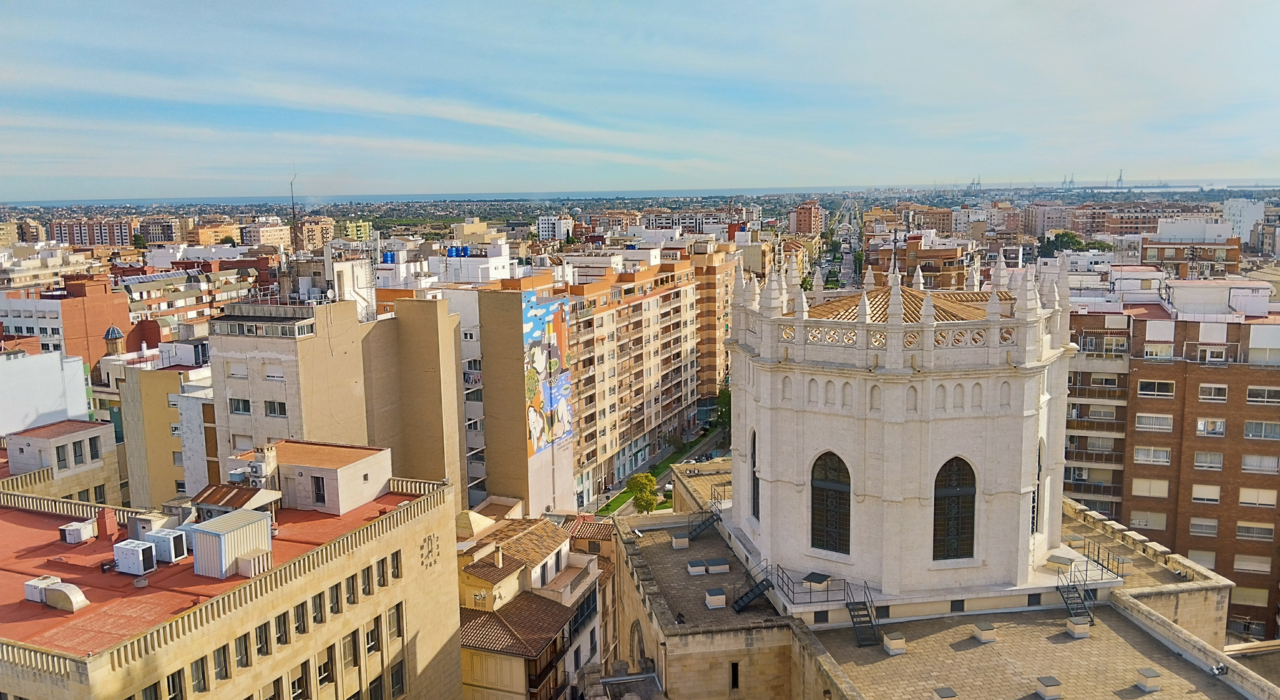
Castellón de la Plana
Comunidad ValencianaClimate
The sun beats down on the Plaza Mayor and the murmur of Castellón’s Mercado Central —more than 60 stalls selling oranges, fresh fish, and cured meats— mingles with the pealing of bells from the top of El Fadrí. The Mediterranean breeze, just four kilometres away, carries a salty scent that reminds you why this provincial capital lives with its gaze fixed on the Costa del Azahar (Orange Blossom Coast). Castellón de la Plana has that unhurried Mediterranean-city rhythm, the kind that doesn’t need to raise its voice to win you over.
The must-seesWhat to see in Castellón de la Plana: the essentials
El Fadrí (tower)
Castellón de la Plana’s most beloved tower, declared a Bien de Interés Cultural (Site of Cultural Interest) on 28 September 2007, rises in the very heart of the old town like a stone watchman that has been observing the city for centuries. Its construction began in the Valencian Gothic style and continued into the Renaissance, and that fusion of styles —the sturdy Gothic base and the Renaissance detailing— is precisely what makes it unique in the architectural heritage of the Comunidad Valenciana (Valencian Community). Admission is free, although access is organised in groups limited to 20 people, so it’s worth arriving with a little time to spare. Climbing to the top of El Fadrí lets you understand the city from its medieval origins.
Basílica de Nuestra Señora del Lledó
The Basílica de Nuestra Señora del Lledó is Castellón de la Plana’s great sanctuary, a place of Catholic worship where locals venerate their patron saint. It houses the image of the Mare de Déu del Lledó (Our Lady of Lledó) and is the central setting for the Fiestas de la Magdalena. It’s well worth a visit both for its devotional significance and for the tranquillity of its landscaped surroundings.
Castell Vell and Cerro de la Magdalena
About 2 km from the centre, on the Cerro de la Magdalena hill, stands the Castell Vell, a fortress of Islamic origin that predates the Christian founding of the city and marks the true birth of Castellón de la Plana. The site is part of the Paraje Natural de la Magdalena, a protected natural area with an interpretation centre dedicated to sharing the history of the medieval fortress that preceded today’s historic centre and the Obelisco del Parque Ribalta. The Ermita de la Magdalena crowns the summit and is the traditional destination of the festival pilgrimage. For a complete experience, the site offers dramatised tours with an esmorzaret castellonero (traditional local brunch) included for groups of 10 to 20 people, available Tuesday to Saturday: a wonderfully fun way to relive history with a full stomach.
Desierto de las Palmas (park)
The Parc Natural del Desert de les Palmes, declared a natural park in 1989 by the Generalidad Valenciana (Valencian regional government), protects 3,293 hectares of Mediterranean mountain landscape spread across five municipalities: Benicasim, Borriol, Cabanes, Castellón de la Plana, and Puebla Tornesa. The IUCN classifies it as a protected area with managed resources (category VI). It’s the great green lung for hiking enthusiasts seeking Mediterranean views and settings of hermitages and Carmelite monasteries.
Plaza de toros de Castellón
The Plaza de toros de Castellón is an emblematic building in the city’s architectural heritage, a witness to the local bullfighting tradition. Although it is not in permanent use, its structure merits a quick visit for those interested in the architecture of historic bullrings in the Spanish Levante.
Parque Ribalta
Parque Ribalta, inaugurated in 1868 on former agricultural land, is Castellón de la Plana’s main urban garden and is listed as a Jardín Histórico (Historic Garden), declared a Bien de Interés Cultural with the category of Bien de Relevancia Local (Site of Local Relevance). It features ponds, palm trees, tree-lined walks, and a lovely bandstand, and forms a continuous ensemble with Plaza de la Independencia and Plaza Tetuán. Inside stands the monument to the painter Ribalta. It regularly hosts fairs and open-air concerts.
Hermitage of San Nicolás de Bari
The hermitage of San Nicolás de Bari is a Catholic place of worship in the municipality of Castellón de la Plana, a regular stop for enthusiasts of local religious heritage.
Roman Villa of Vinamargo
The Roman villa of Vinamargo is an archaeological site in Castellón that offers a glimpse into the area’s Roman past and rounds out a visit to the medieval origins of Castell Vell.
Convent of the Preciosísima Sangre (Most Precious Blood) of Castellón de la Plana
The Convent of the Preciosísima Sangre is a place of retreat and prayer in the city, an oasis of spirituality right in the heart of the urban fabric.
Hermitage of San Francesc de la Font
The hermitage of San Francesc de la Font is a traditional Catholic place of worship in Castellón de la Plana, tied to the rural roots of the municipality.
Hermitage of San Isidro and San Pedro
The hermitage of San Isidro and San Pedro is another Catholic temple in the municipality, much loved by locals and linked to agricultural celebrations.
Teatro del Raval
The Teatro del Raval is the leading theater in central Castellón de la Plana, a stage with a regular program for lovers of the performing arts.
Plaza María Agustina
Plaza María Agustina is one of the central squares of Castellón de la Plana, a common thoroughfare between the old town and the modern district.
Espacio de Arte Contemporáneo de Castellón (Contemporary Art Space of Castellón)
The Espacio de Arte Contemporáneo de Castellón is the city’s temporary exhibition center, ideal for a cultural morning.
Plaza de la Paz
Plaza de la Paz is a lively central square in Castellón, easy to include in any stroll through the city center.
Plaza Santa Clara
Plaza Santa Clara is a square in central Castellón de la Plana, perfect for sitting down for a drink and watching the rhythm of the city.
Old Diago Factory
The square of the old Diago factory is an urban space built over a former ceramics factory, a testament to Castellón’s industrial tile-making past.
🍂 Otoño
Si visitas Castellón de la Plana en otoño, el ambiente es tranquilo y las temperaturas se vuelven muy agradables para caminar sin prisas. Todavía estás a tiempo de disfrutar del Parque Ribalta, el Fadrí y la Plaza Huerto Sogueros sin las aglomeraciones del verano. Consejo práctico: ten a mano un paraguas, porque las lluvias empiezan a ser más frecuentes y pueden sorprenderte por la tarde.
What to do in Castellón de la Plana
Castellón de la Plana offers a wide range of activities: getting lost in the old town among narrow streets and lively squares, soaking up contemporary art at the Espacio de Arte Contemporáneo, exploring Castell Vell with theatrical tours that include esmorzaret, or joining the Fiestas de la Magdalena —whose origins are documented as far back as 1375 and whose current nine-day format dates from 1945—. For sea lovers, El Grao invites you to soak up the sun on the Costa del Azahar (8.6 km of municipal coastline) and to sample freshly landed fish in El Grao; foodies should head to the Mercado Central in Plaza Mayor (more than 60 stalls); and those who prefer shopping can explore the Ensanche, where grand avenues coexist with Parque Ribalta.
Castellón de la Plana in one day: express itinerary
- 10:00 — El Fadrí (tower): Start the day at the city’s symbol. Climb the bell tower in one of the free groups of 20 people and understand Castellón de la Plana from its medieval origins.
- 11:30 — Basílica de Nuestra Señora del Lledó: Just a few minutes away, the patron saint awaits visitors in a peaceful setting much loved by locals.
- 13:00 — Mercado Central de Castellón: Wander through its more than 60 stalls in Plaza Mayor, buy something to snack on, and let yourself be carried away by the colors and aromas.
- 14:30 — Lunch in El Grao: Head to the maritime district (about 4 km away) and try an arroz a banda or a suquet de peix facing the port.
- 18:00 — Castell Vell and Cerro de la Magdalena: End the day by climbing the hill to visit the Islamic fortress and the hermitage, with sunset views over the Mediterranean.
Where to eat in Castellón de la Plana: local gastronomy
Where to stay in Castellón de la Plana
Casco Antiguo (Centro Histórico)
El corazón histórico de la ciudad, con calles estrechas llenas de encanto, plazas animadas y una rica arquitectura que narra siglos de historia. Ideal para pasear, explorar monumentos y disfrutar de la vida local en sus bares y restaurantes.
El Grao (Distrito Marítimo)
La vibrante zona costera de Castellón, que fusiona el carácter de un puerto pesquero activo con extensas playas. Ofrece un ambiente relajado y vacacional, perfecto para disfrutar del sol, el mar y una excelente oferta de marisco.
Ensanche / Zona Comercial
La parte moderna y dinámica del centro de la ciudad, caracterizada por amplias avenidas, zonas peatonales y una gran concentración de tiendas y servicios. El adyacente Parque Ribalta ofrece un espacio verde para el ocio y la relajación.
Estación-Universidad
Un área de ambiente joven y dinámico gracias a la presencia de la Universitat Jaume I y la estación de tren. Es una zona práctica y bien conectada, con opciones de restauración más informales y un pulso de vida estudiantil.
How to get to Castellón de la Plana
| Medio | Duración | Precio aprox. | Frecuencia |
|---|---|---|---|
| Tren (estación Castelló) | Variable según origen | Según Renfe, varía por trayecto | Trenes regionales y de media distancia (sin AVE) |
| Avión (vuelo ligero) | Variable | — | Club ULM La Llosa (aeródromo de ultraligeros) |
| Bus interurbano | Variable según origen | Económico | Líneas regulares desde Valencia y otras ciudades |
The main station is Castelló (with no AVE service according to available data), and for commercial flights you need to use nearby airports, such as Valencia or Manises. For light aircraft and ultralights, there is the Club ULM La Llosa.
How to get around Castellón de la Plana
To get around Castellón de la Plana, the urban bus is the most practical option: it covers the old town, Ensanche, Estación-Universidad and the connection with El Grao and the Costa del Azahar. Within the historic centre everything is easily walkable, and a taxi or a bike ride complete the options for longer journeys. For excursions to Valencia and El Grao, intercity bus lines run with good frequency.
Weather in Castellón de la Plana
Best time to visit Castellón de la Plana
Day trips from Castellón de la Plana
Valencia is just over an hour away via the A-7 and connects with Castellón de la Plana through rail services (according to Renfe) and bus. The City of Arts and Sciences, the Lonja de la Seda (Silk Exchange, a World Heritage Site) and the old town are well worth a full day. For the more curious, it is worth knowing that Castellón and Valencia share the 40° north parallel as an imaginary line across the territory.
Curious facts about Castellón de la Plana you didn’t know
A map of Castellón de la Plana hides a geographical rarity: the 40° north parallel and the 0° Greenwich meridian, two of the imaginary lines that shape the planet, cross through the city. If you stand still in the Plaza Mayor, you are literally at a crossroads of historic coordinates.
The city’s name has very literary medieval roots: it comes from the term «Castellu+Ione», meaning «small castle», itself derived from the Latin Castrum with the diminutive suffix «-ellum». An etymology that explains why El Fadrí, its most recognizable tower, remains the soul of the name.
Matilde Salvador, born in Castellón in 1918, was the first woman to premiere an opera at the Liceu in Barcelona and signed more than 300 works. A quiet pioneer who deserves a raised glass during any vermouth session in El Grao.
The Fiestas de la Magdalena (Magdalena Festival) commemorate the relocation of the town to the plain and have documented origins dating back to 1375, although their current nine-day format dates from 1945. Every year, the people of Castellón make a pilgrimage up to the Cerro de la Magdalena (Magdalena Hill) to honor their patron saint, the Mare de Déu del Lledó.
On November 4, 1837, Queen Isabella II granted Castellón the title of city, after it withstood a three-day siege by Carlist troops. The royal charter is one of the historical reasons for local pride.
30 nautical miles off Castellón lies the volcanic archipelago of the Columbretes Islands, declared a marine reserve in 1990 and a nature reserve in 1994. It is the wild jewel of the Castellón coastline, perfect for a diving excursion.
Who Castellón de la Plana is for
Castellón de la Plana is a city for all types of travelers. Families will find in El Grao a welcoming coastline with beaches of the Costa del Azahar, parks, and beach bars. Couples have in the Casco Antiguo (Old Town) and the Basílica del Lledó a romantic plan with good restaurants. Backpackers and young people will feel right at home in the Estación-Universidad area, next to the Universitat Jaume I. Foodies will enjoy a seafood cuisine with its own identity, and history lovers have in the Castell Vell and the Cerro de la Magdalena an open-air lesson in Andalusi history.
💡 ¿Sabías que...?
- ● En Castellón se cruzan el paralelo 40° norte y el meridiano 0° de Greenwich, dos de las circunferencias imaginarias que rodean la Tierra. (https://es.wikipedia.org/wiki/Castell%C3%B3n)
- ● El nombre de Castellón proviene de la construcción medieval «Castellu+Ione», que significa «castillo pequeño», a su vez derivado de Castrum con el sufijo diminutivo «-ellum». (https://es.wikipedia.org/wiki/Edad_Media_en_Castell%C3%B3n_de_la_Plana)
- ● Matilde Salvador, nacida en Castellón en 1918, fue la primera mujer en estrenar una ópera en el Liceu de Barcelona y compuso más de 300 obras. (https://toldosmanzano.com/personajes-ilustres-castellon/)
- ● Las Fiestas de la Magdalena conmemoran el traslado de la villa al llano y tienen orígenes documentados desde 1375, aunque su formato actual de 9 días data de 1945. (https://es.wikipedia.org/wiki/Fiestas_de_la_Magdalena)
- ● El 4 de noviembre de 1837 la reina Isabel II concedió a Castellón el título de ciudad tras resistir un asedio de tres días por las tropas carlistas. (https://es.wikipedia.org/wiki/Castell%C3%B3n)
- ● A 30 millas náuticas de Castellón se encuentra el archipiélago volcánico de las islas Columbretes, declarado reserva marina en 1990 y reserva natural en 1994. (https://es.wikipedia.org/wiki/Castell%C3%B3n)
Frequently asked questions about Castellón de la Plana
How many days do I need to see Castellón de la Plana?
With two full days you can see the main attractions: El Fadrí, the Basílica del Lledó, Parque Ribalta, the Mercado Central, the Castell Vell, and El Grao. A third day allows you to include the Desierto de las Palmas and an excursion to Valencia or the Columbretes Islands.
What is the best time of year to visit Castellón de la Plana?
According to AEMET, the best time is from April to October, with average temperatures ranging from 11.5°C in winter to 25.0°C in summer and an annual rainfall of 434.9 mm. May, June, and September offer the best balance between sea, festivals, and temperature.
How do I get to Castellón de la Plana from Madrid?
By train to Castelló station (no AVE, according to available data), with times and prices varying according to Renfe and the chosen schedule. By car via the A-3 and AP-7, and by plane to the nearest airport (Manises/Valencia), completing the journey by train or bus to Castellón de la Plana.
How many travelers does Castellón de la Plana receive per year?
Castellón de la Plana receives 254,185 travelers per year (INE), with 33% foreign visitors and an average stay of 1.92 nights, according to the most recent INE data.
Where is the nearest beach to the center?
El Grao, the maritime district of Castellón de la Plana, is about 4 km from the center and offers direct access to the 8.6 km of the municipality’s Costa del Azahar.