Guadalajara
Castilla-La ManchaClimate
Daily budget
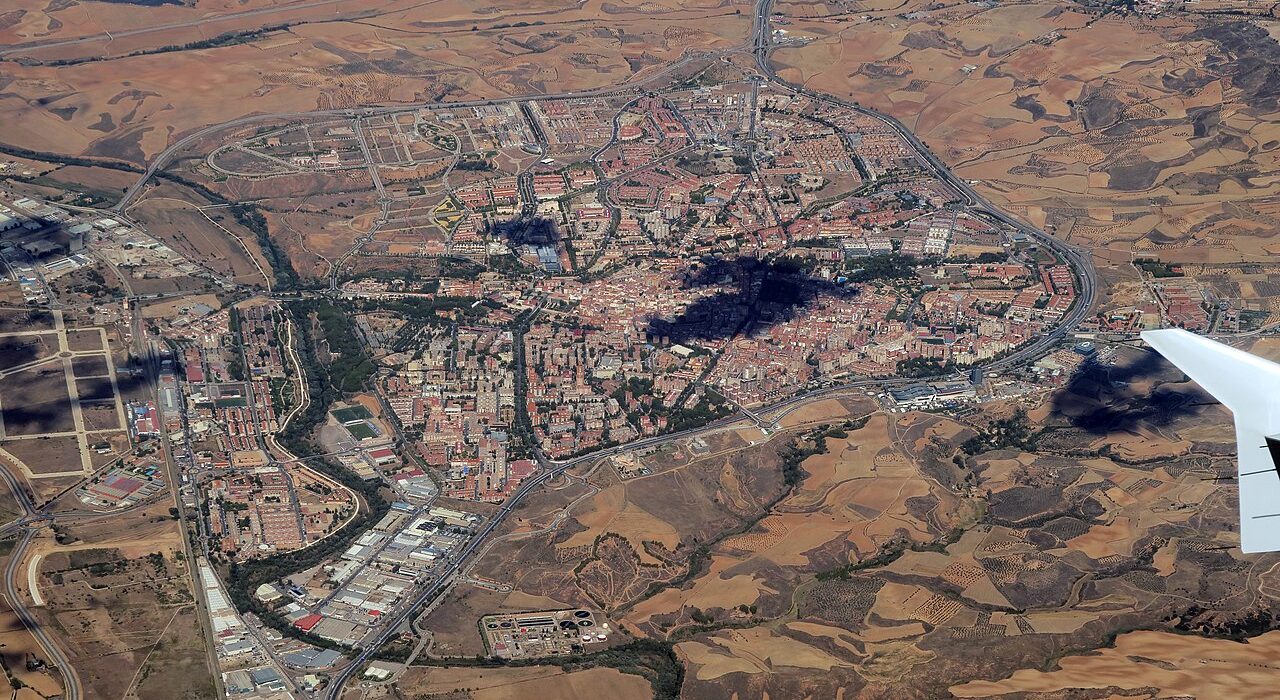
The afternoon sun strikes the more than 2,000 diamond-shaped stone spikes covering the façade of the Palacio del Infantado (Palace of the Infante), creating a play of light unique in the world as you walk through the heart of the southern plateau. Here, in a city of 77,000 inhabitants perched above the Henares River valley from a hilltop among ravines, history is not read in books; it is felt underfoot on the cobblestones of the historic quarter and breathed in the crisp air of its winters or the warmth of its continentalized Mediterranean summers.
The must-seesWhat to See in Guadalajara: The Essentials
Palacio del Infantado and Museo Provincial de Bellas Artes
This emblematic Isabelline Gothic building, designed by Juan Guas for the second Duke of Infantado, is the undisputed jewel of Spanish heritage and houses the Provincial Museum of Fine Arts (Museo Provincial de Bellas Artes) within its walls. Its façade is unique in the world, covered with more than 2,000 stone diamond points, although it was severely damaged in a 1936 bombing that destroyed its rich Mudéjar coffered ceilings. Inside, you cannot miss the famous Patio de los Leones (Courtyard of the Lions) and the Pantheon of the Mendoza family, accessible via a combined ticket that also includes the archaeology and ethnology collections. It is usually open from Tuesday to Sunday with morning and afternoon hours, serving as the mandatory starting point to understand the province’s artistic history.
Castillo de Torija and Museo del Viaje a la Alcarria
Located in Plaza la Villa in the municipality of Torija, this medieval fortress was built by the Knights Templar following the conquest of the region in the 11th century to serve as a key defensive watchtower for the Kingdom of Castile. The keep is the main structure preserved from the original enclosure and today houses the CITUG Interpretation Center and Museum. Inside you will find the Museo del Viaje a la Alcarria (Museum of the Journey to La Alcarria), dedicated to the book by Camilo José Cela, where personal objects, maps, and notebooks from the trip the author made in 1946 are exhibited. Admission is free and it is part of the Castilla-La Mancha Culture Network, offering a fascinating literary perspective of the region.
Capilla de Luis de Lucena
Linked to the humanist Luis de Lucena, this 16th-century Renaissance chapel is renowned for its exceptional Plateresque façade, considered one of the most outstanding examples of religious Renaissance architecture in the province. Its historic portal is the most valued and photographed architectural element by visitors, standing out for its detail and preservation. It constitutes an essential stop for lovers of sacred architecture who wish to appreciate the city’s artistic evolution beyond the great palaces.
Concatedral de Santa María
As the city’s main religious building, the Concatedral de Santa María was constructed over an ancient mosque with roots dating back to the 13th century, situated in the heart of the old town. Inside, historical architectural elements and sacred art from the diocese are preserved, worthy of careful observation. It is usually open for cultural visits and worship, allowing travelers to connect with the spirituality and historical continuity of the urban core.
Other Points of Interest
- Torreón del Alamín: Medieval defensive tower from the late 13th century integrated into the urban layout above the Alamín ravine.
- Parque de la Concordia: The most representative urban park, located next to the historic center for rest and leisure along an axis with San Roque.
- Palacio del Marqués de Villamejor: Renaissance palace with a notable façade and inner courtyard influenced by Lorenzo Vázquez, located in Plazuela de la Cotilla.
- Museo “Francisco Sobrino”: Space dedicated to the work of the local artist, complementing the city’s cultural offerings.
- Mirador del Santo Verde: Strategic viewpoint to observe the layout of the city on the hill and the ravines.
🍂 Otoño
Si visitas Guadalajara en otoño, las temperaturas bajan y el ambiente se vuelve tranquilo, perfecto para recorrer con calma el Museo Provincial de Bellas Artes sin aglomeraciones. Es una estación ideal para disfrutar del Puente Árabe y del Torreón del Alamín con una luz preciosa. Eso sí, te recomiendo llevar paraguas y un buen abrigo, porque las jornadas pueden ser frescas y algo lluviosas.
What to do in Guadalajara
Guadalajara offers specific activities such as attending the bull runs of Tourist Interest during the September Fairs and Festivities, or following the Holy Week processions, declared of Regional Tourist Interest. You can spend the morning buying fresh products at the historic Mercado de Abastos de Guadalajara (Central Supply Market), located in Plaza de la Antigua, and end the day enjoying a quiet stroll through Parque de San Roque combined with a visit to the Convento de San Francisco. For cinema lovers, it is possible to track the locations where part of the masterpiece ‘La tía Tula’ (1963) was filmed, reflecting the city’s atmosphere at that time.
Guadalajara in one day: express itinerary
If you are short on time, this itinerary allows you to cover the essentials without rushing, taking advantage of the proximity of monuments in the historic center.
- 10:00 AM – Palacio del Infantado: Start early to visit the Patio de los Leones (Lions’ Courtyard) and the Provincial Museum before the crowds arrive.
- 12:30 PM – Concatedral de Santa María: Take advantage of the proximity to see the main religious building constructed over the ancient mosque.
- 14:00 PM – Lunch in the Center: Head to the Plaza Mayor area to try migas alcarreñas or roast meat.
- 16:30 PM – Capilla de Luis de Lucena: Dedicate the afternoon to admiring the Plateresque façade and Renaissance architecture.
- 18:00 PM – Parque de la Concordia: End the day with a relaxing walk in the city’s most representative urban park.
Where to eat in Guadalajara: local gastronomy
Where to sleep in Guadalajara
Centro Histórico
El corazón de Guadalajara alberga la mayoría de los monumentos históricos, como el Palacio del Infantado y la Concatedral de Santa María, ideal para sumergirse en la historia y cultura de la ciudad.
Zona del Panteón de la Condesa de la Vega del Pozo
Esta zona destaca por el impresionante Panteón de la Condesa de la Vega del Pozo, una joya arquitectónica ecléctica visible desde lejos que atrae a amantes del arte y la historia.
Zona del Parque de San Roque y Convento de San Francisco
Un área tranquila que combina el relajante Parque de San Roque con la imponente presencia del Convento de San Francisco, perfecta para paseos y disfrutar de la arquitectura y la naturaleza.
How to get to Guadalajara
Connectivity with the city is straightforward, although it is important to keep in mind the current limitations of high-speed rail transport.
| Medio | Detalles | Nota |
|---|---|---|
| Tren | Estación de Guadalajara | Sin servicio AVE actualmente. |
| Avión | Aeródromo de Taragudo | Para aviación general y deportiva. |
| Coche/Bus | Conexión directa desde Madrid | La opción más frecuente para viajeros. |
How to get around Guadalajara
To get around the city, you have an urban bus service covering the main areas. Given that the historic core is compact and many attractions like the Palacio del Infantado or the Concatedral are very close to each other, walking is often the best option to enjoy the surroundings.
Weather in Guadalajara
Best Time to Visit Guadalajara
Day Trips from Guadalajara
If you have extra time, Madrid is the quintessential nearby city for a day trip. Its proximity allows you to combine the tranquility of this Castilian capital with the vibrant cultural and leisure offerings of Spain’s capital in a single journey, taking advantage of the excellent land connections between both cities.
Facts About Guadalajara You Didn’t Know
Did you know that the city’s name comes from the Arabic expression ‘Wād al-Ḥajarah’ (واد الحجرة), which translates as ‘river of stones’ or ‘valley of fortresses’? This name originally referred to the Henares River, which flows through rocky terrain.
Guadalajara is considered the birthplace of Spanish military aviation, as the Military Aerostation Service, dedicated to balloons and airships, was established here in 1896, making the city a pioneering center for aeronautics in Spain.
The city coat of arms features the knight Álvar Fáñez de Minaya, lieutenant of El Cid, whom legend credits with conquering the city from the Muslims in 1085, although modern historiography suggests the surrender was negotiated.
The city houses the Pantheon of the Duchess of Sevillano (1882-1916), a monumental mausoleum with an impressive dome 40 meters high, covered in ceramic tiles with metallic reflections, created by the renowned ceramist Daniel Zuloaga.
It is the birthplace of Antonio Buero Vallejo (1916-2000), one of the most important playwrights of 20th-century Spain, awarded the Cervantes Prize in 1986, and whose name graces the city’s main theater.
The province is famous for its ‘Botargas’, masked characters in colorful costumes who star in ancestral winter festivals, a tradition declared an Intangible Asset of Cultural Interest due to its great ethnographic value.
Who Is Guadalajara For?
Guadalajara is an ideal destination for history and architecture lovers seeking authenticity without the crowds of other major tourist centers, as well as for families who appreciate green spaces like Parque de la Concordia. It is also perfect for foodies interested in traditional Castilian gastronomy and haute cuisine, given its Michelin recognition, and for cultural travelers drawn to its connection with figures such as Camilo José Cela or Antonio Buero Vallejo.
Frequently Asked Questions about Guadalajara
How many days do I need to see Guadalajara?
With an average stay of 1.67 nights according to the INE, a weekend is enough to see the essentials like the Palacio del Infantado (Palace of the Infante) and the Castillo de Torija (Torija Castle), although you could extend it to enjoy the gastronomy and museums at a more leisurely pace.
Is Guadalajara expensive?
Not particularly; you can eat for €12-18 in a mid-range restaurant and find accommodation from €18-30 in hostels or €50-80 in 3-star hotels, making it accessible for different budgets.
What is the best time to visit Guadalajara?
The best time is from May to September, taking advantage of the average summer temperature of 22.8°C, avoiding the long, cold winters where the average is 5.4°C.
How do I get to Guadalajara from Madrid?
The city is very close to Madrid, making this the main recommended day trip; you can arrive by car or bus, although the current train station does not have AVE service.