Tarragona
CataluñaClimate
Daily budget
What to see in Tarragona: the must-sees
The smell of freshly made romesco drifts up through the narrow streets of the Part Alta while the Mediterranean sun bounces off the ancient stones of the Roman circus. Here, where 130,000 people live alongside a heritage that UNESCO has protected since 2000, the past isn’t just visited: it’s walked on, touched and savoured. Tarragona is one of those places where you can have breakfast in a medieval square, cross a Roman aqueduct in the afternoon and end the day over seafood rice facing the boats of a fishermen’s quarter.
Cathedral of Santa Tecla in Tarragona
The Cathedral of Santa Tecla stands at the highest point of the Part Alta, on the remains of an ancient Roman temple. The visit includes the cloister, the diocesan museum and the climb up the tower, from where you get a full panorama of the old town and the sea. It’s one of those cathedrals that forces you to keep looking up, both for its sheer size and for the mix of styles that shape it.
National Archaeological Museum of Tarragona (MNAT)
The MNAT is the gateway to the world of Tarraco, the great Roman capital of Hispania. The promenade around it houses a museum space dedicated to the city in the transitional period between the 18th and 19th centuries, and offers views over the old town and the Mediterranean. Its collection, recognised by UNESCO, helps you understand why this city was one of the most prominent on the Iberian Peninsula during the Roman Empire.
Aqueduct of les Ferreres (Pont del Diable)
The Pont del Diable is a striking two-tier Roman aqueduct that supplied water to the city of Tarraco. Declared a UNESCO heritage site in 2000, it lies on the outskirts of the centre and astonishes with its excellent state of preservation. Walking across its upper level is one of those experiences that makes you feel tiny in the face of Roman engineering.
Roman Circus and Praetorium
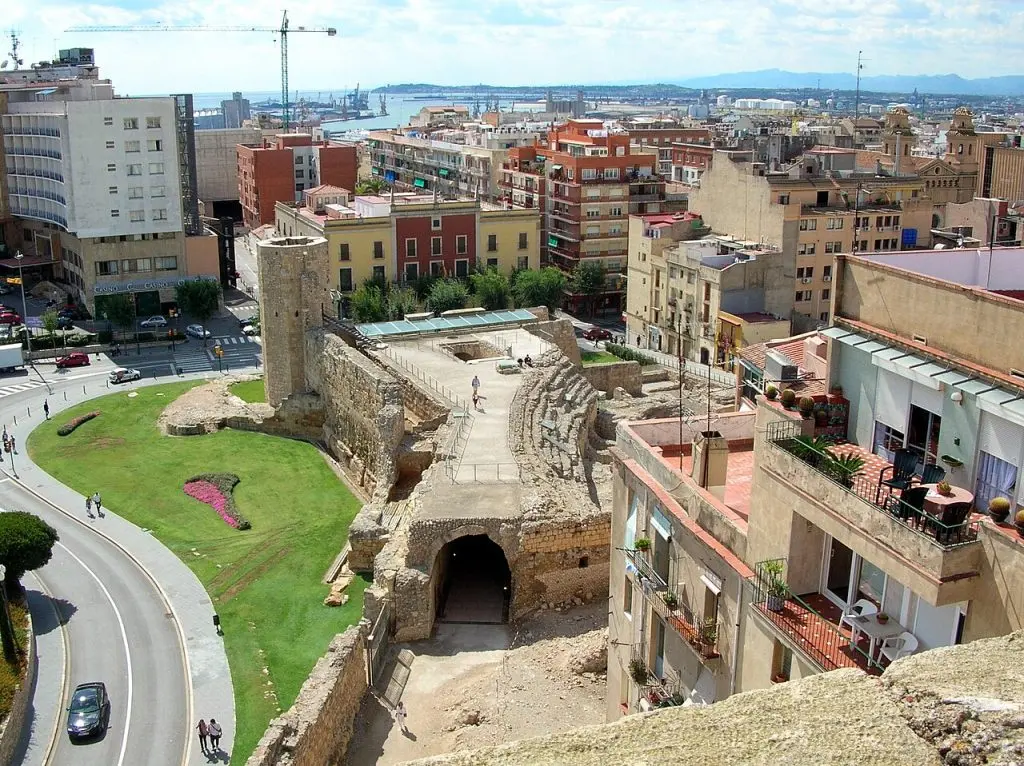
This monumental complex is one of the best-preserved Roman circuses in the Western world, built for chariot races, with the Praetorium tower attached. Opening hours are 09:30 to 21:00 and admission is required. The visit lets you explore the underground level and climb the tower to take in a unique view of the old town and the circus’s original layout, a privilege few Roman cities can offer.
Roman Circus of Tarragona
Built in the 1st century AD, the Roman Circus of Tarragona could hold up to 30,000 spectators who thrilled to biga races and chariot competitions with two and four horses. Another section has been uncovered in the Sedassos square, and some vaults are visible in premises on Trinquet Vell street and the plaza de la Font. It has been a UNESCO heritage site since 2000 and is one of the few Roman circuses preserved within a city.
Early Christian Necropolis of Tarragona
Dating from between the 3rd and 5th centuries AD, it is one of the most important early Christian necropolises on the Iberian Peninsula, located beside the final stretch of the Tulcis (Francolí) river. Discovered in 1923, it formed part of the most extensive suburb of Tarraco. The remains open to visitors include a suburban domus, a production area and part of the extensive burial ground.
Praetorium Tower
The Praetorium Tower formed part of the Provincial Forum and the Circus of Tarraco. From its rooftop you get one of the best panoramic views of the old town and the layout of the Roman circus. Throughout its history, the building has served as a castle, barracks and prison, and it is currently managed by the Tarragona History Museum as a museum space.
City Walls (Archaeological Promenade)
The Roman walled enclosure of Tarragona is the oldest preserved outside Italy, with original towers and gates.
Roman Amphitheatre
An ancient seaside amphitheatre where gladiator fights and spectacles were held, built near the coast to make it easier to unload the wild beasts via the Playa del Miracle.
Cathedral of Santa María
Majestic cathedral marking the transition from Romanesque to Gothic, built on the site of an ancient Roman temple.
Balcón del Mediterráneo
Spectacular viewpoint perched on a cliff offering panoramic views of the sea, the port and the amphitheatre.
Part Alta (Old Town)
A maze of narrow streets and charming squares that is home to most of the Roman and medieval monuments.
Portal del Roser
From this spot you can appreciate the layering of the Roman, medieval and modern city that defines Tarragona, within the urban wall complex of the Pla de Santa María.
Cloister of Tarragona Cathedral
It stands out for its irregular layout, its pointed arches and a rich sculptural decoration on the capitals depicting biblical scenes, plant motifs and scenes of everyday medieval life.
🍂 Otoño
Si visitas Tarragona en otoño, el clima sigue siendo templado y las calles están más tranquilas. Es una gran ventaja para entrar al Museo Nacional Arqueológico de Tarragona o a la Necrópolis Paleocristiana de Tarragona sin prisas. Lleva calzado cómodo y una capa fina por si refresca al atardecer.
What to do in Tarragona
Tarragona offers an archaeological stroll along the oldest surviving Roman walls outside Italy, visits to Modernista markets and the experience of getting lost in the seafaring neighbourhood of El Serrallo. The city invites you to combine UNESCO heritage with local life: in the morning you can explore the Roman circus and in the afternoon sit on a terrace in the Part Alta watching the world go by. The Mercat Central, housed in its Modernista building, is a must-stop to buy fresh produce and soak up the buzz of Tarragona. Sea lovers will find an authentic seafaring atmosphere in El Serrallo, with fishermen’s boats and restaurants where the fish arrives fresh every morning.
- Archaeological route: Walls, circus, amphitheatre and aqueduct in a single day, all of them UNESCO heritage since 2000.
- Mercat Central: Modernista building with stalls selling fresh local produce, meats, fish and more.
- El Serrallo: A seafront stroll through the old fishermen’s quarter, ideal for eating arrossejat overlooking the port.
- Viewpoints: The Balcón del Mediterráneo and the rooftop of the Torre del Pretorio offer the best panoramas of the city.
Tarragona in a day: express itinerary
With a well-planned day you can get a very complete picture of Tarragona, combining Roman heritage, the medieval old town and local cuisine. This itinerary takes you through the essentials without rushing, with time to eat and to gaze out at the sea.
- 09:30 – Roman Circus and Praetorium: Start early, when the ticket offices open, to explore the underground passages of the circus and climb the tower before the sun gets too strong. The view of the circus’s original layout from above is worth the early start.
- 11:00 – Cathedral of Santa Tecla: Spend an hour in the cloister, the diocesan museum and the climb up the tower. The contrast between Romanesque and Gothic will give you a sense of the city’s evolution.
- 12:30 – Part Alta and Portal del Roser: Get lost in the narrow streets of the old town and seek out the Portal del Roser to appreciate the layering of the Roman, medieval and modern city.
- 14:00 – Lunch in the Part Alta: Order a cazuela de romesco or an arrossejat in one of the neighbourhood’s charming restaurants. Budget between 15 and 25 euros per person.
- 16:00 – Roman Amphitheatre and Balcón del Mediterráneo: Head down towards the sea to see the amphitheatre built next to Playa del Miracle and finish at the Balcón del Mediterráneo, with views over the port and the amphitheatre.
Where to eat in Tarragona: local cuisine
Where to stay in Tarragona
Part Alta
El corazón histórico, ideal para sumergirse en la historia y disfrutar de restaurantes con encanto.
El Serrallo
Antiguo barrio de pescadores con un ambiente marinero auténtico, famoso por sus restaurantes de pescado fresco.
How to get to Tarragona
From Barcelona, the fastest option is the train: 31 min (AVE), 103 a day.
Tarragona (1,1 km from the centre)
| From | Direct train | Direct bus | Car |
|---|---|---|---|
| Barcelona | 31 min · 103/day AVE | 1 h 25 min · 13/day Teresa y José Plana, Empresa Plana, ALSA | 1 h 19 min 100 km |
| Reus | 18 min · 47/day Regional | 15 min · 136/day La Hispano Igualadina, Teresa y José Plana, Empresa Plana | 15 min 14 km |
| Vilanova i la Geltrú | 36 min · 41/day Regional | 1 h 12 min · 19/day Cintoi Bus | 44 min 57 km |
| Lleida | 27 min · 28/day AVE | 1 h 20 min · 4/day La Hispano Igualadina | 1 h 10 min 97 km |
| Zaragoza | 1 h 02 min · 21/day AVE | — | 2 h 37 min 232 km |
| Madrid | 2 h 27 min · 13/day AVE | — | 5 h 59 min 542 km |
| Valencia | 2 h 23 min · 12/day AVE Euromed | 3 h 10 min · 1/day ALSA | 2 h 50 min 258 km |
| Castellón de la Plana | 1 h 36 min · 12/day AVE Euromed | 2 h · 1/day ALSA | 2 h 04 min 188 km |
| Alicante | 4 h 34 min · 5/day AVE Euromed | 6 h 10 min · 2/day ALSA | 4 h 47 min 444 km |
| Girona | 1 h 20 min · 7/day AVE | — | 2 h 13 min 191 km |
Direct trains and buses from the official timetables published by the operators on Spain's National Transport Access Point (a reference Wednesday); driving times from OpenStreetMap. Operators that do not publish their timetables may run more services. Check the timetable before you travel.
How to get around Tarragona
Tarragona’s centre is pedestrianised, which makes visiting on foot much easier: the Part Alta, the circus, the cathedral and the Balcón del Mediterráneo are all within a short distance of each other. For longer journeys, such as going to the Aqueduct of les Ferreres or the Paleochristian Necropolis, the urban bus is the most practical option. Urban transport covers the whole city and connects with the neighbourhoods of El Serrallo and the more distant areas of the historic centre. If you come by car, bear in mind that the pedestrianised centre limits access, so it’s best to park on the outskirts and get around on foot or by bus.
Weather in Tarragona
Best time to visit Tarragona
Day trips from Tarragona
The main day trip from Tarragona is Barcelona, reached by direct train from Tarragona Station. The Catalan capital offers a complete contrast to Tarragona’s calm: museums, Modernista architecture, nightlife and an immense dining scene. You can leave early in the morning, spend the day exploring the city and return to sleep in Tarragona without any trouble. It’s a perfect option for those who want to combine Roman heritage with a major European capital in the same trip.
Tarragona curiosities you didn’t know
The circus that roared with 30,000 spectators. The Circus of Tarragona could hold up to 30,000 spectators, who packed in to watch biga competitions and chariot races with two and four horses. Today you can walk through its underground passages and climb the Pretorio tower to imagine the roar of the crowd.
An amphitheatre with a wild beast harbour. The Roman amphitheatre of Tarragona was built near the sea to make it easier to unload the wild beasts brought to the site via Miracle Beach. Gladiators and beasts arrived by sea, straight to the show.
The name that comes from silver. It is believed that the Iberian word ‘Tarakon’ later gave rise to ‘Tarraco’, the Roman name of the city. On some Iberian drachmas minted in Tarragona you can read the name ‘Tarakonsalir’, where the root ‘tarakon’ joins ‘salir’, which means silver in Iberian.
The arm of Santa Tecla that survived the pirates. The arm of Santa Tecla, patron saint of Tarragona, arrived at the Tarragona port on 23 September 1321 after an expedition that crossed the Mediterranean dodging pirates. Since then, the relic has been one of the city’s most venerated treasures.
The scientist who measured the air. Antoni de Martí i Franquès, born in Tarragona, was the European scientist who came closest to pinpointing the composition of atmospheric air, determining that the oxygen concentration is always 21%. A fact that every schoolchild studies today and that was born in this Mediterranean city.
Who Tarragona is for
Tarragona is an ideal destination for lovers of history and Roman heritage, with a UNESCO archaeological ensemble that includes a circus, amphitheatre, walls and aqueduct. It is also perfect for couples looking for a quiet weekend with good restaurants and seaside strolls, and for foodies who want to try romesco casserole, calçots or arrossejat in their place of origin. Families will find spacious, safe areas, with monuments that fascinate children for their scale and antiquity. Backpackers, with hostels between 20 and 35 euros per night, have here an affordable base for exploring the northeast of the peninsula. With 258,529 travellers a year (INE) and 47% of them foreign, Tarragona maintains a balance between local authenticity and openness to visitors.
💡 ¿Sabías que...?
- ● El Circo de Tarragona podía acoger hasta 30.000 espectadores, donde se realizaban competiciones de bigas y carreras de carruajes con dos y cuatro caballos. (https://hoycuriosidades.com/paises/curiosidades-acerca-de-tarragona/)
- ● El anfiteatro romano de Tarragona fue construido cerca del mar para facilitar el desembarco de las fieras que llevaban al lugar a través de la Playa del Miracle. (https://hoycuriosidades.com/paises/curiosidades-acerca-de-tarragona/)
- ● Se cree que la palabra íbera 'Tarakon' dio pie posteriormente a 'Tarraco', el nombre romano de la ciudad de Tarragona. (https://www.turismedetarragona.com/15-claves-historia-tarragona/)
- ● En algunos dracmas ibéricos acuñados en Tarragona se puede leer el nombre 'Tarakonsalir', donde la raíz 'tarakon' se une a 'salir', que significa plata en íbero. (https://www.turismedetarragona.com/15-claves-historia-tarragona/)
- ● El brazo de Santa Tecla, patrona de Tarragona, llegó al puerto tarraconés el 23 de septiembre de 1321 tras una expedición que cruzó el Mediterráneo sorteando piratas. (https://www.economiadigital.es/tendenciashoy/destinos/tarragona-curiosidades.html)
- ● Antoni de Martí i Franquès, nacido en Tarragona, fue el científico europeo que se acercó con más precisión a la composición del aire atmosférico, determinando que la concentración de oxígeno es siempre del 21%. (https://www.turismedetarragona.com/visita-teatralizada-antoni-marti-franques-cientifico/)
Frequently asked questions about Tarragona
How many days do I need to see Tarragona?
With two days you can see the essentials: the Roman circus, cathedral, amphitheatre, walls and aqueduct. The average stay for travellers is 1.77 nights, which confirms that a long weekend is enough for a complete first visit. If you want to take trips to Barcelona or enjoy the food and beaches at a leisurely pace, add a third day.
Is Tarragona expensive?
Tarragona is a mid-priced destination. A meal in a restaurant costs between 15 and 25 euros per person. Hostels range from 20 to 35 euros per night, 3-star hotels from 50 to 90 euros, and 4-5 star hotels from 90 to 200 euros. Compared with Barcelona, it offers very good value for money, especially for accommodation and food.
What is the best time to visit Tarragona?
Spring and autumn are the best times. With average temperatures of 25°C in summer and 12°C in winter, the in-between months offer a mild climate that is ideal for exploring outdoor monuments. The worst time is late autumn and winter, when rain and cold can limit visits to outdoor spaces.
How do I get to Tarragona from Madrid?
Tarragona does not have an AVE station, but its train station offers direct destinations to Barcelona, Valencia, Zaragoza and Lleida. From Madrid, the most practical option is to take a high-speed train to Barcelona or Zaragoza and there transfer to a regional train to Tarragona. You can also arrive by bus with Alsa, Hife or Plana, or by car via the AP-7, the A-7 or the N-340.
Does Tarragona have a beach?
Yes, Tarragona is located on the shores of the Mediterranean, on the Costa Dorada, with beaches of warm waters and recreation centres. The Roman amphitheatre was built next to Playa del Miracle (Miracle Beach), which shows the city’s historic relationship with the sea. The Balcón del Mediterráneo (Mediterranean Balcony) offers panoramic views of the sea, the port and the amphitheatre.