Madrid
Comunidad de MadridClimate
Daily budget
Imagine strolling at sunset in front of the Temple of Debod as the sun gilds the Egyptian stone, or getting lost among the scents of cinnamon and chocolate from a freshly made churro on a winter morning. Madrid is not just a city; it is an explosion of life on its terraces and an open-air museum where every corner tells a story of kings and artists. Get ready to discover the capital of Spain with the confidence of a trusted travel companion.
The must-seesWhat to see in Madrid: the essentials
Madrid boasts an impressive cultural density, with over 10 million annual visitors (INE) coming to discover its treasures. Here is the definitive selection based on verified data.
Museo Nacional del Prado (Prado National Museum)
This museum is one of the largest art galleries in the world, founded in 1819 and recognized by UNESCO. Inside, you cannot miss the masterpieces by Velázquez, Goya, El Greco, and Rubens that define the history of Western art. When planning your visit, keep in mind that it is a very crowded place, so booking tickets in advance is recommended to ensure access. It is the heart of the Art Triangle and a must-stop for any culture lover.
Catedral de la Almudena (Almudena Cathedral)
Located next to the Royal Palace, this Neo-Gothic cathedral was consecrated in 1993 by Pope John Paul II. Its Neo-Romanesque crypt, built in 1911, stands out especially, offering a fascinating architectural contrast to the exterior. It is a key point for understanding the religious and artistic evolution of the modern city.
Palacio Real de Madrid (Royal Palace of Madrid)
Don’t miss the Palacio Real de Madrid, the official residence of the Spanish monarchy and the largest royal palace in Western Europe. As you wander through its rooms, you’ll discover it has 3,418 rooms, an impressive figure that reflects its historic majesty. Although the royals don’t live here nowadays, this monument in the heart of the capital remains an essential symbol you must visit to understand the grandeur of Spain.
Museo Nacional Thyssen-Bornemisza (Thyssen-Bornemisza National Museum)
This museum completes the famous Art Triangle with a collection of nearly 1,000 works ranging from the 13th to the 20th century. Here you can enjoy key movements such as Impressionism and Pop Art that are not found in the Prado. It is ideal for those seeking a complete chronological tour of art history.
Parque del Buen Retiro (Retiro Park)
This 125-hectare green lung in the city center was declared a UNESCO World Heritage Site in 2021, along with the Paseo del Prado. It is the favorite spot for locals to stroll, row boats on the pond, or simply relax under the shade of its centuries-old trees. Its heritage status guarantees the conservation of this unique historical space.
Museo Sorolla (Sorolla Museum)
This house-museum preserves the most extensive collection of works by the painter Joaquín Sorolla in an intimate and personal setting. The highlight is its beautiful Andalusian garden, which invites tranquility after visiting the exhibition halls. It is a hidden gem showcasing the life and work of the master of light.
Templo de Debod (Temple of Debod)
This is an authentic Egyptian temple from the 2nd century BC that was donated by Egypt in 1968 and moved stone by stone to Madrid. It has become the privileged viewpoint par excellence to contemplate one of the city’s most beautiful sunsets. It is a unique historical gift in the heart of Europe.
Gran Vía
This is Madrid’s main commercial artery, inaugurated in 1910, and the axis of the city’s modern life. As you walk along it, look up to admire iconic buildings such as the Metrópolis and the Telefónica, examples of the architecture of the era. It is the perfect setting for shopping, theater, and urban photography.
Puerta del Sol
This square marks Kilometer Zero of Spain’s radial roads and is the nerve center of the city. Here you will find the clock of the Casa de Correos, famous for being the place where the New Year’s bells are rung and broadcast to the entire country.
Royal Site of San Lorenzo de El Escorial
Built between 1563 and 1584 by order of Philip II, this monument is the pinnacle of the Spanish Renaissance, designed by Juan de Herrera. It functions as a monastery, palace, and royal pantheon, and has been declared a UNESCO World Heritage Site since 1984.
Mercado de San Miguel (San Miguel Market)
This gourmet market features an iron structure dating from 1916 and is located next to the Plaza Mayor. Inside, you will find more than 30 gourmet stalls offering a varied culinary experience in a historic setting.
Plaza Mayor
This arcaded square dates back to the 17th century and has a rectangular layout that has witnessed the town’s history. Notable features include the Casa de la Panadería (Bakery House) and the equestrian statue of Philip III, which preside over the central space.
Plaza de España
Renovated in 2021, this square features a monument to Cervantes and offers direct views of the Temple of Debod and the Torre de Madrid. It is an example of how the city has modernized its public spaces while maintaining their essence.
Teatro Real (Royal Theater)
As Spain’s main opera house, inaugurated in 1850, it is a premier cultural landmark. Located opposite the Plaza de Oriente and the Royal Palace, it completes the area’s monumental ensemble.
Museo Nacional Centro de Arte Reina Sofía (Queen Sofia National Museum Art Center)
This museum houses Picasso’s ‘Guernica’ and holds the largest collection of 20th-century Spanish contemporary art. It is essential for understanding the avant-garde and modern art within the Spanish context.
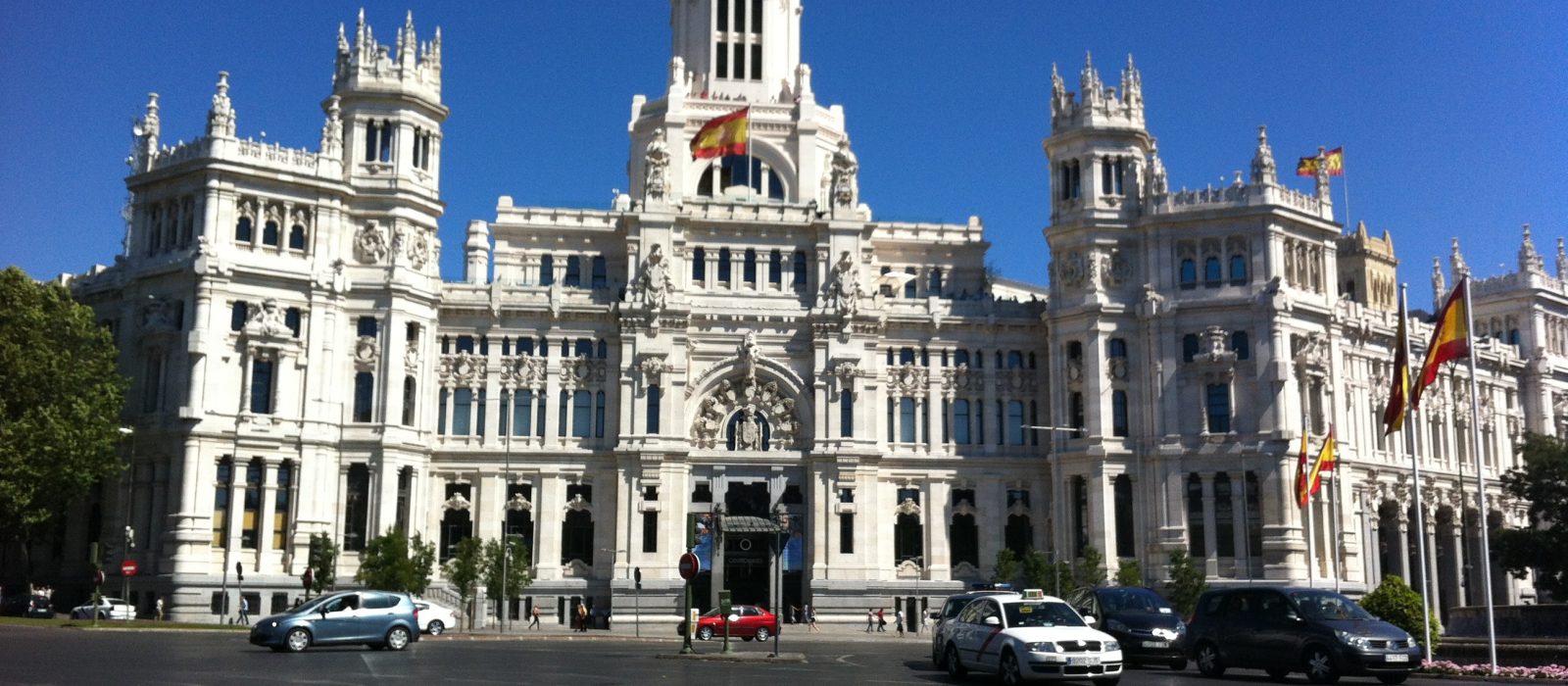
Palacio de Cibeles
Formerly the Palacio de Comunicaciones (Communications Palace) from 1919, it currently serves as the headquarters of the Madrid City Council. Its viewpoint is famous for offering 360° views of the city, similar to the Royal Palace but with a different perspective.
🍂 Otoño
Si visitas Madrid en otoño, el clima se vuelve suave y perfecto para explorar museos y calles históricas. Como es otra de las mejores épocas, verás la ciudad con una luz especial menos masificada. Viste por capas para adaptarte a los cambios de temperatura entre el día y la noche.
What to do in Madrid
Madrid offers vibrant cultural and leisure activities, ranging from music festivals like Veranos de la Villa to traditional markets such as El Rastro. You can enjoy the nightlife in Malasaña, attend the San Isidro Bullfighting Fair in May, or explore haute cuisine at events like Madrid Fusión.
Madrid in one day: express itinerary
If you are short on time, this itinerary allows you to see the essentials by taking advantage of the proximity of the points of interest.
- 09:00 – Museo del Prado: Start early to see Velázquez and Goya before the crowds arrive.
- 11:30 – Parque del Buen Retiro: A brief stroll through this UNESCO Heritage site to connect with nature in the center.
- 13:30 – Mercado de San Miguel: The perfect time for a gourmet appetizer in its historic iron structure.
- 15:30 – Palacio Real and Catedral de la Almudena: Visit the exterior and the Neo-Romanesque crypt in the Austrias district.
- 18:00 – Templo de Debod: End the day with sunset at this Egyptian temple, the perfect conclusion to your visit.
Where to eat in Madrid: local gastronomy
Where to sleep in Madrid
Sol and Los Austrias
The historic and bustling heart of the city, filled with monuments and shops.
Malasaña
An alternative and bohemian neighborhood, epicenter of the 'Movida Madrileña' with vibrant nightlife.
Salamanca
A luxury district featuring haute couture boutiques, elegant restaurants, and stately architecture.
How to Get to Madrid
Madrid is excellently connected by air, train, and road, with Adolfo Suárez Madrid-Barajas Airport (MAD) serving as the main gateway just 15 km away.
| Mode | Station / Point | Destinations / Companies |
|---|---|---|
| Train (AVE) | Madrid-Puerta de Atocha | Direct services to Barcelona, Seville, Valencia, Málaga, Zaragoza (according to Renfe). |
| Bus | Estación Sur (Méndez Álvaro) | Companies: Alsa, Avanza, Socibus. |
| Plane | MAD Airport | 15 km from the center, connected by public transport. |
| Car | Radial roads and ring roads | Access via A-1, A-2, A-3, A-4, A-5, A-6, M-30, M-40. |
Getting Around Madrid
Public transport is efficient and covers the entire city. You can use the metro network and urban buses to reach any point. Furthermore, the city center is largely pedestrianized, making walking the best option for visiting main attractions such as Gran Vía or Plaza Mayor.
Weather in Madrid
Best Time to Visit Madrid
Day Trips from Madrid
If you want to leave the capital, you have several verified nearby options. You can visit Palma or Alcalá de Henares, ideal destinations for a change of scenery. Guadalajara is also available as an excursion option from the city.
Who is Madrid For?
Madrid is a versatile destination receiving over 10 million travelers annually (INE), of which 59% are foreigners. It is perfect for couples seeking culture and romance in El Retiro, families enjoying parks and museums, and backpackers taking advantage of the hostel offerings in Malasaña. History lovers will find a paradise in the Royal Palace (Palacio Real) and El Escorial, while foodies won’t want to miss the tapas route and Michelin-starred restaurants.
Frequently Asked Questions about Madrid
How many days do I need to see Madrid?
The average stay for tourists is 2.06 nights according to the INE. With 2 or 3 days you can cover iconic attractions like the Prado, El Retiro, and the Royal Palace, although to enjoy the gastronomy and neighborhoods at a leisurely pace, 4 days is ideal.
Is Madrid expensive?
Madrid has options for all budgets. An average meal costs between €15-30. Accommodation ranges from €25-40 in hostels to €200-450 in 4-5 star hotels. Museums have varied prices and some offer free entry hours.
What is the best time to visit Madrid?
The best time is Spring and Autumn, avoiding the intense heat of summer where the average temperature is 25°C. Winter is cold with averages of 6°C, but it is pleasant for visiting museums and enjoying winter gastronomy.
How do I get to the center from the airport?
Adolfo Suárez Madrid-Barajas Airport (MAD) is 15 km from the center. You can use public transport (metro or bus) to easily reach areas like Sol or Atocha, or take a taxi from the terminal.
🗺️ Rutas desde Madrid
- How to Get from Madrid to San Sebastián: Distance, Train, Bus & Car
- How to Get from Granada to Madrid: Train, Bus & Car
- How to Get from Madrid to Guadalajara: Distance, Train, Bus & Car
- How to Get from Guadalajara to Madrid: Distance, Train, Bus & Car
- How to Get from Santiago de Compostela to Madrid: Distance, Train, Bus & Car
- How to Get from Madrid to Santiago de Compostela: Distance, Train, Bus & Car
- How to Get from León to Madrid: Train, Bus & Car
- How to Get from Madrid to León: Distance, Train, Bus & Car