Málaga
AndalucíaClimate
Daily budget
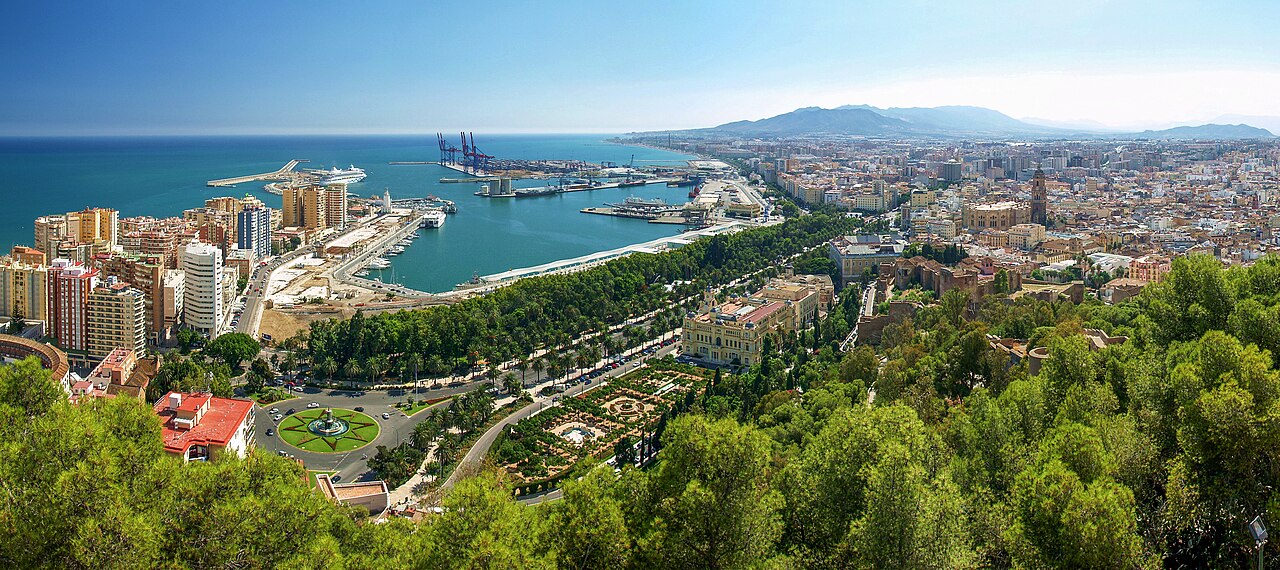
With an annual average of over 1.8 million travelers choosing this coast for their getaways, Málaga has established itself as a destination where history and sunshine go hand in hand without interruption. Here, average summer temperatures reach 26.1°C, creating the perfect setting to enjoy a city that combines world-class museums with accessible urban beaches. It is not just a stopover on the way to the Costa del Sol, but a vibrant cultural hub with 580,000 inhabitants living surrounded by monuments that tell centuries of history.
The must-seesWhat to see in Málaga: the essentials
Santa Iglesia Catedral Basílica de Santa María de la Encarnación (Holy Cathedral Basilica of Saint Mary of the Incarnation)
This majestic building, affectionately known as “La Manquita” (the One-Armed Lady) due to its unfinished tower, began construction in 1528 and halted works in 1782, leaving us a unique testament to Renaissance architecture. Its interior is impressive, designed to inspire devotion and awe, and it is located right in the heart of the historic center, making it impossible to miss while strolling. To visit, note that admission is required and it is advisable to check Mass times if you wish to avoid crowds, as it is an active temple as well as a monument.
Alcazaba of Málaga
As a fortress-palace from the Muslim era, the Alcazaba offers some of the most impressive views of the city and port from its defensive walls. The site has visiting hours from 9 to 20 and requires an entrance ticket, but the walk through its gardens and Nasrid courtyards is worth every euro. It is the ideal starting point to understand the historical stratification of Málaga, situated physically above the Roman Theater and dominating the mountainside.
Picasso Museum Málaga
If you are an art lover, this museum is a must-visit as it houses more than 200 works by the Malaga-born artist Pablo Picasso, covering all stages of his career. Opening hours are from 10 to 19 and also require an entrance ticket, but the opportunity to see the genius’s evolution in his hometown is a unique experience. The rooms are distributed in a 16th-century palace, adding a fascinating contrast between classical architecture and the avant-garde nature of the paintings.
Plaza de Toros de La Malagueta (La Malagueta Bullring)
This unique monument, declared a Site of Cultural Interest, was built in 1874 by the architect Joaquín Rucoba and represents a notable example of Neo-Mudéjar style inaugurated in 1876. The visitor experience is not limited to seeing the arena; it includes a bullfighting museum and historical tours about bullfighting from its origins to the present day, currently belonging to the Provincial Council of Málaga. It is a cultural space that allows understanding a tradition deeply rooted in the province, beyond the bullfighting spectacle itself.
Gibralfaro Castle
Situated on a strategic hill, this 14th-century castle offers panoramic views of the entire city that are unmatched by any other viewpoint. Its visiting hours are from 09 to 18 and require an entrance ticket, but the effort of the climb, whether on foot or by shuttle bus, is rewarded with the immensity of the Mediterranean landscape. From here you can appreciate the urban layout of Málaga and understand why this location was vital for the defense of the square in medieval times.
Other points of interest
- Casa Natal de Picasso (Picasso’s Birthplace): Located in Plaza de la Merced, this historic building is where Pablo Picasso was born in 1881 and recreates the rooms of the 19th-century Malaga bourgeoisie.
- Yacimiento Arqueológico del Museo Thyssen (Archaeological Site of the Thyssen Museum): Reveals a Roman suburban complex with domestic and industrial areas and continuous occupation over centuries, with access included in the general admission fee.
- Teatro Romano de Málaga (Roman Theatre of Malaga): Although sometimes confused in descriptions, it is an essential monument located at the foot of the Alcazaba and is the city’s oldest Roman public construction.
- Calle Marqués de Larios: The main street of the historic center, considered one of the most elegant 19th-century avenues in Spain and currently pedestrianized.
- Jardín Botánico La Concepción (La Concepción Botanical Garden): Founded in the 19th century by the Marquises of Loring, it is a historic romantic-style garden featuring one of the most important collections of tropical plants in Europe.
- Barrio del Soho: Known as the ‘Arts District’, it is a cultural and commercial area with urban art and galleries.
- Muelle Uno: A rehabilitated port area with waterfront restaurants and shops offering promenade walks with views of cruise ships.
- Murallas Medievales de Málaga (Medieval Walls of Malaga): Urban beaches that are part of the city’s tourist offer alongside historical monuments, established as a sun-and-sea destination.
- La Coracha: A sheltered wall corridor of Nasrid origin connecting the Alcazaba with Gibralfaro Castle via a cobblestone path.
- Plaza de la Merced: Also known as Plaza del Mercado or Plaza de Riego, it is one of the most beautiful squares, dating back to the 15th century, and houses the Picasso Foundation.
- Plaza de la Constitución: The heart of Malaga’s historic center, a meeting point and venue for events.
- Centre Pompidou Málaga: Branch of the famous Parisian museum, featuring a collection of modern and contemporary art.
- Puente Nuevo de Ronda (New Bridge of Ronda): An iconic 18th-century monument situated above cliffs, a must-visit destination for excursions from the province.
- Benalmádena Pueblo: Historic core declared a Historic-Artistic Ensemble, featuring white streets and flower pots on facades.
- Edificio de la Aduana (Customs Building): A neoclassical building from 1826 designed by Manuel Martín Rodríguez, located opposite the Alcazaba and headquarters of the Museo de Málaga.
- Caminito del Rey: A safe hiking trail rehabilitated in 2015 with hanging walkways over the Gaitanes gorge, with entry managed online or at the ticket office.
- Reserva Natural Montes de Málaga (Montes de Málaga Nature Reserve): A cultural space located inside the emblematic Plaza de Toros de La Malagueta exhibiting bullfighting costumes and artworks related to bullfighting.
🍂 Otoño
Si visitas Málaga en otoño, el clima sigue siendo benigno dentro de la mejor época hasta octubre. Es un momento excelente para visitar museos con menos aglomeraciones turísticas. Revisa siempre el pronóstico del tiempo, ya que las lluvias pueden aparecer ocasionalmente.
What to do in Malaga
Malaga offers specific activities ranging from immersing yourself in the Feria de Málaga in August—a major summer festival lasting a week with marquees and music—to experiencing the solemnity of Holy Week in March or April with its artistic processions. You can wander through the Mercado Central de Atarazanas, a 19th-century iron building with a monumental Nasrid gate, to sample local gastronomy, or simply enjoy a stroll along Muelle Uno watching the cruise ships.
Málaga in one day: express itinerary
If you only have 24 hours, this is the optimized plan to see the essentials without rushing too much:
- 09:00 – Alcazaba of Málaga: Start early to avoid queues and enjoy the morning views before the temperature rises.
- 11:00 – Málaga Cathedral: Walk from the fortress to the center to admire the Renaissance interior of “La Manquita” (The One-Armed Lady).
- 13:30 – Atarazanas Market: The perfect time for a snack of Malaga-style fried fish or an espeto in the heart of the market.
- 16:00 – Picasso Museum: Dedicate the afternoon to culture by visiting over 200 works by the artist in the 16th-century palace.
- 19:00 – Gibralfaro Castle: Head up for sunset; the panoramic views of the entire city as the sun goes down are unforgettable.
Where to eat in Málaga: local gastronomy
Where to sleep in Málaga
Historic Center
Ideal for immersing yourself in the city's history, culture, and gastronomy.
Soho
Bohemian and artistic neighborhood filled with murals, art galleries, and trendy spots.
Pedregalejo and El Palo
Charming former fishing neighborhoods, famous for their beaches and beach bars.
How to get to Málaga
The city’s connectivity is excellent, with options for all budgets and origins:
| Medio | Detalles | Ubicación / Compañías |
|---|---|---|
| Avión | Aeropuerto de Málaga-Costa del Sol (AGP) a 8 km del centro. | Conexiones internacionales y nacionales. |
| Tren | Estación de tren Málaga Centro Alameda (sin AVE en esta estación específica). | Cercanías y media distancia. |
| Autobús | Estación de Autobuses de Málaga. | Compañías: Alsa, Avanza. |
| Coche | Acceso mediante carreteras principales. | Carreteras: A-7, AP-7, A-45. |
Getting around Málaga
The city center is predominantly pedestrian, making walking the best option to visit the Cathedral, the Alcazaba, and main streets like Marqués de Larios. For longer distances or to reach Gibralfaro Castle, you can use the urban bus, which covers the entire city efficiently. You do not need a car to enjoy the urban core, and in fact, parking in the historic center can be complicated and expensive.
Weather in Málaga
Best time to visit Málaga
Day trips from Málaga
If you have extra time, the province offers incredible destinations just a short distance away. Ronda is a city perched on cliffs on both sides of the Tajo Gorge, where the 18th-century Puente Nuevo (New Bridge) is the landscape’s most iconic monument. Nerja and Marbella are classic coastal options for enjoying beaches and atmosphere, being established destinations for visitors seeking sun and sea to complement their cultural visit. You can also visit Benalmádena Pueblo, a historic core declared a Historic-Artistic Ensemble with white streets and flower pots on the facades.
Who is Málaga for?
Málaga is a versatile destination that works for almost everyone: it is ideal for families looking for safe beaches in Pedregalejo, for couples wanting romance in Soho and Michelin-starred dinners, and for backpackers who can stay in hostels for €20-35. History lovers will find a goldmine here with the Alcazaba and the Roman Theatre, while foodies will enjoy the espeteros (sardine skewers) and the Atarazanas Market. With an average stay of 2.05 nights, it is perfect for a weekend getaway or a long holiday bridge.
Frequently asked questions about Málaga
How many days do I need to see Málaga?
With an average stay of 2.05 nights according to statistics, two or three days are enough to see the main attractions such as the Alcazaba, the Cathedral, and the Picasso Museum, although to enjoy the beaches and excursions to Ronda or Nerja, the ideal is to plan a week.
Is Málaga expensive?
Málaga has options for all budgets: you can eat for €15-25 at a mid-range meal, stay in a hostel for €20-35 per night, or in 3-star hotels between €60-120. Prices are competitive compared to other European capitals.
What is the best time to visit Málaga?
The best time is from April to October, avoiding the intense heat of July and August if you do not like high temperatures (average of 26.1°C in summer). Winter is mild with an average of 13.7°C, ideal for cultural tourism without crowds.
How do I get to Málaga from Madrid?
You can arrive by plane at Málaga-Costa del Sol Airport (AGP) or by bus from the Málaga Bus Station with companies like ALSA and Avanza. There is also a road connection via the A-45.
What monuments can’t I miss?
The essentials are the Alcazaba (Muslim fortress), the Cathedral (started in 1528), the Gibralfaro Castle (panoramic views), and the Picasso Museum (more than 200 works). All are in the center or very close by.
🗺️ Rutas desde Málaga
- How to Get from Ronda to Malaga: Distance, Train, Bus and Car
- How to Get from Malaga to Ronda: Distance, Train, Bus and Car
- How to Get from Cadiz to Malaga: Distance, Train, Bus and Car
- How to Get from Malaga to Cadiz: Distance, Train, Bus and Car
- How to Get from Malaga to Granada: Distance, Train, Bus and Car
- How to Get from Granada to Malaga: Distance, Train, Bus and Car
- How to Get from Malaga to Seville: Distance, Train, Bus and Car
- How to Get from Seville to Malaga: Distance, Train, Bus & Car