Segovia
Castilla y LeónClimate
Daily budget
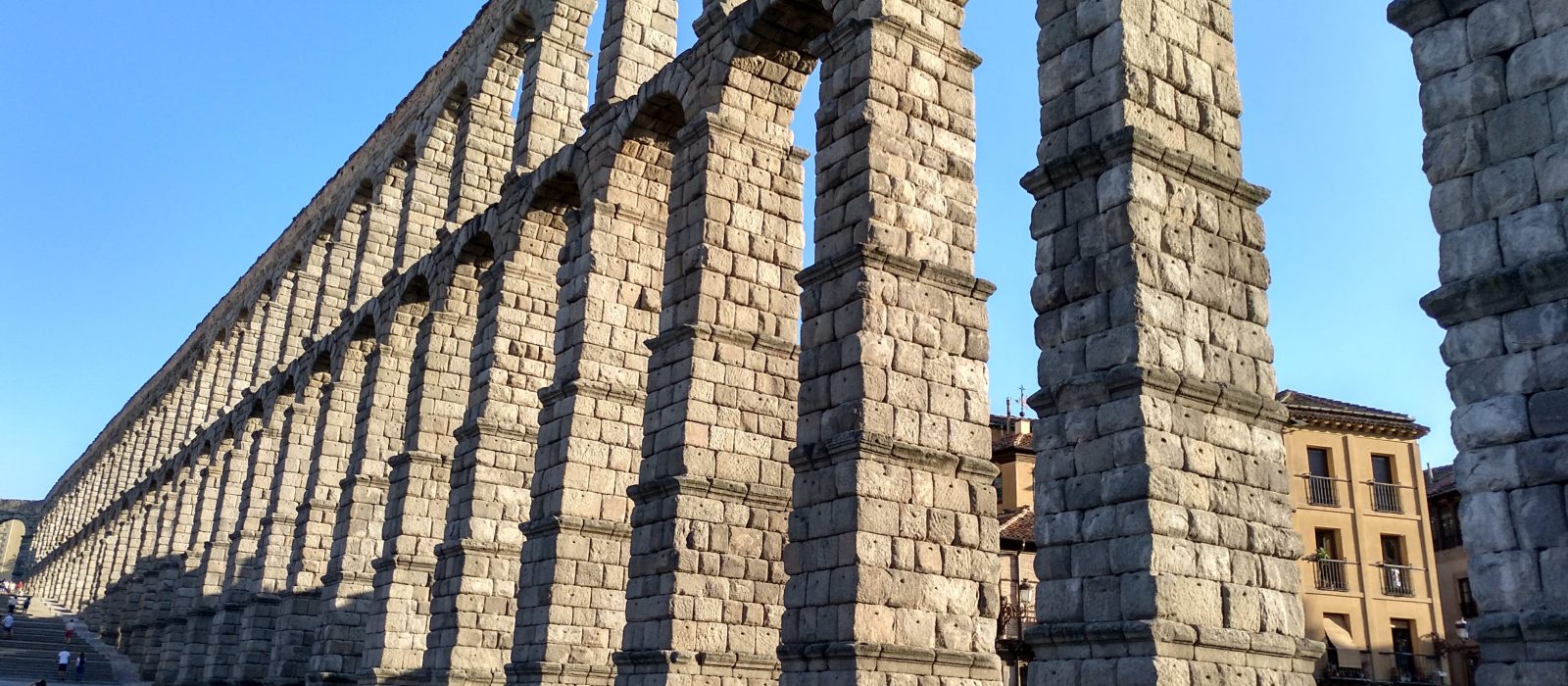
Stand beneath the shade of the 167 granite arches at Azoguejo and lift your gaze to the silhouette cutting across the sunset sky; there, where the medieval wall merges with the elevated section of the aqueduct at the Mirador del Postigo del Consuelo (Postigo del Consuelo Viewpoint), you will understand why 320,970 travelers a year (according to the INE) choose this Castilian capital. It is not just a city of 53,000 inhabitants; it is a living stage where the Eresma River whispers at the foot of a fortress that inspired fairy tales, and where the scent of firewood from traditional ovens fills the cobblestone streets of the Jewish Quarter.
The must-seesWhat to See in Segovia: The Essentials
Real Alcázar de Segovia (Royal Alcázar of Segovia)
This medieval fortress built upon a rock is, without a doubt, the city’s most recognizable icon, historically serving as a royal palace, prison, and even a military academy. Its architecture is so unique that it is said to have inspired the famous Disney castle, making it a must-visit to understand the history of the Spanish monarchy. Although heritage records date it to the year 1200, its stylistic evolution is complex and fascinating. When visiting, do not limit yourself to the façade; step inside to discover its historic halls and enjoy the views from its towers, which dominate the entire valley.
Jardines del Alcázar (Alcázar Gardens)
Before crossing the fortress gates, stroll through this landscaped area, declared a Bien de Interés Cultural (Asset of Cultural Interest), which serves as a perfect prelude to the monumental visit. Here you will find an moving monument dedicated to the heroes of the War of Independence, Daoiz and Velarde, by the Segovian sculptor Aniceto Marinas. It is an ideal spot to catch your breath, offering natural viewpoints towards Pinarillo and the valley of the Eresma and Clamores rivers, strategically located next to the Casa de la Química. Access is included with the Alcázar ticket or can be enjoyed freely from certain exterior points.
Azoguejo
This square is the recommended starting point for exploring Segovia’s monumental axis on foot, situated right in front of the tallest section of the Aqueduct. Historically, it functioned as a souk and communications hub, and its name curiously derives from ‘small souk’. Its urban layout, characterized by low, arcaded houses, further highlights the monumentality of the Roman work presiding over it. Additionally, the square is home to the Romanesque church of Santa Columba, documented in the Cantigas of Alfonso X, adding an extra layer of history to your initial stop.
Mirador del Postigo del Consuelo (Postigo del Consuelo Viewpoint)
To appreciate the true scale of Roman engineering, this viewpoint is privileged, as it is where the Wall meets the elevated section of the Roman Aqueduct. From here, you can count and admire the 167 arches perfectly integrated into the urban landscape, a view that defines the essence of the city. Access is pedestrian and permanently free; it is highly recommended to visit at sunset to capture the best photograph of the monumental ensemble in the golden light of late day.
Torreón de Lozoya
This building, possibly of Roman origin, was configured between the 15th and 16th centuries as a fortified house declared a Bien de Interés Cultural (Asset of Cultural Interest). It stands out for its blend of late Gothic, Mudéjar, and Renaissance styles, consisting of a large main tower and a smaller one with a primitive courtyard. It currently houses the Museo de la Fundación Torreón de Lozoya in Plaza de Colmenares, hosting temporary exhibitions and cultural visits that are well worth experiencing.
Other points of interest
The Monastery of Santa María del Parral is a 15th-century Hieronymite monastery with a Gothic-Mudejar cloister located beside the Eresma River. The Walls of Segovia preserve a Roman origin, featuring a 3 km perimeter and 5 historic gates. The Casa de los Picos (House of Spikes) is a 15th-century palace with a unique granite façade adorned with diamond-shaped spikes, now housing an art school. The Convent of the Discalced Carmelites was founded by Saint John of the Cross in 1586 and contains his tomb. The Royal Mint (Real Casa de la Moneda) was Spain’s first mechanized mint (1583), designed by Juan de Herrera, and today operates as an industrial museum. The Church of La Vera Cruz is a dodecagonal Romanesque church (1208), attributed to the Knights Templar and one of the most unique in Spain. The Church of San Martín is a 12th-century Romanesque church, one of the oldest in Segovia, featuring apses and arcades. The Mirador de la Pradera de San Marcos is a natural viewpoint situated on the hillside opposite the Alcázar, offering the most complete panoramic view of the monument and the Eresma River valley; it is a classic photographic spot to capture the Alcázar within its full landscape setting, with free access via a trail from the historic center, recommended at sunset. The Cathedral of Segovia is the last Gothic cathedral built in Spain (16th century), known as “The Lady of Cathedrals.” The Royal Site of La Granja de San Ildefonso is an 18th-century Bourbon royal palace with spectacular gardens and fountains in the style of Versailles, located 11 km from Segovia. The Church of San Millán is another 12th-century Romanesque church, one of the oldest in the city, featuring apses and arcades. Finally, the Plaza Mayor of Segovia is the city’s nerve center, home to the Cathedral, the Town Hall, and the Juan Bravo Theater.
🍂 Otoño
Si visitas Segovia en otoño, el clima se vuelve más fresco y es la temporada perfecta para probar los famosos asados locales. Lleva siempre un paraguas en la mochila, ya que las lluvias pueden aparecer de sorpresa.
What to do in Segovia
Segovia offers vibrant cultural and traditional activities that go beyond simple sightseeing, centered around its local festivals and markets. If you visit the city in February, do not miss the Festival of Saint Agatha, a unique celebration where married women and widows ‘rule’ the city, starring in traditional dances and the burning of the pelele (effigy). In May, the atmosphere transforms with the Titirimundi Festival, an international puppet and marionette festival that turns Segovia into a vibrant, colorful stage. For a more everyday experience, you can explore the Mercado de los Huertos, the main covered municipal market where fresh local products are found, or visit the various open-air markets held weekly in different squares. If you are looking for specific goods, the Organic Products Market takes place on the first Saturday of each month in the Plaza del Doctor Laguna.
Segovia in one day: express itinerary
If you are short on time, this itinerary will allow you to cover the essentials by walking through the historic center:
- 09:00 – Azoguejo: Start your day here to see the Aqueduct in the morning light with fewer crowds, visiting the Church of Santa Columba along the way.
- 10:30 – Calle Mayor and Plaza Mayor: Walk along the commercial axis to reach the nerve center to admire the Cathedral (“The Lady of Cathedrals”) and the Town Hall.
- 13:00 – Royal Alcázar of Segovia: Dedicate the afternoon to exploring the medieval fortress that inspired Disney and its historic halls.
- 15:00 – Alcázar Gardens: Relax in the landscaped area and enjoy the views towards the valleys of the Eresma and Clamores rivers.
- 17:30 – Mirador del Postigo del Consuelo: End the day at this panoramic point to watch how the sunset light illuminates the 167 arches of the aqueduct integrated into the city walls.
Where to eat in Segovia: local gastronomy
Where to sleep in Segovia
The Historic Center
The heart of Segovia, ideal for exploring the main monuments on foot, such as the Aqueduct, the Cathedral, and the Alcázar, with a vibrant selection of shops and restaurants.
The Jewish Quarter
A neighborhood with unique medieval charm, perfect for those interested in history and culture, and very close to the main tourist attractions.
San Salvador and San Millán
Two neighborhoods with a more local atmosphere, close to the Aqueduct and the historic center, offering a quieter option without straying far from the main areas of interest.
How to get to Segovia
The connection to the city is simple, although it is important to consider the available options depending on your point of origin.
| Medio | Duración | Precio aprox. | Frecuencia |
|---|---|---|---|
| Tren | Variable | Variable | Según Renfe |
| Bus / Coche | Variable | Variable | Diario |
It is essential to know that the Segovia train station does not have AVE service, so travel times may vary compared to other high-speed connections. Nearby cities like Madrid facilitate daily or weekend access.
How to get around Segovia
Once in the city, urban transport is mainly based on the city bus, which connects different points of interest. However, given the compactness of the historic center and the proximity of the main monuments (Aqueduct, Cathedral, Alcázar), the best way to get around is on foot. The city’s design invites you to get lost in its streets, and attractions like the Mirador de la Pradera de San Marcos are accessible via a path from the historic center.
Weather in Segovia
Best time to visit Segovia
Day trips from Segovia
If you decide to extend your stay or want to venture out of the city, there are interesting options in nearby towns. Ávila, also in Castile and León, is a perfect destination to complement your trip, offering another impressive medieval wall and a different yet complementary historic ensemble. Madrid, the capital of Spain, is very close and allows for a quick day trip to swap the pace of a monumental city for metropolitan buzz and its museums. These excursions are easy to organize given the region’s connectivity.
Who is Segovia for?
Segovia is a versatile destination that fits perfectly for couples seeking a romantic getaway among medieval streets and viewpoints, as well as for families who can enjoy the magic of the Alcázar (castle) and the puppets at the Titirimundi Festival. It is ideal for history lovers, given its UNESCO World Heritage status since 1985 and the density of Romanesque and Gothic monuments. Foodies will find paradise in its traditional roast restaurants and protected gastronomy. Although it has budget options, its tourist profile (28% foreigners according to INE) makes it very accessible for all types of travelers.
Frequently asked questions about Segovia
How many days do I need to see Segovia?
The average traveler stay is 1.82 nights (INE), suggesting that a weekend or two full days is enough to see main attractions like the Aqueduct, the Alcázar, and the Cathedral, and to enjoy local cuisine without rushing.
Is Segovia expensive?
Segovia offers options for all budgets. An average meal can cost between €12-18, and you can find accommodation from €18-30 per night in hostels up to 4-5 star hotels ranging from €90-200. Monuments have standard entrance fees, and there are many viewpoints and squares with free access.
When is the best time to visit Segovia?
The best time is from June to September, when the average summer temperature is 21.2°C, ideal for walking. In winter, the average temperature drops to 5.1°C, which can be cold but perfect for enjoying wood-fired oven cuisine.
How do I get to Segovia from Madrid?
Segovia is very close to Madrid, being one of the nearby cities for day trips. You can reach it by train (bearing in mind that the Segovia station is not an AVE stop) or by bus/car. The proximity allows for easy day visits or short stays.