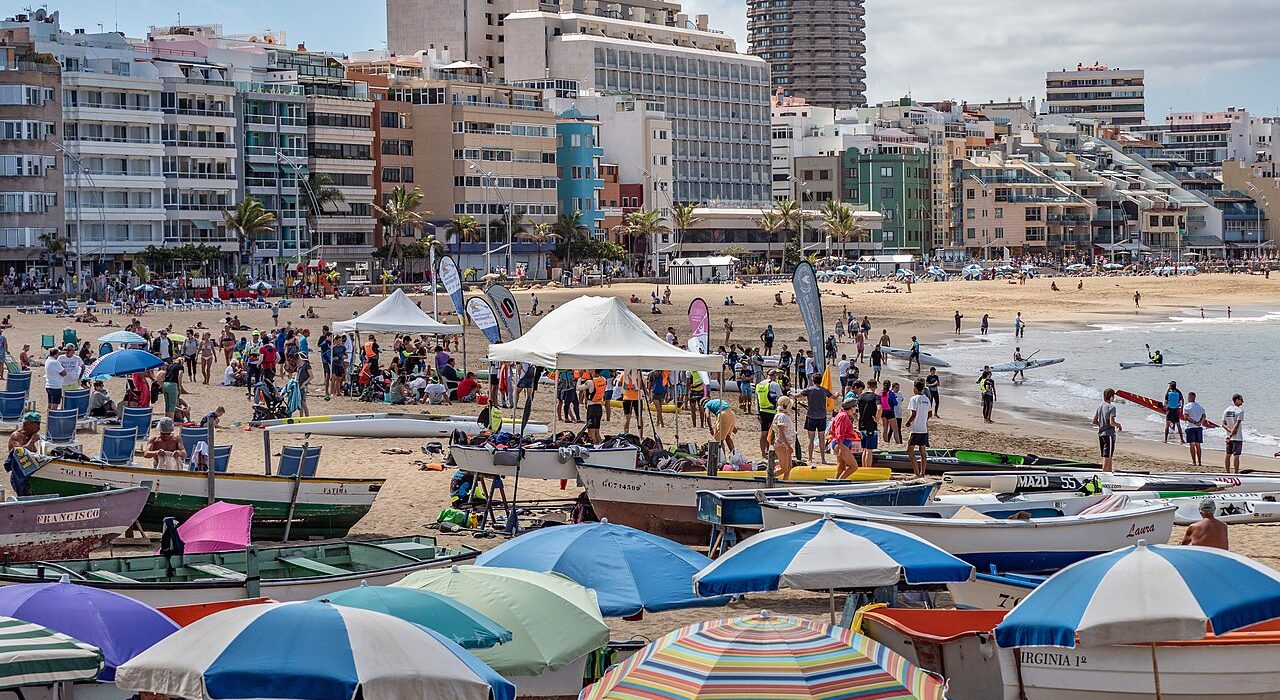
Las Palmas de Gran Canaria
CanariasClimate
Daily budget
Imagine strolling down a cobblestone street where the scent of sea salt mingles with volcanic earth, as the golden light of sunset bathes colonial facades that have witnessed centuries of history. Las Palmas de Gran Canaria is not merely a stop on your journey; it is a warm embrace where life is enjoyed at a leisurely pace. From bustling markets to urban beaches, every corner invites you to pause and breathe in the unique atmosphere found only in the capital of the Canary Islands.
The must-seesWhat to See in Las Palmas de Gran Canaria: The Essentials
Las Palmas de Gran Canaria boasts a diverse historical and cultural heritage, ranging from cultural landscapes declared World Heritage Sites to Modernist buildings in the city center.
Risco Caído and the Sacred Mountains of Gran Canaria
Inscribed as a UNESCO World Heritage Site, this cultural landscape features cave sanctuaries and pre-Hispanic structures in the center of the island, representing the culture of the ancient Canarian inhabitants and their adaptation to the volcanic environment. Although located inland, it is an essential cultural excursion from the capital for understanding the island’s origins. Visiting requires advance planning due to its location and conservation regulations for the archaeological site. It is a place where history is read in the stone and in artificial caves excavated into basalt rock.
Poema del Mar Aquarium
Designed by architect Carlos Ferrater, this aquarium is a landmark in the port of Las Palmas, renowned for its aquatic diversity and avant-garde architecture. It showcases oceanic ecosystems and diverse marine life, including sharks and penguins, in a colorful journey across different continents. Buying tickets in advance during high season is recommended to avoid long queues at the box office and ensure access to the main exhibitions.
Diocesan Museum of Sacred Art
Located in Plaza de Santa Ana, next to the Cathedral of Santa Ana (Catedral de Santa Ana), this museum houses works of great national and international historical significance within a building of traditional architecture. It contains a permanent collection of paintings, sculptures, and sacred goldsmithing spanning from the 15th to the 19th centuries, including notable pieces from the Flemish school and Canarian artists. It is a complementary space to the religious visit, allowing visitors to contemplate the sacred artistic legacy of the Diocese of the Canary Islands in great detail.
Pérez Galdós Theater
Designed in the 19th century by Francisco Jareño as the city’s main cultural venue, its current appearance results from the reconstruction following the 1928 fire, carried out by Miguel Martín Fernández de la Torre with decorations by Néstor. Located in the city center within the historic Triana neighborhood, it regularly programs opera, theater, and classical music in its main hall. It is a living monument where architecture and performing arts fuse to offer high-level cultural experiences.
Viera y Clavijo Botanical Garden
This is the largest botanical garden in Spain, dedicated exclusively to the conservation and study of the endemic flora of the Canary Islands in a privileged natural setting.
Triana Neighborhood
This historic commercial area stands out for its beautiful Modernist buildings and vibrant urban life, inviting visitors to stroll and enjoy local commerce in the heart of the city.
Alfredo Kraus Auditorium
This modern auditorium and congress palace boasts a spectacular seaside location. Dedicated to the famous Canarian tenor, it serves as a venue for international events.
🍂 Otoño
Si visitas Las Palmas de Gran Canaria en otoño, el clima se mantiene suave ideal para caminar por Vegueta. Aprovechas las ventajas de la temporada baja con menos turismo estival. Lleva siempre una chaqueta ligera por si refresca por la noche.
What to do in Las Palmas de Gran Canaria
Las Palmas de Gran Canaria offers vibrant cultural activities such as Carnival, foundational festivals with bonfires on the beach, and visits to historic markets brimming with local products.
If you are lucky enough to visit in February or March, the Carnaval de Las Palmas de Gran Canaria (Las Palmas de Gran Canaria Carnival) is one of Spain’s most important festivals, world-famous for its Drag Queen Gala, colorful parades, and mogollones filled with music. In June, do not miss the Fiestas Fundacionales de la Ciudad (San Juan) (City Founding Festivals – San Juan), a celebration of the city’s origins that magically culminates on Saint John’s Eve with lit bonfires and fireworks launched directly onto the sand of Playa de las Canteras.
For a more everyday yet equally authentic experience, getting lost among the stalls of the Mercado de Vegueta (Vegueta Market), the oldest in the city, will allow you to see firsthand the fresh produce, meats, and fish that feed the locals. Alternatively, the Mercado del Puerto (Port Market) combines its modernist iron structure with a tapas and dining area ideal for trying the local cuisine without leaving the premises.
Las Palmas de Gran Canaria in one day: express itinerary
If you only have 24 hours, this optimized itinerary allows you to cover the essentials of the capital, from its colonial history to its modern seaside life.
- 09:00 – Barrio de Vegueta: Start your day in the old town to immerse yourself in history and culture, visiting the Catedral de Santa Ana (Santa Ana Cathedral) and the Museo Diocesano (Diocesan Museum) before the midday heat arrives.
- 11:30 – Teatro Pérez Galdós: Walk towards the Triana neighborhood to admire the modernist architecture and the interior of this cultural coliseum designed in the 19th century.
- 13:30 – Mercado del Puerto: Stop here for an early lunch; take advantage of the iron structure and the dining area to eat something typical near the water.
- 16:00 – Acuario Poema del Mar: Head to the port to explore ocean ecosystems and see sharks and penguins in an environment designed by Carlos Ferrater.
- 19:00 – Auditorio Alfredo Kraus y Playa de Las Canteras: End the day in the Santa Catalina area, enjoying the view of the seaside auditorium and the cosmopolitan atmosphere of the beach at sunset.
Where to eat in Las Palmas de Gran Canaria: local gastronomy
Where to sleep in Las Palmas de Gran Canaria
Vegueta
The old town, perfect for immersing yourself in history and culture.
Santa Catalina
A vibrant area near the port and Las Canteras Beach, with lively nightlife and a cosmopolitan atmosphere.
Ciudad Jardín
A quiet residential neighborhood with English-style architecture and green areas.
How to Get to Las Palmas de Gran Canaria
The city is connected primarily by air through Gran Canaria Airport and by road via the GC-1, GC-2, and GC-3 motorways.
| Mode | Details / Duration | Approx. Price | Frequency |
|---|---|---|---|
| Plane | Gran Canaria Airport (LPA), 25 km from the city. | Variable depending on origin | Daily |
| Bus (Guagua) | From the San Telmo Bus Station. Companies: Guaguas Municipales, Global. | Economical | Frequent |
| Car | Via the GC-1, GC-2, and GC-3 roads connecting the island. | Fuel + Rental | Flexible |
Getting Around Las Palmas de Gran Canaria
Urban transport relies mainly on the city bus network, managed by Guaguas Municipales, which covers most points of interest within the urban area.
The San Telmo Bus Station (Estación de Guaguas de San Telmo) acts as the main hub for travel. If you plan excursions inland, such as to Risco Caído, or to other parts of the island, you will need to use the services of the Global company. The system is efficient and will allow you to reach from residential neighborhoods to tourist areas without needing your own car within the city.
Weather in Las Palmas de Gran Canaria
Best Time to Visit Las Palmas de Gran Canaria
Day Trips from Las Palmas de Gran Canaria
From the capital, it is possible to take day trips to other towns in the region to explore different facets of the island of Gran Canaria.
Although the city itself offers much to see, its strategic location allows easy access to other points of interest. The nearby towns of the region offer interesting contrasts and are perfect destinations to complete your experience in the archipelago, taking advantage of the GC-1, GC-2, and GC-3 road network that facilitates mobility across the island territory.
Who is Las Palmas de Gran Canaria For?
With 483,923 annual travelers (INE) and 43% foreigners, Las Palmas is a versatile destination ideal for couples, families, and history lovers seeking culture and beach in one place.
It is perfect for history lovers thanks to its old town in Vegueta and museums like the Diocesan Museum. Foodies will find a paradise in its markets and Michelin-starred restaurants. Families will enjoy the safety of the Ciudad Jardín neighborhood and the Poema del Mar Aquarium, while travelers on a tight budget can opt for hostels in Santa Catalina for €20–35 per night. With an average stay of 3.04 nights, it is the perfect place for a short but intense getaway.
Frequently Asked Questions about Las Palmas de Gran Canaria
How many days do I need to see Las Palmas de Gran Canaria?
Based on the number of main attractions such as the Aquarium, the Diocesan Museum (Museo Diocesano), and the historic neighborhoods, the average traveler stays 3.04 nights (INE). This is enough time to explore Vegueta and Triana and enjoy the beaches at a leisurely pace.
Is Las Palmas de Gran Canaria expensive?
Not necessarily. Estimated prices indicate you can eat for €15–25 and find hostel accommodation from €20–35 per night. Three-star hotels range from €60–100, making it affordable compared to other European destinations.
When is the best time to visit Las Palmas de Gran Canaria?
The best time is spring and autumn, when temperatures are pleasant (averaging 24°C in summer and 18°C in winter). It is recommended to avoid late summer due to the possibility of occasional calimas (dust storms).
How do I get to Las Palmas de Gran Canaria from Madrid?
The most direct way is to fly to Gran Canaria Airport (LPA), located 25 km from the city. Once there, you can take a bus from the San Telmo Bus Station (Estación de Guaguas de San Telmo) or use the GC-1, GC-2, or GC-3 highways if you rent a car.