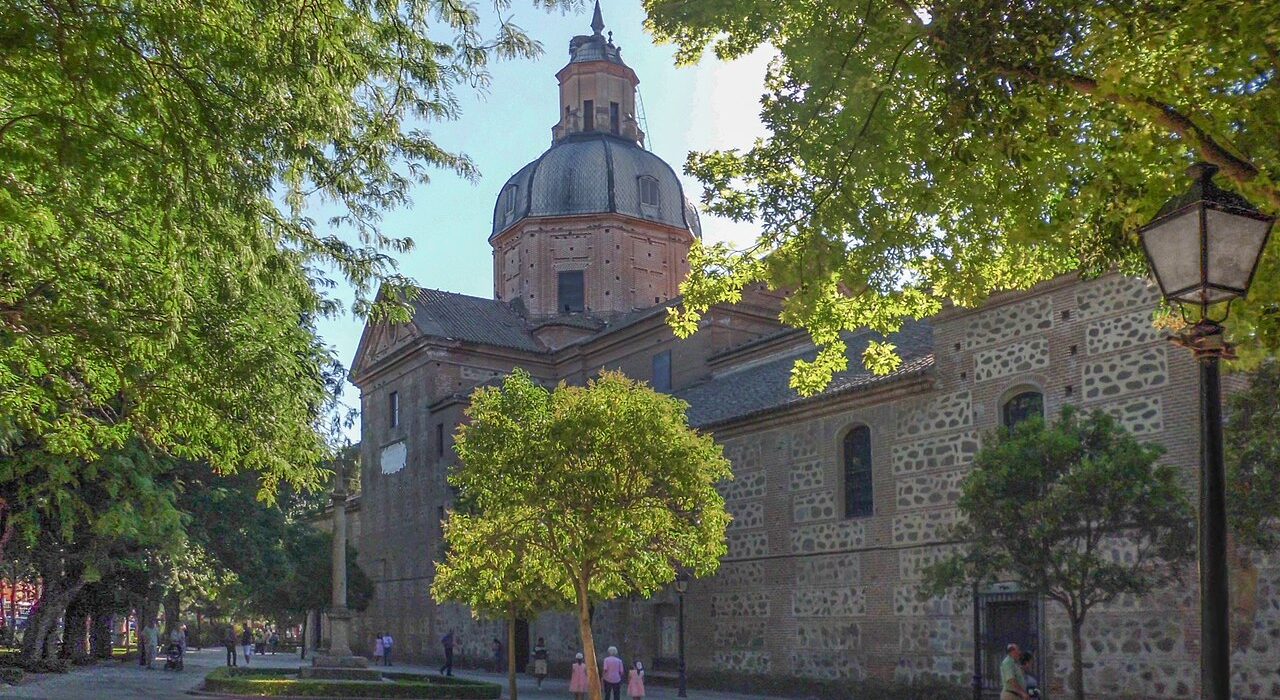
Talavera de la Reina
Castilla-La ManchaClimate
Walk along the right bank of the Tagus River at sunset and you’ll see how the golden light brings out the blues and yellows of the ceramics on the facades of the Casco Histórico (Old Town). With 83,000 inhabitants buzzing between the river and the plain, this city of Toledo invites you to while away the time among monuments that recount royal battles and kiosks where the aroma of fried garlic is legendary. You don’t just come here to pass through; you come to discover the heart of Spanish ceramics and to enjoy a cuisine with deep roots in the land of La Mancha.
The must-seesWhat to see in Talavera de la Reina: the must-sees
Laurel of the First Centenary of the Battle of Talavera
This monument commemorates a crucial historical event: the Battle of Talavera of 1809, where Anglo-Spanish troops defeated the French during the Peninsular War. It is a landmark that connects you directly with the region’s military past and the city’s strategic importance. When visiting, note the solemnity of the site and its location, which invites reflection on how this conflict gave its name to a famous British military march still played today.Monument to Joselito “El Gallo”
Dedicated to one of the most legendary figures in Spanish bullfighting, this monument pays tribute to the charisma and bullfighting history of the area. It is an essential stop for understanding the local culture and the passion that the world of bullfighting inspires in Castile-La Mancha. Notice the details of the sculpture, which capture the essence of a bullfighter who defined an era and is still fondly remembered in the city’s streets.Monument to Fernando de Rojas
This tribute honors the author of “La Celestina,” one of the crowning works of world literature, linking Talavera to the Spanish Golden Age. It is a reminder of the city’s cultural weight and its connection to great literary geniuses. When passing by, it is worth stopping for a moment to appreciate the figure of the writer and remember that his legacy transcends the borders of the province of Toledo.Old Tower of Ilta
Remains of a defensive structure that has watched over the city’s history for centuries, this tower is a silent testimony to the ancient walls and fortifications. It represents the resilience and strategic importance Talavera once had as a frontier stronghold between kingdoms. A visit offers a unique perspective on the military architecture of the past and how the urban landscape around it has evolved.General Services of Talavera de la Reina
Although its name sounds administrative, this monument reflects the organization and development of public infrastructure in the city over time. It is an example of how functional architecture can also hold historical and aesthetic value within the urban fabric. Observe its design and location to better understand how the growth of services has been planned for the more than 83,000 residents who live here.Other points of interest
- Queen Maria of Portugal: Monument recalling the royal figure linked to local history.
- Fray Hernando de Talavera: Tribute to the clergyman who gives his name to one of the city’s districts.
- Talavera Light Aircraft: A curious monument referencing aviation in the area.
- Puerta de Sevilla (Seville Gate): Historic remains evoking the old entrances to the city.
- Vetton Ram’s Head: Symbol of the pre-Roman culture present in the region.
- Cortijo de Valdelafuente: A place with history that is currently submerged beneath the reservoir.
- Monument to the Armed Forces: Impressive ceramic mural presided over by a Spanish flag.
- Monument to the Farmer and the Livestock Breeder: Tribute to the traditional trades that sustain the local economy.
- Old Mill Wheels: Decorative elements recalling the industrial history along the river.
- Ceramic Mural of the City: A burst of color showcasing the mastery of local artisans.
- Brotherhood of San Isidro: Gathering point for the religious and festive traditions of the countryside.
🍂 Otoño
El clima se vuelve más suave y hay menos turistas después del verano. Es perfecto para visitar los museos de cerámica con tranquilidad. Lleva siempre un paraguas pequeño por si acaso llueve, ya que las precipitaciones aumentan.
What to do in Talavera de la Reina
Talavera de la Reina offers specific activities ranging from immersing yourself in medieval history to enjoying the outdoors along the Tagus River. You can wander through the Casco Histórico (Old Town) to admire the ceramics on the facades or visit the Zona de La Alameda, the city’s main green space, ideal for a family picnic. If you’re traveling on special dates, don’t miss the Mercado Medieval (Medieval Market) in December, when the old town transforms with craft stalls and street theater, or experience the intensity of the Fiestas de la Virgen del Prado in September with its running of the bulls and processions.
Talavera de la Reina in one day: express itinerary
- 10:00 AM – Casco Histórico: Start your day strolling through the cobblestone streets to see Talavera ceramics on the facades and visit the Basílica del Prado.
- 12:30 PM – Monumento a Joselito “El Gallo”: Take a moment to appreciate local bullfighting culture before heading to the river area.
- 14:30 PM – Lunch by the Puente Viejo: Enjoy conejo al ajillo (garlic rabbit) at the traditional kiosks with views of the Tagus.
- 17:00 PM – Zona de La Alameda: Stroll through this green setting to digest and relax by the water.
- 19:00 PM – Laurel del Primer Centenario: End the day reflecting on military history at this emblematic monument.
Where to eat in Talavera de la Reina: local gastronomy
Where to stay in Talavera de la Reina
Casco Histórico
El corazón de la ciudad con calles empedradas, plazas tradicionales y la famosa cerámica talaverana en fachadas y edificios. Alberga los monumentos más importantes y ofrece un ambiente tranquilo ideal para pasear.
Barrio de San Antón
Zona residencial tradicional situada cerca del río Tajo, conocida por su tranquilidad y proximidad al puente Viejo. Es un área con encanto local pero con menos oferta turística directa que el centro.
Ensanche o Centro Moderno
La zona comercial y de servicios alrededor de la Avenida de Portugal y la Calle del Carmen, donde se concentran tiendas, bancos y restaurantes modernos. Ofrece mayor comodidad y accesibilidad para el visitante actual.
Barrio de Puerta de Cuartel
Área urbana consolidada que conecta el centro con las zonas de expansión al norte, caracterizada por ser principalmente residencial y de paso. Cuenta con parques locales y servicios básicos para residentes.
Zona de La Alameda
Entorno verde junto al río Tajo que funciona como el principal pulmón y zona de ocio al aire libre de la ciudad. Es el lugar preferido para el descanso familiar y eventos estacionales al aire libre.
How to get to Talavera de la Reina
| Medio | Duración | Precio aprox. | Frecuencia |
|---|---|---|---|
| Tren (Estación Talavera de la Reina) | Variable según origen | Según Renfe | Diaria (sin AVE) |
| Avión (Aeródromo de Lanzahíta) | Corta distancia local | Variable | Limitada |
| Coche | Depende de la ruta | Gasolina + Peajes | Libre |
How to get around Talavera de la Reina
To get around the city, you have an urban bus service that connects the different neighborhoods and points of interest. It’s the most practical option for getting from the Ensanche to the Casco Histórico or the Zona de La Alameda without worrying about parking. Walking is also an excellent option, especially in the center, where distances are short and the surroundings are very pleasant.
Weather in Talavera de la Reina
Best time to visit Talavera de la Reina
Day trips from Talavera de la Reina
The city functions as the center of an urban functional area in the western part of the region, making it an ideal starting point for exploring other cities in the region. You can plan routes to Toledo, the capital of the autonomous community, or to other municipalities in the province that offer similar history and landscapes. The strategic location near the Alberche and Tagus rivers makes it easy to access nearby natural and cultural settings.
Curious facts about Talavera de la Reina you probably didn’t know
Did you know that Talavera de la Reina’s ceramics were declared Intangible Cultural Heritage of Humanity by UNESCO in November 2019? It was the first Spanish pottery technique to receive this specific recognition, which says a great deal about the quality of its artisans.
The city’s name has a fascinating origin: it comes from the ancient Roman settlement of ‘Caesarobriga’, which evolved phonetically through the Arabic ‘Talabayra’ until reaching its current Castilian form.
In 1709 the Battle of Talavera took place during the War of the Spanish Succession, an event so significant that it gave its name to a famous British military march still played today.
The Basílica del Prado (Basilica of Prado), built between the 16th and 17th centuries, houses the Virgen del Prado (Virgin of Prado), whose pilgrimage has been declared a Fiesta of National Tourist Interest since 1980.
The Puente Viejo (Old Bridge) over the Tagus River has five arches and for centuries was the only reliable river crossing in this strategic area between Madrid and Extremadura.
This is the birthplace of the writer Luis Antón de Olmet (1878-1935), known for his historical biographies and his political work in the Cortes of the Restoration.
The city is home to the Museo Ruiz de Luna (Ruiz de Luna Museum), one of the most important ceramics museums in Spain, housed in a 16th-century palace declared a Historic-Artistic Monument in 1962.
During the Middle Ages, Talavera was known as ‘Talavera la Real’ due to a privilege granted for its loyalty to the crown and its importance as a border town.
Who Talavera de la Reina is for
This destination is perfect for history and culture lovers seeking authenticity without the crowds of the major capitals. It’s ideal for families who want to enjoy green spaces such as La Alameda, couples looking for tranquility in neighborhoods like San Antón, and foodies interested in trying traditional dishes such as cocido a la paja. If you like ceramics and folk art, this is your place.
💡 ¿Sabías que...?
- ● La cerámica de Talavera de la Reina fue declarada Patrimonio Cultural Inmaterial de la Humanidad por la UNESCO en noviembre de 2019, siendo la primera técnica alfarera española en recibir este reconocimiento específico. (UNESCO)
- ● El nombre de la ciudad proviene de la antigua población romana 'Caesarobriga', que evolucionó fonéticamente a través del árabe 'Talabayra' hasta llegar al castellano actual 'Talavera'. (Real Academia Española de la Historia)
- ● En 1709, durante la Guerra de Sucesión, tuvo lugar la Batalla de Talavera (realmente en los campos cercanos), donde las tropas anglo-esuñolas derrotaron a las francesas, un evento que dio nombre a una famosa marcha militar británica aún tocada hoy. (Ministerio de Defensa de España)
- ● La Basílica del Prado, construida entre los siglos XVI y XVII, alberga la imagen de la Virgen del Prado, patrona de la ciudad, cuya romería es declarada Fiesta de Interés Turístico Nacional desde 1980. (Ministerio de Industria, Comercio y Turismo)
- ● El Puente Viejo sobre el río Tajo, reconstruido tras ser destruido en 1460, cuenta con cinco arcos y fue durante siglos el único paso firme sobre el río en esta zona estratégica entre Madrid y Extremadura. (Consejería de Cultura de Castilla-La Mancha)
- ● Nació en Talavera de la Reina el escritor y periodista Luis Antón de Olmet (1878-1935), conocido por sus biografías históricas y su labor como diputado en las Cortes de la Restauración. (Biblioteca Nacional de España)
- ● La ciudad posee uno de los museos de cerámica más importantes de España, el Museo Ruiz de Luna, instalado en un palacio del siglo XVI que fue declarado Monumento Histórico-Artístico en 1962. (Ministerio de Cultura y Deporte)
- ● Durante la Edad Media, Talavera fue conocida como 'Talavera la Real' por privilegio otorgado debido a su lealtad a la corona y su importancia como plaza fronteriza entre los reinos cristianos y musulmanes. (Archivo Histórico Nacional)
Frequently asked questions about Talavera de la Reina
How many days do I need to see Talavera de la Reina?
One day is enough to see the main monuments such as the Laurel del Primer Centenario and the historic center, but two days will allow you to enjoy the gastronomy and ceramics museums at a relaxed pace.
What is the best time of year to visit Talavera de la Reina?
The best time is from May to September, taking advantage of average summer temperatures of 25.0°C and avoiding the winter cold, which can drop to 7.1°C.
How do I get to Talavera de la Reina from Madrid?
You can arrive by train at Talavera de la Reina Station (no AVE) or by car, taking advantage of its strategic location in the province of Toledo.
Where can I find more practical information?
For updated schedules, tickets, and the full calendar of events, I recommend visiting the official tourism website of Talavera de la Reina.