Úbeda
AndalucíaClimate
Daily budget
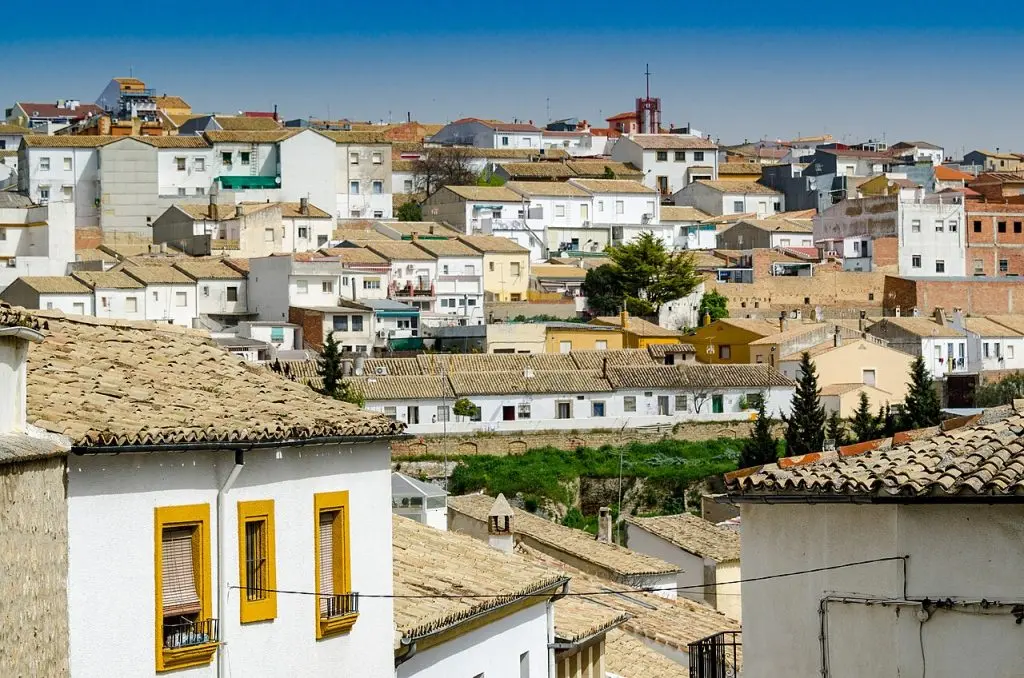
From the golden stone of its Renaissance palaces to the everyday murmur of its food markets, Úbeda moves between two worlds that coexist without friction. You don’t come here to see a couple of monuments: you come to stroll through a complex that UNESCO declared a World Heritage Site on 3 July 2003, and to have dinner for 10-15 euros in a bar on Calle Obispo Cobos. With 35,000 inhabitants, this city in the province of Jaén, capital of La Loma, produces 15% of the world’s olive oil and at the same time preserves one of the most elegant historic centres in Andalusia. It’s that blend of monumentality and neighbourhood life that captivates you from the very first turn of a corner.
The must-seesWhat to see in Úbeda: the essentials
Úbeda concentrates its heritage in a compact, pedestrianised historic centre, where every square hides a palace and every cobbled street leads to a Renaissance church. The crown jewel is the monumental complex shared with Baeza, but the city has more than enough character of its own to fill an entire day of sightseeing.
Renaissance Monumental Complex of Úbeda and Baeza
It is the city’s most important heritage asset and the reason Úbeda appears on the maps of global cultural tourism. Declared a World Heritage Site by UNESCO on 3 July 2003 under cultural criteria (ii) and (iv), it covers most of the main monuments in the historic centre. The exceptional nature of Úbeda and Baeza lies in how they developed in a dual manner: with their own traits and distinctive nuances, their complementarity made them function in some respects as a single unit. History passed in a similar way through both towns without one overshadowing the other, and today that dialogue between two Renaissance cities is unique in Spain.
Basilica of Santa María de los Reales Alcázares
It is the oldest church in Úbeda and one of the most comprehensive visits for understanding late Gothic and local Renaissance architecture. Its late Gothic cloister, its side chapels with highly valuable altarpieces and a Renaissance main portal all stand out. Admission is free and visiting hours are Tuesday to Saturday: mornings from 10:30 to 13:15 and afternoons from 16:30 to 18:30, except Saturday afternoons, when it closes at 18:00. On Mondays and Sundays it remains closed to tourists, so plan your visit so you don’t miss out.
Palacio de las Cadenas
Today it is the seat of Úbeda’s Town Hall, but its main façade still impresses as much as it did on day one: three sections with columns, pediments and noble coats of arms. It owes its name to the chains that marked the boundary of the sacred precinct of the old cathedral. Access to the inner courtyard is free during municipal office hours, so you can pop in without any trouble Monday to Friday in the morning.
Sacra Capilla del Salvador
It looks out over the ridge that dominates the city’s natural surroundings, allowing you to contemplate the transition between the Renaissance houses and the agricultural landscape of olive groves. It is one of the most photographed spots in Úbeda, especially at sunset, when the golden light falls on the stone of the nearby monuments and the horizon takes on warm tones. Don’t leave without looking out from that viewpoint: it’s the postcard you’ll carry with you.
Palacio de Francisco de los Cobos
A 16th-century palatial residence built for Francisco de los Cobos, universal secretary to Charles V, located next to the Sacra Capilla del Salvador. It forms part of an extensive artistic programme promoted by this patron from Úbeda, which also included the never-completed University of Úbeda and the Hospital de los Honrados y Venerables Viejos del Salvador. It currently houses municipal offices and exhibition rooms, so you can go in to see temporary exhibitions while admiring the architecture.
Muralla de Úbeda
A fortified enclosure of Andalusian origin, expanded in Christian times, that surrounded the medieval city; several sections, towers and gates survive, including the Torreón del Portillo de Santo Cristo.
Hospital de Santiago
Built between 1562 and 1575 on the orders of Bishop Diego de los Cobos y Molina, with a design by Andrés de Vandelvira, it is one of the finest examples of Renaissance hospital architecture in Spain and a National Monument since 1917; it now operates as a Conference and Exhibition Centre with guided tours available.
Torreón y Muralla del Portillo de Santo Cristo
A defensive tower of medieval origin with a wall walk and patrol path, it opens Tuesday to Sunday from 11:00 to 14:00 and offers one of the best views of the city wall and the surrounding natural landscape.
Antiguo Pósito
A 16th-century civil building declared a Site of Cultural Interest, with a three-storey ashlar façade, which today houses the National Police Station and cannot be visited inside.
Plaza Vázquez de Molina
Listed as Grade 1 in the PEPCH and declared a Zone of Outstanding Universal Value, this square surprises visitors as it opens up into a large, open space beyond the medieval street layout, bordered by Santa María, the Palacio Juan Vázquez de Molina, the Palacio del Deán Ortega and, at the far end, the Sacra Capilla del Salvador.
🍂 Otoño
Si visitas Úbeda en otoño, el clima se vuelve templado y agradable tras el calor estival, perfecto para recorrer el Hospital de Santiago o la Basílica de Santa María de los Reales Alcázares. Los tonos dorados realzan la piedra renacentista y hay menos turistas. Lleva un paraguas plegable por si cambia el tiempo.
What to do in Úbeda
Úbeda invites you to wander aimlessly through medieval streets, shop in centuries-old markets and linger over long after-meal chats in tapas bars. The city doesn’t demand a rigid plan: it’s best enjoyed by simply going with the flow, pausing for an ochío relleno or a drink on Calle Obispo Cobos.
To get around the city and not miss a thing, keep these essentials in mind:
- Mercado de Abastos: an emblematic covered market in Plaza Gallego Díaz, perfect for buying fresh produce and feeling the local pulse in the morning.
- Mercado Ambulante: a weekly open-air street market held on Fridays in Parque Norte or on Calle Bétula, with clothing, crafts and local fruit and vegetables.
- Mercado de la Barqueta: a covered food market on Avenida Ciudad de Linares, which serves the more modern part of Úbeda.
- Zona Calle Obispo Cobos: the main commercial artery, full of shops, tapas bars and lively restaurants, ideal for a night of tapas.
Úbeda in a day: express itinerary
With a well-organised day you can see the essentials of the historic centre without rushing. This itinerary takes you from square to square, with stops to eat and to look out from the viewpoints.
- 10:00 – Plaza Vázquez de Molina: start here to get your bearings and admire the Renaissance ensemble with the Basílica de Santa María, the Palacio de las Cadenas and the Sacra Capilla in the background.
- 10:30 – Basílica de Santa María de los Reales Alcázares: free entry and a late Gothic cloister; make the most of the morning opening hours to see the interior.
- 12:00 – Sacra Capilla del Salvador: climb up to the cornice and enjoy the view over the sea of olive trees; it’s the best time for photos with good light.
- 13:00 – Palacio de Francisco de los Cobos and Palacio de las Cadenas: peek into their courtyards and façades; the Palacio de las Cadenas houses the Town Hall and its courtyard is free during office hours.
- 14:00 – Lunch on Calle Obispo Cobos: have tapas with lomo de orza, ochíos and pipirrana; budget between 10 and 15 euros per person.
- 17:00 – Torreón del Portillo de Santo Cristo: walk the adarve and the city wall with views of the natural surroundings; it opens Tuesday to Sunday from 11:00 to 14:00, so if you’re travelling at the weekend, move it to the morning.
- 18:30 – Sunset at the cornice of the Sacra Capilla: come back to see the golden light on the stone and say goodbye with the best postcard view of Úbeda.
⭐ Palacio del Marqués de Mancera (UNESCO Heritage)
It is one of the characteristic tower houses of this period in Úbeda, reviving the tower as a representative element of the nobility by recalling the old castle towers, in an urban context in which its defensive function no longer made sense. It preserves a sober Renaissance façade with a stone doorway and heraldic coat of arms. It is listed as a Site of Cultural Interest (BIC). It currently houses public administration offices.
⭐ Palacio de los Orozco (UNESCO Heritage)
It has a façade of stone ashlars and a lintelled doorway with a noble coat of arms. It stands out for its lookout tower and the porticoed courtyard with Tuscan columns. The building has been the subject of various restoration projects over time, documented by the Instituto del Patrimonio Cultural de España. It currently houses municipal offices and exhibition spaces.
Local foodWhere to eat in Úbeda: local cuisine
Where to stay in Úbeda
Centro Histórico
El corazón monumental de la ciudad, declarado Patrimonio de la Humanidad, con la mayoría de palacios e iglesias renacentistas.
Barrio de San Lorenzo
Un tranquilo barrio residencial junto al centro, ideal para una estancia más relajada y económica.
Zona Calle Obispo Cobos
La principal arteria comercial de Úbeda, llena de tiendas, bares de tapas y restaurantes con mucho ambiente.
How to get to Úbeda
From Baeza, the fastest option is driving: 14 min.
| From | Direct train | Direct bus | Car |
|---|---|---|---|
| Baeza | — | 15 min · 16/day ALSA | 14 min 10 km |
| Jaén | — | 1 h · 13/day ALSA | 43 min 56 km |
| Linares | — | 35 min · 8/day ALSA | 22 min 30 km |
| Granada | — | 1 h 45 min · 5/day ALSA | 1 h 42 min 135 km |
| Sevilla | — | 4 h 20 min · 3/day ALSA | 3 h 09 min 279 km |
| Córdoba | — | 2 h 30 min · 3/day ALSA | 1 h 40 min 144 km |
| Valencia | — | 6 h 40 min · 2/day ALSA | 4 h 26 min 371 km |
| Málaga | — | 3 h 45 min · 2/day ALSA | 2 h 59 min 247 km |
| Albacete | — | 3 h · 2/day ALSA | 2 h 31 min 205 km |
| Alicante | — | 5 h 50 min · 1/day ALSA | 4 h 15 min 371 km |
Direct trains and buses from the official timetables published by the operators on Spain's National Transport Access Point (a reference Wednesday); driving times from OpenStreetMap. Operators that do not publish their timetables may run more services. Check the timetable before you travel.
Getting around Úbeda
Úbeda has an urban bus for trips between neighbourhoods, but the historic centre is compact and perfectly walkable. Most monuments are less than 15 minutes on foot from each other. If you stay in the centre, you won’t need public transport except to reach the Jódar-Úbeda train station or the outskirts.
For opening times, tickets and cultural events, check the official Úbeda tourism website.
Weather in Úbeda
Best time to visit Úbeda
Day trips from Úbeda
Úbeda is an excellent base for exploring the La Loma region and the nearby towns of the province of Jaén. The most obvious excursion is to Baeza, just a few kilometres away, with which it shares a World Heritage designation and a twin Renaissance urban layout. Both cities function as a single historic unit, and visiting them on the same day is almost obligatory.
Other towns in the region, such as Linares or Jaén capital, allow you to complete a route through Andalusian Renaissance heritage and the olive grove landscape. If you have a car, the regional roads take you in less than an hour to whitewashed villages and almazaras (olive oil mills) where you can buy extra virgin olive oil directly from the producer.
Curiosities about Úbeda you didn’t know
A biblical foundation. According to legend, Úbeda was founded by Tubal, a descendant of Noah. Before the Romans or the Arabs set foot here, it was already said that this land had roots as ancient as the flood.
The liquid gold of La Loma. The La Loma region, whose capital is Úbeda, is the world’s largest producer of olive oil, accounting for 15 % of all global olive oil production. Every time you dip bread in an ubetense bar, you’re tasting a fraction of that global leadership.
The twelve lions. The twelve lions of Úbeda were twelve local knights who distinguished themselves in a collective duel against twelve other Moorish knights at the siege of Algeciras (1344), in the service of King Alfonso XI of Castile. From this comes the city’s warrior pride.
The Arabic name. Abd al-Rahman II founded the city of Ubbadat al-Arab, which means Úbeda of the Arabs. The current name is a direct echo of that Andalusian foundation.
World Heritage since 2003. Úbeda was declared a World Cultural Heritage Site by Unesco on 3 July 2003, along with nearby Baeza. It is not an honorary title: it is recognition of the quality and conservation of its Renaissance buildings.
An illustrious Jesuit. The Jesuit and writer Alfonso de Alarcos was born in Úbeda in 1617 and died in Rome on 2 January 1679. His figure recalls the intellectual reach of this small Andalusian city.
Who is Úbeda for
Úbeda is for travellers who enjoy heritage without crowds, long after-meal conversations and towns with character. Couples will find romantic corners on the ledge of the Sacra Capilla at sunset; families will appreciate the affordable prices and the safety of a pedestrian historic centre; lovers of history and Renaissance architecture will have enough material for a full day without leaving the centre. Foodies, moreover, can enjoy tapas for 10-15 euros and try everything from andrajos to filled ochíos. It is not a destination for those looking for a beach or major contemporary art museums, but it is for those who value the authenticity of a living city with 80,125 travellers a year (INE) and only 15 % foreign tourism.
💡 ¿Sabías que...?
- ● Según la leyenda, Úbeda fue fundada por Tubal, un descendiente de Noé. (https://ubeda.es/es/node/201?language_content_entity=es)
- ● La comarca de La Loma, cuya capital es Úbeda, es la mayor productora mundial de aceite de oliva, con un 15 % de toda la producción aceitera mundial. (https://es.wikipedia.org/wiki/%C3%9Abeda_(Ja%C3%A9n))
- ● Los doce leones de Úbeda fueron doce caballeros de la localidad que se distinguieron en un duelo colectivo contra otros doce caballeros moros en el sitio de Algeciras (1344), al servicio del rey de Castilla Alfonso XI. (https://es.wikipedia.org/wiki/Los_doce_leones_de_%C3%9Abeda)
- ● Abderramán II fundó la ciudad de Ubbadat al-Arab, que significa Úbeda de los Árabes. (https://ubeda.es/es/node/201?language_content_entity=es)
- ● Úbeda fue declarada Patrimonio Cultural de la Humanidad por la Unesco el 3 de julio de 2003, junto a la cercana Baeza. (https://es.wikipedia.org/wiki/%C3%9Abeda_(Ja%C3%A9n))
- ● El jesuita y escritor Alfonso de Alarcos nació en Úbeda en 1617 y murió en Roma el 2 de enero de 1679. (https://historia-hispanica.rah.es/biografias/1718)
Frequently asked questions about Úbeda
How many days do I need to see Úbeda?
With a full day you can see the essentials of the historic centre: Plaza Vázquez de Molina, Basílica de Santa María, Sacra Capilla del Salvador, Palacio de las Cadenas and Palacio de Francisco de los Cobos. If you want to add the Hospital de Santiago, the Torreón del Portillo de Santo Cristo and a day trip to Baeza, two days are ideal. The average stay for travellers is 1.85 nights (INE), which confirms that most people visit over a weekend.
Is Úbeda expensive?
No, Úbeda is quite affordable. An average meal costs between 10 and 15 euros, a hostel or guesthouse between 18 and 30 euros per night, a 3-star hotel between 40 and 80 euros, and a 4-5 star hotel between 90 and 200 euros. Compared with other heritage cities in Andalusia, the value for money is excellent.
What is the best time to visit Úbeda?
The best time is from May to May, that is, spring and autumn, with mild temperatures for strolling. The average temperature in summer is 28.4 °C and in winter 8.9 °C, according to climate data. Avoid July and August if you can’t handle dry heat, or visit early in the morning and at sunset.
How do I get to Úbeda from Madrid?
There is no direct AVE to Úbeda. The nearest train station is Jódar-Úbeda, with no high-speed service. The most common option is to travel by train or bus to Jaén or Linares and from there take a bus or rent a car. According to Renfe, check timetables and prices for the Madrid-Jaén route and then the road section.
Are Úbeda and Baeza visited together?
Yes, and in fact it’s highly recommended. Both cities were declared a UNESCO World Heritage Site on 3 July 2003 as a single Renaissance monumental complex. They are very close and share history, architecture and even gastronomy, so a half-day trip to Baeza is almost obligatory if you’re in Úbeda.