Logroño
La RiojaClimate
Daily budget
The scent of burnt vine shoots and the clinking of glasses on Calle Laurel welcome you to a city where history is savored in every bite.
🍂 Otoño
Si visitas Logroño en otoño, vivirás la magia de la vendimia con paisajes dorados y bodegas activas. Aunque llueve poco al año, es prudente calzar botas impermeables para pisar uva o caminar entre viñas húmedas.
Logroño is not just a dot on the map; it is the beating heart of La Rioja, a capital that concentrates nearly half of its autonomous community’s population with its 152,000 inhabitants, and knows how to greet you with the warmth of a place that has been a crossroads for centuries. Here, the sound of laughter in the arcaded squares blends with the history of contested kingdoms, creating a unique atmosphere where every corner, from the Ebro River to the medieval towers, invites you to stop and enjoy the present moment.
The must-seesWhat to see in Logroño: the essentials
Logroño offers a compact and accessible monumental heritage that summarizes centuries of religious and civil history in a space perfect for exploring on foot.
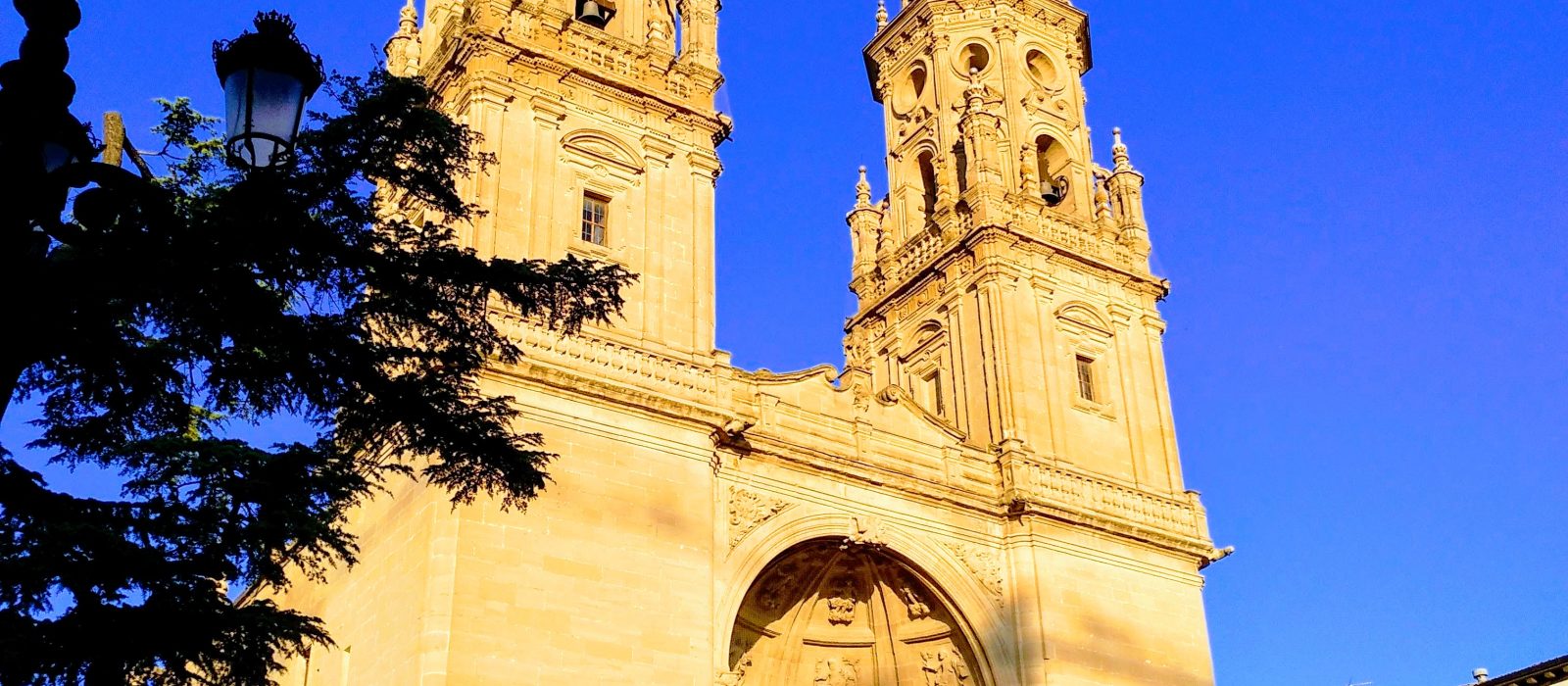
Co-Cathedral of Santa María de la Redonda
This co-cathedral is much more than a temple; its history is intrinsically linked to the city’s development and the welcome extended to pilgrims of the Camino de Santiago. It stands out as a unique jewel of La Rioja’s religious architecture, dominating the skyline with its twin towers that have become the undisputed symbol of Logroño. Visiting it means not just seeing a building, but walking the ground of a place that has witnessed the spiritual and urban evolution of the region.
Church of Santa María de Palacio
Popularly known as “La Imperial” due to its historic ties to the Spanish Crown, this temple is one of the oldest in the city, preserving structural parts dating back to the 12th century. Its most fascinating element is the 13th-century Gothic pyramidal spire, which rises 45 meters above the city, being the only one of its kind in all of La Rioja. Inside, you can admire a main altarpiece from the 16th century and Romanesque remains, with the advantage that entry is free, although guided tours must be arranged directly through the parish.
Museum of La Rioja
Housed in a splendid Baroque palace of the Marquises del Exposito built in the 18th century, this museum is located in the heart of the historic center and functions as a regional time capsule. Its collections are exhaustive, covering everything from Prehistory and the Roman era with pieces from Riojan archaeological sites, to medieval and modern art, including valuable Flemish and Spanish paintings from the 16th to the 18th centuries. It is a must-visit and free entry, open from Tuesday to Saturday from 10:00 to 14:00 and from 16:00 to 21:00, and on Sundays from 10:00 to 14:00.
Church of Santiago el Real
This Gothic temple from the 15th and 16th centuries is the patron saint of Logroño and a fundamental stage of the Camino de Santiago, where historical figures such as the Catholic Monarchs prayed before the conquest of Granada in 1492. Its main façade is of great iconographic value, highlighting the equestrian image of Saint James the Moor-slayer, curiously known as “Mataindios” due to a modification made in the 19th century. Access to the temple is free, although visiting the sacristy requires booking an appointment in advance, always respecting Mass times.
Calado de San Gregorio
This 17th-century monument preserves its traditional underground structure in perfect condition, offering a unique insight into how wine was historically stored and processed. Currently, it is dedicated exclusively to guided tours, tastings, and events related to the world of wine, making it the ideal place to understand winemaking culture from its deepest foundations.
Other points of interest
- Fuente de los Peregrinos (Pilgrims’ Fountain): Rebuilt in 1675 and restored in 1986, this stone fountain is a landmark popularly known as the fountain of the Camino.
- Calle Laurel: Walking along La Laurel is experiencing the pure Riojan character, with a high density of bars inviting you to enjoy pinchos in an atmosphere of closeness and joy.
- Historic Center: Articulated around Calle Mayor and Laurel, it preserves the medieval urban layout with narrow streets and is the gastronomic epicenter with the highest concentration of pintxos bars.
- Paseo del Espolón: This natural space outlines the city’s profile alongside the Old Town, dotted with historic towers and offering a perfect urban balance.
- Palacio de Espartero and Espacio Lagares: Both buildings currently function as commercial or entertainment establishments within the urban fabric.
What to do in Logroño
Logroño offers top-tier cultural and festive activities revolving around its winemaking tradition and medieval history.
If you visit the city in June, do not miss the Fiestas de San Bernabé (Festival of Saint Barnabas), which commemorate the victory in the 1521 siege with parades and the traditional tasting of ‘fish, bread, and wine’. In September, the city transforms for the Fiestas de San Mateo (Festival of Saint Matthew), declared a National Tourist Interest Festival, where you can participate in the grape stomping in the Plaza del Ayuntamiento, a tradition institutionalized since 1956. For a more everyday experience, visit the Mercado de San Blas, the main supply market, ideal for finding fresh produce from the Riojan orchards and feeling the local pulse.
Logroño in one day: express itinerary
To make the most of a 24-hour visit, follow this optimized route combining history, culture, and gastronomy.
- 10:00 – Co-cathedral of Santa María de la Redonda: Start the day admiring the city’s symbol and its religious architecture linked to the Camino.
- 11:30 – Church of Santa María de Palacio: Walk to “La Imperial” to see its unique 45-meter pyramidal spire and its Romanesque remains.
- 13:00 – Museo de La Rioja: Dedicate an hour to exploring the Baroque palace and its art and prehistory collections before lunch.
- 14:30 – Lunch on Calle Laurel: Immerse yourself in the gastronomic heart to try pinchos (tapas) and feel the Riojan warmth.
- 17:00 – Church of Santiago el Real: Visit the patron church and its façade featuring the image of Santiago Matamoros (Saint James the Moor-Slayer).
- 18:30 – Calado de San Gregorio: End the day with a tasting or guided tour in this 17th-century wine cellar to understand the local wine.
Where to eat in Logroño: local gastronomy
Where to sleep in Logroño
Casco Antiguo
El corazón histórico de Logroño, lleno de monumentos, iglesias y calles con encanto.
Calle Laurel
Famosa zona de tapeo con decenas de bares, cada uno con su pincho estrella. Es el epicentro de la vida social y gastronómica.
How to get to Logroño
The city is well connected by land and air, although it currently does not have a direct AVE connection.
| Medio | Detalles | Destinos/Frecuencia |
|---|---|---|
| Tren | Estación de tren de Logroño (sin AVE). | Directos a Madrid, Barcelona, Bilbao, Zaragoza. |
| Autobús | Estación de Autobuses de Logroño. | Compañías: Alsa, Jiménez Movilidad. |
| Avión | Aeropuerto de Logroño-Agoncillo (RJL). | Situado a 14 km de la ciudad. |
| Coche | Acceso por autopista y carreteras nacionales. | AP-68, A-12, A-13, N-232, N-111. |
Getting Around Logroño
The city is very walkable, especially in its core, but it also has efficient public transport options.
The city center is pedestrianized, making it extremely easy to stroll between the churches and Calle Laurel (Laurel Street) on foot. For longer distances or outer neighborhoods, you can use the available urban bus service. Given the concentration of attractions in the Casco Antiguo (Old Town), walking is often the fastest and most pleasant option.
Weather in Logroño
Best Time to Visit Logroño
Day Trips from Logroño
Logroño’s location makes it a perfect base for exploring northern Spain.
From here you can take easy day trips to cities like Vitoria-Gasteiz, the Basque capital full of modern architecture and medieval old towns, or Pamplona, famous for its Sanfermines festival and fortifications. Burgos is also nearby, offering the opportunity to visit its impressive Gothic cathedral and the Atapuerca archaeological site.
Logroño Facts You Didn’t Know
Logroño hides historical and statistical data that make it unique in the Spanish landscape.
Did you know that Logroño received its Fuero (charter) in 1095 from King Alfonso VI? This document was one of the most influential medieval charters on the peninsula. Another surprising fact is that Calle del Laurel concentrates one of the highest densities of bars per square meter in the world, with more than 50 establishments in less than 200 meters. Historically, the Puente de Piedra (Stone Bridge) over the Ebro River, built in the 16th century, has been the main crossing point of the French Way of the Camino de Santiago in the city. Furthermore, the name Logroño appears cited in the Cantar de Mio Cid as a stopping place during the campaigns of the 11th century.
Who Is Logroño For?
Logroño is the perfect destination for foodies seeking gastronomic quality, history lovers interested in the Camino de Santiago, and travelers who enjoy a safe and walkable urban atmosphere. With an average stay of 1.63 nights and receiving more than 372,000 travelers per year (INE), it is ideal both for couples looking for romantic wine getaways and for groups of friends wanting to enjoy tapas hopping.
💡 ¿Sabías que...?
- ● Logroño recibió su Fuero en 1095 de manos del rey Alfonso VI, siendo uno de los fueros medievales más influyentes de la península. (Archivo Municipal de Logroño)
- ● La Calle del Laurel concentra una de las densidades de bares por metro cuadrado más altas del mundo, con más de 50 establecimientos en menos de 200 metros. (Turismo de La Rioja)
- ● El Puente de Piedra sobre el río Ebro, construido en el siglo XVI, es el paso histórico principal del Camino de Santiago francés en la ciudad. (Gobierno de La Rioja)
- ● Durante las Fiestas de San Mateo, cualquier persona puede participar en la pisada de la uva en la plaza del Ayuntamiento, una tradición institucionalizada desde 1956. (Ayuntamiento de Logroño)
- ● El nombre de Logroño aparece citado en el Cantar de Mio Cid como lugar de paso durante las campañas del siglo XI. (Real Academia Española)
Frequently Asked Questions about Logroño
How many days do I need to see Logroño?
With an average stay of 1.63 nights according to INE data, a weekend (2-3 days) is enough to see the main attractions such as the Co-Cathedral and the Museum, and enjoy the gastronomy on Calle Laurel.
Is Logroño expensive?
Logroño offers options for all budgets. You can eat for an average of €15-25, sleep in hostels from €20-40, or in 3-star hotels between €60-100 per night.
What is the best time to visit Logroño?
According to climate data, the best time is from May to September, with average summer temperatures of 22.2°C, avoiding the winter cold which averages 6.7°C.
How do I get to Logroño from Madrid?
You can arrive by direct train from the Logroño train station (no AVE) or by bus via companies like ALSA from the Logroño Bus Station.
What festivals should I not miss?
The San Mateo Festivals in September (Harvest Festival) are the most important, declared of National Tourist Interest, followed by the San Bernabé festivities in June.
🗺️ Rutas desde Logroño
- How to Get from Logroño to Burgos: Distance, Train, Bus and Car
- How to Get from Burgos to Logroño: Distance, Train, Bus and Car
- How to Get from Logroño to Zaragoza: Distance, Train, Bus and Car
- How to Get from Zaragoza to Logroño: Distance, Train, Bus and Car
- How to Get from Logroño to Pamplona: Distance, Train, Bus and Car
- How to Get from Pamplona to Logroño: Distance, Train, Bus and Car
- How to Get from Vitoria-Gasteiz to Logroño: Distance, Train, Bus & Car
- How to Travel from Logroño to Vitoria-Gasteiz: Distance, Train, Bus & Car