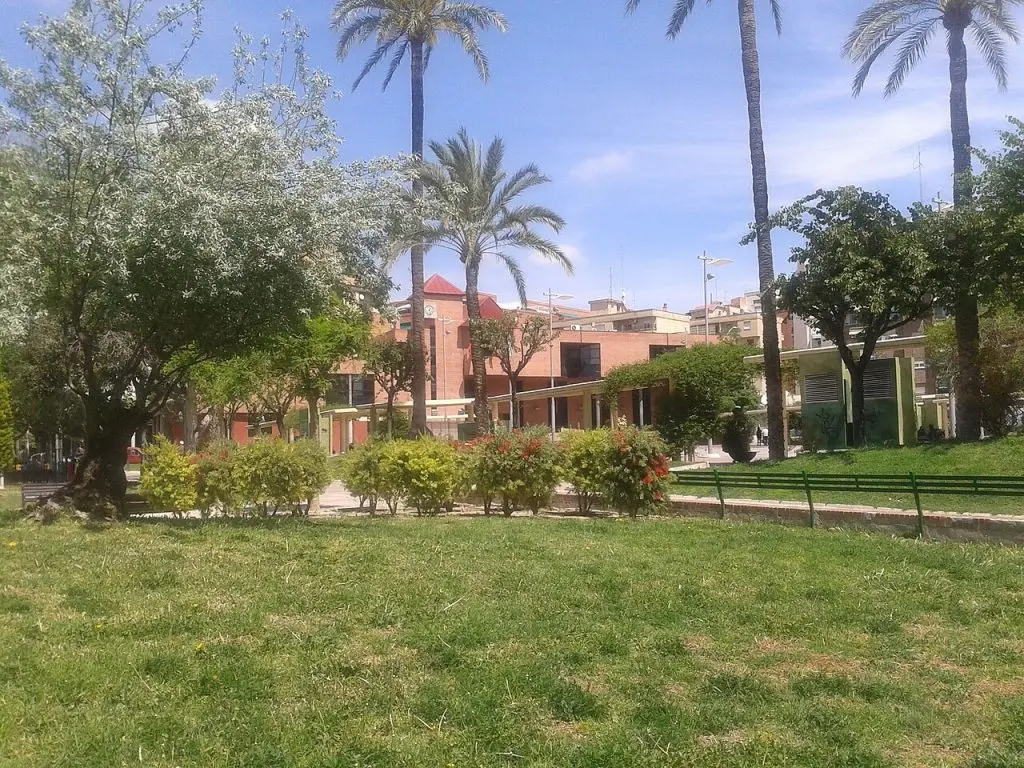
Molina de Segura
Región de MurciaClimate
What to see in Molina de Segura: the essentials
Molina de Segura concentrates its heritage in a compact old town that can be explored on foot without rushing. The Andalusian imprint, 18th-century religious architecture and a well-connected network of ethnographic museums turn a visit into a stroll through eight centuries of history. Here are the stops that truly deserve your time.
Historic Centre. Barrio del Castillo
The medieval heart of Molina de Segura is a complex of Andalusian origin laid out in an oval shape, with narrow concentric alleys that adapt to the terrain in a way you will rarely see in the Region of Murcia. This was the site of the hisn Mulina, the defensive fortress built from the 9th century onwards, and remains of the alcazaba still survive at the Mirador del Castillo-Casa Maita. The guided tour of the old town lasts approximately two and a half hours and covers eight centuries of history; if you prefer something lighter, the Tourist Office organises free one-and-a-half-hour visits. It is, without question, the best way to understand why Molina is the capital of the Vega Media del Segura.
MUDEM (Museum of the Wall Enclave)
The MUDEM protects and showcases the archaeological remains of the hisn Mulina wall rescued in 2004, and it does so with a playful, interactive approach that sets it apart from the typical museum of display cases. It is located on Calle Ibn Arabí, and its highlights include the vestiges of the medieval wall and resources explaining how the fortification was built and what life was like in the Andalusian period. The venue is accessible for people with disabilities and has generous opening hours: Tuesday to Friday from 10:00 to 14:00, Saturdays and Sundays from 11:00 to 13:30, and Tuesday to Saturday also in the afternoon from 17:30 to 20:30. It is closed on Mondays, and it is worth confirming updated hours before you go.
Arab wall of Molina de Segura
The remains of the Arab wall that formed part of the defensive enclosure of the hisn Mulina date from between the 11th and 13th centuries and were built with rammed earth and stone. The complex also included the alcázar, and it is one of the main archaeological vestiges in the municipality. Its Latin origin survived in the Arabic name Mulina, which later became Molina Seca, derived from Sikka, the causeway. It is direct testimony to the city’s Andalusian past and is much better understood with a visit to the MUDEM.
Church of Nuestra Señora de la Asunción
This temple was built in the mid-18th century outside the walls of the medieval city, and today it is one of the heritage landmarks of the historic complex. The guided tour starts in the Plaza de la Iglesia and explains in detail the façade, the presbytery by Bernabé Gil and the dome painted by Muñoz Barberán, as well as its chapels. It is one of the usual stops on guided routes through the historic centre, and it is well worth going inside to appreciate the dome painting at leisure.
Carlos Soriano Museum
The Carlos Soriano Ethnographic Museum occupies the manor house of the lawyer Carlos Soriano in the district of El Llano de Molina, rehabilitated to house this collection linked to the rural and traditional memory of the huerta. Its ethnographic character revolves around the noria as a representative element of water architecture, something that defines the landscape of Molina de Segura very well. It is a visitable space that integrates architectural, ethnographic and landscape heritage, and it forms part of the municipal museum network.
Mosque of Molina
The Mosque of Molina is at Calle Gustavo Adolfo Bécquer, 18, ground floor, and is a leading Islamic place of worship for the local Muslim community. It also serves as a space for meeting and intercultural dialogue in the municipality. If you wish to visit, do so respecting the rules of worship and preferably outside prayer times.
Museo del Horno del Concejo
A museum dedicated to traditional bread-making and its history, located in the popular Castillo neighbourhood, in a 17th–18th-century house built using the rammed-earth technique; particularly noteworthy is the impressive dome of the Moorish oven, which is documented as far back as 1491 and remained in use until the 1970s.
Centro de Ritos y Tradiciones del Campo de Molina
A museum space devoted to the identity, folklore and traditions of the Molina countryside, offering insight into the customs and ways of life of the market gardens and rural world of the municipality.
Casa Cárcel
The Casa Cárcel is the oldest surviving cultural monument in Molina de Segura, with a history that runs from prison to regulated wheat store, archive in 1845, public school in 1909 and today a library, study room and exhibition hall on Calle Cervantes.
Molino de La Hornera
A traditional mill included in the catalogue of monuments of Molina de Segura, representative of the hydraulic industrial architecture linked to the market gardens and the Segura river.
Torre Anita
The Casa Torre Anita is a complex made up of a garden and a building constructed in 1940 by the Murcian architect Pedro Cerdán Martínez, author of numerous emblematic buildings in the Region of Murcia, and stands out for its exterior handcrafted wrought-iron grilles.
Parque de la Compañía
A park that houses a traditional 18th-century irrigation waterwheel originally installed by the Jesuits in 1750 over the Subirana irrigation channel, moved during the construction of the park and restored in 1993; it occupies the land where the residence of the Society of Jesus stood centuries ago, which already held possessions in Molina in 1590.
Soto de La Ermita
A riverside natural area associated with the Segura river, rated 4.0 out of 5, ideal for peaceful strolls, contemplating the riverside landscape and nature watching in contact with the river ecosystems of the Murcian market gardens.
🍂 Otoño
Si visitas Molina de Segura en otoño, el tiempo sigue siendo suave y luminoso, perfecto para disfrutar del Parque de la Compañía o subir al Barrio del Castillo. En septiembre puedes coincidir con las Fiestas Patronales en honor a la Virgen de la Consolación, que llenan las calles de ambiente. Lleva una chaqueta ligera para la noche, que refresca.
What to do in Molina de Segura
Molina de Segura offers a range of options that run from free guided tours of the old town to patron saint festivals with centuries of tradition, by way of ethnographic museums, riverside walks and a tapas scene closely tied to the market gardens. If you happen to visit in September, the Fiestas Patronales in honour of the Virgen de la Consolación fill the city with the opening proclamation, concerts, a fair, religious events and pilgrimages accompanying the Virgin down and back up. In January, San Antón is celebrated with family gatherings and outings to the countryside, and San Vicente Mártir, the city’s patron saint, is moved when San Antón falls on a Sunday.
To get around the city, the urban bus covers journeys between neighbourhoods and outlying districts, although the old town is perfectly walkable on foot. If you’re after shopping or casual food, the Polígono Industrial Campollano area has the largest concentration of fast dining and large retail outlets. And if tapas are your thing, join the Ruta de la Tapa: many establishments in the town centre take part, and it’s the perfect excuse to try thinly sliced mojama as an appetiser.
For more practical information on opening times, tickets and the cultural calendar, see the official tourism website of Molina de Segura.
Molina de Segura in a day: express itinerary
This itinerary lets you see the essentials of Molina de Segura in a full day, walking between stops and with time to eat without rushing.
- 10:00 – MUDEM (Museo del Enclave de la Muralla): start here to understand the city’s Andalusian origins and see the remains of the hisn Mulina wall rescued in 2004. It’s interactive and easy to get through in an hour.
- 11:15 – Historic Centre. Barrio del Castillo: wander the oval-shaped old town, pass by the Mirador del Castillo-Casa Maita and seek out the narrow alleys with a medieval atmosphere. If you can, join the free hour-and-a-half guided tour that leaves from the Tourist Office.
- 12:30 – Arab Wall and Iglesia de Nuestra Señora de la Asunción: from the Andalusian defensive enclosure to the 18th-century temple. Note the dome painted by Muñoz Barberán and the presbytery by Bernabé Gil.
- 14:00 – Lunch in the Casco Antiguo: order zarangollo and arroz y conejo in any of the bars in the centre. It’s the ideal area for local gastronomy.
- 17:00 – Museo del Horno del Concejo: in the Barrio del Castillo, discover the dome of the Moorish oven with records dating back to 1491 and the Casa del Folclore section with popular music and dances from Molina.
- 18:30 – Parque de la Compañía: end the day beside the 18th-century waterwheel restored in 1993, strolling through the grounds once occupied by the Compañía de Jesús.
Where to eat in Molina de Segura: local gastronomy
Where to stay in Molina de Segura
Casco Antiguo
Es el núcleo histórico de la ciudad donde se concentran los monumentos principales y la administración local. El ambiente es tranquilo durante el día y se anima con el paso de residentes en las horas comerciales tradicionales.
El Olivar
Barrio residencial consolidado conocido por su zona verde homónima que sirve de pulmón para los vecinos. Es una zona principalmente dormitorio con poco atractivo turístico específico más allá de la vida local cotidiana.
La Milagrosa
Zona de expansión urbana con bloques de viviendas y equipamientos educativos y deportivos. Su carácter es eminentemente funcional y residencial, careciendo de infraestructura hotelera o de ocio para visitantes.
San Antonio
Área tradicionalmente vinculada a la ermita de San Antonio Abad y zonas de huerta periurbana. Ofrece una visión más rural y silenciosa de la ciudad, alejada del bullicio del centro comercial.
El Carmen
Barrio residencial que creció alrededor de la antigua estación de ferrocarril y la industria conservera. Mantiene una estructura de calles rectas típica de los ensanches obreros de principios del siglo XX.
Polígono Industrial Campollano / Zona Comercial
Aunque es un área industrial y logística, concentra la mayor oferta de restauración rápida y grandes superficies de la ciudad. No es un barrio residencial ni turístico, pero es el punto de encuentro para compras y comida informal.
How to get to Molina de Segura
Molina de Segura is well connected to the rest of the Region of Murcia by road and commuter train, although it doesn’t have an AVE station. The Alguazas-Molina train station is the rail reference point, and the nearest airport is AeroCieza. To get there from the city of Murcia, the commuter train and bus are the most practical options.
| Medio | Duración | Precio aprox. | Frecuencia |
|---|---|---|---|
| Tren (Alguazas-Molina) | Variable según origen | Económico | Consultar horarios |
| Avión (AeroCieza) | Según origen | Variable | Según aerolínea |
| Bus urbano | Travesía urbana | Económico | Frecuente en hora punta |
Getting around Molina de Segura
The old town and the main monuments can easily be explored on foot, but if you need to reach districts such as Romeral, Torrealta, Ribera de Molina or El Llano, the urban bus is the public transport option. The city is not excessively large, and getting around by private car is also feasible, especially for reaching the ethnographic museums in the outlying districts or the Soto de La Ermita.
Weather in Molina de Segura
Best time to visit Molina de Segura
Day trips from Molina de Segura
Molina de Segura is a convenient base for exploring other cities in the Region of Murcia. Thanks to its location in the Vega Media del Segura, destinations such as Murcia city, Cartagena and Lorca, the community’s three most populous cities, are within easy reach. Murcia offers its cathedral and historic centre; Cartagena, its Roman heritage and port; and Lorca, its castle and its Semana Santa. All are accessible by car or public transport from Molina, and allow you to combine a visit to the molinense market gardens with the region’s urban heritage.
Curiosities about Molina de Segura you didn’t know
The largest meteorite to fall in Spain landed in Molina de Segura in the early hours of 24 December 1858. This is no minor detail: it is the largest ever recorded on Spanish soil, and its memory is still alive in the city. In fact, the Paseo de las Letras, inaugurated on 28 March 2011 in the Parque de la Compañía, features 10 plaques dedicated to writers born or resident in Molina, and the graphic motif on each plaque is a meteorite.
The writer Lola López Mondéjar was born in Molina de Segura in 1958, and is one of the most recognised literary voices in the Region of Murcia. Her name is part of that Paseo de las Letras which links literature and local memory.
The name Molina de Segura has Latin origins, but its linguistic history is fascinating: the Arabs kept it as Mulina and Mulinat-as-Sikka, meaning “Molina of the causeway”, and the Christians transformed it into Molina Seca, derived from Sikka. An evolution that sums up centuries of cultural coexistence in the Vega Media.
In 2022, the 750th anniversary of the establishment of the council, town and municipal district of Molina de Segura was celebrated, along with the visit of King Alfonso X El Sabio to the town in June 1272. A milestone that confirms the historical importance of this municipality in the organisation of Murcian territory.
According to the chronicler Antonio de los Reyes, the irrigation of Molina begins at the Algaida weir through a 416-metre underground channel and then runs for 18 kilometres. A hydraulic engineering feat that explains why the molinense market gardens have been so productive for centuries and why the waterwheel is the city’s ethnographic symbol.
Who is Molina de Segura for
Molina de Segura is ideal for lovers of history and ethnographic heritage, especially for those who enjoy old towns of Andalusian origin and the culture of the Murcian market gardens. Couples will find in the Casco Antiguo a relaxed plan of strolling, museums and tapas; families can make the most of the parks, the Soto de La Ermita and interactive museums such as the MUDEM; and foodies have in zarangollo, arroz y conejo and mojama a perfect excuse to tour the bars in the centre. It is not a destination for grand hotels or intense nightlife, but it is an authentic, manageable place with a strong identity of its own, shaped by the River Segura and its history.
💡 ¿Sabías que...?
- ● El meteorito caído en Molina de Segura en la madrugada del 24 de diciembre de 1858 es el más grande caído en España. (https://www.mncn.csic.es/es/comunicacion/blog/el-meteorito-que-cayo-en-nochebuena)
- ● El Paseo de las Letras, inaugurado el 28 de marzo de 2011 en el Parque de la Compañía, tiene 10 placas dedicadas a escritores nacidos o residentes en Molina de Segura, y el motivo gráfico de cada placa es un meteorito. (https://cultura.molinadesegura.es/literatura/autores-del-meteorito/)
- ● La escritora Lola López Mondéjar nació en Molina de Segura en 1958. (https://cultura.molinadesegura.es/literatura/autores-del-meteorito/)
- ● El nombre de Molina de Segura tiene origen latino; los árabes lo mantuvieron como Mulina y Mulinat-as-Sikka (Molina de la calzada), y los cristianos lo llamaron Molina Seca proveniente de Sikka. (https://es.wikipedia.org/wiki/Historia_de_Molina_de_Segura)
- ● En 2022 se celebró el 750 aniversario de la constitución del concejo, villa y término de Molina de Segura, y la visita del rey Alfonso X El Sabio a la villa en junio de 1272. (https://www.femp.es/wp-content/uploads/2022/06/molinadesegura.pdf)
- ● Según el cronista Antonio de los Reyes, los riegos de Molina arrancan del azud de la Algaida a través de una mina de 416 metros bajo tierra y después recorren 18 kilómetros. (https://www.laverdad.es/agro/nilo-tigris-eufrates-20230131224415-ntvo.html)
Frequently asked questions about Molina de Segura
How many days do I need to see Molina de Segura?
With a full day you can see the essentials: MUDEM, Barrio del Castillo, the Arab wall, Iglesia de la Asunción, Museo del Horno del Concejo and Parque de la Compañía. If you want to add the ethnographic museums in the outlying districts (Carlos Soriano in El Llano, Centro de Ritos y Tradiciones) and the Soto de La Ermita, allow two days. The guided tour of the old town lasts between an hour and a half and two and a half hours, so the total time depends on how many guided tours you want to do.
What is the best time of year to visit Molina de Segura?
From March to November, according to climate data. The average temperature in summer is 26.9°C and in winter 11.9°C, with annual rainfall of 282.2 mm. Spring and autumn are the most pleasant seasons for walking, and September adds the Fiestas Patronales in honour of the Virgen de la Consolación, with pilgrimages and a festive atmosphere.
How do I get to Molina de Segura from Madrid?
The rail option is to reach Alguazas-Molina station, which has no AVE service, so the journey from Madrid may require a connection in Murcia or Albacete. By car, the A-30 connects Molina with Murcia and with the rest of the motorway network. The nearest airport is AeroCieza, although for commercial flights it is usual to use the Aeropuerto Internacional de la Región de Murcia or Alicante-Elche and continue by road.
What typical dishes should I try in Molina de Segura?
The three essentials are zarangollo (courgette, onion and scrambled egg), arroz y conejo (slow-cooked rice with rabbit) and mojama (cured tuna loin in thin slices). You will find them in bars in the town centre and in establishments taking part in the Ruta de la Tapa.
Is Molina de Segura accessible for people with disabilities?
The MUDEM (Museo del Enclave de la Muralla) is accessible for people with disabilities. The old town, due to its medieval origins, has narrow streets and steep sections in places, so it is worth planning your visit calmly. The rest of the city, including the parks and the Soto de La Ermita, is flat and easy to get around.