Oviedo
AsturiasClimate
Daily budget
Between the sacred silence of 8th-century buildings and the elegance of the Princess of Asturias Awards ceremony, Oviedo offers a unique contrast found in no other capital. With a population of 220,000, this Asturian city combines a labyrinthine, pedestrianized old town with a vibrant, modern university life, all just 47 km from the sea yet surrounded by mountains. You come here not just to see ancient stones, but to explore a geographic and administrative hub where Early Middle Ages history coexists with a lively commercial and gastronomic scene.
The must-seesWhat to See in Oviedo: The Essentials
Oviedo boasts a collection of Pre-Romanesque monuments declared a UNESCO World Heritage Site, forming the foundation of its cultural wealth. Below, I detail the places you cannot miss, based strictly on verified data.
Santa María del Naranco
Built in the 9th century during the reign of Ramiro I, this palace is a masterpiece of Asturian Pre-Romanesque architecture with Paleo-Byzantine roots that you must visit. Inside, you will observe vaulted halls with transverse arches and twisted-shaft columns on the upper floor, architectural details demonstrating the sophistication of the era. Access is via public transport or car up Mount Naranco, though you should note that visiting hours are limited. As a UNESCO monument, its conservation is paramount, so it is advisable to check opening times before heading up.
Cathedral of San Salvador of Oviedo (Catedral de San Salvador de Oviedo)
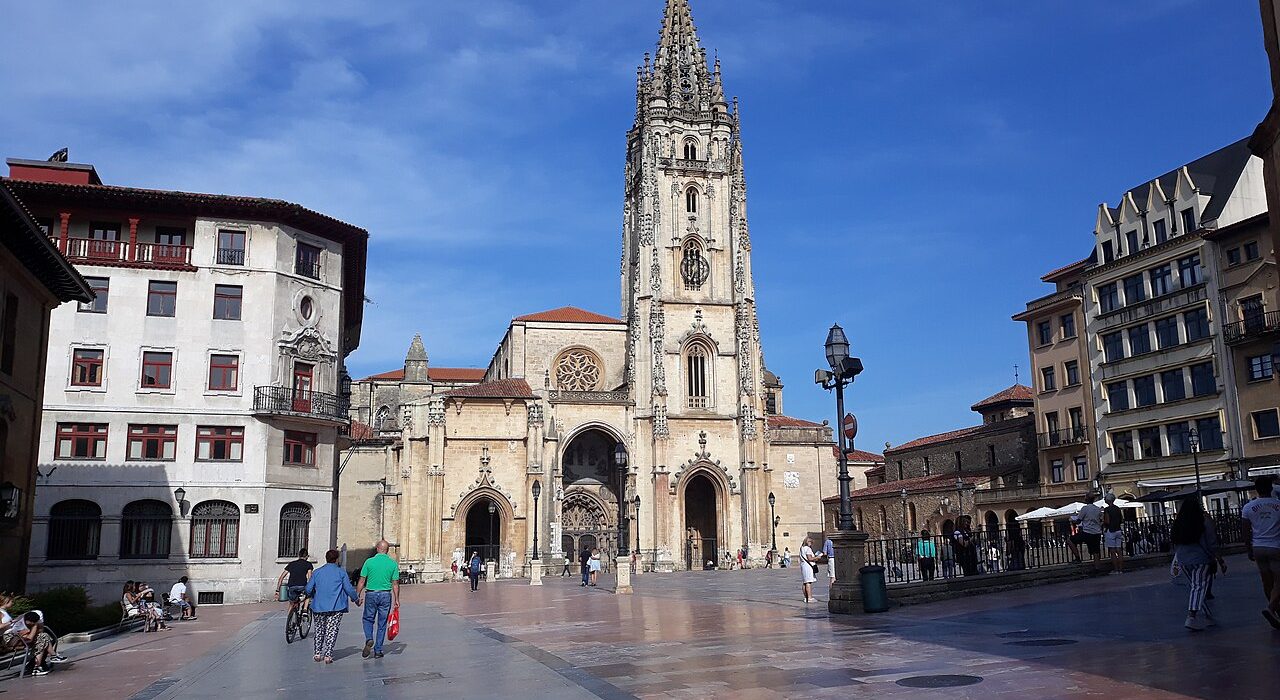
This religious building, declared a UNESCO World Heritage Site in 1985, is the spiritual heart of the city and a labyrinth of history in itself. Entry requires a ticket, ensuring controlled access to its artistic and religious treasures. Integrated within this complex is the Holy Chamber (Cámara Santa), a 9th-century Pre-Romanesque building that once guarded the relics of the Kingdom of Asturias. It is the ideal starting point for understanding the city’s evolution from its medieval origins to the present day.
San Miguel de Lillo
Founded in the 9th century alongside Santa María del Naranco, this temple originally had three naves, of which only the entrance remains, offering an open-air lesson in architectural history. Notable features include its windows with pierced stone latticework and reliefs on the jambs of the main door, elements that have withstood the passage of centuries. Visits are conducted jointly with Santa María del Naranco under a single entry fee, facilitating the tour of Mount Naranco. Like its neighbor, it is part of the UNESCO ensemble, ensuring its protection and international value.
San Julián de los Prados (Santullano)
Built between the years 812 and 842 under the rule of Alfonso II, it is the largest Pre-Romanesque building and one of the best preserved. Declared a National Monument and a UNESCO World Heritage Site, its interior houses original mural paintings with geometric decoration and simulated architecture that will leave you breathless. The monument offers free admission and specific opening hours, making it a very accessible option for travelers. It is a mandatory stop for anyone interested in Early Middle Ages mural art.
La Foncalada
This unique 9th-century Pre-Romanesque public fountain was declared a UNESCO World Heritage Site in 1985. It is a historical landmark demonstrating the hydraulic engineering of the time and its importance for supplying the ancient city. Although smaller in scale compared to the churches, its symbolic value is enormous within the Oviedo monumental ensemble. Located within the urban environment, it recalls the glorious past of the Asturian capital amidst today’s bustle.
Other points of interest
- Cámara Santa: A 9th-century pre-Romanesque building integrated into the Cathedral housing treasures such as the Cruz de los Ángeles (Cross of the Angels); prior booking or a guided tour is required.
- Pre-Romanesque Monuments of Mount Naranco: A complex of buildings offering panoramic views, including Santa María del Naranco and San Miguel de Lillo.
- Museum of Fine Arts of Asturias: An important collection of Spanish art spanning from the Middle Ages to the present day, featuring works by renowned artists.
- Teatro Campoamor: Inaugurated in 1892 with a neoclassical façade, it hosts opera performances and the Princess of Asturias Awards ceremony.
- Palace of the Counts of Toreno: A 17th-century Baroque construction located in Porlier Square, birthplace of the Count of Toreno.
- Plaza de la Escandalera: One of Oviedo’s most iconic and central squares.
- Plaza del Fontán: A historic square situated next to the covered market of the same name.
- Plaza Daoiz y Velarde: A significant public space within Oviedo’s urban layout.
- Plaza de Trascorrales: A pedestrian square in the historic center connecting commercial streets with the monumental area.
- Plaza de Alfonso II El Casto: A square located in the surroundings of the Cathedral and historical monuments.
- Plaza de América: An open space popularly known as the “square of the birds.”
- Plaza de la Constitución: Known as Plaza del Ayuntamientu, it concentrates social life and outdoor terraces in the historic center.
- Campo de San Francisco: Oviedo’s green lung, a central urban park ideal for strolling and relaxing.
- Plaza de la Catedral: The historic heart dominated by the Cathedral and surrounded by emblematic buildings.
- Archaeological Museum of Asturias: Explores the history of Asturias from Prehistory to the Middle Ages through its artifacts.
- Plaza del Carbayón: A central square in Oviedo with vibrant commercial and social activity.
- Old Town of Oviedo: A labyrinth of pedestrian streets featuring historic buildings, charming squares, and a lively commercial and gastronomic scene.
🍂 Otoño
Si visitas Oviedo en otoño, el aire se refresca y los parques se tiñen de colores dorados espectaculares. Es la temporada perfecta para probar la gastronomía asturiana más contundente en los restaurantes locales. Viste por capas para adaptarte a los cambios de temperatura durante el día.
What to do in Oviedo
Oviedo offers specific cultural and gastronomic activities rooted in its traditional festivals and historic spaces. You can immerse yourself in history during the San Mateo Festival in September, which includes concerts and the traditional ‘Day of America in Asturias,’ or participate in the historical commemoration of El Desarme in October, where a menu of chickpeas with cod is savored. For a more everyday experience, visit the El Fontán Market, a historic covered market where you can find fresh local products such as meats, fish, and cheeses. Furthermore, getting lost in the Old Town is an activity in itself, wandering through its pedestrian streets filled with bars and charming squares.
Oviedo in One Day: Express Itinerary
If you’re short on time, this practical 1-day itinerary covers the 4-5 main attractions so you can make the most of your visit.
- 10:00 AM – Cathedral of San Salvador: Start your day in the historic heart by visiting this UNESCO monument from 1985 and its Holy Chamber.
- 12:00 PM – Plaza de la Constitución and Trascorrales: Stroll through the pedestrian center, admire the City Hall, and enjoy the atmosphere at the outdoor terraces.
- 14:00 PM – Lunch in the Old Town: Sample local gastronomy in the streets surrounding the Mercado del Fontán.
- 16:30 PM – Santa María del Naranco and San Miguel de Lillo: Head up Mount Naranco to see the masterpieces of 9th-century Asturian Pre-Romanesque art.
- 19:00 PM – Campo de San Francisco: End your day relaxing in the city’s green lung before dinner.
Where to Eat in Oviedo: Local Gastronomy
Where to Stay in Oviedo
Zona Centro
Con calles peatonales, oferta cultural, de ocio y gastronómica, es ideal para turistas y amantes de la vida urbana.
Casco Antiguo
El barrio más antiguo y con encanto, lleno de historia, plazas y bares, perfecto para turistas y vida nocturna.
El Cristo - Buenavista
Un barrio moderno y familiar, cercano a la universidad, con buena infraestructura y servicios.
How to Get to Oviedo
The city is well connected by land and air, with options varying according to your point of origin and budget.
| Medio | Duración | Precio aprox. | Frecuencia |
|---|---|---|---|
| Tren (AVE) | Variable según origen (ej. Madrid) | Variable | Diaria (Estación de Oviedo) |
| Autobús (Alsa) | Variable según origen | Económico | Frecuente (Estación de Autobuses) |
| Avión | 47 km desde el aeropuerto | Variable | Diaria (Aeropuerto de Asturias OVD) |
| Coche | Variable | Gasolina + Peajes | Continuo (Vías A-66, A-8, A-64) |
Getting Around Oviedo
Urban transport in Oviedo is efficient, and the city center is very walkable. You can use the urban bus to reach farther points like Mount Naranco or residential neighborhoods. However, much of the city’s charm lies in its pedestrian center, allowing you to visit the Cathedral, main squares, and Mercado del Fontán simply by walking. To reach the Pre-Romanesque monuments on Mount Naranco, you can access them by public transport or car, as they are situated on an elevation above the center.
Weather in Oviedo
Best Time to Visit Oviedo
Day Trips from Oviedo
If you have extra time, Oviedo serves as a perfect base to explore other nearby cities in the region and Cantabria. Gijón is a popular option, a coastal city combining beach and culture, easily accessible from the Asturian capital. Another interesting choice is Santander, the capital of Cantabria, offering a different maritime setting and its own tourist attractions. These excursions allow you to complement your cultural visit to Oviedo with coastal experiences within a close radius.
Who is Oviedo for?
Oviedo is a versatile destination that attracts around 487,698 travelers annually according to the INE, with 23% being foreigners. It is ideal for history lovers who want to see 9th-century UNESCO monuments, as well as for foodies eager to try authentic fabada (bean stew) and sidra (cider). Families will find safe and pleasant surroundings in neighborhoods like El Cristo – Buenavista and San Francisco Park, while tourists seeking nightlife and culture will find their best allies in the Casco Antiguo (Old Town) and the Teatro Campoamor. With an average stay of 1.98 nights, it is perfect for a weekend getaway.
Frequently asked questions about Oviedo
How many days do I need to see Oviedo?
With an average stay of 1.98 nights according to tourism data, a weekend is enough to see the main attractions such as the Cathedral and the monuments of Naranco, although you might need more time to explore all the museums and squares in depth.
Is Oviedo expensive?
Oviedo has varied prices; an average meal costs between €12-€18, hostels range from €15-€35 per night, and 3-star hotels between €55-€100, making it accessible for different budgets.
When is the best time to visit Oviedo?
The best time is from May to September, when the average summer temperature is 20°C, avoiding the months from November to February, which are the worst time with average temperatures of 8°C and more rain.
How do I get to Oviedo from Madrid?
You can arrive by AVE train with direct destinations from Oviedo Station, or by bus through the Oviedo Bus Station with companies like ALSA, in addition to driving on the A-66 and A-64 highways.
Which monuments are World Heritage Sites in Oviedo?
Pre-Romanesque monuments such as Santa María del Naranco, San Miguel de Lillo, San Julián de los Prados, and La Foncalada, as well as the Holy Chamber in the Cathedral, are declared World Heritage Sites by UNESCO.