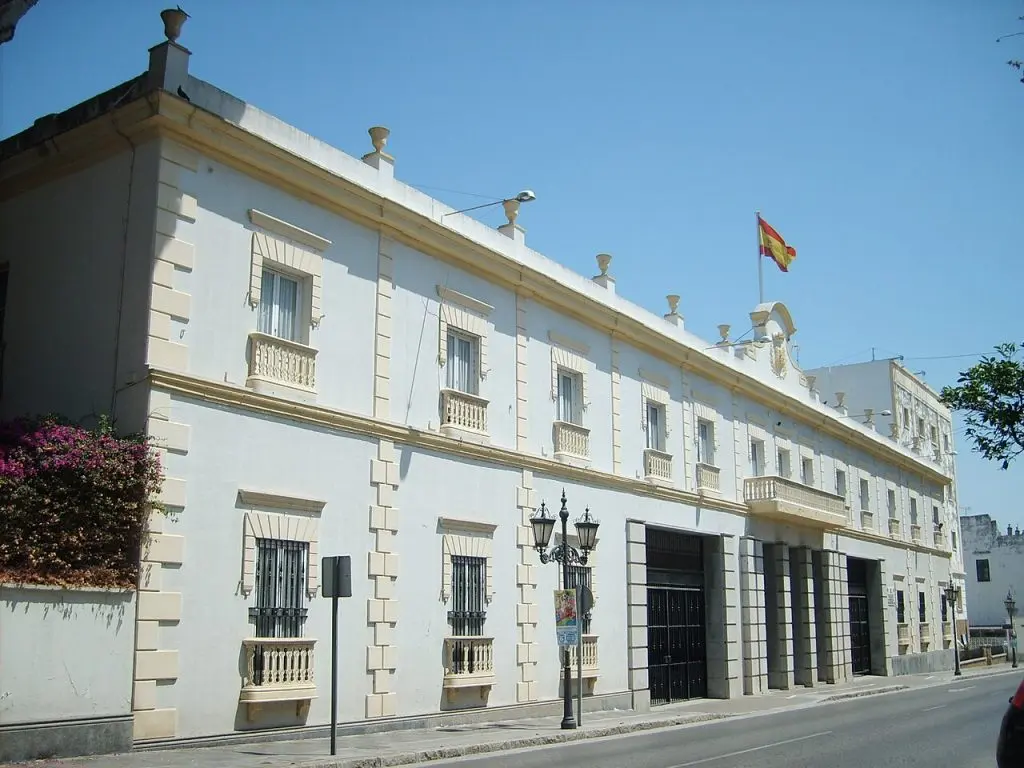
San Fernando
AndalucíaClimate
What to see in San Fernando: the essentials
San Fernando isn’t a typical postcard city: it’s a city experienced among channels, salt marshes and streets with constitutional memory. Here’s what you shouldn’t miss.
Panteón de Marinos Ilustres (Pantheon of Illustrious Sailors)
Within the grounds of the Población Militar de San Carlos, this neoclassical building began construction in 1786 as a church and wasn’t completed until the mid-19th century. In 1850 a Royal Order designated it the Pantheon of Illustrious Sailors, and today it houses the mausoleums of naval figures such as Jorge Juan y Santacilia, Antonio de Escaño and Pascual Cervera y Topete. Walking through its side aisles is a glimpse into Spanish naval history in a solemn, uncrowded space. It’s worth checking visiting hours, as access may be regulated given its location within a military compound.
Iglesia Mayor de San Pedro y San Pablo (Main Church of Saint Peter and Saint Paul)
Its twin towers are the visual welcome to San Fernando and one of the landmarks of the old town. The temple combines late Baroque and Neoclassicism, the two movements that have most shaped local architecture. Here the first Constituent Cortes of Spain swore their oath on 24 September 1810, in the midst of the French siege, when the Puente Suazo marked the boundary of “free Spain”. Its historical and sentimental value makes it a must-stop to understand why this city prides itself on its constitutional heritage.
Playa de Camposoto (Camposoto Beach)
Some 5 kilometres of unspoilt sand within the Parque Natural de la Bahía de Cádiz (Cádiz Bay Natural Park), with salt marshes of high environmental value. It is divided into two areas: one with full services and another far more natural, accessible only on foot along the shore towards the Punta del Boquerón, declared a Natural Monument of Andalusia. Along the promenade you’ll find two bunkers and, at the far end, the legendary Castillo de Sancti Petri (Sancti Petri Castle). It holds a Blue Flag and a Q for Tourist Quality, and forms part of one of Europe’s main coastal wetlands.
Parque Natural de la Bahía de Cádiz (Cádiz Bay Natural Park)
The park wraps around much of the municipal area and offers trails to interpret the landscape of tidal channels and creeks. The Centro de Visitantes Bahía de Cádiz (Cádiz Bay Visitor Centre), at Calle Buen Pastor 507, next to the Salina del Estanquillo and near Camposoto, is the ideal starting point to get your bearings. There you’ll be informed about the public facilities available to enjoy the park without damaging its delicate ecosystem.
Real Instituto y Observatorio de la Armada (Royal Institute and Observatory of the Navy)
A top-level scientific institution dedicated to astronomy, geodesy and determining the official time in Spain. Its historic instrument collection is a treasure for science and navigation enthusiasts. It’s worth finding out about guided tours or open days.
Puerta del Mar (Sea Gate)
This monument is part of San Fernando’s heritage landscape and a good reference point for getting your bearings in the city.
Casa Consistorial de San Fernando (San Fernando Town Hall)
The seat of the city council on Plaza del Rey, it is an 18th-century building by Torcuato Cayón and Torcuato Benjumeda. It is listed as a Site of Cultural Interest and forms part of the historic site of the places of the Cortes and the Constitution of 1812. It’s well worth including on a tour of the historic centre.
Real Teatro de las Cortes (Royal Theatre of the Cortes)
Built in the early 19th century, at a time of great demographic and economic growth for the city, this theatre still hosts performances. It was formerly known as the Corral or Casa de Comedias, and its current name pays tribute to the constitutional episode of 1810.
Castillo de San Romualdo (San Romualdo Castle)
Its structure and location are designed to control and watch over a strategic area, showcasing construction techniques typical of the era in which it was built. It forms part of the legacy of Spanish fortifications that protected key territories.
Puente Zuazo
Historic bridge that was once the only land access from the mainland to Cádiz and the scene of the city’s defence during the Peninsular War. Its strategic value and setting make it an outstanding heritage site.
Parroquia Conventual de Nuestra Señora del Carmen
Convent church at Calle Real 225, also known as the Church of Nuestra Señora de Belén, linked to the city’s seafaring tradition. It preserves altarpieces and imagery of interest and is open for worship and visits every day except Saturdays and Sundays.
Camarón Museum
Brings together mementos, photographs and objects linked to the artistic career of José Monge Cruz, Camarón de la Isla. Open Tuesday to Saturday from 11:00 to 14:00 and Sundays from 10:00 to 14:00; closed on Mondays.
Centro de Congresos Cortes de la Real Isla de León
Hosts cultural activities and forms part of the city’s constitutional route. Highlights include the Auditorio Lázaro Dou, with a capacity of 260 people, and rooms such as the Parlamento, the Bicentenario de las Cortes and the Plenos.
Torrealta
Optical telegraph on the Madrid-Cádiz line, number 59.
Museo Municipal
Municipal museum space in the city.
Batería de Zuazo
Palace.
Hornos Púnicos
Monument.
🍂 Otoño
Si visitas San Fernando en otoño, el clima sigue siendo templado y las lluvias aún no son protagonistas, ya que la precipitación anual es de 476.4mm. Puedes disfrutar de la Fiesta de Las Cortes en septiembre, la Romería del Cerro de los Mártires o la Fiesta de Tosantos en octubre. Lleva calzado cómodo para caminar y algo de abrigo fino para la noche.
What to do in San Fernando
San Fernando offers food markets, centuries-old festivals, natural beaches within a protected park and neighbourhoods with authentic local life. If you happen to visit during one of its big festivals, the experience is multiplied: the February Carnival fills the streets with humorous parades and performances on tablaos, while the Feria del Carmen y de la Sal in July honours the patron saint with casetas, music and processions. In June, the Noche de San Juan in La Casería burns the “Juan y Juana” figures on the shortest night of the year. For eating, the Mercado Gastronómico La Isla opens Monday to Saturday and brings together food stalls and local produce in a single space. And if you’re looking for nature, the trails of the Parque Natural Bahía de Cádiz and Camposoto beach are the perfect plan between April and October.
San Fernando in a day: express itinerary
- 10:00 – Iglesia Mayor de San Pedro y San Pablo: start at the place where the first Constituent Cortes swore their oath in 1810; its twin towers place you in the heart of the old town.
- 11:00 – Casa Consistorial and Plaza del Rey: stroll through the historic centre and admire this 18th-century building, declared a Site of Cultural Interest.
- 12:00 – Real Teatro de las Cortes and Camarón Museum: peek into the 19th-century theatre and, if you’re a flamenco fan, step into the museum of the island’s most universal cantaor.
- 13:30 – Mercado Gastronómico La Isla: enjoy a varied selection of tapas made with local produce in a single space.
- 17:00 – Playa de Camposoto and Punta del Boquerón: walk along the shore towards the Castillo de Sancti Petri, pass by the bunkers and enjoy one of Europe’s most important coastal wetlands.
Where to eat in San Fernando: local cuisine
Where to stay in San Fernando
Casco Antiguo
El centro histórico de San Fernando, con calles estrechas y plazas como la Plaza del Rey y la Plaza de la Iglesia. Alberga edificios históricos, la Iglesia Mayor y el Ayuntamiento, y tiene un ambiente tranquilo con comercios locales y bares tradicionales.
La Isla
Zona residencial y comercial que conecta el casco antiguo con otras áreas, con avenidas amplias y numerosos comercios y restaurantes. Es una zona céntrica y animada, con fácil acceso a pie a los principales puntos de interés.
Bahía Sur
Zona moderna junto a la bahía, conocida por su centro comercial y de ocio, con cines, restaurantes y un entorno ajardinado. Es ideal para familias y para quienes buscan comodidad y aparcamiento.
La Casería
Barrio residencial situado al norte, con ambiente local y tranquilo, cerca de la playa de la Casería. Tiene servicios básicos y es una zona menos turística, ideal para conocer la vida cotidiana.
San José
Barrio tradicional con calles tranquilas y ambiente familiar, próximo al centro histórico. Cuenta con pequeños comercios y bares de barrio, y es una buena opción para alojarse lejos del bullicio pero cerca de todo.
El Parque
Zona residencial alrededor del Parque Almirante Laulhé, con amplias zonas verdes y paseos. Es un área tranquila y bien comunicada, con algunos hoteles y restaurantes, adecuada para familias y viajeros que buscan relax.
Getting to San Fernando
From Jerez de la Frontera, the fastest option is the train: 22 min (Regional), 41 a day.
San Fernando-Centro (0,4 km from the centre)
| From | Direct train | Direct bus | Car |
|---|---|---|---|
| Jerez de la Frontera | 22 min · 41/day Regional | 1 h 20 min · 1/day ALSA | 34 min 35 km |
| Cádiz | 10 min · 59/day Intercity | 20 min · 85/day Consorcio de Transportes Bahía de Cádiz, ALSA | 19 min 16 km |
| Chiclana de la Frontera | 20 min · 37/day Cercanías T1 | 10 min · 36/day Consorcio de Transportes Bahía de Cádiz | 13 min 11 km |
| El Puerto de Santa María | 13 min · 41/day Intercity | 55 min · 1/day Consorcio de Transportes Bahía de Cádiz | 27 min 27 km |
| Sevilla | 1 h 21 min · 16/day Intercity | 2 h 35 min · 1/day ALSA | 1 h 30 min 124 km |
| Dos Hermanas | 1 h 12 min · 13/day Regional | — | 1 h 17 min 108 km |
| Córdoba | 2 h 37 min · 9/day Intercity | — | 2 h 56 min 257 km |
| Utrera | 1 h 03 min · 9/day Regional | — | 1 h 20 min 106 km |
| Jaén | 5 h 15 min · 8/day Regional | — | 4 h 09 min 327 km |
| Madrid | 4 h 23 min · 4/day Intercity | — | 7 h 12 min 654 km |
Direct trains and buses from the official timetables published by the operators on Spain's National Transport Access Point (a reference Wednesday); driving times from OpenStreetMap. Operators that do not publish their timetables may run more services. Check the timetable before you travel.
Getting around San Fernando
The old town and the main points of interest are easy to explore on foot, especially the area between Plaza del Rey, the Iglesia Mayor and calle Real. For longer journeys, San Fernando has a city bus connecting the outlying neighbourhoods, Camposoto beach and the Bahía Sur area. If you’re staying in the centre, you’ll probably only need the bus to get to the beach or the Parque Natural. For up-to-date timetables and routes, check the official San Fernando tourism website.
Weather in San Fernando
Best time to visit San Fernando
Day trips from San Fernando
San Fernando is an excellent base for exploring the Bay of Cádiz and its surroundings. Cádiz, just a few minutes away by train, is the bay’s great monumental city, with its old town, urban beaches and lively atmosphere. El Puerto de Santa María offers wineries, beaches and a lively historic centre. Chiclana de la Frontera adds long beaches and golf courses. Puerto Real retains a quiet, authentic feel facing the bay. And Jerez de la Frontera, somewhat further north, is a must for wine, flamenco and the Real Escuela Andaluza del Arte Ecuestre. All these towns are part of the Mancomunidad de Municipios Bahía de Cádiz or the Bahía de Cádiz-Jerez metropolitan area, so road and rail connections are frequent.
Little-known facts about San Fernando
A Spanish capital that doesn’t appear in tourism books. San Fernando was the seat of the Spanish Cortes and the capital of the nation during the War of Independence, after heroically resisting the French siege. The Puente Suazo then marked the boundary of “free Spain”.
It wasn’t always called San Fernando. Until 1813, the city was officially known as Villa de la Real Isla de León. The name change was a tribute to King Ferdinand VII at the height of constitutional fervour.
The “white gold” that drove the economy. Salt was so important in San Fernando that it became known as “white gold”. Its extraction shaped the economy and society of the territory for centuries.
Canals built to withstand the siege. In 1810, Navy brigadier Diego de Alvear y Ponce de León designed a series of canals on the Isla de León to guarantee the defence during the French siege in the War of Independence.
Monchi came from here. The famous sporting director of Sevilla FC was born in San Fernando in 1968 and began his career at C.D. San Fernando before becoming one of Europe’s most renowned sporting directors.
Who San Fernando is for
San Fernando is for travellers fleeing mass tourism and looking for a city with layers: constitutional history, seafaring tradition, protected nature and unpretentious tapas bars. Couples will find quiet corners in San José or the old town; families will appreciate the convenience of Bahía Sur and Camposoto beach; history lovers will enjoy exploring the sites of the 1810 Cortes; and foodies have in bienmesabe, cañaillas and estuary fish more than enough reason to stay. It isn’t a city of grand museums or spectacular monuments, but it is a place where heritage is lived in the streets, in the bars and along the channels.
💡 ¿Sabías que...?
- ● San Fernando se llamó oficialmente Villa de la Real Isla de León hasta el año 1813, cuando pasó a denominarse San Fernando. (https://es.wikipedia.org/wiki/San_Fernando_(C%C3%A1diz))
- ● La ciudad fue sede de las Cortes españolas y capital de la nación durante la Guerra de Independencia Española, tras resistir heroicamente el asedio francés. (https://es.wikipedia.org/wiki/Historia_de_San_Fernando)
- ● San Fernando también es cuna de numerosos personajes ilustres, como el futbolista Monchi, nacido en 1968, que comenzó su carrera en el C.D. San Fernando y luego destacó como director deportivo del Sevilla FC. (https://www.elguichidecarlos.com/personajes-historicos-de-san-fernando-gentes-de-la-isla/)
- ● La importancia de la sal en San Fernando llevó a que este elemento se denominara 'oro blanco', y su explotación influyó en la economía y sociedad del territorio. (https://dialnet.unirioja.es/servlet/oaiart?codigo=9006704)
- ● En 1810, el brigadier de la Armada Diego de Alvear y Ponce de León proyectó una serie de canales en la Isla de León (actual San Fernando) para garantizar la defensa durante el asedio francés en la Guerra de Independencia. (https://helvia.uco.es/xmlui/handle/10396/17574)
Frequently asked questions about San Fernando
How many days do I need to see San Fernando?
With one full day you can cover the essentials: Iglesia Mayor, Casa Consistorial, Real Teatro de las Cortes, Camarón Museum and Camposoto beach. If you want to explore the Parque Natural Bahía de Cádiz, the Panteón de Marinos Ilustres and the Observatorio de la Armada at a leisurely pace, 2 or 3 days are ideal. San Fernando also works very well as a base for excursions to Cádiz, Jerez or El Puerto de Santa María.
What is the best time of year to visit San Fernando?
From April to October, with average temperatures of 18 to 24.2 °C according to AEMET. Summer is perfect for the beach, though busier; spring and autumn are ideal for combining heritage and nature without the crowds. Winter is mild (13.0 °C on average), but with a higher chance of rain.
How do I get to San Fernando from Madrid?
There is no direct AVE to San Fernando. The usual route is to take a high-speed train to Seville or Cádiz and from there continue by medium-distance or Cercanías train to the Plaza del Carmen station. You can also fly to Jerez or Seville and complete the journey by road or rail.
Does San Fernando have a beach?
Yes. Camposoto beach is an unspoilt stretch of about 5 kilometres within the Parque Natural de la Bahía de Cádiz, with Blue Flag and Q for Tourist Quality certifications. Its most natural section, towards the Punta del Boquerón, is only accessible on foot along the shoreline or by paths.
What typical dishes should I try in San Fernando?
Don’t leave without trying bienmesabe (marinated and fried fish with cumin and oregano), papas con chocos, boiled cañaillas and estuary fish such as dorada, lubina or lenguado. The Mercado Gastronómico La Isla is a good starting point for a varied tasting.