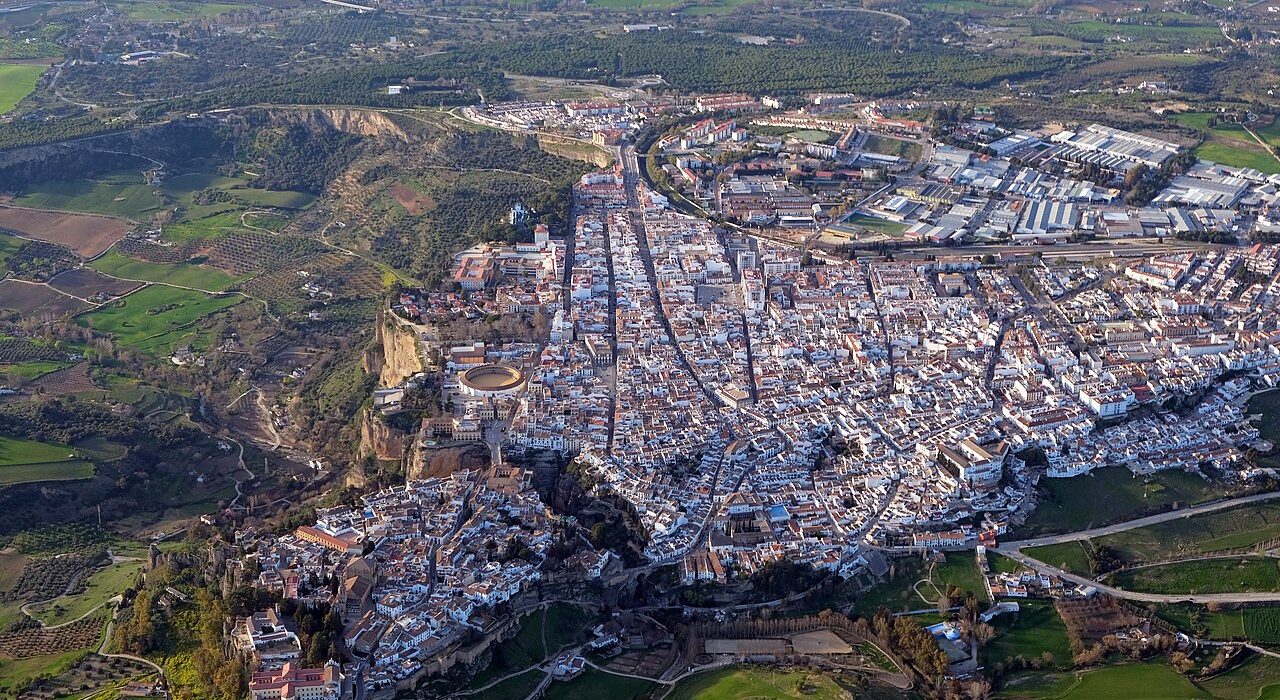
Ronda
AndalucíaClimate
Daily budget
What to see in Ronda: the essentials
Puente Nuevo de Ronda
The Puente Nuevo de Ronda (New Bridge of Ronda), designed by the architect Martín de Aldehuela, is the city’s quintessential postcard image: 66 meters of stone and masonry divided into three arches that span the Guadalevín gorge and link the historic center with the modern area. What almost nobody knows is that inside it houses an old prison, now accessible as a viewing room from the bridge’s interpretation center. It is worth going down to the base of the gorge to appreciate its true scale and stopping at the side viewpoints to understand why the people of Ronda call it “the new bridge” even though it is almost two centuries old. A visit to the interpretation center offers insight into its construction and the trades that made it possible.Puente Viejo (Roman Bridge) and Puente Árabe
The Puente Árabe (Arab Bridge), also known as Puente de las Curtidurías (Tanneries Bridge), dates from the 11th century and was part of the old Muslim walls. Although it is popularly known as the Roman Bridge, there is no current evidence to confirm such an origin, although it cannot be ruled out that a Roman-era bridge existed in the same spot, since it was the only point that allowed access to the city from the north. Its current state is also not entirely Islamic, as it has undergone several repairs following successive floods of the river. It is located a few meters from the Arab Baths and is reached by going down from the Puente Viejo and the Arch of Philip V, a perfect combination of history and views.Tajo de Ronda
The Tajo de Ronda is a gorge more than 100 meters deep, 500 meters long and 50 meters wide, carved by the Guadalevín River over millennia, dividing the historic city from the modern one. This geological formation creates a picturesque setting of outstanding cultural and historical character, opening at its base into what is known as the Caldera. On its cliffs nests an important colony of lesser kestrel, along with choughs, peregrine falcon, eagle owl and swift, making the visit a small gift for birdwatching lovers. Walking its viewpoints is a must, especially at sunset.Palacio de Mondragón
The Palacio de Mondragón (Mondragón Palace) today houses the Municipal Museum of Ronda, with archaeological, ethnographic and sacred art collections, and is located at Plaza Mondragón, s/n. General admission costs €5 and opening hours are: Sundays and public holidays from 10h to 15h (last entry 14:30h); Mondays from 10h to 14h and from 15h to 18h (last entry 17:30h); Tuesday to Friday from 10h to 19h (last entry 18:30h); Saturdays from 10h to 14h and from 15h to 18h (last entry 17:30h). Allow about 30 minutes to see it calmly and do not leave without looking into its interior courtyard, a small Nasrid gem. For same-day queries, write to informacion@turismoderonda.es or call +34 952 18 71 19.Iglesia del Padre Jesús
The Iglesia de Santa María de la Encarnación la Mayor, known as Iglesia del Padre Jesús (Church of Father Jesus), was elevated to a collegiate church by King Ferdinand the Catholic and stands on the site of the city’s former main mosque, of which remains of the mihrab are still preserved. Work began in 1486, with later Mannerist additions, and its Latin cross plan mixes Renaissance and Mannerist elements from the 16th and 17th centuries. Its tower, with a square base and octagonal sections topped with Gothic tracery and pinnacles, is one of the most recognizable silhouettes of the old town. It is worth noting the triple gallery added to it in the early 17th century.Plaza de Toros de la Real Maestranza de Caballería de Ronda
Its monumental façade faces Avenida de la Paz and, according to the original design, stood opposite the Royal Box, forming an axis toward the Puente Nuevo (New Bridge), a layout that was altered by the urban expansion of the late 19th and early 20th centuries. Access to the site requires a combined ticket with the museum, approximately €8, with morning and afternoon opening hours depending on the season. It is the birthplace of modern bullfighting and an essential stop for understanding why Ronda beats to the rhythm of the bull.Baños Árabes
The Baños Árabes (Arab Baths) of Ronda had a hydraulic system fed by the Culebras stream by means of water wheels, and featured hot, warm, and cold pools following Roman tradition. Its rooms, supported by columns and star-shaped skylights, are semi-subterranean beside the riverbed. It is one of the best preserved in Spain.Alameda del Tajo
The Alameda del Tajo is a 19th-century tree-lined promenade, formerly called Alameda de San Carlos, that skirts the gorge on the modern side and offers panoramic views of the Serranía. Some of its bicentennial trees are listed in the guide to notable trees of Málaga, such as the Himalayan cedar, the stone pine, and the three-spiked acacia. It features viewpoints, benches, and old flower and craft stalls.Iglesia de Santa María la Mayor
The Iglesia de Santa María la Mayor (Church of Saint Mary the Greater) belongs to the Diocese of Málaga and is an outstanding example of Ronda’s religious heritage, one of the city’s main monuments. It is located in the heart of the old town, a few steps from Plaza de la Duquesa de Parcent.Murallas y Puerta de Almocábar
The Puerta de Almocábar (Almocábar Gate), the main walled entrance, retains its semicircular towers and is one of the most distinctive entrances to the old town. The visit is free of charge, a perfect excuse to walk around the walls.Jardines de Cuenca
The Jardines de Cuenca (Cuenca Gardens) are a free-access viewpoint that completes the Ronda itinerary alongside other Muslim gates such as the Arco del Cristo, the Puerta de las Imágenes, and the Castillo del Laurel.Mirador de la Aldehuela
The Mirador de la Aldehuela is one of the classic viewpoints on the Ronda tourist route, easily accessible on foot from the city center. Ideal for a first photo of the gorge.Plaza de la Duquesa de Parcent
The Plaza de la Duquesa de Parcent is the monumental heart of the old town, named after Trinidad Scholtz, known as the Duchess of Parcent. At its center stands an ornamental fountain that is one of its most photographed features.Casas Colgantes del Tajo
The Casas Colgantes del Tajo (Hanging Houses of the Gorge) are a group of dwellings literally built into the rock and suspended over the abyss, visible from the Puente Nuevo and the viewpoints of the modern quarter. One of the most striking images of the city.Casa del Rey Moro y La Mina
The Casa del Rey Moro y La Mina (House of the Moorish King and the Mine) is a monument that forms part of Ronda’s historical route. For updated practical information, check the official Ronda tourism website.🍂 Otoño
Si visitas Ronda en otoño, las temperaturas bajan y vuelven las lluvias, así que el ambiente es más tranquilo y con menos turistas. Es un buen momento para visitar la Casa del Rey Moro y bajar por La Mina sin colas, aunque el terreno puede estar algo resbaladizo. Lleva calzado impermeable y un chubasquero plegable para no perderte nada.
What to do in Ronda
Ronda offers walking routes through its three main neighborhoods—La Ciudad, San Francisco, and El Mercadillo—guided visits to its monumental heritage, and the experience of buying local products at the Mercado Municipal de San Cristóbal, where fruits, vegetables, meats, fish, cheeses, and cured meats from the Serranía come together. You also can’t miss the tapeo scene in the Mercadillo area, where Ronda’s nightlife stretches on among traditional bars.Ronda in one day: express itinerary
- 09:00 — Mirador de la Aldehuela. First contact with the gorge and good morning light for photos.
- 10:00 — Puente Nuevo (New Bridge) and its interpretation center. Tour the old prison-viewpoint inside.
- 11:30 — Plaza de Toros de la Real Maestranza. Combined visit with the bullfighting museum.
- 13:00 — Lunch at the Mercado Municipal de San Cristóbal or at bars in the Mercadillo neighborhood.
- 15:30 — Palacio de Mondragón and Municipal Museum (5€, 30 minutes).
- 17:00 — Iglesia del Padre Jesús, Puente Árabe (Arab Bridge) and Baños Árabes (Arab Baths), a historic trio you can cover on foot.
- 19:00 — Stroll along the Alameda del Tajo at sunset to say goodbye to the gorge.
Where to eat in Ronda: local gastronomy
Where to stay in Ronda
Casco Antiguo (La Ciudad)
Ideal para quienes visitan Ronda por primera vez, este barrio histórico está lleno de calles empedradas, balcones floridos y monumentos emblemáticos.
Barrio de San Francisco
Un barrio tranquilo y tradicional, perfecto para una experiencia andaluza auténtica, con negocios locales y fácil acceso a parques naturales.
Zona Nueva / El Mercadillo
Una opción moderna y práctica cerca de la estación de tren, con una vibrante oferta de restaurantes, bares y la principal calle comercial.
How to get to Ronda
| Medio | Duración | Precio aprox. | Frecuencia |
|---|---|---|---|
| Tren (estación de Ronda, sin AVE) | Variable según origen (consultar según Renfe) | Variable según Renfe | Trenes regionales según Renfe |
| Avión (Aeródromo de Ronda) | Avión privado/aeronaves ligeras | — | — |
| Autobús | Variable según origen | Variable | Líneas regulares desde Málaga y otras ciudades |
How to get around Ronda
Ronda is easy to explore on foot, as the distances between the main monuments in the old town are short. For longer journeys, the city has an urban bus network connecting the modern area, the Mercadillo, and the outlying neighborhoods. If you arrive by train, the Old Town is a reasonable walk away, and the bus is a good option with heavy luggage.Weather in Ronda
Best time to visit Ronda
Day trips from Ronda
Málaga, the provincial capital, is just over an hour away by road and allows for a full day combining its historic center, the Picasso Museum, and the port. It’s the perfect excursion to complement your visit to Ronda with a contrast of a big city and the Mediterranean coast.Who is Ronda for
Ronda is ideal for couples looking for a destination with romance and unique views, for history lovers thanks to its Roman, Arab, and Christian heritage, and for foodies who want to try slow-cooked stews and cured meats from the Serranía. Families find a safe and manageable environment, backpackers have hostels from 15-40€ per night, and the local food scene delights those on a tight budget.Frequently asked questions about Ronda
How many days do I need to see Ronda?
With one well-organized day you can cover the must-see attractions —Puente Nuevo (New Bridge), Tajo, Plaza de Toros (Bullring), Palacio de Mondragón (Mondragón Palace), Iglesia del Padre Jesús (Church of Father Jesus), Puente Árabe (Arab Bridge) and Baños Árabes (Arab Baths)—. If you want to enjoy the local cuisine and the viewpoints at sunset, two days are ideal. The average stay of tourists according to the INE is 1.57 nights.
Is Ronda expensive?
No. A full meal costs around €10-20, hostels range from €15 to €40 per night, 3★ hotels between €50 and €80, and 4-5★ hotels between €90 and €200. Admission to the Palacio de Mondragón costs €5 and the combined ticket for the Plaza de Toros around €8, very reasonable figures.
What is the best time of year to visit Ronda?
According to AEMET data, the best time runs from June to September, with mild temperatures (average of 21.9°C in summer). Winter is colder (7.4°C on average) and annual rainfall is 1,675.5 mm, so it is best to avoid the wettest months.
How do I get to Ronda from Madrid?
The most common way is by train, arriving at Ronda station (no AVE), according to Renfe. You can also arrive by bus or car by road, combining with the local urban bus network once in the city.
Is Ronda an overcrowded destination?
Ronda receives around 261,102 travelers per year according to the INE, with 68% foreign visitors, making it a very international destination but still manageable outside the peaks of Semana Santa (Holy Week) and summer.