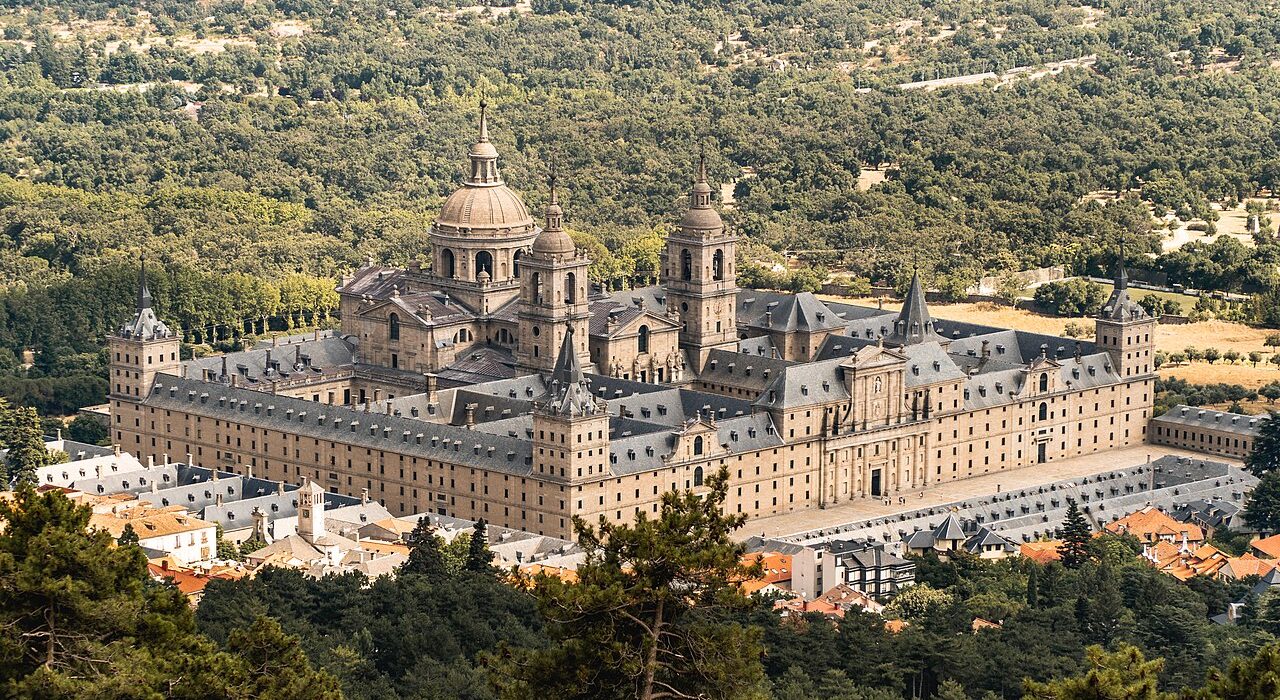
El Escorial
Comunidad de MadridClimate
What to see in El Escorial: the essentials
Royal Monastery of San Lorenzo de El Escorial
The grey mass visible from miles around is the main reason most people cross the mountain range. Built between 1563 and 1584 by order of Philip II, the monumental complex was declared a UNESCO World Heritage Site on 2 November 1984, and it shows in every corner: kings rest here, thousands of books are kept here, and this is where a building was designed that experts have considered the Eighth Wonder of the World since the late 16th century. Inside, you should at least get tickets for the Panteón de los Reyes (Pantheon of the Kings), the Basilica, the Chapter Houses, the Library, and, if the time slot works out, the Painting Gallery. The usual opening hours run from Tuesday to Sunday in morning and afternoon sessions, with general admission priced around €12 (Europeans with accreditation usually get a reduced rate); online booking is highly recommended on weekends and in summer. The official El Escorial tourism website keeps opening hours and prices up to date.Pantheon of the Kings
It is the most solemn chamber in the entire Escorial complex and probably the one that makes the greatest impression when you enter for the first time. It forms part of the Royal Monastery declared a UNESCO World Heritage Site, built between 1563 and 1584 by order of Philip II, and it brings together a royal palace, basilica, monastery, pantheon, library, and school under a single granite roof. Most of the kings of Spain since Charles I are buried here, so it is worth spending at least half an hour contemplating the vault decorated with jaspers and the play of light entering through the upper lanterns.Casita del Príncipe (Prince’s Little House, also known as Casita de Abajo)
A few minutes from the Monastery, tucked away on one side of the garden, hides one of the lesser-known surprises: a small Rococo-Neoclassical palace that Prince Charles IV commissioned as a retreat. It preserves original frescoes and period furniture, so the visit is more enjoyable if you take your time to notice the details on the walls and in the small salons. It usually opens on weekends and for guided tours; check the schedule at the tourist office before heading over.Chair of Philip II
About 7 km round trip from the San Lorenzo de El Escorial Tourist Office, roughly 1 hour of walking at low difficulty, one of the loveliest routes in the area begins. The path sets off through the Arcos de la Compaña, leaving La Lonja behind, and already in the first stretch it reveals the Jardín y Huertas de los Frailes (Friars’ Garden and Orchards) with the pond presided over by a weeping willow whose origin is the Blasco Sancho fountain, one of the two oldest in the site. The destination is a rock carved into the shape of a throne from which Philip II oversaw the Monastery’s construction: the panoramic views of the Escorial complex justify every step.Museo Cocheras del Rey
For those curious about courtly life, this historic space is linked to the activity of the Spanish court during its journeys to the monastery residence: this is where the animal-drawn carriages were kept, along with the surrounding stables and services for the care of the horses. Access is restricted and it only opens to groups with prior reservation of a minimum of 10 people on weekdays and 30 on Saturdays, remaining closed on Sundays and public holidays. It is worth calling ahead if you are traveling in a group, because the site is small and spots fill up fast.Falda de Abantos
On the slopes of Mount Abantos there is a beech forest (the Abantos beech forest) accessible via hiking routes of around 14 km with significant cumulative elevation gain, following dirt paths and dirt tracks, with the usual starting point at the Monastery pond. It is the best nature excursion for a full morning.Mirador Cruz de Rubens
A reference point on the scenic viewpoint routes in the area, with elevated views over the mountain range. Perfect for rounding off the day after visiting the Monastery.🍂 Otoño
Si visitas El Escorial en otoño el clima se vuelve más fresco y los paisajes de la Falda de Abantos se tiñen de tonos ocres, creando un ambiente muy especial para caminar. La Casita del Príncipe y los Jardines de los Frailes se ven especialmente bonitos con esta luz. Eso sí, te recomiendo llevar paraguas y consultar la previsión, ya que las lluvias pueden aparecer en cualquier momento.
What to do in El Escorial
El Escorial offers three main axes to fill your itinerary: monumental heritage, nature, and festivals. On the one hand, the Fiestas Patronales de San Bernabé (patron saint festivities of St. Barnabas, June) fill the town for more than a week with concerts, a free novillada (novice bullfight) in the Parque de la Manguilla, an artisan market, a sports tournament, children’s activities, and an opening proclamation in the Plaza de España. In August, the Fiestas Patronales de San Lorenzo Mártir (patron saint festivities of St. Lawrence the Martyr) add Honores y Distinciones (honors and distinctions), concerts in the Lonja del Real Monasterio (monastery square), gigantes y cabezudos (giants and big-head figures), peñas (social clubs), and the Travesía de las Cumbres Escurialenses as the closing event. And in September, declared of Regional Tourist Interest, the Romería de la Virgen de la Herrería (pilgrimage of the Virgin of La Herrería) carries the image to its hermitage in the La Herrería forest with decorated carts, traditional mountain dress, peñas, countryside meals, and a mass in the Prados del Rodeo. Those who prefer quieter plans can connect the neighborhoods of the historic center with the local bus and finish the day at a local asador (grill restaurant).El Escorial in one day: express itinerary
- 9:30 — Real Monasterio de San Lorenzo. It opens early and the rooms are still empty: start with the Basilica and then go down to the Pantheon of the Kings.
- 11:30 — Casita del Príncipe. A few minutes’ walk away, perfect for a short visit before lunch.
- 13:30 — Cocido madrileño at an asador in the center. Go early because many places run out of portions by mid-afternoon.
- 16:00 — Silla de Felipe II. A walking route of about 7 km round trip, low difficulty, starting from the Tourist Office through the Arcos de la Compaña.
- 18:30 — Mirador Cruz de Rubens or the Monastery pond. Soft light to end the day with views of the mountains.
Where to eat in El Escorial: local gastronomy
Where to stay in El Escorial
Zona del Real Monasterio (Casco Histórico)
Corazón cultural e histórico de El Escorial, dominado por el impresionante Monasterio de San Lorenzo. Aquí se concentra la mayor actividad turística, con calles llenas de tiendas, restaurantes tradicionales y un ambiente vibrante. Es ideal para sumergirse en la historia y la arquitectura.
Zonas Residenciales Periféricas
Áreas que rodean el centro histórico, ofreciendo un ambiente más tranquilo y local. Son ideales para quienes buscan escapar del bullicio turístico sin alejarse demasiado de las atracciones principales, con opciones de alojamiento más diversas y a menudo más económicas.
Zona de Miradores y Naturaleza (Silla de Felipe II)
Ubicada en las afueras del núcleo urbano, esta zona ofrece impresionantes vistas panorámicas del Monasterio y el paisaje circundante. Es un lugar perfecto para amantes de la naturaleza, el senderismo y para quienes buscan un momento de paz y conexión con el entorno natural.
How to get to El Escorial
| Medio | Duración | Precio aprox. | Frecuencia |
|---|---|---|---|
| Tren (estación El Escorial, sin AVE) | Aprox. 1 h desde Madrid | 5–8 € según Renfe | Servicios diarios según Renfe |
| Autobús | Variable según compañía | 6–10 € | Salidas regulares |
| Coche | Aprox. 50 min desde Madrid | Peaje variable | Libre |
How to get around El Escorial
The local bus connects the historic center with the outlying residential areas and the main points of interest, including access to hiking trails such as the Silla de Felipe II (Philip II’s Seat) and the Monastery’s pond. For most travelers, the best option is to get around on foot: the Monastery, the Casita del Príncipe (Prince’s Little House), and the restaurants in the center are all within very short distances.Weather in El Escorial
Best time to visit El Escorial
Day trips from El Escorial
El Escorial’s location, at the foot of the southern slopes of the Sierra de Guadarrama according to the INE, makes it a perfect starting point for excursions to mountain towns. From here you can easily connect with villages in the Sierra de Guadarrama National Park, with Rascafría, Cercedilla, or the Lozoya Valley itself, all less than an hour away by road and well connected by Cercanías commuter train. Madrid itself is also a viable day trip: about 50 km away via the A-6, it allows you to combine El Escorial’s heritage with an afternoon of tapeo (bar-hopping for tapas) in the center.Things you didn’t know about El Escorial
The Monastery of El Escorial was declared a World Heritage Site by UNESCO on November 2, 1984, a date that local guides repeat with pride. The architectural construction of the monastery took 21 years, from 1563 to 1584, a record time for the period according to experts, who are still amazed at how a structure of those dimensions was raised in just two decades. The workers who labored on the El Escorial project paid no taxes, had medical care that was unusual for the time, discounts on food, and could not be fired: a set of labor rights that was very advanced for the 16th century. The Monastery of El Escorial has been considered the Eighth Wonder of the World since the late 16th century due to its size and complexity, a title that, four centuries later, is still repeated on every guided tour.Who El Escorial is for
El Escorial is for everyone, but especially for couples and families who love history: the Monastery and the Pantheon of the Kings are reason enough for the trip, and the dining scene (cocido stew, suckling pig, grilled meats) rounds out the experience. Backpackers will find good lodging in outlying residential areas and hiking trails such as the Silla de Felipe II or the Abantos beech forest. And foodies have two essential stops: Montia, with its Michelin star, and Charolés, a classic if ever there was one.Frequently asked questions about El Escorial
How many days do I need to see El Escorial?
With one full day you can cover the Monastery, the Casita del Príncipe (Prince’s Cottage) and the Silla de Felipe II (Philip II’s Seat), but two days allow you to add the Museo Cocheras del Rey (King’s Carriage Museum), a route through the Abantos beech forest and a relaxed cocido dinner. If you coincide with the San Bernabé or San Lorenzo festivals, add one extra night to enjoy concerts and peñas (open-air festival bars).
What is the best time of year to visit El Escorial?
According to AEMET, the average temperature in summer is around 18.7°C and in winter 3.2°C. The best time runs from June to September, especially if you want to coincide with the patron saint festivals or the Romería de la Virgen de la Herrería (pilgrimage of the Virgin of Herrería).
How do I get to El Escorial from Madrid?
By train, according to Renfe, from El Escorial station (no AVE) with an approximate duration of 1 hour and a price between €5 and €8. By car, via the A-6, the journey takes around 50 minutes.
Can you visit the Monastery inside?
Yes, the Real Monasterio de San Lorenzo de El Escorial opens Tuesday to Sunday in morning and afternoon shifts, with general admission around €12 (reduced rate for accredited Europeans). It includes the Basilica, Pantheon of the Kings, Chapter Houses, Library and Painting Gallery. Online booking is highly recommended on weekends.
Are there Michelin-starred restaurants in El Escorial?
Yes, Montia has 1⭐ Michelin (recovered in 2025 after a fire) and offers wild, seasonal cuisine. Charolés, from the Michelin Selection, is a classic with stone walls famous for its cocido madrileño on Mondays, Wednesdays and Fridays.