Vejer de la Frontera
AndalucíaClimate
Daily budget
Vejer de la Frontera: a complete guide for travellers
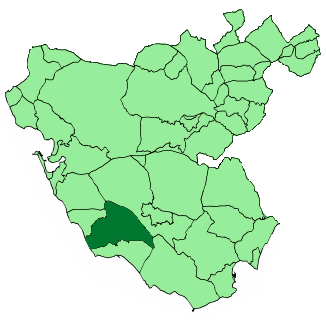
Perched 200 metres above the Barbate river and just 8 kilometres from the Atlantic, Vejer de la Frontera is that rare gem that combines a walled old town declared a Historic-Artistic Site in 1976 with a golden sandy beach that seems to stretch on forever. While the white village clings to its hill with labyrinthine streets and centuries of history, El Palmar pulses with a youthful vibe, surfers and beachfront chiringuitos (beach bars). Two worlds in a single municipality of 13,000 inhabitants, linked by 11 kilometres of road that separate a stroll along medieval walls from a sunset with live music by the sea. The must-seesWhat to see in Vejer de la Frontera: the essentials
Castle of Vejer de la Frontera
The medieval castle crowns the highest point of the old town and is the heart of the walled complex that was declared a Historic-Artistic Site in 1976. Its labyrinthine layout of narrow, cobbled streets, with whitewashed houses and interior courtyards, reflects the traditional architecture of the white villages of Cadiz province. From its surroundings, viewpoints open out over the countryside and the Atlantic coastline, and its urban fabric reflects the coexistence of Jewish, Muslim and Christian cultures in the town’s history. Together with the Almohad wall, it forms one of the most characteristic corners of the historic quarter.
Jewish Quarter of Vejer
The Jewish quarter is laid out around the old synagogue and the Almohad wall, forming one of the most picturesque and photogenic areas of the old town. Its exceptionally narrow, winding streets are connected by arches such as the famous Arco de las Monjas (Nuns’ Arch), creating passageways that are one of Vejer’s main attractions. The traditional architecture, with whitewashed walls and tiled roofs, adapts to the uneven terrain with stepped streets that invite you to get lost without rushing.
Convent of the Concepcionist Nuns
Founded in the 18th century, this cloistered convent is popularly known as the Convento de las Monjas (Convent of the Nuns) and stands out for its church and the intimate atmosphere of the building, integrated into the old town. The nuns traditionally sell convent sweets made by the religious community, a tradition much appreciated by visitors looking to take home an authentic culinary souvenir.
Parish Church of El Divino Salvador
Built on the site of an old mosque, this church features a 14th-century Gothic-Mudéjar apse and later alterations up to the 16th century. Inside, highlights include the 17th-century main altarpiece, the chapel of the Gothic Crucifix and the central nave with ribbed vaults. It is the main religious monument of the old town, and entry is usually free outside service times, with the option of a tourist visit.
Casa del Mayorazgo
An 18th–19th-century noble mansion in the old town, linked to the Mayorazgo tower of the walled enclosure. It currently houses museum and cultural uses, and its architecture reflects the model of the Andalusian manor house with a central courtyard. It is one of the most notable civic buildings in the historic quarter.
El Palmar Beach
A golden sandy beach belonging to the municipality of Vejer de la Frontera, located about 11 kilometres from the old town. It is known for its natural dune setting and its almost unspoilt atmosphere, and is a popular destination for surfers, kitesurfers and paddle surfers, as well as visitors combining a visit to the village with the coast. It has beachfront chiringuitos and, in season, craft markets, as well as nightlife with live music and concerts.
Arco de la Segur
A gateway to the walled enclosure on the western side, built at the end of the 15th century during the reign of the Catholic Monarchs, and one of the best-preserved historic entrances to the town, with its semicircular arch and cobbled street making it one of the most photographed corners of Vejer.
Arco de Sancho IV
Historic gate in the walled enclosure of Vejer, one of the four that survive in their original state alongside the Puerta de la Segur, the Puerta de la Villa and Puerta Cerrada, whose name recalls King Sancho IV of Castile.
Molinos de Santa Lucía
The Santa Lucía Water Mill Route (Ruta de los Molinos de Agua de Santa Lucía) lies about 3 kilometres from Vejer de la Frontera, in a unique natural spot in the La Janda region, with a circular hiking trail of around 5.5 kilometres, low difficulty and an estimated duration of about 2 hours that lets you discover the traditional water-powered flour mills and enjoy waterfalls and lush vegetation.
Mirador de la Cobijada
Viewpoint located in the historic centre that offers panoramic views over the town’s surroundings and the Cádiz countryside, associated with the figure of the Cobijada, the traditional women’s costume of Vejer that completely covers the woman’s body and face except for one eye.
🍂 Otoño
Si visitas Vejer de la Frontera en otoño, el ambiente se vuelve más tranquilo y la luz es muy bonita para fotografiar la Iglesia Parroquial del Divino Salvador o el Convento de las Monjas Concepcionistas. Las temperaturas aún permiten disfrutar de terrazas y paseos sin el calor fuerte del verano. Lleva algo de abrigo fino porque al atardecer refresca.
What to do in Vejer de la Frontera
Vejer de la Frontera offers a whole range of experiences, from getting lost in medieval streets and buying convent sweets to surfing at El Palmar, hiking among water mills and enjoying food and craft markets. The Mercado Gastronómico de San Francisco, a former food market turned gastronomic centre, operates in the mornings as a fresh produce market and at midday and in the evening as a space for tapas and local specialities. On Thursdays, the Mercadillo de Vejer spreads out along Avenida Rey Juan Carlos I with everyday essentials, clothing and typical local food. The Santa Lucía Water Mill Route (Ruta de los Molinos de Santa Lucía) lets you walk a 5.5-kilometre circular trail among waterfalls and lush vegetation, while El Palmar offers craft markets and nightlife with live music and concerts in season.
Vejer de la Frontera in a day: express itinerary
- 9:00 – Arco de la Segur: Enter the old town through this 15th-century gate, the most photogenic in the village, and start wandering the cobbled streets.
- 10:00 – Castle and Jewish Quarter: Follow the labyrinthine layout of whitewashed streets, pass under the Arco de las Monjas and look out from the viewpoints over the countryside and the Atlantic coast.
- 11:30 – Iglesia Parroquial del Divino Salvador: Visit the main religious monument in the historic centre, with its 17th-century main altarpiece and ribbed vaults.
- 12:30 – Convento de las Monjas Concepcionistas: Buy convent sweets made by the cloistered nuns, a much-loved tradition.
- 13:30 – Mirador de la Cobijada and lunch: Take in the panoramic views before heading down to La Corredera, Vejer’s main gastronomic hub, for lunch on one of its terraces.
- 17:00 – Playa de El Palmar: Drive the 11 kilometres to the golden-sand beach for a swim, a stroll through the dunes or a drink at a chiringuito.
Where to eat in Vejer de la Frontera: local cuisine
Where to stay in Vejer de la Frontera
Casco Histórico
El corazón de Vejer. Un laberinto de calles encaladas, patios floridos y arcos antiguos, rodeado por murallas medievales. Es la zona más monumental y con más encanto, declarada Conjunto Histórico-Artístico.
Barrio de la Judería
Una de las zonas más pintorescas y fotogénicas dentro del casco antiguo. Se caracteriza por sus calles excepcionalmente estrechas y sinuosas, conectadas por arcos como el famoso Arco de las Monjas.
Zona de La Corredera
Esta avenida-mirador bordea una parte del casco antiguo, ofreciendo vistas panorámicas espectaculares del paisaje rural. Es el principal centro gastronómico de Vejer, repleto de restaurantes y terrazas de alta calidad.
El Palmar
Es la zona de playa de Vejer, a unos 11 km del pueblo. Famosa por su extensa playa de arena dorada, es un paraíso para surfistas y amantes del mar. El ambiente es joven, relajado y bohemio, especialmente en verano con sus numerosos chiringuitos.
Zona Nueva
La parte más moderna de Vejer, situada fuera de las murallas. Aquí se encuentran la mayoría de los servicios como supermercados, bancos y comercios locales. Ofrece una estancia más práctica y funcional, con mejor acceso y aparcamiento.
How to get to Vejer de la Frontera
From Conil de la Frontera, the fastest option is the bus: 20 min (Consorcio de Transportes Bahía de Cádiz), 7 a day.
| From | Direct train | Direct bus | Car |
|---|---|---|---|
| Conil de la Frontera | — | 20 min · 7/day Consorcio de Transportes Bahía de Cádiz | 22 min 16 km |
| Cádiz | — | 1 h 20 min · 6/day Consorcio de Transportes Bahía de Cádiz | 53 min 57 km |
| Chiclana de la Frontera | — | 45 min · 6/day Consorcio de Transportes Bahía de Cádiz | 31 min 32 km |
| San Fernando | — | 1 h · 5/day Consorcio de Transportes Bahía de Cádiz | 39 min 43 km |
| Jerez de la Frontera | — | 1 h 30 min · 1/day Consorcio de Transportes Bahía de Cádiz | 1 h 03 min 71 km |
| El Puerto de Santa María | — | 1 h 10 min · 1/day Consorcio de Transportes Bahía de Cádiz | 55 min 62 km |
Direct trains and buses from the official timetables published by the operators on Spain's National Transport Access Point (a reference Wednesday); driving times from OpenStreetMap. Operators that do not publish their timetables may run more services. Check the timetable before you travel.
Getting around Vejer de la Frontera
Vejer has an urban bus service connecting the different areas of the municipality, including the old town and its surroundings. To travel between the town and El Palmar, located 11 kilometres away, the most practical option is to have your own or a hire car, as public transport connections can be limited. Within the old town, a car is not advisable: the narrow, cobbled streets invite you to walk and get lost without rushing.
Weather in Vejer de la Frontera
Best time to visit Vejer de la Frontera
Day trips from Vejer de la Frontera
Vejer de la Frontera’s location, right in the heart of the La Janda region and just 8 kilometres from the Atlantic coast, makes it an excellent base for exploring the province of Cádiz. The El Palmar coast itself, which belongs to the municipality, is a day trip in its own right: 11 kilometres of road separate the old town from the golden sandy beach. To broaden your horizons, the nearby towns of the Cádiz region offer options ranging from historic heritage to seafood gastronomy, all reachable by car in under an hour.
Little-known facts about Vejer de la Frontera
A garment that leaves only one eye visible. The cobijada, the traditional black costume worn by the women of Vejer, covers the entire body and face except for one eye, and has Castilian origins dating back to the 16th and 17th centuries. Today it is one of the town’s most recognisable symbols and gives its name to a viewpoint with panoramic views.
A land draw with more than seven centuries of history. The Hazas de la Suerte of Vejer distribute 232 plots of land every four years, a tradition that dates back to the first land donation in 1288. It is one of the oldest communal land distributions in Spain.
A battle that changed the fate of the peninsula. In 711, the Battle of La Janda pitted Tarik’s troops against those of Don Rodrigo near Vejer, after which the town remained under Muslim rule for five and a half centuries.
Half a million years of history. Palaeolithic prehistoric remains dating back 500,000 years have been found within the municipality of Vejer, on the edges of the former Laguna de la Janda, making this one of the most anciently inhabited areas of the province.
A site destroyed by knights from Jerez. The Cerro Patria site in Vejer de la Frontera was occupied from the 3rd century BC until 1271, the year a contingent of knights from Jerez destroyed it, bringing more than fifteen centuries of continuous settlement to an end.
Who is Vejer de la Frontera for?
Vejer de la Frontera is a destination for everyone, but it shines especially for couples and history lovers looking to lose themselves in medieval streets, buy convent sweets and dine on terraces overlooking the countryside. Foodies will find a paradise of tapas and local produce in La Corredera and the Mercado Gastronómico de San Francisco, with dishes such as berza vejeriega (Vejer-style stew) or lomo en manteca (pork loin in lard). Backpackers and surfers have their refuge in El Palmar, with its bohemian atmosphere, beach bars and waves all year round. And families will appreciate the practicality of the Zona Nueva, with supermarkets, banks and easier car access, without sacrificing proximity to the old town and the beach.
💡 ¿Sabías que...?
- ● El centro histórico amurallado de Vejer fue declarado conjunto histórico-artístico en 1976. (https://es.wikipedia.org/wiki/Vejer_de_la_Frontera)
- ● Vejer forma parte de la Asociación Los Pueblos Más Bonitos de España desde 2014. (https://es.wikipedia.org/wiki/Vejer_de_la_Frontera)
- ● La cobijada es un traje negro tradicional de las mujeres de Vejer que solo deja al descubierto un ojo, con origen castellano de los siglos XVI-XVII. (https://elpais.com/smoda/moda/2023-11-27/no-las-mujeres-de-vejer-de-la-frontera-no-llevan-burka-historia-de-la-misteriosa-cobijada.html)
- ● El sorteo de las Hazas de la Suerte de Vejer, con más de siete siglos de historia, reparte 232 lotes de tierra cada cuatro años; la primera donación de tierras fue en 1288. (https://www.juntadeandalucia.es/presidencia/portavoz/142794/JuntadeAndalucia/ConsejeriadeCulturayPatrimonioHistorico/BiendeInteresCultural/BIC/HazasdelaSuerte/VejerdelaFrontera/Cadiz)
- ● En 711, la Batalla de la Janda enfrentó a las tropas de Tarik con las de Don Rodrigo, tras lo cual Vejer permaneció bajo dominio musulmán durante cinco siglos y medio. (https://turismovejer.es/historia-de-vejer/)
- ● El yacimiento de Cerro Patria en Vejer de la Frontera tuvo ocupación desde el siglo III a.C. hasta 1271, año en que un contingente de caballeros jerezanos lo destruyó. (https://dialnet.unirioja.es/servlet/articulo?codigo=7771732)
- ● En su término municipal se han localizado restos prehistóricos paleolíticos de hace 500.000 años en los rebordes de la antigua Laguna de la Janda. (https://turismovejer.es/historia-de-vejer/)
Frequently asked questions about Vejer de la Frontera
How many days do I need to see Vejer de la Frontera?
With a full day you can cover the highlights of the old town: the castle, the Jewish quarter, the Iglesia del Divino Salvador (Church of the Divine Saviour), the Convento de las Monjas Concepcionistas (Convent of the Concepcionist Nuns) and the Mirador de la Cobijada (La Cobijada viewpoint). If you want to add Playa de El Palmar (El Palmar Beach), the Ruta de los Molinos de Santa Lucía (Santa Lucía Windmill Route) and enjoy the local cuisine at a leisurely pace, 2-3 days is ideal.
Is Vejer de la Frontera expensive?
Not especially. An average meal costs between 12 and 18 euros per person, guesthouses range from 40 to 70 euros per night, and 3-star hotels from 70 to 120 euros. 4-5-star hotels can reach 100-200 euros per night, but overall the value for money is good, especially outside high season.
What is the best time to visit Vejer de la Frontera?
According to AEMET data, the average temperature in summer is 24.1°C and in winter 12.9°C, with annual rainfall of 658.2 mm. The best time is from April to October, with spring and autumn being ideal months for strolling and hiking, and summer for combining the town and the beach at El Palmar.
How do I get to Vejer de la Frontera from Madrid?
The fastest option is to fly to Jerez Airport (XRY), located 82 km away by road (about 1 h 12 min by car), and from there hire a vehicle or take a bus. You can also travel by train to a nearby station and complete the journey by road, although a car is the most flexible way to get around the area.
Can you visit Playa de El Palmar without a car?
El Palmar is about 11 kilometres from the old town of Vejer. Although there is a local bus service in the municipality, connections to the beach can be limited, so the most practical option is to have your own or a rental car, especially if you want the freedom to move between the town and the coast.