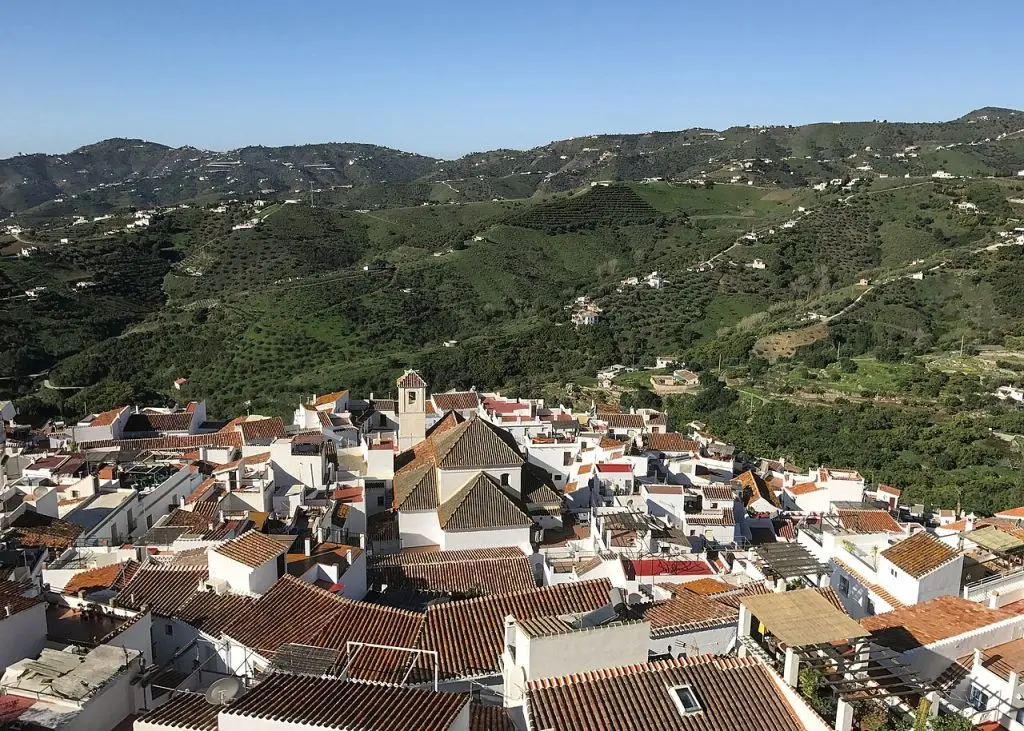
Frigiliana
AndalucíaClimate
Frigiliana Travel Guide
Only in continental Europe is there a factory still making sugarcane honey the way it has been done for centuries, and it sits in a town of 3,000 inhabitants perched some 300 metres above the Mediterranean. Frigiliana is not just that record: it is an old town with an Andalusian layout so well preserved that it was declared a Site of Cultural Interest, with whitewashed alleys, covered passageways and viewpoints looking out over the Almijara mountain range. People come here to walk without hurry, to try fried aubergines with sugarcane honey and to understand why this corner of the Axarquía in Málaga wins over anyone who sets foot in it. The must-seesWhat to see in Frigiliana: the essentials
Historic Centre of Frigiliana (Barribarto)
The Barribarto is the historic heart of Frigiliana and one of the purest examples of popular architecture of Arab origin in the province of Málaga. It is declared a Historic Site as a Site of Cultural Interest, and preserves the urban layout of Andalusian heritage with narrow, steep, stepped streets, dead-end alleys and covered passageways that adapt to the uneven terrain. The route is free and done on foot, following the ceramic panels that narrate the history of the Moorish rebellion from the public thoroughfare. Don’t miss the most photogenic corners of the upper part, where the silence and the white lime create a unique atmosphere.
Castillo de Lízar
The Torreón de Frigiliana, known as Castillo de Lízar, is one of the most representative vestiges of the municipality’s defensive heritage and forms part of the Mudejar-style historic complex of the old town. It is an old watchtower and defence tower linked to the system of fortifications that protected the valley and the town centre from medieval times, whose function was to control the territory and serve as a refuge for the population in the event of attack. Its elevated position makes it possible to understand the logic of the surveillance and visual communication system with other towers and watchtowers in the surrounding area, as well as with the nearby coast. Next to this tower are other emblematic monuments such as El Ingenio, the Fuente Vieja, the Ermita de Ecce Homo and Los Reales Pósitos.
Palace of the Counts of Frigiliana (El Ingenio)
The Palace of the Counts of Frigiliana, known as El Ingenio, is one of the most singular historical and ethnographic spaces in the municipality, set in the old town of Moorish origin. Inside you can learn about the traditional process of making sugarcane must, from the grinding of the cane to the obtaining of the honey, and buy the product in its shop. It can be visited during business hours, with free entry to the shop as a guide and the possibility of touring the historical space during the visit. It is the only working sugarcane honey factory in continental Europe, a fact that on its own justifies the stop.
Church of San Antonio de Padua
The Church of San Antonio de Padua is the main temple of Frigiliana, located in the town square, in the heart of the old town of Moorish origin. Its bell tower stands out, visible from much of the town centre and the surrounding area of the municipality. Inside, an altarpiece of interest and the image of San Antonio de Padua are preserved. It is a usual stop on the route through the historic centre, alongside the white, narrow and steep streets of Arab layout that characterise the municipality.
Ermita del Ecce Homo
The Ermita del Ecce Homo, also known by locals as the Ermita del Santo Cristo de la Caña, is an 18th-century building of small dimensions built on a single nave. It opens to the outside with an atrium over a semicircular arch at the front, while the epistle side is attached to the hill. Inside is venerated the carving of the Ecce Homo, a piece in polychrome wood in neo-baroque style made in the second half of the 20th century, which is carried in procession to the Church of San Antonio on Holy Wednesday.
Casa del Apero (Tourist Office, Library and Archaeological Museum)
The Casa de la Cultura (House of Culture), located on the Cuesta del Apero, houses Frigiliana’s Tourist Office, the library, an exhibition room and the Frigiliana Archaeological Museum, whose pieces document the Phoenician, Roman and Arab past of the area.
El Torreón
A tower of Mudéjar architecture included among the award-winning historic buildings of the old town, alongside El Ingenio and the chapel of the Ecce Homo.
Real Pósitos
A former pósito (public granary) building located in the historic centre of Frigiliana, a testament to the town’s historic economic and administrative activity, cited among the examples of monuments preserved alongside El Ingenio, the Fuente Vieja, the Ermita de Ecce Homo and El Torreón.
Parque Natural de las Sierras de Tejeda, Almijara y Alhama
The Parque Natural de las Sierras de Tejeda, Almijara y Alhama (Tejeda, Almijara and Alhama Mountains Nature Park) is a protected natural area of great scenic and ecological value that offers a wealth of routes for hiking enthusiasts, many of them accessible from the municipal district of Frigiliana.
Miradores del Casco Histórico
A collection of viewpoints in the Barribarto offering panoramic views over the Almijara mountain range, the valley and the Costa del Sol.
Festival Frigiliana 3 Culturas
A recreational and cultural festival held over the last weekend of August, when the town becomes a meeting place for the three great cultures: Christian, Muslim and Jewish.
Ruta de los Mosaicos de Cerámica Vidriada
A monumental route through the historic centre of Frigiliana.
🍂 Otoño
Si visitas Frigiliana en otoño, el clima sigue siendo agradable y las lluvias aún escasas, perfecto para caminar por el casco antiguo sin las aglomeraciones del verano. Puedes conocer el Palacio de los Condes de Frigiliana o la Casa del Apero con más calma. Lleva una chaqueta fina para el atardecer, que refresca rápido.
What to do in Frigiliana
Frigiliana offers a leisurely stroll through its historic centre, declared a Site of Cultural Interest, hiking routes through the Parque Natural de las Sierras de Tejeda, Almijara y Alhama, and a festive calendar that kicks off in January with San Sebastián and culminates in August with the Festival Frigiliana 3 Culturas. If you happen to be there on the last weekend of August, you’ll see the town decked out with music, food and activities for all ages that recall the town’s Christian, Muslim and Jewish past. In May, the Cruces de Mayo fill the streets with flowers, cured meats, tortillas, migas and typical sweets, with pandas de verdiales and choirs and dances livening up the route. And if walking is your thing, the Tourist Office provides informative material with hiking routes in PDF format to explore the privileged surroundings of the Axarquía.
Frigiliana in a day: express itinerary
- 09:30 – Casa del Apero: the usual starting point for a visit, with a tourist office, library and archaeological museum. Pick up route materials here and confirm opening times.
- 10:00 – Casco Histórico (Barribarto): wander the narrow, steep, stepped streets of Andalusian heritage. Follow the ceramic panels that narrate the Moorish rebellion from the public thoroughfare.
- 11:30 – Castillo de Lízar and El Torreón: climb up to the defensive tower to understand the medieval surveillance system and enjoy the views over the valley and the coast.
- 12:30 – Palacio de los Condes de Frigiliana (El Ingenio): learn about the traditional process of making cane honey and buy the product in its shop. It is the only working cane honey factory in continental Europe.
- 13:30 – Iglesia de San Antonio de Padua and Ermita del Ecce Homo: visit the main church and the 18th-century chapel, both in the heart of the historic centre.
- 14:30 – Lunch: try the fried aubergines with cane honey at any bar in the old town, accompanied by a sweet wine from the Axarquía.
- 17:00 – Miradores del Casco Histórico: end the day with panoramic views over the Almijara mountain range, the valley and the Costa del Sol from the viewpoints of the Barribarto.
Where to eat in Frigiliana: local cuisine
Where to stay in Frigiliana
Casco Antiguo (Barrio Morisco-Mudéjar)
El corazón histórico de Frigiliana y su principal atractivo. Un laberinto de estrechas y empinadas calles empedradas, casas encaladas adornadas con flores y mosaicos de cerámica que cuentan la historia de la rebelión morisca.
Barribarto
La zona más alta y antigua del barrio morisco, considerada por muchos el núcleo del Casco Antiguo. Ofrece las vistas más espectaculares y las callejuelas más fotogénicas y tranquilas.
Zona de El Ingenio
Área situada en la parte baja, cuyo centro es el Palacio de los Condes de Frigiliana, también conocido como El Ingenio. Alberga la única fábrica de miel de caña de Europa, un emblema del pueblo.
La Parte Nueva
La zona más moderna y funcional de Frigiliana, ubicada en la parte baja del pueblo. Aquí se encuentran la mayoría de servicios, comercios, y el acceso es más cómodo, sin tantas cuestas.
Loma de la Cruz
Una pequeña colina que domina el pueblo, coronada por una cruz. No es un barrio residencial, sino una zona de paseo que ofrece una de las panorámicas más completas y hermosas de Frigiliana y las montañas.
How to get to Frigiliana
| Medio | Duración | Precio aprox. | Frecuencia |
|---|---|---|---|
| Coche desde Aeropuerto de Málaga-Costa del Sol (AGP) | 1 h 09 min (72 km por carretera) | Variable según alquiler o combustible | Acceso directo por carretera |
| Bus urbano | Según ruta | Económico | Servicio urbano disponible |
The nearest airport is Málaga-Costa del Sol (AGP), located 72 km away by road, which works out at approximately 1 hour and 9 minutes by car. For more practical information on opening times, tickets and what’s on, see the official Frigiliana tourism website.
Getting around Frigiliana
Frigiliana is best explored on foot, especially the historic centre, where the narrow, steep, stepped streets make using a car impossible — and pointless. The municipality has an urban bus service for journeys within the municipal area and connections to the surrounding region. To explore the Barribarto, put on comfortable shoes and forget about the clock: the slopes are part of the charm. If you arrive by car, the most practical option is to park in the lower part of town or in the designated areas of La Parte Nueva and walk up to the old town.
Weather in Frigiliana
Live webcam — Nerja*
Frigiliana* The nearest webcam to Frigiliana is in Nerja, 5.1 km away.
Source: Windy Webcams
Best time to visit Frigiliana
Day trips from Frigiliana
Frigiliana is an excellent base for exploring the Axarquía region and the province of Málaga. Less than an hour and a half away by car is the city of Málaga, with its cultural, culinary and leisure offerings, as well as the international airport. The Axarquía coast, with towns such as Nerja, is reachable from Frigiliana in a short drive or bus ride, and offers beaches and seafront promenades. Inland, the Parque Natural de las Sierras de Tejeda, Almijara y Alhama (Tejeda, Almijara and Alhama Mountains Natural Park) unfurls a network of signposted trails winding through ravines, pine forests and holm oak groves, many of them accessible from Frigiliana’s own municipal area. For those seeking a more urban experience, Granada and the Alhambra are a reasonable distance away for a full-day trip from the Axarquía.
Little-known facts about Frigiliana
Inhabited since the late Neolithic period, around 3,000 BC. The remains found in caves near the Higuerón river show that this spot has been drawing settlers for millennia. This is not a town with a recent history: it is a place where human presence dates back to prehistory.
The name Frigiliana derives from a Roman proper name, ‘Frexinius’, plus the suffix ‘ana’. It would mean ‘Frexinius’s farmstead’, an etymology that reveals the Roman footprint in the area long before the Arab domination that would shape its urban layout.
Frigiliana is home to the only sugarcane honey (miel de caña) factory in continental Europe. El Ingenio is still in operation today, keeping alive a traditional process that has disappeared elsewhere on the continent. Tasting its sugarcane honey is tasting a product found nowhere else in Europe.
Hernando el Darra was a Morisco leader from Frigiliana. Regarded as a chieftain and captain general during the rebellion of Bentomiz, his figure is tied to the history of Morisco resistance that the ceramic panels of the old town recount along the streets of the Barribarto.
Who Frigiliana is for
Frigiliana is a destination for couples looking to lose themselves in whitewashed alleys and viewpoints overlooking the Almijara mountain range, for families wanting a quiet town with accessible services in La Parte Nueva and walks without the crowds, and for backpackers who value the historic heritage and the hiking trails of the Natural Park. History lovers will find in the Barribarto one of the purest examples of popular architecture of Arab origin in the province of Málaga, and foodies have in sugarcane honey and fried aubergines (berenjenas fritas) reason enough for the trip. It is not a destination for nightlife or grand museums: it is a place to walk, eat well and switch off.
Frequently asked questions about Frigiliana
How many days do I need to see Frigiliana?
With a full day you can visit the essentials: the Casco Histórico (Barribarto) (the old town), the Castillo de Lízar (Lízar Castle), the Palacio de los Condes de Frigiliana (El Ingenio) (Palace of the Counts of Frigiliana), the Iglesia de San Antonio de Padua (Church of St Anthony of Padua) and the Ermita del Ecce Homo (Ecce Homo Chapel). If you want to do some hiking in the Parque Natural de las Sierras de Tejeda, Almijara y Alhama (Tejeda, Almijara and Alhama Mountains Natural Park) or coincide with the Festival Frigiliana 3 Culturas (Frigiliana 3 Cultures Festival), the ideal is two or three days.
What is the best time of year to visit Frigiliana?
The best time is from April to October, with an average summer temperature of 24.7°C and a winter average of 13.7°C, according to climate data for the area. Annual precipitation is 475.8 mm, so clear days are in the majority. August is the month of the Festival Frigiliana 3 Culturas, the town’s most crowded event.
How do I get to Frigiliana from Madrid?
The fastest way is to fly to Málaga-Costa del Sol Airport (AGP) and from there drive the 72 km by road to Frigiliana, a journey of approximately 1 hour and 9 minutes by car. You can also travel by train or bus to Málaga and continue by road with a local bus or a rental car.
What is special about Frigiliana’s miel de caña (sugarcane honey)?
It is a unique product in Europe, made exclusively in this village by boiling down sugarcane juice until it becomes a thick, dark syrup. El Ingenio is the only working miel de caña factory in continental Europe, and you can visit it during business hours, with free entry to the shop as a guide.
Is Frigiliana a good destination to visit with children?
Yes, especially if you stay in La Parte Nueva or the Zona de El Ingenio, where access is easier and most services are located. The old town has steep, stepped streets, so it is advisable to wear comfortable shoes and bring a baby carrier if the children are small. The Festival Frigiliana 3 Culturas offers activities for all audiences regardless of age or origin.