Algeciras
AndalucíaClimate
What to see in Algeciras: the essentials
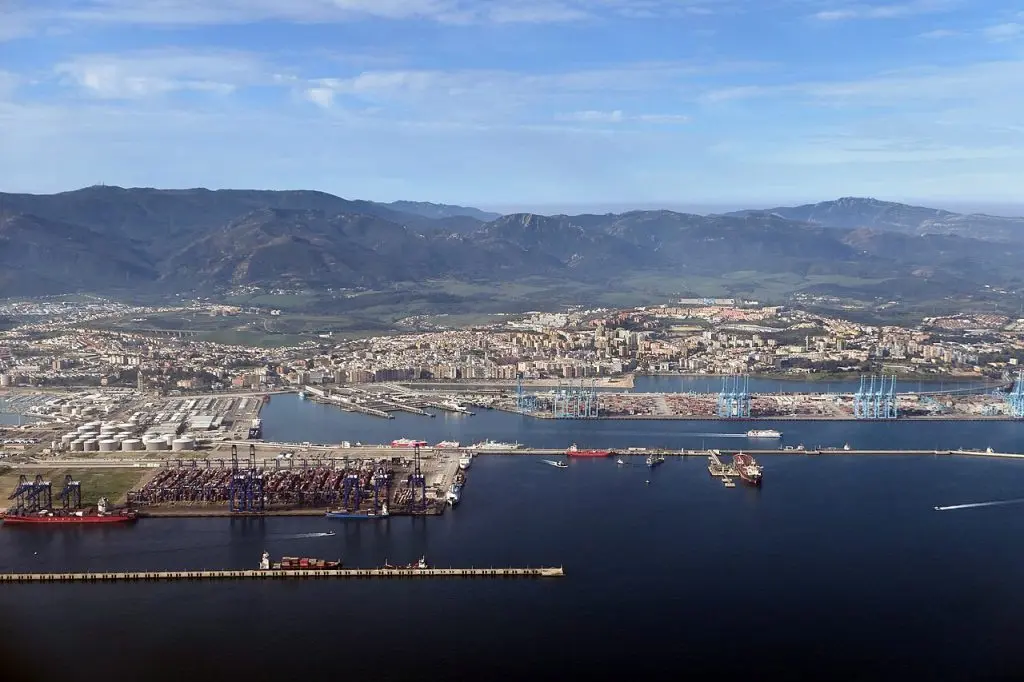
Algeciras isn’t a city of perfect postcards, and that’s exactly why it gets under your skin. It’s a living port, a crossroads between two continents and a place where history is underfoot without you even noticing. With 123,000 inhabitants, it is the largest city in the Campo de Gibraltar and its port handles the most freight traffic in Spain. But beyond the cranes and ferries, there’s an old town with soul, Roman ruins, Blue Flag beaches and a food scene that smells of salt and freshly fried fish.
Port of Algeciras
The Port of Algeciras is one of Europe’s most important ports for passenger and freight traffic, and the main gateway to the African continent from the Iberian Peninsula. Its location in the bay, facing the Rock of Gibraltar, makes it an emblematic spot, although visits are limited to the public and boarding areas since much of the complex is given over to commercial operations. Even so, it’s worth strolling along the seafront promenade to watch the constant bustle of ferries, merchant ships and fishing boats. It is the economic heart of the city and part of its everyday landscape.
Parish Church of Nuestra Señora de la Palma
The Parish Church of Nuestra Señora de la Palma stands out for its quadrangular architecture and its historical and religious significance in the heart of Algeciras. It is the city’s main temple and is dedicated to the local patron saint, the Virgen de la Palma. Access is usually open during worship hours, generally in the morning and afternoon, so you can go in without any problem if you happen to coincide with a mass or an opening time.
Roman salting factories of Iulia Traducta
This archaeological site preserves structures related to the production of salted fish and fish sauces (garum) in Roman times, mainly vats or basins lined with opus signinum used for macerating fish. The complex is open to visitors and offers an insight into the construction techniques and workings of a Roman salting factory, although its state of preservation is partial since only some of the original structures have been documented. It’s a brief but very interesting stop for understanding that Algeciras has lived off the sea for centuries. The site is also part of archaeological outreach activities on food production and the role of women in the Roman economy.
Fuerte de San García
The ruins of the old Fuerte de San García are located inside the Parque del Centenario, on the Punta de San García, the last natural space within the city that retains its unspoilt landscape values. The fort was destroyed in 1811 by British troops during the Peninsular War, and in this setting you can also see the old 16th-century watchtower. Access to the park and the trail is free, so you can combine history and nature in a single visit.
Museo de Algeciras
The Museo Municipal de Algeciras is housed in the José Luis Cano building on Calle Teniente Miranda, in the old Hospital de la Caridad in the Villa Nueva. It was created and inaugurated in 1995 and occupies a building constructed between 1748 and 1768, originally conceived as a hospital, which gives it notable architectural and historical value. Its collections cover archaeology and local history, offering a journey through the heritage of the city and its surrounding area. Admission is free for everyone, so it’s an easy stop with no excuses.
Murallas Meriníes
The archaeological park of the Murallas Meriníes (Marinid Walls) is located on Avenida de Blas Infante and displays the remains of Islamic defensive architecture: stretches of wall, towers, a moat and a gate, elements that let you imagine the city’s former fortifications.
Torre del Fraile
A watchtower or lookout of military architecture built in the 16th century (1588), located on the coast of the Bay of Algeciras, declared a Monument and Asset of Cultural Interest, and which can be viewed from the outside.
Getares Beach
Its sheltered location in the bay makes it an ideal spot for family relaxation, and its wind and wave conditions are perfect for water sports such as kayaking, paddle surfing, windsurfing and kitesurfing, with advice, supervision and lessons available for these disciplines.
Chapel of La Caridad
A small chapel located in the Villa Nueva district of Algeciras, on Plaza Juan de Lima, built in 1768 and attached to the former Hospital de la Caridad, with a façade whose main door is flanked by Doric pilasters.
Rinconcillo Beach
An urban beach in Algeciras located to the north of the city, next to the Rinconcillo neighbourhood, approximately 7,900 metres long and about 40 metres wide, with sandy composition and good conditions for swimming.
Paco de Lucía Interpretation Centre
A space dedicated to the flamenco guitarist Paco de Lucía, born in Algeciras in 1947, charting his artistic career from his first recordings with his brother Pepe to his collaborations with Camarón de la Isla, Larry Coryell, Carlos Santana, Al Di Meola and John McLaughlin, displaying personal objects, photographs and audiovisuals about his life and work.
Plaza Alta
Plaza Alta is one of the most emblematic spaces in the historic centre of Algeciras and makes the ideal starting point for exploring the old town with its irregular streets, traditional buildings and everyday atmosphere.
Parque del Centenario
An urban park in Algeciras located at Punta de San García, built in 2007, spanning more than 100,000 m² of scrubland and featuring a gravel path with several bridges and an iron tower that can be climbed to enjoy spectacular views of the Bay, the Strait of Gibraltar, the African coast and the mountains around Algeciras.
San Isidro Neighbourhood
The San Isidro neighbourhood is one of the oldest and most traditional in Algeciras, the city’s quintessential typical quarter, with one- or two-storey houses, tree-lined streets, narrow steep alleys and communal courtyards that preserve the charm of traditional Algeciras.
🍂 Otoño
Si visitas Algeciras en otoño, el tiempo sigue siendo agradable, con menos turistas y una luz especial para caminar por el centro. Puedes aprovechar para ver la Parroquia de Nuestra Señora de la Palma o el Museo de Algeciras sin prisas. Un paraguas plegable no sobra, porque las lluvias empiezan a aparecer.
What to do in Algeciras
Algeciras offers strolls through a historic centre with centuries of history, blue-flag urban beaches, coastal hiking routes with views of Africa, birdwatching in the Strait and a festive calendar that fills the streets with life all year round. The city is not a theme park: it is a place to sit on a terrace, order a tapa of ortiguillas and watch life go by between the port and the mountain.
If you happen to visit during the Fiestas Patronales de Nuestra Señora de la Palma in August, you will find religious events and popular celebrations that transform the centre. At Easter, thirteen processions wind through the streets, with Holy Tuesday and Jesús de Medinaceli standing out. And if you like flamenco, the Paco de Lucía Interpretation Centre is a must-stop to understand why this city proudly claims to be the birthplace of the guitarist who revolutionised the genre.
For those who prefer the outdoors, Parque del Centenario and Punta de San García offer freely accessible routes with views of the Strait, while Getares and El Rinconcillo beaches let you combine swimming, water sports and seaside walks. Birdwatching in the Strait is another activity that attracts travellers throughout the year, especially during migration periods.
Algeciras in a day: express itinerary
If you only have one day in Algeciras, this route gives you a complete overview of the city without rushing: history, sea, a characterful neighbourhood and local gastronomy on a logical walk from morning to afternoon.
- 09:00 – Plaza Alta and the old town: Start the day in Plaza Alta, the heart of the historic centre, and lose yourself in its irregularly laid-out streets. It is the best time to watch the city wake up and have breakfast in a traditional café.
- 10:30 – Marinid Walls and Capilla de la Caridad: Walk to Avenida de Blas Infante to see the remains of the Islamic fortification and head to Plaza Juan de Lima to see the Capilla de la Caridad (Chapel of Charity), built in 1768.
- 11:30 – Algeciras Museum: Enter the Municipal Museum, housed in the old Hospital de la Caridad, free of charge to understand local history through archaeology. In half an hour you get a good idea of the city’s Roman and Islamic past.
- 13:00 – Port of Algeciras and La Bajadilla: Head down to the port to watch the comings and goings of ferries and merchant ships, and eat in La Bajadilla, the old fishermen’s neighbourhood, where the chiringuitos serve the day’s fresh fish.
- 16:30 – Parque del Centenario and Fuerte de San García: Climb up to Punta de San García to stroll along the park trail, see the ruins of the fort destroyed in 1811 and go up the iron tower to enjoy the views over the Strait and Africa.
- 19:00 – Getares beach or San Isidro neighbourhood: If the weather is good, round off the day at Getares beach; if you prefer an urban atmosphere, head up to the San Isidro neighbourhood to wander its steep alleys and neighbours’ courtyards before dinner.
Where to eat in Algeciras: local gastronomy
Where to stay in Algeciras
Casco Antiguo
El corazón histórico de la ciudad con calles estrechas y arquitectura tradicional andaluza. Alberga la mayoría de los monumentos históricos, plazas con naranjos y una oferta concentrada de bares de tapas.
La Bajadilla
Antiguo barrio de pescadores situado junto al puerto pesquero, conocido por su ambiente marinero auténtico y sus numerosos chiringuitos y restaurantes de pescado fresco.
El Rinconcillo
Zona residencial tranquila cerca del centro que cuenta con el parque más grande de la ciudad, ideal para paseos familiares y descanso lejos del ruido portuario.
San García
Barrio comercial y residencial en expansión que conecta el centro con las zonas altas, caracterizado por tener grandes superficies comerciales y una vida local activa.
Punta Carnero
Zona costera al sur de la ciudad famosa por sus vistas panorámicas al Estrecho de Gibraltar y a África, con un entorno natural de acantilados y faro.
Los Barrios (zona perimetral / industrial)
Nota: Los Barrios es un municipio independiente, no un barrio de Algeciras. Se omite para cumplir la instrucción de no inventar. Se sustituye por Zona Portuaria/Industrial como referencia visual.
How to get to Algeciras
From La Línea de la Concepción, the fastest option is the train: 15 min (Intercity), 6 a day.
| From | Direct train | Direct bus | Car |
|---|---|---|---|
| La Línea de la Concepción | 15 min · 6/day Intercity | 27 min · 38/day Red de Consorcios de Transporte de Andalucía - Campo de Gibraltar, ALSA | 21 min 20 km |
| Ronda | 1 h 31 min · 6/day Intercity | — | 1 h 49 min 100 km |
| Málaga | — | 1 h 45 min · 4/day ALSA | 1 h 43 min 138 km |
| Madrid | 5 h 29 min · 1/day Intercity | — | 7 h 29 min 661 km |
| Marbella | — | 1 h · 4/day ALSA | 1 h 80 km |
| Barcelona | — | 17 h 15 min · 2/day ALSA | 12 h 11 min 1092 km |
| Granada | — | 3 h 50 min · 3/day ALSA | 3 h 07 min 256 km |
| Estepona | — | 45 min · 3/day ALSA | 42 min 51 km |
| Valencia | — | 12 h · 2/day ALSA | 8 h 11 min 732 km |
| Córdoba | 3 h 43 min · 1/day Intercity | 6 h 45 min · 1/day ALSA | 3 h 22 min 291 km |
Direct trains and buses from the official timetables published by the operators on Spain's National Transport Access Point (a reference Wednesday); driving times from OpenStreetMap. Operators that do not publish their timetables may run more services. Check the timetable before you travel.
Getting around Algeciras
Algeciras has an urban bus network connecting the centre with the outlying neighbourhoods, the beaches and the shopping areas. For the old town, La Bajadilla and the port, it’s best to explore on foot: distances are short and strolling between squares, narrow streets and viewpoints is part of the charm.
If you want to go to Playa del Rinconcillo, Parque del Centenario or Punta Carnero, the urban bus is the most comfortable option without a car. For day trips to Tarifa, Gibraltar or Los Barrios, the bus from the port station is your base of operations.
Weather in Algeciras
Live webcam — La Línea de la Concepción*
Algeciras* The nearest webcam to Algeciras is in La Línea de la Concepción, 8.9 km away.
Source: Windy Webcams
Best time to visit Algeciras
Day trips from Algeciras
Algeciras is an excellent base camp for exploring the Campo de Gibraltar and the Strait. From the port bus station or by car, you have several day trip options:
- Tarifa: Less than an hour away by car or bus, it’s the capital of wind and kitesurfing, with wild beaches and views of the African continent.
- Gibraltar: About 20 minutes by car, the Rock offers hiking trails, the famous macaques and views of the Strait from the top.
- Cádiz: An hour and a half by road, the provincial capital is one of the oldest cities in Europe, with a historic centre full of squares, towers and sea views.
- Los Barrios and Los Alcornocales Natural Park: Just a few kilometres away, this independent municipality gives access to one of the largest cork oak forests in Europe, ideal for hiking and nature lovers.
Curiosities about Algeciras you didn’t know
A city named after a green island. The name Algeciras comes from the Arabic ‘al-Yazīra al-Haḍrā’, meaning ‘green island’, after an island covered in vegetation opposite what is now Villa Vieja. Today no island remains, but the name still evokes that origin.
A clock older than Big Ben. The clock of the Iglesia de Nuestra Señora de La Palma, with more than 250 years of history, is one of the oldest in the world, predating Big Ben and the clock at Puerta del Sol. A detail that goes unnoticed by most visitors.
The birthplace of arrastre de latas. The tradition of arrastre de latas originated in Algeciras in 1900, according to the Asociación de Emprendedores del Patrimonio Algecireño. It’s one of those customs that remain alive in local celebrations.
A fair with pedigree. The Feria Real de Algeciras, dating back to 1850, is one of the oldest in the Campo de Gibraltar and was declared of National Tourist Interest of Andalusia. If you happen to be there, don’t miss it.
Almanzor was born here. Almanzor was born in 939 in Algeciras, according to the city council’s website, and won fifty consecutive campaigns without losing a single battle. One of the most feared figures in medieval Spanish history was from Algeciras.
Paco de Lucía, its most illustrious son. Paco de Lucía, the flamenco guitarist, was born in Algeciras. The city dedicates an interpretation centre to him and a route that traces the places of his childhood and career.
Who Algeciras is for
Algeciras is for travellers who aren’t looking for a perfect city, but an authentic one. It’s ideal for history lovers who want to walk among Roman ruins, Islamic walls and forts destroyed by the British in 1811 without paying an entrance fee. It’s perfect for foodies who’d rather eat at a chiringuito in La Bajadilla than at a white-tablecloth restaurant. And it’s a great base for families who want beach, parks and trips to the Strait without the prices of Tarifa or Gibraltar. With 190,904 travellers a year according to the INE and 53% of them foreign, Algeciras is more a place to pass through than a mass tourism destination, and that works in its favour: here you come to live the city, not to photograph it.
💡 ¿Sabías que...?
- ● El nombre de Algeciras proviene del árabe 'al-Yazīra al-Haḍrā', que significa 'isla verde', debido a una isla con mucha vegetación frente a la actual Villa Vieja. (https://www.diarioarea.com/algeciras/sabias-que-curiosidades-algeciras/)
- ● El Reloj de la Iglesia de Nuestra Señora de La Palma, con más de 250 años de historia, es uno de los más antiguos del mundo, siendo más longevo que el Big Ben o el de la Puerta del Sol. (https://www.diarioarea.com/algeciras/sabias-que-curiosidades-algeciras/)
- ● La tradición del arrastre de latas tiene origen en Algeciras en 1900, según la Asociación de Emprendedores del Patrimonio Algecireño. (https://www.diarioarea.com/algeciras/sabias-que-curiosidades-algeciras/)
- ● La Feria Real de Algeciras, con origen en 1850, es una de las más antiguas del Campo de Gibraltar y pasó a ser de Interés Turístico Nacional de Andalucía. (https://www.diarioarea.com/algeciras/sabias-que-curiosidades-algeciras/)
- ● Almanzor nació en 939 en Algeciras, según la web del Ayuntamiento, y venció en cincuenta campañas seguidas sin perder ninguna batalla. (https://www.algeciras.es/es/ciudad/historia/)
- ● Paco de Lucía, guitarrista flamenco, es natural de Algeciras. (https://www.cadizturismo.com/en/municipios/algeciras)
Frequently asked questions about Algeciras
How many days do I need to see Algeciras?
With one well-organised day you can see the essentials: the old town, the walls, the museum, the port and Parque del Centenario (Centenary Park). If you want to add the beach, trips to the Strait and unhurried tapas crawling, two or three days is ideal. The average stay is 1.8 nights, which confirms that many travellers use it as a base or a stopover.
What’s the best time of year to visit Algeciras?
From May to October, when the average summer temperature is 21.7°C and the weather invites beach days and strolls. Winter is mild (13.3°C on average) but rainier, with annual rainfall of 601.5 mm concentrated between November and March. If you’re after festivities, August is the month of the Fiestas Patronales (patron saint festivals).
How do I get to Algeciras from Madrid?
There’s no direct AVE to Algeciras. The train station is Algeciras-Paco de Lucía, with medium-distance connections. The bus from Madrid is a frequent alternative, and by car the journey takes around 6-7 hours on the motorway. According to Renfe, train options require a change in Córdoba or Antequera.
Can you visit the Port of Algeciras?
Yes, but only the public and boarding areas. Much of the port complex is given over to commercial operations and isn’t accessible. Even so, the promenade next to the port offers good views of the comings and goings of ferries and cargo ships, and it’s a good place to start exploring the city.
What typical dishes should I try in Algeciras?
The three essentials are fideos con chirlas (noodles with clams), a seafood stew made with clams from the Strait; fried ortiguillas, battered and crispy sea anemones; and boyuno, a unique cut of bluefin tuna with a gelatinous texture and an intense taste of the sea. You’ll find them in bars in the old town, La Bajadilla and the central market.
For more practical information on opening hours, tickets and cultural events, see the official Algeciras tourism website.