Bilbao
País VascoClimate
Daily budget
Morning sunlight filters through the gray clouds typical of the north, illuminating the silver curve of the Zubizuri Bridge (White Footbridge) as the aroma of freshly brewed coffee mingles with the salty breeze rising from the Nervión Estuary. This is not just a city of 350,000 inhabitants in Biscay; it is a living stage where avant-garde architecture dialogues with centuries of industrial and maritime history in the heart of the Basque Country. Walking here means understanding how an urban center transformed its manufacturing past into a global cultural reference, inviting you to get lost among its steep streets and hanging bridges without needing to check a map.
The must-seesWhat to see in Bilbao: the essentials
Guggenheim Museum Bilbao
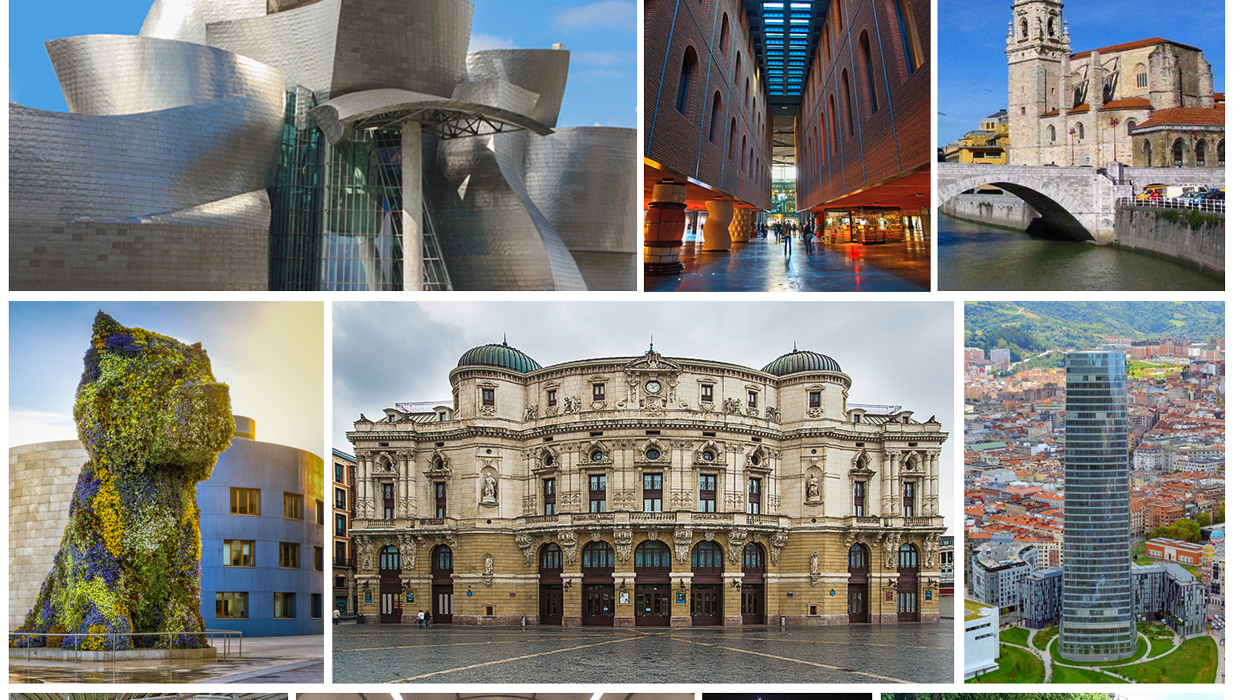
This iconic museum of modern and contemporary art, designed by architect Frank Gehry, stands as the undisputed symbol of the city’s urban renewal. Inside, visitors can explore top-tier temporary exhibitions and the permanent collection that defines art from recent decades, all housed within a titanium structure that changes color depending on the daylight. Opening hours are from 10:00 to 19:00, and it is necessary to purchase tickets in advance to access the galleries. Just outside, Jeff Koons’ floral sculpture “Puppy” welcomes tourists, becoming a mandatory photo stop before entering.
Vizcaya Bridge
This historical monument stands out as the world’s first transporter bridge, an engineering feat declared a UNESCO World Heritage Site in 2006. Travelers can cross the estuary using the elevated pedestrian walkway, which operates from 10:00 to 19:00 and requires a ticket, or observe the vehicle transport service that runs 24 hours a day. Its iron structure joins the two banks of the river, offering a unique perspective on the port activity and the area’s industrial landscape.
Camino de Santiago (Northern Route)
Located in the Casco Viejo (Old Town), this route marks the official direction toward the Cathedral of Santiago, identified with the number 148005 in the world heritage register. It serves as the main access hub to the city’s most historic religious monument, guiding pilgrims and tourists through cobblestone medieval streets. Its importance lies in connecting Bilbao with the European pilgrimage network, keeping a thousand-year-old tradition alive right in the urban center.
Cathedral of Santiago de Bilbao
This 14th-century Gothic temple, situated in the heart of the Casco Viejo (Old Town), functions as an essential stop on the Camino de Santiago and a testament to the town’s faith. Opening hours for tourist visits are from 10:00 to 18:00 and require the purchase of a ticket to access the interior and admire its religious architecture. It is a cultural meeting point where the history of the diocese intertwines with the constant flow of pilgrims seeking their stamp on the credential.
Other Points of Interest
- Puente Zubizuri (White Bridge): Designed by Santiago Calatrava and completed in 1997, this steel-and-glass pedestrian bridge connects Campo de Volantín with Uribitarte, serving as an iconic photo spot over the estuary with free access 24 hours a day.
- Ría del Nervión: It forms the main geographical axis upon which the city’s primary tourist and architectural attractions are built, acting as the aorta of metropolitan Bilbao and a stage for economic development since the Middle Ages.
- Torres Isozaki: A 165-meter skyscraper designed by César Pelli that serves as a corporate headquarters and stands as the tallest building in the Basque Country, dominating the urban skyline from the Abando area.
- Puente de La Salve: Popularly known by this name although its official title is Príncipes de España, this colossal green concrete bridge crosses the estuary next to the Guggenheim and was the first in Spain to feature a cable-stayed system.
- Casco Viejo (Las Siete Calles / The Seven Streets): This is the historic heart of Bilbao, filled with shops, pintxos bars, and charming buildings that preserve the original medieval layout.
- Azkuna Zentroa: A former wine warehouse converted into a modern leisure and culture center by Philippe Starck, notable for its thematic columns in the central courtyard.
- Mercado de la Ribera: One of the largest covered markets in Europe, where you can find fresh produce and a gastropub area for dining beside the water.
- Paseo de Abandoibarra: The central axis of urban renewal that transformed old shipyards into a riverside park inaugurated in 2003, ideal for walking among contemporary sculptures.
- Museo del Athletic Club: Located in the San Mamés stadium, it narrates the club’s history since 1898 with historical artifacts and an original wooden grandstand.
- Iglesia de San Antón: Situated on Calle de la Ribera, it dates back to before the founding of the town in 1300 and is distinguished by its north façade beneath a gallery from 1559.
- Plaza Nueva: A neoclassical square in the Casco Viejo, famous for its pintxos bars and for hosting a traditional Sunday market.
- Mirador de Artxanda: Offers the best panoramic views of Bilbao and is accessible via a century-old funicular rising from the city center.
- Museo Chillida-Leku: An open-air museum dedicated to sculptor Eduardo Chillida, located in a natural setting in Hernani, Gipuzkoa, within a farmhouse restored by the artist himself.
🍂 Otoño
Si visitas Bilbao en otoño, el clima se vuelve más fresco y húmedo, invitándote a refugiarte en sus increíbles museos y bares de pintxos. Es un momento encantador para vivir la cultura local con más calma, solo asegúrate de equipar una chaqueta impermeable para los chaparrones.
What to Do in Bilbao
Bilbao offers specific activities ranging from immersion in festive culture to gastronomic enjoyment in its most emblematic neighborhoods. During August, the city transforms completely with Aste Nagusia (Great Week), a 9-day event full of concerts, fireworks, and theater that brings the city to a standstill. In winter, Saint Thomas’ Day in December turns the Casco Viejo into a large agricultural fair with stalls selling artisanal products and traditional food. For sports enthusiasts, visiting the Museo del Athletic Club is a key experience to understand Basque culture, while strolling along the Paseo de Abandoibarra allows you to enjoy a safe pedestrian route beside the water among modern sculptures.
Bilbao in One Day: Express Itinerary
If you only have 24 hours, this itinerary covers the essentials by taking advantage of the proximity of the main attractions:
- 10:00 – Guggenheim Museum Bilbao: Start your day admiring Frank Gehry’s architecture and the Puppy sculpture, entering the museum first thing to avoid crowds.
- 12:30 – La Salve Bridge and Nervión Estuary: Walk along the river observing the colossal green bridge and the structure of the Isozaki Towers as you head to the center.
- 14:00 – Casco Viejo (Old Town) and Mercado de la Ribera: Immerse yourself in the Seven Streets (Siete Calles) to eat pintxos and visit the largest covered market in Europe to see local produce.
- 16:30 – Santiago Cathedral and Plaza Nueva: Explore a section of the Camino de Santiago, visit the Gothic cathedral, and end at the neoclassical square for a coffee or drink.
- 19:00 – Zubizuri Bridge and Sunset: Cross Calatrava’s bridge towards Uribitarte to enjoy the last light of day over the water before dinner.
Where to Eat in Bilbao: Local Gastronomy
Where to Stay in Bilbao
Casco Viejo (Siete Calles)
Ideal para sumergirse en la historia, ir de compras y disfrutar de la ruta de pintxos.
Indautxu
Zona elegante y céntrica con muchos bares de copas, restaurantes de moda y ambiente nocturno.
How to Get to Bilbao
The city is well connected via various transport infrastructures, with the airport and train station being the main entry points:
| Medio | Detalle | Conexiones |
|---|---|---|
| Avión | Aeropuerto de Bilbao (BIO) a 12 km del centro. | Conexiones nacionales e internacionales. |
| Tren | Estación Bilbao-Abando Indalecio Prieto (sin AVE). | Destinos directos: Madrid, Barcelona, Zaragoza, Vigo (según Renfe). |
| Autobús | Estación Bilbao Intermodal. | Compañías: Alsa, Bizkaibus, Flixbus. |
| Coche | Acceso mediante autopistas de peaje y nacionales. | Carreteras: AP-8, AP-68, N-634. |
Getting Around Bilbao
Urban transport is efficient and covers the entire metropolitan area through an integrated network of metro, city buses, and tram. The city center is mostly pedestrianized, making it easy to walk between major attractions like the Guggenheim Museum and the Casco Viejo (Old Town). Furthermore, the Bilbao Metro stations, designed by Norman Foster, are an attraction in themselves and serve as a historical and geographical axis that has shaped the city’s commercial development.
Weather in Bilbao
Best Time to Visit Bilbao
Day Trips from Bilbao
Bilbao’s location allows for quick getaways to nearby cities of great cultural and scenic interest. Recommended destinations include Vitoria-Gasteiz, the administrative capital of the Basque Country known for its green spaces, and San Sebastián, famous for its bay and top-tier gastronomy. It is also possible to visit Santander, offering a different perspective of the Cantabrian coast and its palaces.
Who Is Bilbao For?
Bilbao is a versatile destination that attracts both couples seeking cultural and gastronomic getaways and families interested in interactive museums and spacious venues like the Guggenheim. It is ideal for history lovers who want to explore the Casco Viejo (Old Town) and the Camino de Santiago, as well as for “foodies” wishing to tour the pintxos route and try traditional Basque cuisine. With an average stay of 1.96 nights and over 1.2 million annual travelers (INE), the city offers a complete experience for backpackers and luxury travelers alike.
Frequently Asked Questions About Bilbao
How many days do I need to see Bilbao?
With an average stay of 1.96 nights according to the INE, it is recommended to dedicate at least 2 full days to visit the Guggenheim Museum, explore the Casco Viejo (Old Town), cross the Vizcaya Bridge, and enjoy the local gastronomy without rushing.
Is Bilbao expensive?
Prices are moderate for a European city of this size; an average meal costs between €15 and €25, hostels range from €25 to €40, and 3-star hotels cost between €70 and €120 per night, offering good value for money.
What is the best time to visit Bilbao?
The best time is spring and summer (May to September) with average temperatures of 21°C, avoiding winter (November to February) where temperatures drop to 9°C and rainfall increases.
How do I get to Bilbao from Madrid?
You can reach it by train from the Bilbao-Abando Indalecio Prieto station with direct routes from Madrid, or by bus from the Bilbao Intermodal station with companies like Alsa or Flixbus.
🗺️ Rutas desde Bilbao
- How to Get from Bilbao to Santander: Distance, Train, Bus and Car
- How to Get from Santander to Bilbao: Distance, Train, Bus and Car
- How to Get from San Sebastian to Bilbao: Distance, Train, Bus and Car
- How to Get from Bilbao to San Sebastián: Distance, Train, Bus and Car
- How to Get from Pamplona to Bilbao: Distance, Train, Bus and Car
- How to Get from Bilbao to Pamplona: Distance, Train, Bus and Car
- How to Get from Bilbao to Barcelona: Distance, Train, Bus & Car
- How to Get from Barcelona to Bilbao: Distance, Train, Bus & Car