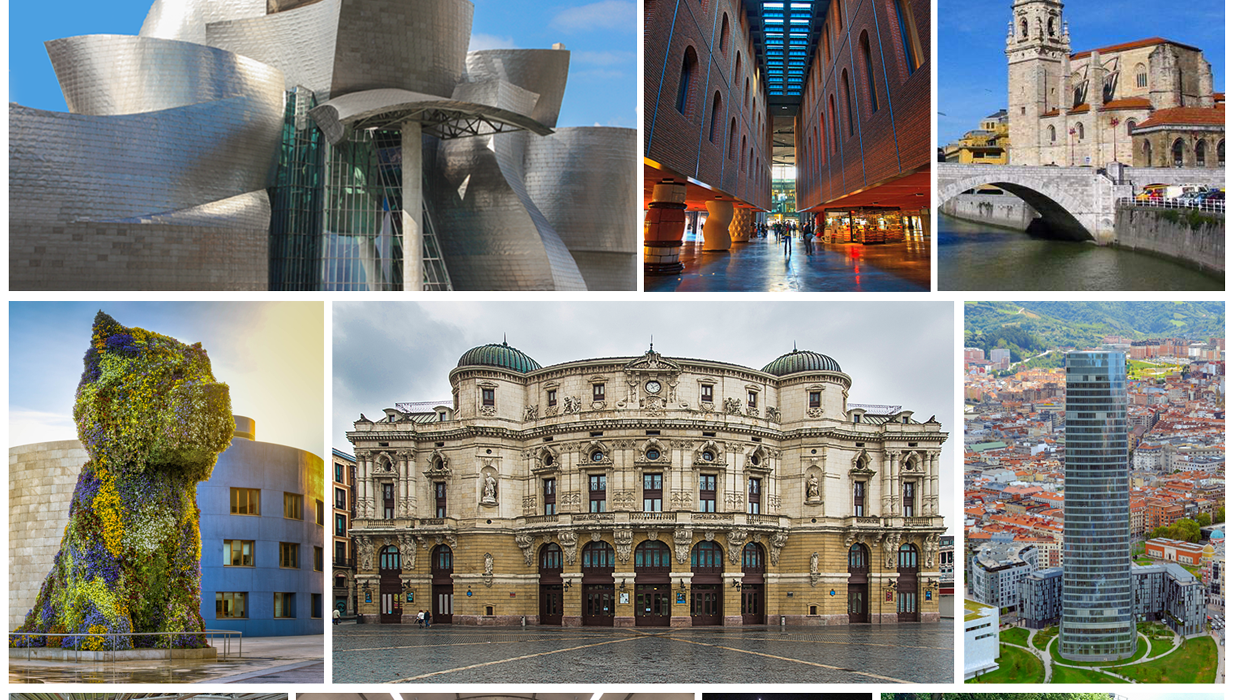
Pamplona → Bilbao
155 kmLeaving the Pamplona Basin behind to venture into the lands of Bizkaia is one of those short but intense journeys that define northern Spain, where in less than two hours you transition from the Navarrese plateau to the Atlantic influence, enjoying a road that winds between green valleys and towns steeped in history.
How to get from Pamplona to Bilbao: quick overview
The fastest and most flexible option for traveling from Pamplona to Bilbao is undoubtedly a private car, covering the 155 kilometers in just 1 hour and 35 minutes, although the bus offers a comfortable and direct alternative for those who prefer not to drive. If you are traveling alone or as a couple and looking to save money, the bus from companies like La Burundesa or Autobuses La Unión is excellent, with a journey of 195 minutes and prices from €15.60, but if your priority is the freedom to explore the beautiful towns along the way such as Vitoria or Azpeitia, a private vehicle is the undisputed recommendation.
This quick overview of options will help you decide according to your travel style: the independent driver will want the open road, while the relaxed traveler will prefer the bus. There is no direct train option, which rules out rail as a viable alternative for this specific route without complex transfers. The distance is short, which makes any option feasible, but the experience changes radically. By car, you control your time; by bus, you hand over the driving and enjoy the Basque landscape through the window.
By car from Pamplona to Bilbao
The driving route from Pamplona to Bilbao is mainly carried out via a network of toll-free highways and national roads totaling 155 km and an estimated time of 1h 35min of actual driving. The best part of this journey is that all the main roads are toll-free, which makes the trip very economical in terms of road infrastructure, allowing you to save that money for a good lunch along the way.
To start the journey, you will generally take the A-15, known as the Iruñeko mendebaldeko sahiesbidea, which allows you to leave the Navarrese capital heading west with ease. From here, the natural connection takes you to link up with the A-1, the Autovía del Norte (Northern Highway), a key route that crosses the north of the peninsula. However, the route may vary slightly depending on traffic and your exact departure point, potentially using sections of the N-1 or the A-10 (Sakanako autobia) if you are looking for alternatives through the Burunda valley.
As you approach the border between Álava and Bizkaia, you may drive along sections of the N-622 or connect with the A-636 on the Beasain – Bergara stretch, a road that facilitates movement between the interior and the coast. Finally, for the grand entrance into Bilbao, the A-8, Autovía del Cantábrico (Cantabrian Highway), is the main artery that will drop you in the heart of the metropolitan area. It is also worth mentioning the A-12 (Donejakue Bidearen autobia) as part of the connected network; although its main use is toward Logroño, it serves as a reference in the Navarrese road network. All these roads, from the A-1 to the N-622, are verified as toll-free options, guaranteeing a journey with no last-minute surprises for your wallet.
By bus from Pamplona to Bilbao
The bus is the most reliable public transport option for getting from Pamplona to Bilbao, operated mainly by the companies Autobuses La Unión and La Burundesa with a direct service that requires no changes. This means of transport is ideal for students, tourists without a vehicle, or travelers who prefer to read or rest during the journey rather than concentrate on the road.
The bus journey takes 195 minutes, which is equivalent to 3 hours and 15 minutes, a longer time than by car due to intermediate stops and access to bus stations. As for the cost, the ticket price starts at €15.60, and may vary slightly depending on how far in advance you book or the specific fare of the day, but it remains in a very competitive range for a distance of 155 km. Departure is from Pamplona/Iruña station, a central and well-connected point, and arrival is at the Bilbao terminal, leaving you in a prime location to continue your visit to the city without the need for additional taxis.
Recommended stops along the way
If you decide to make the journey by car, you have a unique opportunity to stop in some of the most charming towns and cities in the Basque Country, turning a simple transfer into a first-rate sightseeing route. Here are the verified stops you should not miss:
- Durango: This historic town is a perfect stop to feel the essence of traditional Basque commerce. Its old town, with cobbled streets and arcaded porticoes, invites you to stroll unhurriedly. It is a place where medieval history blends with a modern, vibrant atmosphere, ideal for grabbing a coffee before continuing toward the coast.
- Azkoitia: Located in the Urola valley, Azkoitia stands out for its impressive architectural heritage. By stopping here, travelers can admire Renaissance and Baroque buildings that tell the story of the area. It is a quiet town, perfect for stretching your legs and enjoying the civil and religious architecture that has withstood the passage of time.
- Azpeitia: A neighbor of Azkoitia, Azpeitia is famous for being the birthplace of Ignatius of Loyola. Its basilica and sanctuary are cultural points of interest of the highest order. In addition to its religious history, the town offers a beautiful natural setting along the Urola River, making this stop a cultural and scenic breather in the middle of the route.
- Beasain: This town acts as an important hub in the Goierri region. Beasain combines an industrial tradition with a very well-kept old town. It is a strategic place to refuel or grab a quick bite, as it has good services and is very well connected to the main roads, making it easy to enter and exit the route.
- Vitoria-Gasteiz: Although it deviates slightly from the straight line toward the coast, Vitoria deserves a special mention if your route passes through the south. As a capital city, it offers spectacular green areas and a walled medieval center (the Medieval Almond) that is a gem. Stopping here turns the trip into a full-day excursion, given the number of museums and high-quality restaurants it offers.
- Bergara: Known for its arms-making and ironworking tradition, Bergara has a beautiful historic center with Renaissance palaces. It is a more intimate and less crowded stop than others, ideal for those seeking authenticity. San Martín Square is a perfect meeting point for observing local life.
- Arrasate / Mondragón: This town is the heart of the Mondragón cooperative and has a very distinctive character. Its arcaded square is one of the most beautiful in the Basque Country. Stopping in Arrasate allows you to understand the region’s industrial transformation without losing its rural and mountainous essence. It is a place with a great deal of personality.
- Hernani: Already very close to the coast and to San Sebastián, Hernani offers privileged views and a quiet residential setting with historic touches. It is a good last stop before reaching Bilbao if you want to avoid entering the city on an empty stomach, as it has a good selection of cider houses and traditional restaurants in its surroundings.
Where to stay in Bilbao
To stay in Bilbao, the most recommended areas are the Casco Viejo (Old Town, also known as Siete Calles) for those seeking nightlife and tradition, or the Indautxu and Abando district for those who prefer modern hotels and proximity to the Guggenheim. Prices in the city vary depending on the season, but you will generally find mid-range and high-end options due to strong tourist and business demand.
In the Casco Viejo, you will find charming boutique hotels in historic buildings, perfect for an immersive experience, although they can be noisier on weekends. On the other hand, the Indautxu area offers a wider selection of 3- and 4-star hotel chains, with better car access and parking, something to consider if you have arrived in a private vehicle. There are also rural accommodation options on the outskirts if you prefer tranquility, but to visit the city, the ideal is to stay within the inner ring.
Frequently asked questions about the Pamplona-Bilbao route
How long does it take to get from Pamplona to Bilbao?
Travel time depends on the mode of transport: by car it takes approximately 1 hour and 35 minutes covering 155 km, while by bus the journey extends to 195 minutes due to commercial stops.
Which is cheaper, the train or the bus?
The bus is the available budget option, with prices from €15.60, as there is no direct train line between these two cities that would allow an immediate price comparison for a journey without transfers.
Is it worth renting a car?
Yes, it is worth renting a car if you plan to make stops on intermediate routes such as Azpeitia, Bergara or Vitoria-Gasteiz, as the bus is direct and does not allow detours, and the A-8 and A-1 roads are free and easy to drive.
When is the best time to travel?
The best time to travel is during spring or autumn to avoid the heavy winter rains and the summer heat, thus enjoying the green landscapes of the A-10 and A-12 at their finest with mild temperatures.
📍 También te puede interesar
Qué ver en Pamplona →
Qué ver en Bilbao →