Pamplona → Zaragoza
177 kmCrossing from north to south through the Ebro Valley is one of those experiences that combine the efficiency of modern transport with the beauty of a landscape that subtly shifts from deep green to golden, arid tones. This route is not just a transfer between two historic capitals, but a quick journey where the geographical proximity allows you to enjoy both Navarrese and Aragonese cuisine in a single day, whether crossing the plain by car or relaxing as you watch the landscape pass by from the train window.
How to get from Pamplona to Zaragoza: quick overview
The fastest option for traveling from Pamplona to Zaragoza is the Regional Exprés train, which covers the distance in 103 minutes, although the car offers the greatest flexibility for exploring the surroundings in 1 hour and 50 minutes. If you are looking for affordability and comfort without worrying about traffic, the bus is a solid alternative with a competitive price of between €16.10 and €20.00. For the independent traveler who values schedule freedom and intermediate stops, a private vehicle is unbeatable, while for the tourist who wants to arrive directly in the center without stress, the railway operated by Renfe is the logical choice.
By car from Pamplona to Zaragoza
The road distance between Pamplona and Zaragoza is exactly 177 kilometers, a journey that takes approximately 1 hour and 50 minutes of actual driving time. The main route is structured around a network of modern, toll-free highways that greatly ease transit, avoiding the tolls that could make the trip more expensive in other parts of Spain. When leaving the Navarrese capital, you will take the A-15 (Iruñeko mendebaldeko sahiesbidea), which acts as the ring road and natural exit southward, connecting smoothly with the national network.
Once you leave the Pamplona metropolitan area behind, the route merges into the A-21 (Pirinioetako autobia) and the A-12 (Donejakue Bidearen autobia), roads that cross rural landscapes characteristic of Navarre. As you approach the border with Aragon and the Ebro valley, the main road becomes the A-68 (Autovía del Ebro), which is the backbone of this journey. This highway will take you directly to the outskirts of Zaragoza, where you can connect with the A-23 (Autovía Mudéjar) or the A-2 (Autovía del Nordeste) to access the different entry points to the city. You can also find stretches of the N-232 and the N-122 on secondary connections, all of them toll-free, which makes this trip a very economical option for families or groups traveling together.
By train from Pamplona to Zaragoza
The direct train service between Pamplona and Zaragoza is operated exclusively by Renfe, offering a frequency of 11 daily trains that guarantee great schedule flexibility. The origin station is Pamplona/Iruña and the final destination is the modern Zaragoza-Delicias station, a multimodal transport hub. The fastest journey is made with REG.EXP. type trains, which complete the route in just 103 minutes, although the duration can range up to 148 minutes depending on the specific service and intermediate stops.
Renfe offers a variety of train types to suit different speed and comfort needs. In addition to the 7 daily Regional Exprés services, there is an Intercity service that completes the journey in 104 minutes, ideal for those seeking a balance between price and speed. For travelers who prioritize comfort and top speed, there are 2 daily ALVIA services and 1 MD (Media Distancia) service, both with a travel time of 118 minutes. The departure schedule is very broad, with the first train leaving at 6:05 in the morning, perfect for early risers, and the last train available at 20:14, allowing you to spend a full day in either of the two cities without excessive rushing.
By bus from Pamplona to Zaragoza
The bus is a direct and economical transport option, operated by companies such as Interbus and Lineas Regulares De Navarra, with a total journey time of 120 minutes. This alternative is especially attractive for budget-conscious travelers or those who prefer not to drive, as the ticket price is in a very competitive range of between €16.10 and €20.00. Unlike driving, the bus allows you to switch off during the two-hour journey, making the most of the time to read or rest before arriving at Zaragoza station.
The frequency and punctuality of these regular lines make the bus a direct competitor to the train in terms of total door-to-door time, especially when adding station access times. As a direct service, no transfers are required, which simplifies travel logistics. It is a recommended option for students or occasional travelers looking for excellent value for money without the complications of parking in central Zaragoza.
Recommended stops along the way
If you decide to make the journey by car, the route is dotted with charming towns that deserve a pause to stretch your legs or enjoy the local culture. Below, we describe the key verified points for making a technical or sightseeing stop:
- Tudela: Strategically located on the route, Tudela is the second most important city in Navarre and a must-stop point. Known as the city of the four cultures, it offers a monumental historic quarter and is famous for its gastronomy, making it the perfect place for a hearty lunch before continuing toward Aragon.
- Ejea de los Caballeros: This town, capital of the Cinco Villas (Five Towns) region, represents the transition to the drier, Monegros-style landscape. It is a historic place with a Templar past that is worth visiting if you are looking to get away from the more touristy routes and discover the rural essence of the area.
- Berriozar: Right on the outskirts of Pamplona, Berriozar is a town that forms part of the metropolitan area. It is a useful stop if you need to leave the city at a relaxed pace or if you have business in the northern zone before taking the main highway south.
- Villava / Atarrabia: Neighboring Pamplona and famous for being the hometown of Miguel Indurain, Villava offers a quiet, residential atmosphere. It is a good initial reference point on the route, marking the start of the Arga corridor before heading onto the highway.
- Sarriguren: Located in the Ebro River valley, Sarriguren is an example of modern, eco-friendly urban planning. If you pass through here, you can see how Pamplona’s expansion eastward has developed, integrating green spaces and technology.
- Utebo: Already in Aragonese territory and very close to Zaragoza, Utebo is known for its impressive Mudéjar tower, declared a World Heritage Site. It is the last recommended stop before entering the capital, ideal for a quick 30-minute cultural visit.
- Borja: World-famous in recent years, Borja is a town that preserves a rich artistic and religious heritage. Located on the route, it is the perfect place for art and history lovers who want to explore beyond the major capitals.
Where to stay in Zaragoza
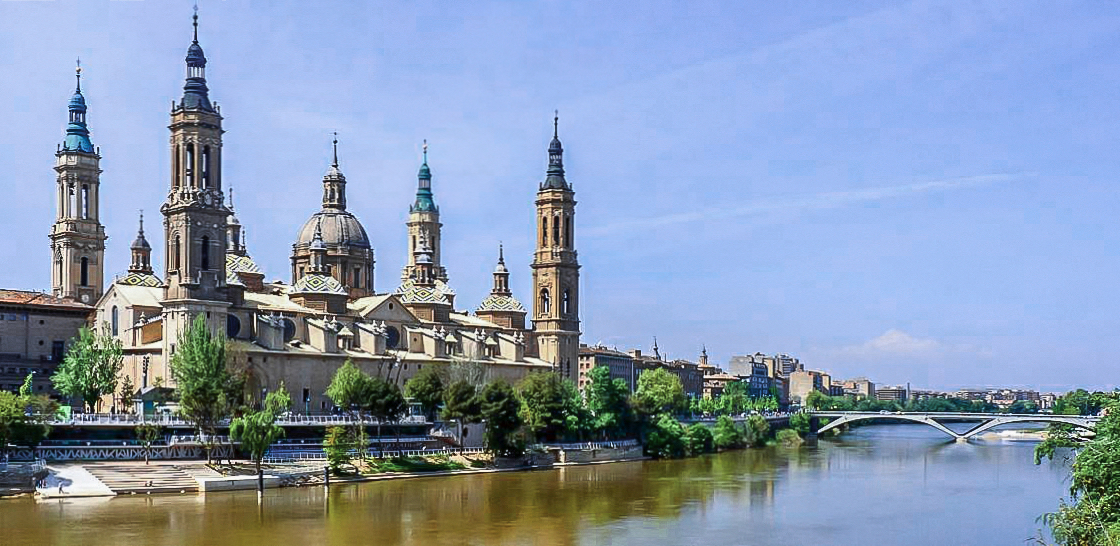
Upon arriving in Zaragoza, you have several strategic areas to stay depending on your budget and plans. The Historic Center is the most popular option for tourists, as it allows you to walk to the Basilica del Pilar and the Seo without needing transport, although hotel and tourist apartment prices here tend to be higher, especially on weekends and during the Pilar festival. For those seeking a more balanced value-for-money option, the Delicias area, near the train and bus station, offers a wide range of chain hotels and modern guesthouses, with the advantage of being very well connected to the rest of the city by tram and bus.
Another interesting alternative is the Romareda or Actur area, more residential neighborhoods where you can find apartments and hotels at more affordable prices, ideal for long stays or travelers with a car looking for easy parking. The price ranges in the city are varied: you can find guesthouses from €25-€40 per night, 3-star hotels in the €60-€90 range, and 4-star or boutique establishments that exceed €100 per night. Booking in advance is key, especially if your visit coincides with sporting or festive events.
Frequently asked questions about the Pamplona-Zaragoza route
How long does it take to get from Pamplona to Zaragoza?
Travel time varies depending on the mode of transport you choose. By car, the 177 km journey takes approximately 1 hour and 50 minutes. By train, the fastest option (REG.EXP.) takes 103 minutes, while the bus completes the trip in 120 minutes.
Which is cheaper, the train or the bus?
Generally, the bus is the most economical and predictable option in terms of price, with fixed fares between €16.10 and €20.00. The train can be competitive if you book in advance or use Renfe promotional fares, but the bus guarantees a low price without as much variability.
Is it worth renting a car?
Yes, it is worth it if you plan to make stops on routes such as Tudela, Borja or Ejea de los Caballeros, as public transport will not give you the same freedom to explore these intermediate points. Additionally, the route is completely toll-free, which lowers the cost of the journey.
When is the best time to travel?
The best time to travel is during spring and autumn, when temperatures in the Ebro Valley are mild and pleasant for exploring both the cities and the roads. Avoid local public holidays if you are looking for lower accommodation prices and less traffic on the A-68.
📍 También te puede interesar
Qué ver en Pamplona →
Qué ver en Zaragoza →