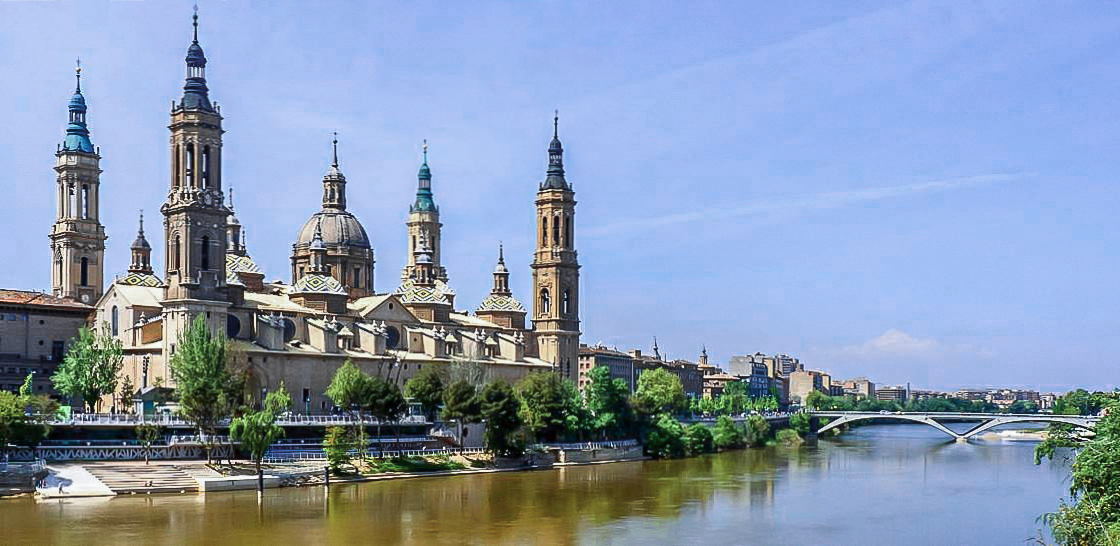
Huesca → Zaragoza
72 kmForty minutes on the tracks and the Pyrenees fade behind you as the AVE crosses the Monegros. Seventy-two kilometers separate Huesca from Zaragoza, but the speed of the train and the contrast between the mountains and the Ebro Valley turn this Aragonese journey into one of the most pleasant getaways in northern Spain. It doesn’t matter whether you prefer the aroma of roast ternasco (suckling lamb) in a Huesca restaurant before departing or your first coffee with borrajas (borage) in the capital: the trip always leaves a good taste in your mouth.
How to get from Huesca to Zaragoza: quick overview
Three modes of transport connect Huesca with Zaragoza by land: car, train, and bus. The Renfe AVE takes between 45 and 58 minutes and is the fastest option, with departures from early morning until late at night. Driving via the A-23 or A-2 covers the 72 km in about 50 minutes and allows stops in towns like Zuera or Almudévar. The Avanza Grupo bus is the most economical alternative, with tickets from €6.2 and a journey time of 55 minutes. Choose the train if you prioritize speed and comfort, the car if you want gastronomic stops along the way, and the bus if you’re looking for the lowest price.
By car from Huesca to Zaragoza
The most comfortable way to cover the 72 km between Huesca and Zaragoza is by highway, with an estimated time of 50 minutes without traffic. The most direct option is the A-23, also known as the Autovía Mudéjar, which links both cities toll-free and with a modern layout. This route crosses the Monegros and leads directly into Zaragoza, with good connections to the city center.
Another interesting alternative is the A-22, or Autovía del Camino Catalán, which connects Huesca with Lleida and can be useful if your origin or final destination lies in that direction. If you’re coming from northern Spain, the A-2 (Autovía del Nordeste) and the A-68 (Autovía del Ebro) are also toll-free options for reaching Zaragoza. The N-232, the road from Vinaròs to Santander, is a quieter and more scenic route for those who prefer to avoid highway speeds.
None of these roads have tolls, so the cost of the car journey comes down to fuel, which runs around €8-10 for an average vehicle, plus potential wear and tear over the 72 km distance. The highways are in good condition year-round, although in winter it’s worth checking the weather report if you’re driving through elevated areas of the Monegros, where fog can be dense in the early morning.
By train from Huesca to Zaragoza
The train is the fastest option for getting from Huesca to Zaragoza, with a journey time ranging between 45 and 58 minutes depending on the service chosen. Renfe operates around 10 daily trains between Huesca station and Zaragoza-Delicias station, with the first service at 6:32 and the last at 20:39. Of the 10 trains, 2 are AVE and complete the journey in 45 minutes, while the remaining 8 are regional trains with a duration of 50 minutes.
The AVE is the premium option for those seeking maximum speed and greater comfort, with more spacious seats and onboard service. Regional trains are an equally reliable alternative for those prioritizing savings or needing specific schedules. Zaragoza-Delicias station is well connected to the city center by tram and urban bus, so you’ll have no trouble continuing your journey once you arrive at your destination.
Ticket prices vary depending on the type of train and how far in advance you book. As a reference, AVE tickets tend to be more expensive than regional ones, but Renfe applies dynamic pricing with significant discounts for early bookings. We recommend checking the official Renfe website or its mobile app to find the best prices and updated schedules.
By bus from Huesca to Zaragoza
The bus is the most economical option for connecting Huesca with Zaragoza. The company Avanza Grupo operates direct services between the two cities, with a journey time of approximately 55 minutes and a price ranging from €6.2 to €9.4 per trip. It is a highly competitive alternative to the train, especially for those traveling on a tight budget or who do not need the speed of the AVE.
Bus frequency is usually good during the day, although it is advisable to check schedules in advance on the Avanza Grupo website, especially on weekends or public holidays. Buses depart from the Huesca bus station and arrive at the Zaragoza station, located in a well-connected area of the city. The journey is comfortable and allows you to enjoy views of the Ebro Valley, although without the speed of the train.
For last-minute trips or without a prior reservation, the bus is a reliable option with no surprises. Tickets can be purchased online or directly at the station, and the lowest prices usually correspond to promotional fares or advance purchases.
Recommended stops along the way
If you are traveling by car, you have the option of making interesting stops before reaching Zaragoza. Four towns are located along the route and are well worth a visit or a break to stretch your legs.
Zuera is a town located halfway between Huesca and Zaragoza, with an interesting historical heritage. Its old town preserves notable buildings and the parish church of San Pedro is one of its main attractions. It is a good place to have a coffee or try the local cuisine before continuing the journey.
Villanueva de Gállego is already on the outskirts of Zaragoza, in the Cinco Villas region. It is a quiet town with a pleasant natural setting, ideal for a final stop before arriving in the Aragonese capital.
San Mateo de Gállego is another town in the Zaragoza area that stands out for its rural atmosphere and its proximity to the Gállego River. It is perfect for those seeking an authentic Aragonese corner just a few kilometers from the city.
Almudévar is located in the province of Huesca, somewhat further north, but it is a recommended stop for those wishing to get to know the area. Its historic center and agricultural surroundings make it a point of interest for lovers of the most rural Aragon.
Where to stay in Zaragoza
Zaragoza offers a wide variety of accommodation for all budgets. In the historic center, next to the Basílica del Pilar and the Seo, you will find mid-to-high-range hotels with prices ranging from €70 to €150 per night, ideal for those looking to be close to the main monuments and the dining scene.
The Tubo area and the Casco Viejo (Old Town) are home to numerous boutique hotels and charming accommodations, perfect for a getaway with atmosphere. Prices in this area tend to range from €60 to €120 per night, depending on the category and the season.
If you prefer a more economical option, the hostales and pensiones in the Delicias or Universidad areas offer rooms from €40 per night. Tourist apartments are another interesting alternative for longer stays or family trips, with prices starting at around €50-70 per night.
On the outskirts of the city, near the Zaragoza-Delicias station, there are more functional chain hotels, with competitive prices from €50 per night, ideal for travelers passing through or on business.
Where to eat along the route
Aragonese cuisine is one of the great attractions of this route. Among the standout dishes are chiretas, a traditional recipe from the Aragonese Pyrenees consisting of lamb tripe stuffed with rice, offal, ham, bacon, garlic, parsley, and spices. It is a hearty and flavorful dish, perfect for cold mountain days.
Ternasco de Aragón (young roast lamb from Aragon) is perhaps the region’s most emblematic product. It is young lamb, between 70 and 90 days old, fed on mother’s milk and cereals. It is usually roasted in the oven and results in tender, juicy meat, with Protected Geographical Indication status. You will find it in restaurants all along the route between Huesca and Zaragoza.
Borrajas (borage) are a typical vegetable from the banks of the Ebro, highly prized in the province of Zaragoza. They are usually boiled, often accompanied by potatoes and a garlic sauté, although there is also a more sophisticated version with clams. It is a delicate dish well worth trying on any visit to the area.
Migas a la pastora (shepherd’s-style fried breadcrumbs) are a humble and hearty classic, made with crumbled stale bread fried and accompanied by garlic, longaniza sausage, pancetta, and sometimes grapes. It is a shepherd’s dish that has become a hallmark of Aragonese cuisine.
To accompany your meal, nothing beats a good local wine. Somontano wine, from the province of Huesca, offers high-quality reds, rosés, and whites thanks to the diversity of grape varieties and the peculiar climate of the sierra. Meanwhile, Campo de Borja wine, in the province of Zaragoza, is known as the “Empire of Garnacha” and produces powerful, characterful reds, along with fresh rosés and some whites.
Frequently asked questions about the Huesca-Zaragoza route
How long does it take to get from Huesca to Zaragoza?
Travel time depends on the mode of transport chosen. By car, the journey by highway takes about 50 minutes to cover the 72 km distance. The Renfe AVE is the fastest option, with a duration of 45-58 minutes depending on the service. The Avanza Grupo bus takes approximately 55 minutes to complete the journey.
Which is cheaper, the train or the bus?
The bus is the most economical option, with prices ranging from €6.2 to €9.4 per trip depending on the company and how far in advance you book. The regional train can be competitive in price, but the AVE tends to be more expensive. For travelers on a tight budget, the bus is the best alternative.
Is it worth renting a car?
Renting a car is worth it if you want to make stops in towns such as Zuera, Villanueva de Gállego, San Mateo de Gállego, or Almudévar, since public transport does not always connect these localities well. For a direct trip from Huesca to Zaragoza, the AVE train or the bus are more convenient and avoid parking worries in the Aragonese capital.
When is the best time to travel?
The best time to travel from Huesca to Zaragoza is spring and autumn, when temperatures are mild and the landscape offers its best colors. Summer can be very hot, especially when crossing the Monegros, while winter brings morning fog in the flatter part of the route. For those seeking snow and mountains, the months from December to March allow you to combine the visit with winter activities in the Pyrenees before departing from Huesca.
💡 ¿Sabías que...?
- ● Sobre el asentamiento ibero de Salduie se fundó, entre el 25 y el 12 a. C. (muy probablemente el 14 a. C.), una colonia romana inmune llamada Caesaraugusta en honor de César Augusto. (https://es.wikipedia.org/wiki/Historia_de_Zaragoza)
- ● La Plaza del Pilar es considerada la plaza peatonal más grande de la Unión Europea, y en el resto de Europa solo es superada por la Plaza Roja de Moscú. (https://zaragozafieles.es/curiosidades-de-zaragoza-no-sabias/)
- ● La Basílica del Pilar tardó 280 años en construirse tal y como se conoce hoy: las obras del Templo actual comenzaron en 1681 y no terminaron hasta 1961. (https://zaragozafieles.es/curiosidades-de-zaragoza-no-sabias/)
- ● El Palacio de la Aljafería, mandado construir en el siglo XI por Ahmad Abú Ya´far ibn Hud al-Muqtadir, es considerado el palacio árabe situado más al norte del mundo que sigue en pie. (https://zaragozafieles.es/curiosidades-de-zaragoza-no-sabias/)
- ● La muralla romana de Zaragoza, construida entre los siglos I y III d.C., llegó a tener 3.000 metros de longitud y 120 torreones, aunque apenas quedan 80 metros originales junto al Torreón de la Zuda. (https://zaragozafieles.es/datos-curiosos-de-zaragoza-no-conocias/)
- ● La evolución fonológica documentada del nombre va de /tsɛsaɾ.au'ɡusta/ (Cæsaraugusta) hasta /θaɾa'ɡoθa/ (Zaragoza), pasando por las formas Saraqusta, Çaracozta y Çaragoça. (https://es.wikipedia.org/wiki/Historia_de_Zaragoza)
📍 También te puede interesar
Qué ver en Huesca →
Qué ver en Zaragoza →