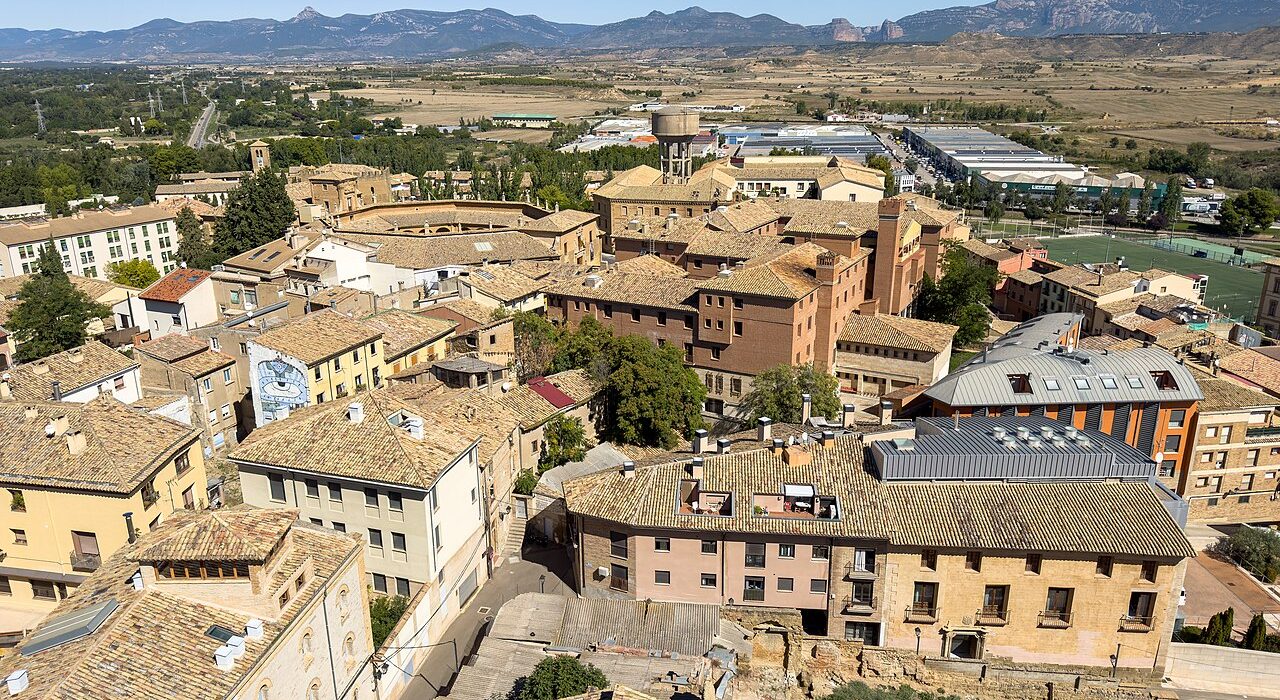
Huesca
AragónClimate
What to see in Huesca: the essentials
Monasterio de San Pedro el Viejo (Saint Peter the Old Monastery)
Declared a National Monument in 1885, this monastery is a pure example of Aragonese Romanesque architecture built upon an ancient Mozarabic temple. Construction began in 1117, and the complex houses the impressive pantheon of Kings Alfonso I and Ramiro II, a crucial historical fact for understanding the Aragonese monarchy. Do not miss the cloister, whose capitals depict biblical scenes, nor the north portal with its Trinitarian chrism held by angels. The monastery is open for visits throughout the week, although you must consider specific liturgical closures when planning your entry.Sierra de Guara
Located in the Aragonese Pre-Pyrenees, this area is recognized as a UNESCO Global Geopark and is famous for its spectacular canyons and ravines. The area contains numerous shelters with prehistoric rock art paintings that have been declared a World Heritage Site, offering a journey into humanity’s remote past. Guides are recommended for technical canyoning activities, while the territory also offers accessible routes between peaks and traditional towns. It is the perfect natural setting for adventure and geology lovers.Aragonese Way of Saint James
This pilgrimage route connects the Somport pass with Puente la Reina, following the medieval path of the Via Tolosana through the Pyrenees and the Aragón Valley. The 165-kilometer route crosses the province featuring significant Romanesque architectural landmarks and allows pilgrims to obtain credentials at local churches. It is a less crowded and more authentic experience than other Jacobean routes, with historic stages such as Jaca that are well worth visiting.Santa Iglesia Catedral de Jesús Nazareno de Huesca (Holy Cathedral Church of Jesus the Nazarene of Huesca)
Built between the 13th and 16th centuries on the remains of the city’s former main mosque, this Gothic monument houses the valuable Diocesan Museum. Visitors can ascend the bell tower to enjoy unique panoramic views over the city and observe the outstanding Gothic altarpiece inside. Cultural visiting hours vary by season, and general access requires purchasing a ticket on-site, so it is advisable to check the official tourism website of Huesca before going.Museo Pedagógico de Aragón (Aragon Pedagogical Museum)
This museum offers a unique perspective on the history of education in the region, preserving materials and classrooms from past eras. It is a cultural space that complements the city’s monumental visits with a social and historical focus that is very interesting for families and educators.Other points of interest
- Ordesa y Monte Perdido National Park: Declared a National Park in 1918, it features glacial valleys and waterfalls such as Cola de Caballo, with regulated access in summer.
- Iglesia de San Miguel (Church of Saint Michael): A historic convent complex from the 17th century in the old town that maintains the traditional religious structure.
- Murallas Árabes y Torre del Amparo (Arab Walls and Amparo Tower): The Torre del Amparo is the best-preserved structure of the original ninety towers, and its outdoor access is free.
- Castillo de Loarre (Loarre Castle): Located 30 km from the city, it is the best-preserved Romanesque castle in Europe and served as the setting for the movie ‘Kingdom of Heaven’.
- Monasterio de San Juan de la Peña (Saint John of the Peña Monastery): A unique enclave beneath a rock that houses the Royal Pantheon of the kings of Aragon.
- Aínsa: A medieval town with a porticoed Plaza Mayor declared a Historic-Artistic Complex in 1965.
🍂 Otoño
Si visitas Huesca en otoño, el clima se vuelve fresquito y el ambiente se llena de calma, ideal para disfrutar sin prisas de Ultramarinos La Confianza, una tienda con mucho sabor local. Las murallas y la catedral se ven especialmente bonitas con esta luz tranquila. Un consejo: lleva paraguas y un buen chaquetón, porque las lluvias aparecen y las tardes invitan más a un café que a caminar por la sierra.
What to do in Huesca
Huesca offers a vibrant cultural agenda blending religious tradition, avant-garde cinema, and neighborhood life. During August, the city transforms for the San Lorenzo Festival (Fiestas de San Lorenzo), turning white and green to celebrate its patron saint with dancers and concerts. If you prefer art, the International Film Festival in June or the Periferias Festival in October turn the city into a meeting point for filmmakers and artists. For a more local experience, join the Bonfires of Saint Vincent (Hogueras de San Vicente) in January or explore the Ecological Market (Mercadillo Ecológico) to buy seasonal products directly from local producers.Huesca in one day: express itinerary
If you are short on time, this route will allow you to see the essentials of the capital and its immediate surroundings:- 09:00 – Monastery of San Pedro el Viejo: Start your day by visiting this national monument to see the royal pantheon and the Romanesque cloister before the crowds arrive.
- 11:30 – Huesca Cathedral: Climb the bell tower for a panoramic view of the city and visit the Diocesan Museum inside.
- 13:30 – Historic Quarter and Walls: Stroll through the medieval streets to the Torre del Amparo to see the remains of the Arab wall free of charge.
- 15:00 – Lunch in the San Lorenzo Neighborhood: Head to this district to try roast lamb (ternasco) or chiretas in one of its many tapas bars.
- 17:00 – Pedagogical Museum or Church of San Miguel: Dedicate the afternoon to learning about the region’s educational history or the 17th-century convent architecture.
Where to eat in Huesca: local gastronomy
Where to sleep in Huesca
Casco Histórico
El corazón histórico de Huesca, donde la arquitectura medieval y las plazas tradicionales narran siglos de historia. Es ideal para pasear, descubrir monumentos y sumergirse en la cultura local.
Barrio de San Lorenzo
Este animado barrio es el epicentro de la vida social y gastronómica de Huesca, famoso por su concentración de bares de tapas y restaurantes. Ofrece un ambiente vibrante tanto de día como de noche.
Barrio Nuevo (Antigua Judería)
Una zona con un profundo legado histórico, cuyas estrechas callejuelas invitan a un viaje al pasado judío de Huesca. Ofrece una perspectiva cultural y tranquila de la ciudad.
El Coso (Zona Comercial Central)
La principal arteria comercial de Huesca, que abarca El Coso Alto y Bajo, junto con sus calles adyacentes. Aquí se encuentran tiendas de todo tipo, desde moda hasta productos locales, cafeterías y servicios.
How to get to Huesca
The city has good land connections, although it is important to know that the train station currently has no direct AVE service.| Medio | Duración | Precio aprox. | Frecuencia |
|---|---|---|---|
| Tren (Regional/Media Distancia) | Variable según origen | Económico | Diaria |
| Autobús | Variable según origen | Económico | Frecuente |
| Coche | Flexible | Combustible + Peajes | N/A |
How to get around Huesca
The historic quarter of Huesca is very walkable, and most main attractions are close to each other. For longer distances or to reach peripheral neighborhoods, the city has an urban bus service covering the main routes. Given the city’s compact size (53,000 inhabitants), walking is usually the fastest and most pleasant option to enjoy the atmosphere.Weather in Huesca
Best time to visit Huesca
Day trips from Huesca
If you have extra time, Zaragoza is the ideal nearby city for a day trip. Located in the same autonomous community of Aragon, it offers an urban contrast with its own monumental richness, such as the Basílica del Pilar (Basilica of Our Lady of the Pillar) and the Aljafería Palace. It’s an easy journey that allows you to complement Huesca’s nature and Romanesque experience with the imperial and Mudéjar history of the Aragonese capital.Huesca facts you didn’t know
The Legend of the Bell: Huesca is the birthplace of the famous legend where King Ramiro II ‘The Monk’ beheaded 15 rebellious nobles and used their heads to form a bell as a warning to other lords of the kingdom.
Hollywood Setting: The Castle of Loarre, in the province, is so spectacular that Ridley Scott chose it as the main setting for the fortress of Kerak in the movie ‘Kingdom of Heaven’ (2005).
The Roof of the Pyrenees: Aneto Peak, at 3,404 meters in altitude, is the highest mountain in the entire range and is located in the province of Huesca, hosting the largest glacier in the Pyrenees.
Saint Lawrence’s Tears: The famous Perseid meteor shower is popularly known as the ‘Tears of Saint Lawrence’ because its peak activity (August 10) coincides with the feast day of the city’s patron saint.
Cradle of Filmmakers: Acclaimed director Carlos Saura, winner of awards at Cannes and Berlin, was born in Huesca in 1932, which explains the city’s strong connection to the International Film Festival.
Who is Huesca for?
Huesca is a versatile destination ideal for history lovers seeking pure Romanesque architecture and medieval legends, as well as for foodies who want to try top-notch meat and mountain cuisine. It is also perfect for couples looking for quiet getaways in the Historic Quarter and for backpackers using the city as a base to explore Ordesa National Park and the Sierra de Guara. With an average stay of 1.98 nights (INE), it is a perfect destination for an intense weekend.Frequently asked questions about Huesca
How many days do I need to see Huesca?
With an average stay of 1.98 nights according to the INE, a weekend (2-3 days) is enough to see the historic quarter, the cathedral, and the monastery. If you plan excursions to Ordesa or Loarre, add 1 or 2 more days.
What is the best time to visit Huesca?
The best time is from May to September, when the average summer temperature is 23.3°C. August is especially lively due to the San Lorenzo Festivities, although it is also the busiest time.
How do I get to Huesca from Madrid?
You can arrive by car or bus. By train, Huesca station does not have a direct AVE, so a transfer in Zaragoza is generally required. Duration and price vary depending on the chosen mode of transport.
Is Huesca an expensive city to visit?
As a small provincial capital (53,000 inhabitants), prices for dining and accommodation tend to be more moderate than in large tourist capitals, especially if you move away from the immediate center.