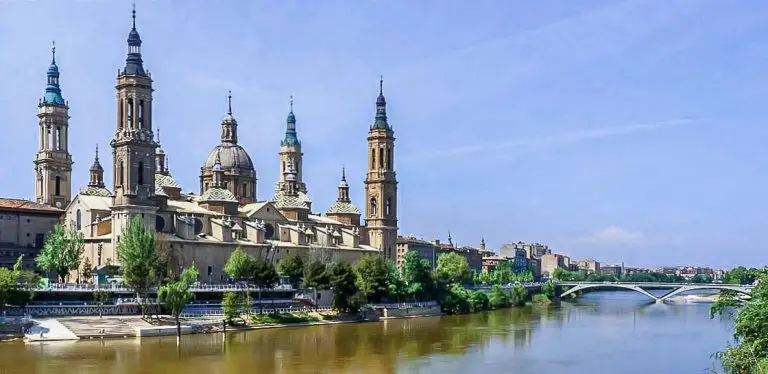
Barcelona → Zaragoza
296 kmHow to get from Barcelona to Zaragoza: quick summary
The Barcelona-Zaragoza route offers three main options: car (296 km by motorway in about 3h), direct AVE train (85 minutes on the fastest journey) and direct bus (210 minutes). For travellers in a hurry, the AVE is unbeatable; for those who want to explore stops such as Lleida or Montblanc, the car is the best option; and for tighter budgets, the ALSA bus offers fares from €6.
By car from Barcelona to Zaragoza
The drive from Barcelona to Zaragoza covers 296 km and takes approximately 3 hours by motorway, with no tolls on most of the route. The main route combines four roads: the B-23 (16 km) to leave the Barcelona metropolitan area, the AP-7 (49 km) heading west, the AP-2 (214 km) as the backbone of the journey through inland Catalonia, and the A-2 (17 km) on the final approach to Zaragoza. According to road data, the AP-2 is the Zaragoza-Mediterrània motorway and accounts for more than 70% of the journey, toll-free. The AP-7 connects the initial stretch from Barcelona to the junction with the AP-2, also toll-free. The final stretch along the A-2, the Autovía del Nordeste, allows a smooth entry into the Aragonese capital.
By train from Barcelona to Zaragoza
The direct train from Barcelona to Zaragoza is the fastest option, with the AVE covering the journey in 85 minutes according to Renfe. There are 28 trains per day, departing from Barcelona-Sants and arriving at Zaragoza Delicias. The first train leaves at 05:40 and the last at 20:20. The train types available include: AVE (17 trains/day, 85 min), Ouigo (3/day, 86 min), AVE INT (1/day, 95 min), ALVIA (4/day, 115 min), Intercity (1/day, 122 min) and REG.EXP. (2/day, 335 min). Prices vary depending on how far in advance you book and the operator, but the high frequency makes it possible to find options ranging from budget fares on Ouigo to flexible tickets on AVE.
By bus from Barcelona to Zaragoza
The direct bus from Barcelona to Zaragoza is operated by ALSA and Alsa, with a journey time of 210 minutes (3 and a half hours). The price ranges from €6 to €50 depending on how far in advance you buy, the type of seat and the season. It is the cheapest option for travellers with time to spare, especially if you book weeks ahead. Buses depart from Barcelona Nord station and arrive at Zaragoza’s central station, with several daily departures.
Recommended stops along the way
The Barcelona-Zaragoza route reveals eight interesting stops, from Catalan industrial cities to medieval villages and provincial capitals. These are the verified stops on the route:
Lleida
Lleida is the largest stop on the journey, located halfway between Barcelona and Zaragoza. Its old town is home to the Seu Vella, a medieval cathedral on a hill overlooking the Segre river. It is an ideal stop to stretch your legs and sample Catalan inland cuisine, especially caracoles a la llauna (grilled snails).
Sabadell
Sabadell lies in the Barcelona metropolitan area, just a few kilometres from the B-23 exit. It is a city with a textile past and today a modern urban centre. It can be a brief stop for those who want to avoid Barcelona traffic and start the journey from here.
Terrassa
Terrassa, Sabadell’s neighbour, offers an outstanding Modernista ensemble with the Sant Llorenç del Munt Natural Park as a backdrop. It is a practical stop to refuel or grab a coffee before heading inland on the AP-7.
Montblanc
Montblanc is a walled medieval town in the province of Tarragona, accessible from the AP-2. Its 14th-century walls, the church of Santa María and its arcaded streets make it one of the most charming stops on the route. It is the perfect place for a gastronomic break with produce from the Conca de Barberà region.
Santa Coloma de Gramenet
Santa Coloma de Gramenet sits right next to Barcelona, on the other side of the Besòs river. It is a densely populated city with an interesting Roman and Modernista heritage. For those leaving Barcelona from the north, it is an optional stop before joining the B-23.
Fraga
Fraga is the first Aragonese stop on the route, already in the province of Huesca and very close to the border with Lleida. It is known for its old town of Arab origin and as the gateway to the Bajo Cinca region. Here you can get a first taste of Aragonese cuisine, especially ternasco (roast lamb).
les Borges Blanques
Les Borges Blanques is a municipality in the Les Garrigues region, in Lleida, famous for its production of extra virgin olive oil with a protected designation of origin. It is a brief but highly recommended stop to buy local oil and see centuries-old olive groves.
Montcada i Reixac
Montcada i Reixac is located north of Barcelona, at the start of the route along the AP-7. It is a town with an industrial past and direct access to the Collserola mountain range. For those leaving Barcelona from the northern area, it is the last stop before leaving the metropolitan area behind.
Where to stay in Zaragoza
Zaragoza offers accommodation for every budget, concentrated mainly in three areas: the Casco Histórico (around the Basílica del Pilar and La Seo), the Estación Delicias district (practical for those arriving by AVE or bus) and the Paseo de la Independencia area (commercial and business district). Prices range from €40-70 per night in hostels and guesthouses in the centre, €60-120 in 3-star hotels, and €100-200 in 4-star hotels. For short stays, sleeping near the Delicias station saves travel time; for sightseeing, the Casco Histórico lets you visit the monuments on foot. The offer ranges from youth hostels to boutique hotels in restored palaces.
Where to eat along the route
The cuisine along the Barcelona-Zaragoza route combines the Catalan cooking of the coast and inland areas with hearty Aragonese fare. These are the typical dishes and products verified along the route:
Pan con tomate
Pan con tomate (bread with tomato) is the quintessential Catalan tapa, found throughout the province of Barcelona. It consists of toasted bread rubbed with garlic and ripe tomato, dressed with olive oil and salt. It is usually served with cured meats such as jamón or fuet. It is the perfect breakfast or snack before leaving Barcelona.
Butifarra with beans
Butifarra with beans is a typical dish from the Osona region and other areas of the province of Barcelona. It consists of fresh butifarra sausage, boiled or grilled, served with white beans or mongetes. The butifarra is made with minced pork and spices. It is a hearty meal, ideal for tackling the journey.
Calçots
Calçots are tender onion shoots roasted over embers and served with romesco sauce. They are typical of the Valls region (Tarragona) and nearby areas of Barcelona. They are eaten by peeling the charred stalk and dipping it in the sauce. Their season runs from November to April, coinciding with the so-called calçotades.
Bacalao a la aragonesa
Bacalao a la aragonesa is a stew of desalted cod with tomato, onion, pepper and sometimes potatoes. It is cooked slowly until the fish is tender. It is a typical dish of Zaragoza and its province, perfect to try upon arriving in the Aragonese capital.
Ternasco de Aragón
Ternasco de Aragón is young lamb, roasted or grilled, typically with panadera potatoes. The meat is tender and juicy, with its own protected designation of origin. It is the most emblematic dish of Zaragoza and Teruel, and a must-stop for meat lovers.
Cariñena wine
Cariñena wine is made primarily from garnacha grapes in the Cariñena region, in the province of Zaragoza. The area has a winemaking tradition and produces red, white and rosé wines with a designation of origin. It is the perfect pairing for ternasco and Aragonese bacalao.
Somontano wine
Somontano wine belongs to the Somontano designation of origin, in the Somontano region (Huesca). It is made with varieties such as garnacha, tempranillo or chardonnay. Although it is not strictly on the Barcelona-Zaragoza route, it is a nearby Aragonese DO that is regularly consumed in Zaragoza and deserves a tasting.
Frequently asked questions about the Barcelona-Zaragoza route
How long does it take to get from Barcelona to Zaragoza?
The time varies depending on the means of transport: by car it takes 3 hours (296 km on the motorway), by AVE 85 minutes on the fastest journey (according to Renfe), by bus 210 minutes (3 and a half hours with ALSA), and by regional train up to 335 minutes. The AVE is the fastest option, while the car offers flexibility to make stops.
Which is cheaper, the train or the bus?
The bus is generally cheaper, with prices between €6 and €50 according to ALSA, especially if booked in advance. The AVE train can be more expensive, although operators such as Ouigo offer competitive fares starting from low prices if purchased weeks in advance. For tight budgets, the bus is the most economical option.
Is it worth renting a car?
Renting a car is worth it if you want to make stops along the route such as Lleida, Montblanc or Fraga, which are not accessible by direct train. With 296 km of toll-free motorway and 3 hours of driving, it is a comfortable route. If you are only going to Zaragoza and don’t need to get around the surrounding area, the AVE is faster and avoids the stress of driving.
When is the best time to travel?
The best time to travel from Barcelona to Zaragoza is in spring (April-June) and autumn (September-October), when temperatures are mild and the extreme heat of the Aragonese summer is avoided. In winter, Zaragoza can be cold but offers fewer tourist crowds. If you travel by car, avoid the peak departure hours from Barcelona (7:00-9:00) to avoid traffic on the B-23 and AP-7.
💡 ¿Sabías que...?
- ● La Basílica del Pilar es el único edificio cristiano de occidente que mantiene simbología taoísta china, con hexagramas de base matemática binaria. (https://www.hoyaragon.es/cultura/zaragoza-datos-curiosos/20190224132638049371.html)
- ● El casco histórico de Zaragoza, que agrupa los barrios de El Gancho-San Pablo, La Magdalena y San Miguel, es el segundo más grande de España. (https://www.hoyaragon.es/cultura/zaragoza-datos-curiosos/20190224132638049371.html)
- ● El nombre de Zaragoza proviene de Caesaraugusta, la colonia fundada por el emperador Augusto en el 14 a.C. (https://vivezaragoza.es/memoria)
📍 También te puede interesar
Qué ver en Barcelona →
Qué ver en Zaragoza →