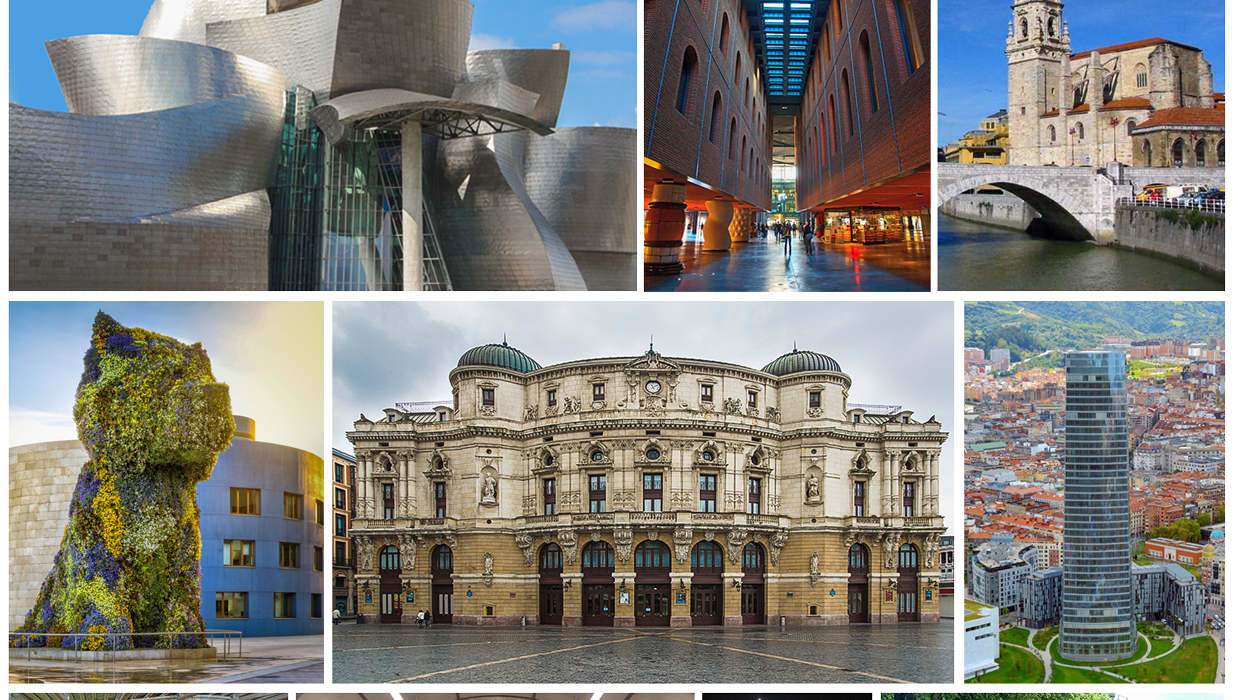
Madrid → Bilbao
400 kmImagine crossing the peninsula in under five hours, leaving behind the dry Castilian plain to plunge into the lush, vibrant green of the north, where the Cantabrian Sea awaits with its estuaries and gastronomy. This journey is more than just a transfer; it’s a climatic and cultural transition you can experience at full speed on a high-speed train or by enjoying the freedom of the open road.
How to get from Madrid to Bilbao: a quick overview
The fastest and most comfortable way to travel from Madrid to Bilbao is undoubtedly Renfe’s ALVIA train, which covers the distance in under 5 hours, while driving offers total flexibility to explore the route at your own pace.
For the business traveler or tourist who prioritizes time, the railway is unbeatable, connecting the heart of the capital with Bizkaia’s financial center stress-free. However, if your plan includes a road trip, visiting intermediate towns, or traveling with bulky luggage, the private vehicle option remains highly competitive, especially considering that the main highways on the route are toll-free. The bus is a budget-friendly alternative, ideal for travelers on a tight budget who don’t require the speed of the train or the privacy of a car.
Madrid to Bilbao by car
Driving from Madrid to Bilbao involves covering a distance of 400 km, which takes an estimated time of 4 hours and 15 minutes.
The road trip is a smooth experience thanks to Spain’s excellent highway infrastructure. Although the logical route naturally focuses on the north, the journey benefits from an interconnected network of freeways that guarantee safe transit with no additional toll costs. Along the way, you will travel on the A-1 (Autovía del Norte), the backbone connecting the capital with the north of the peninsula, offering changing landscapes as you ascend towards the mountain range.
It is essential to know the available connections within the Spanish road network for this trip. In addition to the A-1, the route is integrated into a broader system that includes the A-8 (Autovía del Cantábrico), essential for the final arrival on the Basque coast. Other arteries that form part of the national transport network and that you might encounter or use for alternative connections are the A-62 (Autovía de Castilla), which facilitates the crossing of the plateau, and the A-12 (Donejakue Bidearen autobia), whose name evokes the Camino de Santiago (Way of St. James) and is vital in the La Rioja and Navarre area.
The network of toll-free freeways is extensive and covers all cardinal directions from Madrid, offering detour options if necessary. Among the toll-free routes available are the A-2 (Autovía del Nordeste), the A-3 (Autovía del Este), and the A-4 (Autovía del Sur), although for this specific destination the main flow heads north. Also part of the national infrastructure are the A-5 (Autovía del Suroeste), the A-6 (Autovía del Noroeste), the A-11 (Autovía del Duero), the A-42 (Autovía de Toledo), and the A-73. All these roads share the advantage of being free-flowing freeways, meaning the cost of a car journey is practically limited to fuel and vehicle wear and tear.
Getting from Madrid to Bilbao by train
The ALVIA train operated by Renfe is the fastest means of transport, covering the route between Madrid-Chamartín and Bilbao-Abando in just 287 minutes.
The train experience is synonymous with comfort and efficiency. The national operator, Renfe, runs this line with a frequency of 2 direct trains per day, allowing you to plan your day in advance. The first train departs at 7:20 a.m., ideal for those who want to make the most of the day in Bilbao, while the last service of the day leaves at 17:37, perfect for a more relaxed journey after lunch.
Travel time ranges between 287 and 291 minutes, depending on the specific service, which means less than 5 hours of travel. The stations are centrally located and perfectly connected with urban transport: you will depart from the modern Madrid-Chamartín-Clara Campoamor station and arrive directly in the heart of the Basque city at Bilbao-Abando Indalecio Prieto station. Upon arriving at Abando, you will find yourself just a short walk from the Guggenheim and the Casco Viejo (Old Town), eliminating the need for additional transfers.
Getting from Madrid to Bilbao by bus
The bus is the most economical option, with fares starting from 54.98€ operated by companies such as Alsa and FlixBus.
For travelers looking to save on transport, the direct bus is a viable solution. The main companies covering this route are Alsa and FlixBus, both with extensive experience in national and international routes. Although the exact journey time may vary depending on traffic conditions and intermediate stops, the price is the main attraction of this option.
With a base cost starting from 54.98€, you can secure your seat well in advance. It is a recommended option if you are not in a hurry to arrive and prefer to allocate that budget to gastronomic or cultural experiences once at your destination. Buses usually come with basic amenities such as WiFi and power sockets, making the journey more pleasant despite being slower than the train.
Recommended stops along the way
If you decide to drive, the route offers plenty of opportunities to stretch your legs and discover charming towns before reaching your final destination.
- Santo Domingo de la Calzada: This stop is essential for lovers of history and the Camino de Santiago (Way of St. James). Located in La Rioja, it is famous for its cathedral and the legend of the cock and the hen. It is the perfect place for a cultural break at the halfway point.
- Burgos: It is impossible not to mention the city of El Cid. Burgos offers a monumental stop with its stunning Gothic cathedral, a UNESCO World Heritage Site. It is the ideal spot for a hearty lunch before continuing the journey north.
- Alcalá de Henares: Just outside Madrid, this university city is a historical breath of fresh air. Its Calle Mayor and the Cisneros University are quick but highly rewarding stops to admire the Cervantes-era architecture before getting on the highway.
- Torrejón de Ardoz: Strategically located near the capital, this is a useful stop for those departing from the Henares Corridor. It offers a full range of services and is a major transport hub in the eastern area of Madrid.
- Arrigorriaga: Very close to Bilbao, at the entrance to the estuary, Arrigorriaga marks the definitive transition into the Basque metropolitan area. It is a good point to prepare for arrival and see how the landscape becomes increasingly industrial and green.
- Daganzo de Arriba: In the northern part of the Madrid region, this municipality offers an interesting rural contrast. It is a quiet stop, far from the bustle of the main highways, ideal for a quick coffee in a more local setting.
- San Sebastián de los Reyes: Known for its festivals, this town in northern Madrid is a frequent stopover point. It has extensive service areas and is a key landmark for those traveling on the A-1 motorway.
- Alcobendas: Neighboring San Sebastián de los Reyes, Alcobendas is a modern business and residential hub. Stopping here gives you access to high-quality services and shopping areas before you definitively head out on the route north.
Where to stay in Bilbao
To stay in Bilbao, the most recommended areas are the Casco Viejo (Old Town) to experience the traditional atmosphere, and the Indautxu area for a more modern and central vibe.
The city’s accommodation offer is varied and adapts to different budgets. In the Casco Viejo (Siete Calles), you will find boutique hotels and guesthouses with plenty of character, ideal for those who want to go out partying or have pintxos without leaving the historic center. Prices here tend to be higher due to high tourist demand, but the experience of sleeping among historic buildings is priceless.
On the other hand, the Indautxu area and the surroundings of Abando station offer modern chain hotels and apartments. It is the perfect area for business travelers or tourists who prioritize connections to the train and metro. Price ranges in Bilbao vary considerably depending on the season; in summer and during the Semana Grande (Big Week) festival, prices skyrocket, while in autumn and winter it is possible to find more affordable deals. There is no “bad” area, as Bilbao is a compact and safe city, but it is advisable to avoid the purely industrial surroundings of the port if you are looking for scenic views.
Frequently asked questions about the Madrid-Bilbao route
How long does it take to get from Madrid to Bilbao?
Travel time depends on the mode of transport you choose: by car it takes 4 hours and 15 minutes, while the ALVIA train journey lasts between 287 and 291 minutes.
Which is cheaper, the train or the bus?
The bus is generally cheaper, with prices starting from 54.98€ on companies like Alsa and FlixBus, while the ALVIA train, though faster, usually has higher fares that vary depending on how far in advance you book.
Is it worth renting a car?
Yes, it is worth it if you plan to make tourist stops along routes such as Burgos or Santo Domingo de la Calzada (a historic town on the Camino de Santiago), as the 400 km distance is manageable and highways like the A-1 and A-8 are toll-free.
When is the best time to travel?
The best time to travel is spring or autumn to enjoy the mild climate, although if you are looking to save money, travelling on weekdays outside of peak season will help you find better prices on buses and accommodation.
📍 También te puede interesar
Qué ver en Madrid →
Qué ver en Bilbao →