Burgos
Castilla y LeónClimate
Daily budget
What to see in Burgos: the must-sees
Catedral de Santa María de Burgos
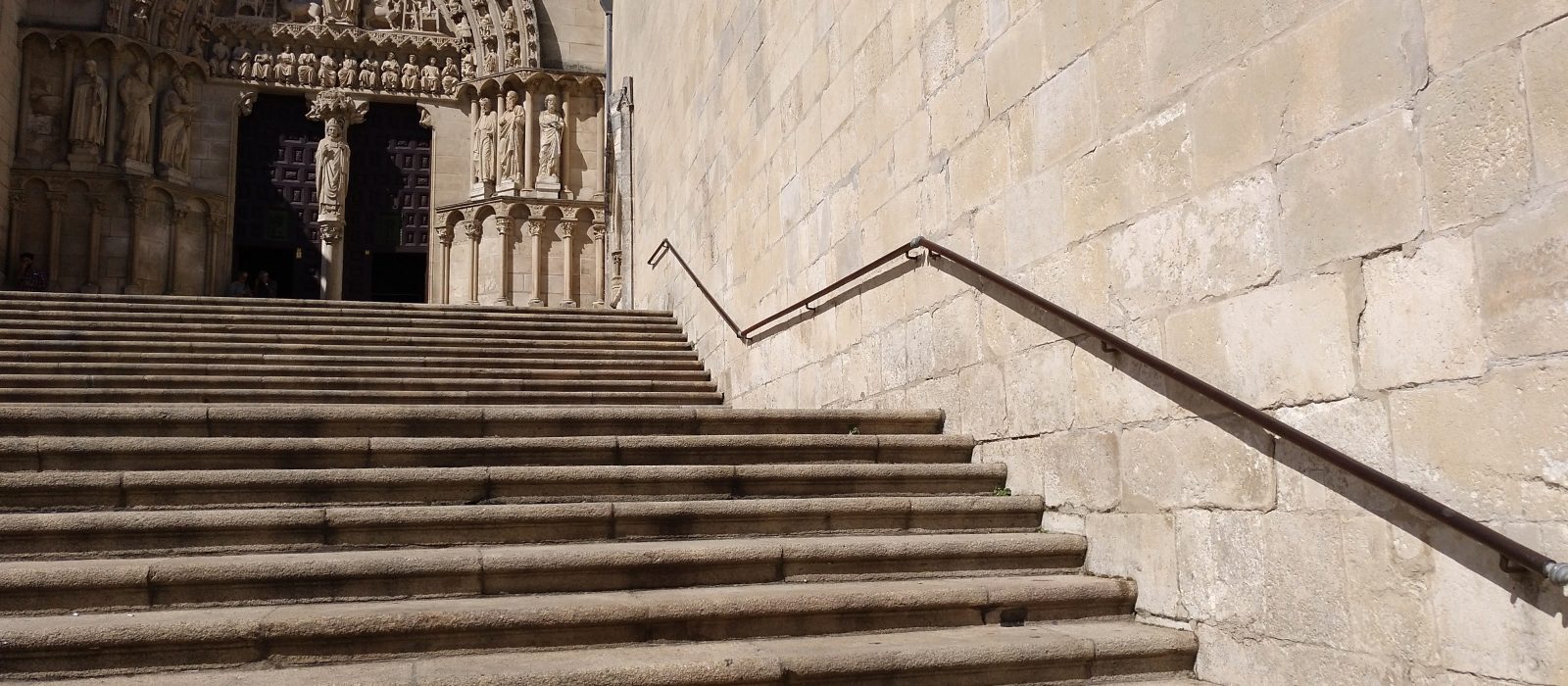
The silhouette of its Gothic spires etched against the Castilian sky is the quintessential postcard image of Burgos. Declared a UNESCO World Heritage Site in 1984, this cathedral serves as the Royal Pantheon of Queen Isabella the Catholic’s parents, as well as a Carthusian monastery and National Monument. Inside, don’t miss the Papamosc automaton, which on the stroke of every hour opens its mouth and moves its arm to ring a bell. General visiting hours are from 10:00 to 19:00; for tourist information you can call 947 25 25 86 (faxYacimientos de la Sierra de Atapuerca (Atapuerca Archaeological Sites)
About 15 km east of the city lies one of the most important paleontological sites in the world. Declared a UNESCO World Heritage Site in 2000, Atapuerca provides the oldest fossil record of human presence in Europe, with remains of Homo antecessor dated at over 900,000 years old. Visits are conducted exclusively in guided groups and require advance booking, something you should arrange well ahead of time if traveling in summer.Monasterio de Santa María la Real de Las Huelgas
This female Cistercian monastery is one of the most important in Spain and also serves as the Pantheon of the kings of Castile. Its cloister, chapter houses, and royal quarters deserve a leisurely visit to grasp the historical weight of the Castilian crown. Visiting hours are from 10:00 to 13:00 and from 16:00 to 17:30, and admission is required.Catedral de Burgos (Burgos Cathedral)
Next to the former cathedral complex stands the Gothic see that houses the tombs of El Cid Campeador and his wife Jimena, an unmissable stop for any visitor. Declared a UNESCO World Heritage Site, its interior, stained-glass windows, and chapels are a hands-on lesson in European Gothic architecture. If you’re up for climbing its towers, the views over the Arlanzón River and the rooftops of the old town make the effort worthwhile.Museo de la Evolución Humana (MEH) (Museum of Human Evolution)
On the banks of the Arlanzón, very close to the Puente de San Pablo (St. Paul Bridge), this modern museum showcases the findings from the Sierra de Atapuerca. It’s the best way to put the fossils into context and understand why this site changed what we knew about human evolution in Europe. It’s worth setting aside at least two hours so you don’t miss the permanent collection and the temporary exhibitions.Cartuja de Miraflores (Miraflores Charterhouse)
About 4 km from the historic center, in a natural setting with a pond and hermitage, stands this Carthusian monastery, also declared a National Monument and Royal Pantheon of Queen Isabella the Catholic’s parents. It houses an impressive funerary sculptural ensemble by Gil de Siloé that alone justifies the visit. Hours are Monday to Saturday from 10:15 to 15:00 and from 16:00 to 18:00, and Sundays from 11:00 to 15:00 and from 16:00 to 18:00; Mass is celebrated on Sundays and public holidays at 10:15.Monasterio de San Juan de Ortega (Monastery of San Juan de Ortega)
In the village of San Juan de Ortega, this Romanesque complex with Gothic additions has been listed as a Bien de Interés Cultural (Site of Cultural Interest) since June 3, 1931 and forms part of a UNESCO World Heritage Site. Highlights include the church, the Romanesque cloister, the cenotaph of the founding saint, the Chapel of San Nicolás, and the apse, where the well-known equinox light phenomenon takes place.Casa del Cordón (Palacio de los Condestables de Castilla)
Its interior courtyard, arranged as a double gallery with Renaissance arches and columns, is one of the finest examples of palatial architecture in Burgos from the transition between late Gothic and Renaissance. On its façade you can still see the Franciscan cord that gives the building its name, a symbol of the Constables’ lineage.Paseo del Espolón
This is the city’s most central and popular tree-lined, landscaped promenade, running alongside the Arlanzón River. It’s ideal for a leisurely after-lunch stroll or for children to run around safely among its flower beds.Puente de San Pablo
This stone bridge of medieval origin has documented works dating from 1242, although an earlier bridge may have existed. It takes its name from the Dominican convent of San Pablo that stood on the left bank, exactly where the Museum of Human Evolution now stands.Plaza Mayor
A typical Castilian main square, irregular in shape and surrounded by arcades lined with shops and restaurants. It is the perfect spot to enjoy a vermouth between sightseeing stops.🍂 Otoño
Si visitas Burgos en otoño, notarás cómo bajan las temperaturas y vuelven las lluvias, así que el paraguas será tu mejor compañero. A pesar de eso, el ambiente tranquilo invita a visitar lugares como el Arco de Santa María y el Monasterio de San Juan de Ortega sin esperar colas. Mi consejo: planifica las visitas a cubierto para los días más grises y aprovecha los ratos de sol para callejear por el casco histórico.
What to do in Burgos
Burgos offers a very full agenda combining heritage, markets, and neighborhood life. On Sunday morning, head to the Mercadillo del Plantío Dominical del Plantío (Plantío Sunday Flea Market), held around the football stadium, where you can find everything from food to clothing and antiques; if you prefer something more permanent, Mercado Sur is the city’s main food market, housed in a historic building near Plaza de España. For tapas and nightlife, the Las Llanas area buzzes with traditional bars and pubs; for a family stroll, nothing beats the Espacio Espacio, which is the Paseo del Espolón; and to visit the most important monuments, the Casco Antiguo (Old Town) concentrates nearly all the essentials within easy walking distance.Burgos in one day: express itinerary
- 10:00 — Catedral de Santa María de Burgos and Catedral de Burgos: start with the most emblematic monument, climb the towers if you can, and don’t leave without seeing the Papamosc.
- 12:30 — Paseo del Espolón and Puente de San Pablo: stroll along the Arlanzón, cross the medieval bridge, and take a photo with the Arlanzón in the background.
- 13:30 — Plaza Mayor: quick tapas under the arcades, with morcilla de Burgos (Burgos blood sausage) as the star.
- 16:00 — Museum of Human Evolution (MEH): two hours to understand why Atapuerca changes the history of humanity.
- 18:30 — Cartuja de Miraflores: end the day with the altarpiece and the tombs by Gil de Siloé in a peaceful setting.
Where to eat in Burgos: local gastronomy
Where to stay in Burgos
Casco Antiguo
El corazón histórico y monumental de Burgos, donde se encuentra la majestuosa Catedral y la Plaza Mayor.
Paseo del Espolón
Un elegante y céntrico paseo arbolado junto al río Arlanzón, perfecto para caminar y disfrutar del ambiente de la ciudad.
Las Llanas
Famosa por su vibrante vida nocturna, esta zona está repleta de bares de tapas y pubs tradicionales.
Barrio de la Universidad
Un área con un ambiente más joven y moderno, que ofrece opciones de alojamiento y restauración a buen precio.
How to get to Burgos
| Medio | Duración | Precio aprox. | Frecuencia |
|---|---|---|---|
| Tren (estación Burgos-Rosa Manzano) | Variable según origen; sin AVE directo | Variable según Renfe | Trayectos diarios, según Renfe |
| Autobús (Estación de Burgos, Alsa / Avanza) | Variable según origen | Variable según compañía | Salidas diarias |
| Avión (Aeropuerto de Valladolid, VLL) | 130 km por carretera | Variable según compañía | Según temporada |
| Coche por carretera | A-1, AP-1, A-62, A-231, N-120 y N-623 | Variable | Acceso permanente |
How to get around Burgos
Burgos’s Old Town is easy to explore on foot: most of the monuments (Cathedral, Plaza Mayor, Paseo del Espolón, Puente de San Pablo, MEH) are concentrated within a very small radius. For longer journeys there are urban bus lines, and the central area is mostly pedestrianised. If you come with your own car, the most practical option is to park in one of the park-and-ride car parks near the centre and then walk.Weather in Burgos
Best time to visit Burgos
Day trips from Burgos
- Logroño (La Rioja): just over an hour away via the N-120 or the AP-1, perfect for combining Burgos heritage with Rioja tapas and visits to DOCa Rioja wineries.
- Valladolid (Castile and León): the regional capital, connected by the A-62; ideal for a day of museums, such as the National Sculpture Museum, and for tapas around the Plaza Mayor.
- León (Castile and León): a little further away, but feasible on a long day trip; its Gothic cathedral and the Barrio Húmedo (Wet Quarter) are well worth the excursion.
Things about Burgos you didn’t know
- If you visit the Cathedral on the hour, pay attention: the Papamosc is a half-body automaton that opens its mouth and moves its arm to ring a bell, a mechanical curiosity that has been working for centuries before the eyes of visitors.
- The name Burgos comes from the late Latin burgus, a term used to designate a fortification or protected settlement and related to Germanic words: a linguistic clue to the city’s original defensive character.
- Burgos was founded in the year 884 by Count Diego Rodríguez Porcelos, on the orders of King Alfonso III of Asturias, as a control and surveillance point on the kingdom’s frontier. That is why its layout and its castle are so closely linked to medieval Castilian history.
Who Burgos is for
Burgos is especially suited to lovers of history and heritage: two UNESCO monuments in the city itself and a third 15 km away (Atapuerca) justify the trip on their own. It is also a very suitable city for couples and families thanks to its manageable size, the pedestrian centre and the Paseo del Espolón. Foodies will enjoy morcilla (blood sausage), lechazo (roast suckling lamb) and olla podrida (rich meat and bean stew), and backpackers on a tight budget will find hostels from €20–35 a night in Las Llanas and the University Quarter. It is not a beach destination nor one with a wild nightlife: if you are looking for a long night out, look towards Las Llanas; if you are looking for sunsets with a monument, look towards the Cathedral.💡 ¿Sabías que...?
- ● La Catedral de Burgos alberga el autómata 'Papamoscas', una figura de medio cuerpo que cada hora en punto abre la boca y mueve el brazo para accionar una campana. (https://www.lasexta.com/viajestic/escapadas/burgos-descubre-ciudad-castilla-leon-traves-estas-curiosidades_2021121561baf26b272e1700015c23b0.html)
- ● El nombre 'Burgos' procede del latín tardío 'burgus', término usado para designar una fortificación o asentamiento protegido, vinculado a vocablos germánicos. (https://www.visitarburgos.com/historia/)
- ● Burgos fue fundada en el año 884 por el conde Diego Rodríguez Porcelos, por encargo del rey Alfonso III de Asturias, como punto de control y vigilancia en la frontera del reino. (https://www.visitarburgos.com/historia/)
Frequently asked questions about Burgos
How many days do I need to see Burgos?
With one full day you have time to see the five main attractions (the Cathedral, MEH, Cartuja de Miraflores, Paseo del Espolón and Plaza Mayor). If you want to add the Sierra de Atapuerca or the Monasterio de Las Huelgas, two days is ideal. According to the INE, the average tourist stay is 1.51 nights, so a weekend getaway is perfectly viable.
Is Burgos expensive?
It is not an expensive city. An average meal costs around €15–25 per person, and accommodation falls within these ranges: guesthouse €20–35, 3★ hotel €60–90 and 4–5★ hotel €90–200. Monument entrance fees tend to be moderate, with free admission and discounts commonly available.
What is the best time of year to visit Burgos?
From June to September, according to AEMET. The average summer temperature is 18.9°C and in winter it drops to 4.0°C, so avoid December–February if you don’t like extreme cold. May and October can be good options if you’re looking for fewer tourists.
How do I get to Burgos from Madrid?
By car via the A-1 or the AP-1 is the most comfortable and fastest option. By train, Burgos-Rosa Manzano station operates (no AVE), with schedules according to Renfe; by bus there are daily departures with Alsa and Avanza from Burgos Bus Station. The nearest airport is Valladolid (VLL), about 130 km away.
What can I see near Burgos in a day?
Logroño, Valladolid and León are the most common day trips from the capital. The Sierra de Atapuerca, 15 km to the east, is a must-see if you’re interested in human evolution, but it requires advance booking and a guided tour.
🗺️ Rutas desde Burgos
- How to Get from Burgos to Salamanca: Distance, Train, Bus and Car
- How to Get from León to Burgos: Distance, Train, Bus and Car
- How to Get from Burgos to León: Distance, Train, Bus and Car
- How to Get from Salamanca to Burgos: Distance, Train, Bus and Car
- How to Get from Logroño to Burgos: Distance, Train, Bus and Car
- How to Get from Burgos to Logroño: Distance, Train, Bus and Car
- How to Get from Valladolid to Burgos: Distance, Train, Bus and Car
- How to Get from Burgos to Valladolid: Distance, Train, Bus and Car