Aranjuez
Comunidad de MadridClimate
The sweet scent of freshly picked strawberries mingles with the sound of water flowing through historic irrigation channels as you stroll along the banks of the Tagus River. Here, in the southernmost part of the Community of Madrid, time seems to stand still amidst French-style gardens and Bourbon architecture. This is not just a stop on the map; it is a living cultural landscape where nature and human craftsmanship merged to create one of Spain’s most unique enclaves.
The must-seesWhat to see in Aranjuez: the essentials
Aranjuez concentrates its greatest monumental wealth in the Royal Site, a complex declared a UNESCO World Heritage Site in 2001 that deserves a leisurely visit.
Parterre of the Royal Palace
This historic garden, located opposite the main façade of the Palacio Real (Royal Palace), is a masterful example of 18th-century French classical gardening. It stands out for its geometric parterres with ornamental species and offers a privileged viewpoint of the palace architecture, in addition to providing access to the exclusive Jardín del Rey (King’s Garden). As part of the Cultural Landscape of Aranjuez, declared a World Heritage Site, its conservation is a priority and visiting it is essential to understand the site’s aesthetics. It is an open space inviting visitors to walk along its boxwood-lined paths and enjoy the perfect symmetry of its design.
Casa del Labrador
Located inside the Jardín del Príncipe (Prince’s Garden), this Neoclassical gem was built in the late 18th century by order of Charles IV as a private royal residence. Its interior surprises with Empire-style decoration and original furniture reflecting the taste of the monarchy of the time. Visits are available with a separate ticket from the Royal Palace, allowing for a more tranquil exploration of this small palace. It is a unique testament to the private life of the kings away from strict court etiquette.
Casa de los Infantes
This historic 18th-century building, integrated into the Historic Site declared a World Heritage Site, housed the service dependencies of the Royal Palace. Its functional palace architecture, typical of the era of Ferdinand VI and Charles III, was designed to support court life in the heart of the Royal Site. Located near the Plaza de San Antonio and the historic gardens of the Tagus River, it forms part of the monumental ensemble that defines the place’s aesthetics and its relationship with nature. It is a key example of how service was organized in the Spanish court.
Jardín del Príncipe and Embarcadero
Within the perimeter of this vast garden lies a historic landing stage built during the reign of Ferdinand VI. Traditionally used for river access to the Royal Site from the Tajo River, it is a fundamental heritage element of the 18th-century royal infrastructure. This point connects land with water, recalling the importance of the river in the town’s development and leisure. Walking here allows one to imagine the royal arrivals of yesteryear in a setting of great natural beauty.
Casa de Caballeros y Oficios
This monument in Aranjuez completes the set of historic buildings surrounding the Royal Palace. Its presence is fundamental to understanding the spatial and functional distribution of the Royal Site during the centuries of monarchical splendor.
Other points of interest
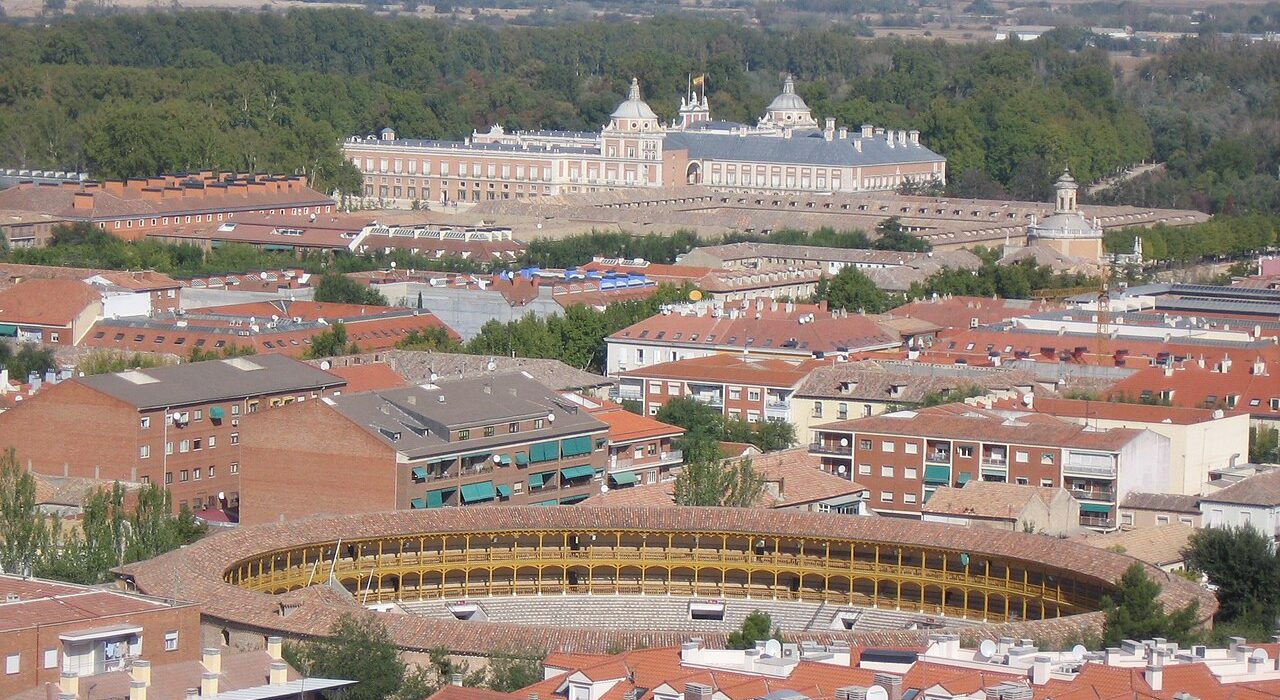
- The Aranjuez bullring is an emblematic building that forms part of the city’s bullfighting tradition.
- The church of Alpajés and the Royal Chapel of San Isidro are outstanding examples of religious architecture in the area.
- The Museum of Royal Barges exhibits the luxury vessels used by monarchs on the Tajo.
- The Necropolis of Cacera de las Ranas and geodetic vertices such as Cavina, Loma Culebra, and Valdelacierva offer historical and geographical interest.
- The convent of San Pascual and the Jardines del Brillante and del Deleite are cultural assets worthy of mention.
- The Plaza de San Antonio, with its church, and ornamental fountains such as those of Hercules and Antaeus, Apollo, or the Thorn Puller, beautify the walks.
- The Teatro Real Carlos III of Aranjuez and the Vallehondo vertex close the list of relevant monuments.
🍂 Otoño
Si visitas Aranjuez en otoño, las temperaturas empiezan a bajar y el ambiente es tranquilo, ideal para visitar la Real Capilla de San Isidro o la Casa de los Infantes con calma. Los jardines cambian de color y hay menos turistas, lo que hace la visita más relajada. Eso sí, lleva un paraguas y un abrigo ligero porque puede refrescar bastante por las tardes.
Things to Do in Aranjuez
Aranjuez offers cultural and leisure activities ranging from the historical reenactment of the Mutiny to shopping for local crafts at specialized fairs.
If you visit the city in September, do not miss the Fiestas del Motín de Aranjuez (Mutiny Festivals), which commemorate the events of 1808 with an impressive historical reenactment and a pirate descent down the Tagus River. In May, the atmosphere fills with music thanks to the Festival de Música Antigua (Early Music Festival), which brings renowned performers to the palaces and gardens, and the Fiestas de San Fernando (Saint Ferdinand Festivities), featuring processions and bullfights. For craft lovers, the Alfaranjuez fair gathers experts from all over Spain in the Plaza de la Constitución to showcase their techniques live. Additionally, throughout the year you can explore the Mercadillo Semanal (Weekly Market) with more than 200 stalls on Calle del Primero de Mayo, ideal for finding food products and household goods.
Aranjuez in One Day: Express Itinerary
To make the most of a 24-hour visit, follow this optimized route covering the main landmarks without rushing.
- 10:00 – Parterre del Palacio Real: Start the morning with soft light illuminating the main façade and the French geometric gardens.
- 11:30 – Casa del Labrador: Venture into the Jardín del Príncipe to visit this neoclassical palace and its Empire-style decor.
- 13:30 – Lunch in the Urban Center: Head to Calle Real or Avenida de la Arboleda to try seasonal asparagus or strawberries.
- 16:00 – Jardín de la Isla and Banks of the Tagus: Stroll along the riverbank, observe the spectacular fountains, and enjoy the serene riverside setting.
- 18:00 – Plaza de San Antonio: End the day in the monumental heart, visiting the church and soaking up the square’s tranquil atmosphere.
Where to Eat in Aranjuez: Local Gastronomy
Where to Stay in Aranjuez
Zona del Palacio Real y Plaza de San Antonio
El corazón monumental de Aranjuez, hogar del majestuoso Palacio Real. Esta zona ofrece un viaje a la historia y la arquitectura real española, con amplias plazas y edificios históricos que reflejan el esplendor de la villa. El ambiente es tranquilo y cultural, ideal para quienes buscan sumergirse en el patrimonio.
Centro Urbano (Comercial y Gastronómico)
Esta área abarca las calles principales del centro de Aranjuez, como la Calle Real y la Avenida de la Arboleda, donde se concentra la vida local. Aquí encontrarás una variada oferta de tiendas, restaurantes y bares que invitan a disfrutar de la gastronomía local y a realizar compras de productos típicos.
Jardines del Príncipe y Parterre
Un vasto y exuberante conjunto de jardines históricos que invitan a la tranquilidad y el paseo. Destacan por su diseño paisajístico, fuentes ornamentales y la riqueza de su flora. Es un espacio perfecto para relajarse y disfrutar de la naturaleza en un entorno palaciego.
Jardín de la Isla y Orillas del Tajo
Ubicado a orillas del río Tajo, este jardín se caracteriza por su estilo francés y sus espectaculares fuentes. Ofrece un entorno sereno para pasear y disfrutar de la belleza del río, con la posibilidad de realizar paseos en barca y rutas a pie por la ribera. Ideal para el ocio al aire libre.
How to Get to Aranjuez
The rail connection is the most direct and popular option for traveling from the capital to this historic city.
| Medio | Duración | Precio aprox. | Frecuencia |
|---|---|---|---|
| Tren (Estación de Aranjuez) | Variable según origen | Económico | Regular (sin AVE) |
| Bus Urbano | N/A (Local) | Bajo | Según líneas |
It is important to note that the Aranjuez train station does not have AVE services, serving as a stop for conventional or Cercanías trains depending on the line.
Getting Around Aranjuez
To get around the city, the available urban transport is the local bus, which connects the different points of interest.
Given the concentration of monuments in the Royal Site and the center, many of the main attractions such as the Palace, the Gardens, and the Plaza de San Antonio are accessible on foot. The local bus is useful for reaching more peripheral areas or if you prefer not to walk long distances under the summer sun.
Weather in Aranjuez
Best Time to Visit Aranjuez
Day Trips from Aranjuez
If you have extra time, the city of Toledo is the closest and most relevant day-trip destination listed to visit from Aranjuez.
Toledo, located in the province of Toledo, offers a perfect historical contrast with its medieval and multicultural heritage, being a natural extension of a route through the south of the Community of Madrid.
Aranjuez Facts You Didn’t Know
Behind the royal facade of Aranjuez lie fascinating stories ranging from classical music to entomology.
Did you know that the Cultural Landscape of Aranjuez was the first site in Spain to be declared a UNESCO World Heritage Site in the ‘Cultural Landscape’ category in December 2001? This designation recognizes the harmonious union of nature and human work.
The city was the setting for the historic ‘Mutiny of Aranjuez’ (Motín de Aranjuez) on March 17, 1808, a revolt that led to the fall of Godoy and the abdication of Charles IV, changing the course of Spanish history.
The famous ‘Concierto de Aranjuez’ by Joaquín Rodrigo, composed in 1939, was inspired by the gardens of the Royal Palace and the sounds of nature, evoking the singing of birds.
The first railway line of the Community of Madrid, inaugurated in 1851, connected Madrid with Aranjuez specifically to transport the famous strawberries and products from the royal orchards to the capital.
The gardens have served as a film set, including the Hollywood movie ‘The Medallion’ (El Poder del Talismán) (2003) starring Jackie Chan.
Aranjuez gives its name to a vulnerable butterfly subspecies, the ‘Euphydryas aurinia arán’ or Aranjuez Harlequin Butterfly, which has one of its most important habitats here.
The Museum of Royal Barges exhibits luxury vessels, including a Venetian gondola and the barge of Charles IV, over 14 meters in length, built in 1798.
Who Is Aranjuez For?
Aranjuez is a perfect destination for couples seeking romance in the gardens, families desiring open spaces, and history lovers interested in the Spanish monarchy. It is also a paradise for ‘foodies’ who want to try quality garden produce and for cultural travelers who appreciate UNESCO heritage.
Frequently Asked Questions about Aranjuez
How many days do I need to see Aranjuez?
One day is enough to see the essentials such as the Royal Palace (Palacio Real), the Parterre Garden, and the House of the Labourer (Casa del Labrador), although two days allow you to enjoy the gardens and local gastronomy at a more leisurely pace.
What is the best time to visit Aranjuez?
The best time is from May to August, when the average temperature is 24.7°C and the strawberry and asparagus seasons coincide, along with festivals such as the Early Music Festival (Festival de Música Antigua).
How do I get to Aranjuez from Madrid?
You can reach it by train from Atocha Station to Aranjuez Station (no AVE service), or use urban transport and buses connecting the region.
Where can I find official information on opening hours?
For further practical information on opening hours, tickets, and an updated agenda, consult the official tourism website of Aranjuez.