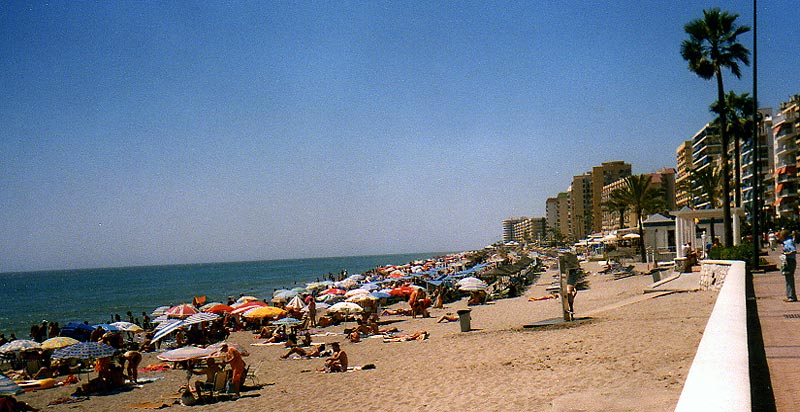
Fuengirola
AndalucíaClimate
Forget the idea that the Costa del Sol is only sun and beach; here you have a 10th-century Muslim fortress that has watched over the sea for more than a thousand years and a zoo that is a world pioneer in eliminating cages. Fuengirola, with its 83,000 inhabitants, is a city that has managed to integrate its Roman and Arab past with a vibrant modern life, offering more than 7 kilometers of continuous coastline where the pace of life is set to the rhythm of the Mediterranean. If you are looking for a destination where history is not a boring museum but part of the urban landscape, this is your place.
The must-seesWhat to see in Fuengirola: the must-sees
The city condenses centuries of history into a small area, allowing you to visit key landmarks in very little time. Here is what you cannot miss, based on verified historical and cultural data.
Castillo de Sohail (Sohail Castle)
This Muslim fortress, built in 956 AD by order of Caliph Abd al-Rahman III, is the undisputed icon of the city. It rises 38 meters above sea level at the mouth of the Fuengirola River, offering spectacular panoramic views of the Mediterranean and the coast from its crenellated walls. Admission is free for visitors, although opening hours vary by season, generally daily in summer and with reduced hours on weekends in winter.
Yacimiento Arqueológico Finca del Secretario (Finca del Secretario Archaeological Site)
Discovered in 1987 in the Los Boliches area, this Roman villa dates from the mid-1st century AD and remained in use until the 5th century AD. The site integrates an urban and industrial area with a factory, fish-salting tanks, and a thermal complex, where the architecture stands out with its porticoed courtyard and polychrome mosaics. Some of the most significant finds, such as the Venus of Fuengirola, are currently exhibited at the Museum of Málaga.
Villa Romana de Torreblanca (Torreblanca Roman Villa)
Although the name can be misleading, this point of interest refers to a beach located on the Costa del Azahar, in the province of Castellón, known as Torrenostra beach. It is a sandy area with clean waters, a seafront promenade, and services, close to the Prat Natural Park, which offers a natural marshland environment ideal for relaxation.
Playa de Los Boliches (Los Boliches Beach)
This is one of the most emblematic beaches in Fuengirola, built on the old fishing neighborhood that is now fully integrated into the municipality. It forms part of the seven kilometers of golden sandy coastline that characterize the city, historically known as Little Córdoba, and boasts a wide range of beach bars (chiringuitos) and an established seafront promenade.
Playa de Santa Amalia (Santa Amalia Beach)
This is an extensive urban beach located in Fuengirola that connects directly with the seafront promenade. It offers full access to services such as restaurants and water sports, maintaining the accessibility characteristic of the Costa del Sol.
Centro Comercial Miramar (Miramar Shopping Center)
This shopping center is an emblematic landmark in the official image of the municipality of Fuengirola. It functions as a main destination for shopping and leisure within the city, attracting both locals and visitors.
Iglesia del Rosario (Church of the Rosary)
The Parish Church of Nuestra Señora del Rosario is the main Catholic temple in the city, located in Plaza de la Constitución. Built in the 18th century, it stands out for its single-nave architecture and side chapels, housing the city’s patron saint and maintaining an active liturgical function.
Fuengirola (Bioparc)
This conservation zoo is recognized for its immersion model with no visible barriers between visitor and animal. Specialized in breeding threatened species such as lemurs and respecting natural biorhythms, it offers educational talks and primate areas with lockers open from 10:00h.
Reyes Católicos (Catholic Monarchs)
This monument is one of the historical points of interest distributed throughout the city that pay homage to key figures in the history of Spain.
Torre Vigía Torreblanca
Originally built in 1765 and dismantled in the 1960s, this tower was relocated and rebuilt in its current location to preserve the historical memory of coastal watchtowers.
Juan Gomez Gonzalez “JUANITO”
This monument commemorates a notable local figure, adding cultural value to Fuengirola’s urban landscape.
Andrés López Yebra
Another prominent monument in the city that honors the memory of important figures for the local community.
Monumento Romano (Roman Monument)
This heritage site serves as a physical reminder of the Roman presence in the area, complementing the city’s historical offerings.
Pueblo López
This coastal village in the province of Malaga, located in Fuengirola, is known as the birthplace of Pablo López and has established itself as a visited destination on the Costa del Sol for its cultural connections.
Parque del Río (River Park)
This natural area is located at the mouth of the Fuengirola River, bordering the Castle of Sohail, combining native vegetation with sea views for strolling and relaxing.
Paseo Marítimo Rey de España
This space functions as a key commercial and entertainment hub along the coastline.
🍂 Otoño
Si visitas Fuengirola en otoño, el mar mantiene el calor acumulado y las temperaturas siguen siendo muy agradables. Es una ventaja enorme para bañarse con tranquilidad cuando ya se han ido los turistas de agosto. Solo debes estar atento al pronóstico del tiempo por si cae alguna de las precipitaciones típicas de esta época.
What to do in Fuengirola
Fuengirola offers a highly active cultural and leisure calendar, standing out especially for its international festivals and themed markets that transform the city. You can immerse yourself in the Feria de los Pueblos (Peoples’ Fair) in August, where more than 40 nationalities set up booths with typical gastronomy and dances, or enjoy the Starlite Fuengirola Festival in July with top-tier artists by the sea. If you prefer tradition, the Feria de Mayo (May Fair) combines the Andalusian atmosphere with fishing competitions, while in December the Mercadillo Medieval (Medieval Market) brings the old town to life with street theater and crafts. For nature and wildlife lovers, a visit to the bioclimatic zoo is a must to see endangered species in recreated habitats without visible cages.
Fuengirola in one day: express itinerary
If you’re short on time, this plan lets you see the essentials of the city on foot while enjoying the coast.
- 10:00 – Castle of Sohail: Start your morning by climbing up to the 10th-century fortress for the best panoramic views of the coast and to understand the defensive history of the site.
- 12:30 – Parque del Río and Paseo Marítimo: Walk down from the castle along the river mouth toward the promenade, enjoying the native vegetation and the coastal atmosphere.
- 14:30 – Lunch in Los Boliches: Head to the old fishing quarter to try espeto de sardinas (sardine skewers) or rice with seafood at the beach bars in the area.
- 17:00 – Bioparc Fuengirola: Spend the afternoon exploring the conservation zoo, observing lemurs and primates in its barrier-free immersion model.
- 20:00 – Iglesia del Rosario and downtown: End the day at Plaza de la Constitución visiting the 18th-century church and enjoying the evening atmosphere of the historic center.
Where to eat in Fuengirola: local gastronomy
Where to stay in Fuengirola
Centro Histórico (Casco Antiguo)
Es el núcleo tradicional de la ciudad con calles estrechas y empedradas que rodean la plaza de la Constitución. Ofrece un ambiente auténtico andaluz lejos del bullicio hotelero, lleno de bares de tapas tradicionales y tiendas locales.
Los Boliches
Antiguo barrio de pescadores situado al este del centro, mantiene una identidad propia muy marcada con su propia plaza y paseo marítimo. Es una zona más residencial y tranquila que el centro turístico, ideal para experimentar la vida local.
Fuengirola Centro / Playa de los Castillos
Zona densamente turística ubicada frente al castillo y el puerto deportivo, llena de hoteles, restaurantes internacionales y tiendas de souvenirs. El ambiente es vibrante y cosmopolita, siendo el epicentro de la actividad diurna y nocturna para visitantes.
Carvajal
Barrio residencial situado en el límite oeste con Benalmádena, conocido por ser una zona tranquila con chalets y apartamentos alejados del ruido masivo. Cuenta con su propio paseo marítimo y una playa amplia, frecuentada por residentes a largo plazo.
El Boquetillo
Zona situada al oeste del río Fuengirola, caracterizada por ser un área principalmente residencial con acceso directo a una playa extensa y menos concurrida que la del centro. Es un lugar discreto donde predominan las viviendas de vecinos sobre los grandes complejos hoteleros.
Torreblanca
Ubicada en el extremo este junto al límite con Mijas Costa, esta zona destaca por tener uno de los paseos marítimos más largos y amplios de la costa malagueña. Es un área de expansión urbana con grandes avenidas, parques y playas anchas, menos saturada que el centro.
How to get to Fuengirola
The city’s connectivity is efficient, allowing access by both public and private transport from key points in the region.
| Medio | Duración | Precio aprox. | Frecuencia |
|---|---|---|---|
| Tren (Cercanías) | Variable según origen | Económico | Alta (Estación Carvajal) |
| Avión + Traslado | Variable | Variable | Diario (Base BRICA de Cártama / Aeropuerto Málaga) |
| Bus Urbano | N/A | Económico | Regular |
How to get around Fuengirola
To get around the municipality, the urban bus is the main public transport option available. Given the city’s compact layout and its 7 kilometers of continuous beach, many areas such as the Historic Center, Los Boliches, and the seafront promenade are perfectly accessible on foot.
Weather in Fuengirola
Best time to visit Fuengirola
Day trips from Fuengirola
From Fuengirola you have easy access to other towns in the Western Costa del Sol region and the province of Malaga. The strategic location on the central coast allows you to explore the municipalities of the association of the same name and the nearby judicial district. You can plan visits to the surrounding areas to learn more about Andalusian culture and the province’s landscapes, taking advantage of the connection by urban transport and train.
Curious facts about Fuengirola you didn’t know
Did you know that the city’s name evolved from the Arabic ‘Fahs al-Yurr’ (Field of Stone) or ‘Suhayl’ to become Fuengirola, having been known as Suel in Roman times? This linguistic shift reflects the many cultures that have inhabited the area.
Castillo Sohail (Sohail Castle) is not just a fortress; it took its name from the star Canopus (Suhayl in Arabic) and is one of the best-preserved coastal fortifications in the province of Malaga.
Fuengirola is home to Spain’s only bioclimatic zoo, Bioparc Fuengirola, opened in 1978 and a pioneer in eliminating visible cages to recreate natural habitats.
The city boasts more than 7 kilometres of continuous urban beach, an exceptional feature on the Costa del Sol that allows you to walk the entire coastline on foot without interruptions.
During the Second World War, Fuengirola was a strategic coastal surveillance point due to the presence of General Franco’s artillery batteries, amid fears of an Allied landing.
The Feria de los Pueblos (Festival of the Peoples), held annually since 1990, has brought together more than 40 different nationalities, establishing itself as one of the largest multicultural festivals in Europe.
In the 1960s and 1970s, the city was a filming location for numerous ‘Spaghetti Western’ films and European comedies thanks to its arid landscapes and its castle.
Who Fuengirola is for
Fuengirola is a versatile destination that suits families perfectly thanks to its safe beaches and Bioparc, but also history lovers who want to explore Castillo de Sohail and the Roman archaeological sites. It is ideal for foodies looking for fresh fish and a chiringuito (beach bar) atmosphere, as well as for travellers who prefer an urban stay with full services (such as the Miramar Shopping Centre) without giving up the sea. With an average stay of 4.34 nights and 68% foreign travellers (INE), it is a city accustomed to international tourism but with a local soul.
💡 ¿Sabías que...?
- ● El nombre de Fuengirola proviene del árabe 'Fahs al-Yurr' (Campo de Piedra) o 'Suhayl', evolucionando durante la reconquista cristiana a 'Font-jirola' y finalmente Fuengirola, siendo conocida en época romana como Suel. (Ayuntamiento de Fuengirola / Estudios toponímicos andaluces)
- ● El Castillo Sohail, construido por orden del califa Abderramán III en el año 956 d.C., es una de las fortificaciones costeras mejor conservadas de la provincia de Málaga y tomó su nombre de la estrella Canopo (Suhayl en árabe). (Junta de Andalucía / Catalogación de Bienes de Interés Cultural)
- ● Fuengirola alberga el único zoológico bioclimático de España, Bioparc Fuengirola, inaugurado en 1978 y pionero en eliminar jaulas visibles para recrear hábitats naturales, especializado en conservación de especies en peligro. (Asociación Europea de Zoos y Acuarios (EAZA))
- ● La ciudad cuenta con más de 7 kilómetros de playa continua urbana, un hecho excepcional en la Costa del Sol que permite recorrer a pie toda la línea de costa sin interrupciones desde el límite con Mijas hasta Benalmádena. (Ministerio para la Transición Ecológica / Datos del Ayuntamiento)
- ● Durante la Segunda Guerra Mundial, Fuengirola fue punto estratégico de vigilancia costera debido a la presencia de baterías de artillería del General Franco, temiendo un desembarco aliado tras la operación Torch en el norte de África. (Archivos históricos militares españoles / Museo Histórico Municipal)
- ● La Feria de los Pueblos, celebrada anualmente desde 1990, ha llegado a reunir a más de 40 nacionalidades diferentes en un mismo recinto, consolidándose como una de las fiestas multiculturales más grandes de Europa. (Patronato de Turismo de la Costa del Sol)
- ● En la década de 1960 y 1970, Fuengirola fue escenario de rodaje de numerosas películas del género 'Spaghetti Western' y comedias europeas debido a sus paisajes áridos cercanos y su castillo medieval. (Film commissions de Andalucía / Base de datos IMDb)
Frequently asked questions about Fuengirola
How many days do I need to see Fuengirola?
With an average stay of 4.34 nights according to the INE, you have enough time to visit Castillo de Sohail, walk the 7 kilometres of beach, enjoy Bioparc and try the local cuisine at a relaxed pace. An express one-day itinerary covers the essentials, but at least 3 days are recommended to experience the atmosphere of neighbourhoods like Los Boliches.
What is the best time of year to visit Fuengirola?
The best time is from April to October, when the average summer temperature reaches 24.4°C and the weather is more stable. Avoid the wettest months if you want guaranteed beach days, although winter is mild with an average of 14.5°C.
How do I get to Fuengirola from Madrid?
You can fly to the BRICA base in Cártama or to Malaga airport and take ground transport. It is also possible to use Carvajal train station (no direct AVE to Fuengirola, a connection is required) or the urban bus from connecting points on the region’s transport network.
Is it expensive to eat in Fuengirola?
The local cuisine offers options for every budget. You can eat typical dishes such as fried sardines or espetos (skewered sardines) in chiringuitos and tapas bars in the centre at affordable prices, or enjoy rice with seafood in restaurants at the marina with a mid-to-high price range.
Where can I find more official information?
For further practical information on attraction opening times, tickets and the full events calendar, you can consult the official Fuengirola tourism website.