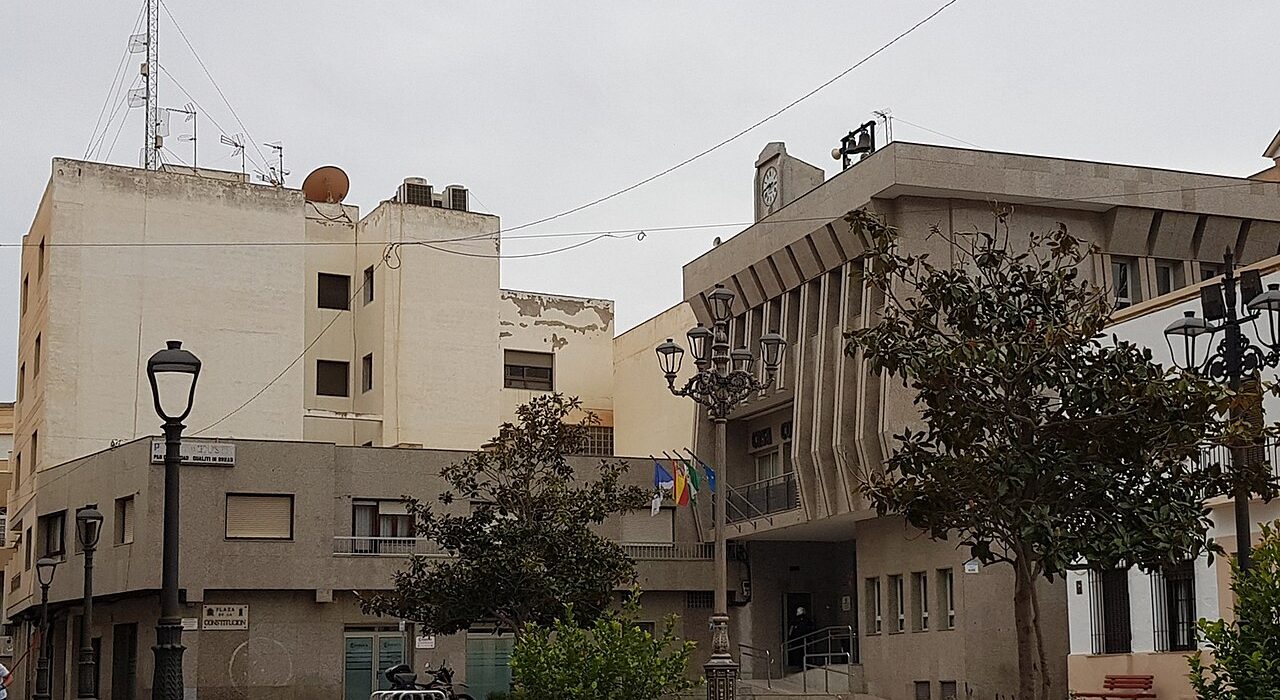
Roquetas de Mar
AndalucíaClimate
Roquetas de Mar is not just a sun-and-beach destination; it is living proof of how a small village of 2,500 inhabitants became a European demographic powerhouse in barely half a century. What you may not expect to find here is such an intense fusion between the history of coastal defense against Barbary pirates and the modernity of a municipality that today exceeds 100,000 residents thanks to the agricultural boom. Beyond the hotels, this city offers you a heritage ranging from archaeological sites to a century-old lighthouse watching over a coastline where the Mediterranean Sea meets the most fertile land.
The must-seesWhat to see in Roquetas de Mar: the must-sees
To understand the essence of this town, you should start with its monuments and museums that tell the story of its evolution. Here are the places you cannot miss, organized by their historical and cultural relevance.
Monument to the 2005 Mediterranean Games
This monument commemorates a key sporting milestone for the city, as Roquetas de Mar was a sub-venue for the Mediterranean Games held in 2005. It is an urban meeting point that symbolizes the town’s international projection and its capacity to host major events. When you visit, you will notice the modern architecture contrasting with the surroundings, a reminder of how sport helped consolidate local infrastructure. It is freely accessible and located in a central area, ideal for a quick photo while you explore the city.
Aula del Mar (Marine Classroom)
If you want to connect with the fishing tradition, the Aula del Mar is an essential museum that showcases the richness of the local marine ecosystem. Inside, you can observe Mediterranean species and learn about the marine biology that has sustained the population for generations. It is an educational and informative space, perfect for understanding the importance of the fish market and artisanal fishing in Roquetas’ economy. The visit is highly recommended for families and usually has hours adapted to summer tourism.
La Ribera de la Algaida-Turaniana Archaeological Site
This site is a direct window into the past, revealing settlements that demonstrate human occupation of the area since ancient times. It stands out as a monument that protects historical structures within a natural setting, offering an open-air archaeology lesson. It is a quiet place where you can appreciate the historical layering of the Poniente Almeriense region. Visiting it requires a bit of attention to detail to fully appreciate the remains preserved in situ.
Monument to the Horse
This monument pays tribute to equestrian culture and the importance of the horse in Andalusian and local traditions. It is a striking sculpture usually located in thoroughfares or squares, serving as a visual reference point for visitors. It stands out for its artistic value and for representing a part of the folklore that remains alive in the romerías (pilgrimage festivals) and local festivities. It is a quick but photogenic stop that complements the cultural route.
Museo del Olivar (Olive Grove Museum)
The Museo del Olivar immerses you in the agricultural history that transformed the landscape, explaining olive cultivation and oil production. Inside the museum, you will find traditional tools and explanations about the production process that has defined local gastronomy. It is a key space for understanding why olive oil is a starring ingredient in the region’s dishes. The visit is highly illustrative and connects directly with the rural identity of the town.
Other points of interest
In addition to the main ones, the city has other spaces that deserve a quick mention if you have extra time. The Museo Taurino (Bullfighting Museum) covers the history of bullfighting in the town, while the Castillo de Santa Ana (Santa Ana Castle), declared a Bien de Interés Cultural (Site of Cultural Interest) in 1985, is the oldest building in the urban core, constructed in the 16th century. You can also see the Monument to the Alpujarra Traditional Music Festival, the Puerta del Corazón del Poniente (Gateway to the Heart of Poniente), the Monument to Farmers honoring agricultural labor, the unique Traduces Traducción y extranjería, and the Monument to Blood Donors.
🍂 Otoño
Si visitas Roquetas de Mar en otoño, el clima sigue siendo agradable ya que la mejor época se extiende hasta noviembre. Podrás disfrutar del mar con menos multitud, así que te recomiendo probar la gastronomía local en los chiringuitos más tranquilos.
What to do in Roquetas de Mar
Roquetas de Mar offers activities ranging from taking part in traditional seafaring festivals to hiking in protected natural areas. Throughout the year, you can immerse yourself in local culture by attending the Romería de San Isidro Labrador (Pilgrimage of Saint Isidore the Laborer) in May, where you will see decorated carts, or experience the intensity of the Fiestas Patronales in honor of the Virgen del Carmen (Our Lady of Mount Carmel) in July, with its spectacular boat procession. If you visit the city in August, the Feria de Roquetas de Mar (Roquetas de Mar Fair) awaits you with casetas (festival booths) and live performances, while in September the El Almería International Short Film Festival puts the spotlight on cinema. For nature lovers, the Punta Entinas-Sabinar Nature Reserve allows birdwatching in a unique dune system, and in March, Semana Santa (Holy Week) showcases the solemnity of the local brotherhoods.
Roquetas de Mar in one day: express itinerary
If you only have 24 hours, this itinerary will let you see the highlights without rushing too much, combining culture, history, and local atmosphere.
- 10:00 AM – Old Town (Iglesia Vieja): Start your day in the historic heart around the old fortified church, a symbol of the town against pirates, and enjoy the typical white Andalusian buildings.
- 12:00 PM – Castillo de Santa Ana: Walk to this 16th-century structure, the oldest preserved in the area, to understand coastal defense and enjoy the views from this Bien de Interés Cultural (Site of Cultural Interest).
- 14:00 PM – Lunch in Bajo de Guía: Head to this traditional fishing neighborhood to eat fresh fish in one of its restaurants famous for fried fish and old-village charm.
- 16:30 PM – Olive Oil Museum or Aula del Mar: Choose between learning about agricultural history or maritime heritage depending on your interests; both museums offer a deep insight into Roquetas’ identity.
- 19:00 PM – Stroll along the Roquetas Urbanization: End the day walking along the long seafront promenade of the largest tourist area, enjoying the atmosphere and nightlife by the sea.
Where to eat in Roquetas de Mar: local gastronomy
Where to stay in Roquetas de Mar
Roquetas de Mar (Centro)
Es el núcleo urbano principal donde se concentran los servicios administrativos, comercios y la vida local cotidiana. Ofrece un ambiente más auténtico y menos masificado que las zonas puramente turísticas, con acceso a plazas y parques urbanos.
Urbanización Roquetas
La zona turística más extensa y consolidada, caracterizada por un largo paseo marítimo flanqueado de hoteles, apartamentos y restaurantes. Es el área con mayor oferta de ocio nocturno y actividades playeras durante todo el año.
Aguadulce
Antiguo núcleo pesquero convertido en una zona residencial y turística de calidad, conocida por su puerto deportivo y calas rocosas alternadas con playas. El ambiente es más tranquilo y familiar comparado con la Urbanización.
Bajo de Guía
Barrio tradicional de origen marinero situado entre Aguadulce y la Urbanización, famoso por su concentración de restaurantes de pescado fresco y frituras. Mantiene una atmósfera de pueblo antiguo con calles estrechas cerca del mar.
Las Salinas
Zona natural protegida ubicada en el límite oeste, destacada por sus humedales y observación de aves en un entorno tranquilo y poco urbanizado. Ideal para visitantes que buscan naturaleza y senderismo lejos del bullicio hotelero.
Casco Antiguo (Iglesia Vieja)
El corazón histórico del municipio articulado alrededor de la antigua iglesia fortificada, símbolo de la localidad frente a las incursiones piratas. Es una zona pequeña pero con valor patrimonial y edificios blancos típicos andaluces.
How to get to Roquetas de Mar
The city is well connected by road and public transport, making access easy from the capital and other parts of the region.
| Medio | Duración | Precio aprox. | Frecuencia |
|---|---|---|---|
| Autobús (Estación de Roquetas) | Variable según origen | Económico | Regular (Alsa, Consorcio) |
| Coche (A-7, N-340a) | Rápido desde Almería (21 km) | Combustible | Libre |
| Coche (A-1051, AL-3300) | Acceso local y comarcal | Combustible | Libre |
How to get around Roquetas de Mar
Once in the city, getting around is easy thanks to the urban infrastructure. The urban bus covers the main routes connecting the different neighborhoods and tourist areas. In addition, much of the center is pedestrianized, making it easy to explore the shopping and leisure areas on foot without worrying about traffic. For longer distances between neighborhoods such as Aguadulce and the Urbanización, the car or the bus are the best options.
Weather in Roquetas de Mar
Best time to visit Roquetas de Mar
Day trips from Roquetas de Mar
Roquetas de Mar’s location in the Poniente Almeriense region makes it a perfect base for exploring the area. Being just 21 kilometers from the provincial capital, Almería, it is very easy to take a quick trip to visit the Alcazaba (Moorish fortress) or the historic center of the capital. In addition, being in a strategic coastal area, you can explore other nearby cities in the Andalusian region, taking advantage of the A-7 and N-340a roads that connect the entire coastline.
Curious facts about Roquetas de Mar you didn’t know
This city holds demographic and historical secrets that make it unique on the map of Spain.
Did you know that Roquetas de Mar went from having approximately 2,500 inhabitants in 1950 to surpassing 100,000 residents today? This growth makes it one of the municipalities with the highest percentage expansion in Europe in recent decades, driven by the agricultural boom.
The name ‘Roquetas’ has a curious origin: it derives from the Latin ‘robur’ or ‘roble’ (oak), referring to the ancient forests of holm oaks and oaks that existed before the agricultural transformation, debunking the popular belief that it comes from the reddish color of the soil.
The municipality is a fundamental part of the Campo de Dalías, the largest concentration of greenhouses in the world, clearly visible from space satellites. This “sea of plastic” occupied thousands of hectares and radically transformed the local economy from the 1960s onward.
Within its municipal boundaries lies the Punta Entinas-Sabinar Natural Area (Paraje Natural de Punta Entinas-Sabinar), which protects around 200 hectares of dune systems. It is one of the best-preserved coastal ecosystems in Andalusia, full of sabina (juniper) vegetation.
The Castle of Santa Ana, built in the 16th century under the reign of Philip II, is the oldest preserved building in the urban center. It was declared a Site of Cultural Interest (Bien de Interés Cultural) in 1985 and served to defend the coast from Barbary pirate attacks.
The town is home to the Roquetas Lighthouse, inaugurated in 1863, which stands 18 meters above the ground and has a nominal luminous range of 25 nautical miles, making it a crucial reference point on the Almerian coastline.
Although Roquetas de Mar hosts the Roquetas Auditorium and the Municipal Theater with national productions, there are no verified records of famous international film shoots specifically in its urban locations, unlike other parts of Almería such as the Tabernas Desert.
Who Roquetas de Mar is for
Roquetas de Mar is a versatile destination that mainly attracts families looking for safe beaches and quiet atmospheres such as Aguadulce, and travelers who appreciate gastronomy based on fresh local produce in neighborhoods like Bajo de Guía. It is also ideal for backpackers interested in the nature of Las Salinas and for couples who enjoy the historic charm of the Casco Antiguo (Old Town). With 578,663 annual travelers (INE) and an average stay of 4.53 nights, it is a place for those seeking to combine relaxation with local culture without the extreme overcrowding of other coastal destinations.
💡 ¿Sabías que...?
- ● Roquetas de Mar pasó de tener aproximadamente 2.500 habitantes en 1950 a superar los 100.000 residentes en la actualidad, siendo uno de los municipios con mayor crecimiento demográfico porcentual de Europa en las últimas décadas debido al boom agrícola. (INE (Instituto Nacional de Estadística))
- ● El Castillo de Santa Ana, construido en el siglo XVI bajo el reinado de Felipe II, es la edificación más antigua conservada en el núcleo urbano y fue declarado Bien de Interés Cultural en 1985 para defender la costa de ataques berberiscos. (Ministerio de Cultura de España)
- ● La localidad cuenta con el Faro de Roquetas, inaugurado en 1863, que tiene una altura de 18 metros sobre el terreno y un alcance lumínico nominal de 25 millas náuticas, siendo un punto de referencia crucial en el litoral almeriense. (Autoridad Portuaria de Almería)
- ● En su término municipal se encuentra la Reserva Natural Paraje Natural de Punta Entinas-Sabinar, que protege alrededor de 200 hectáreas de sistema dunar y vegetación de sabinares, uno de los ecosistemas costeros mejor conservados de Andalucía. (Junta de Andalucía)
- ● El nombre 'Roquetas' deriva del latín 'robur' o 'roble', haciendo referencia a los antiguos bosques de encinas y robles que existían en la zona antes de la transformación agrícola, aunque la etimología popular a veces lo asocia erróneamente solo al color rojizo de la tierra. (Diccionario Toponímico de Andalucía)
- ● Roquetas de Mar alberga el Auditorio de Roquetas y el Teatro Municipal, espacios que han acogido producciones nacionales, pero no existen registros verificados de rodajes de películas cinematográficas internacionales famosas específicamente en sus localizaciones urbanas, a diferencia de otros puntos de Almería como el Desierto de Tabernas. (Filmoteca de Andalucía)
- ● La festividad de San Pedro, patrón de los pescadores, se celebra el 29 de junio con una procesión marinera donde la imagen del santo recorre las aguas del puerto, una tradición consolidada desde hace más de un siglo vinculada a la historia pesquera del municipio. (Ayuntamiento de Roquetas de Mar)
- ● El municipio es parte fundamental del campo de Dalías, la mayor concentración de invernaderos del mundo, visible claramente desde satélites espaciales, ocupando miles de hectáreas que transformaron radicalmente la economía local a partir de los años 60. (NASA Earth Observatory)
Frequently asked questions about Roquetas de Mar
How many days do I need to see Roquetas de Mar?
With an average stay of 4.53 nights according to the INE, you have enough time to enjoy the beach and the culture. However, to see the main attractions such as the Castillo de Santa Ana (Santa Ana Castle), the Museo del Olivar (Olive Grove Museum), and the key neighborhoods, an express itinerary of 1 to 2 days is enough, although staying longer is recommended to enjoy the climate.
What is the best time of year to visit Roquetas de Mar?
The best time is from March to November, when temperatures are pleasant, with a summer average of 26.4°C. Winter is mild (14.1°C), but spring and autumn offer the perfect balance between good weather and fewer crowds.
How do I get to Roquetas de Mar from Madrid?
The most direct way is by car using the road network that connects with the A-7, or by bus from the Estación de Autobuses de Roquetas de Mar (Roquetas de Mar Bus Station), operated by companies such as Alsa, although the journey requires a transfer or connection from the provincial capital.