Reus
CataluñaClimate
The unmistakable aroma of freshly poured vermouth, with its hint of orange and ice, floats through the air of the historic center as the afternoon light caresses the façade of Casa Navàs. Here, in the heart of Baix Camp, life slows down a little to enjoy an aperitif that is much more than a drink: it is a statement of intent. Reus awaits you with Modernista architecture that rivals Barcelona’s, but with an approachability and unhurried pace you only find in a city of 107,000 inhabitants where history is lived out on the streets.
The must-seesWhat to see in Reus: the essentials
Reus offers a unique monumental ensemble that combines history, art, and the legacy of its most illustrious sons and daughters. Below, I detail the points you cannot miss to understand the essence of this Catalan city.
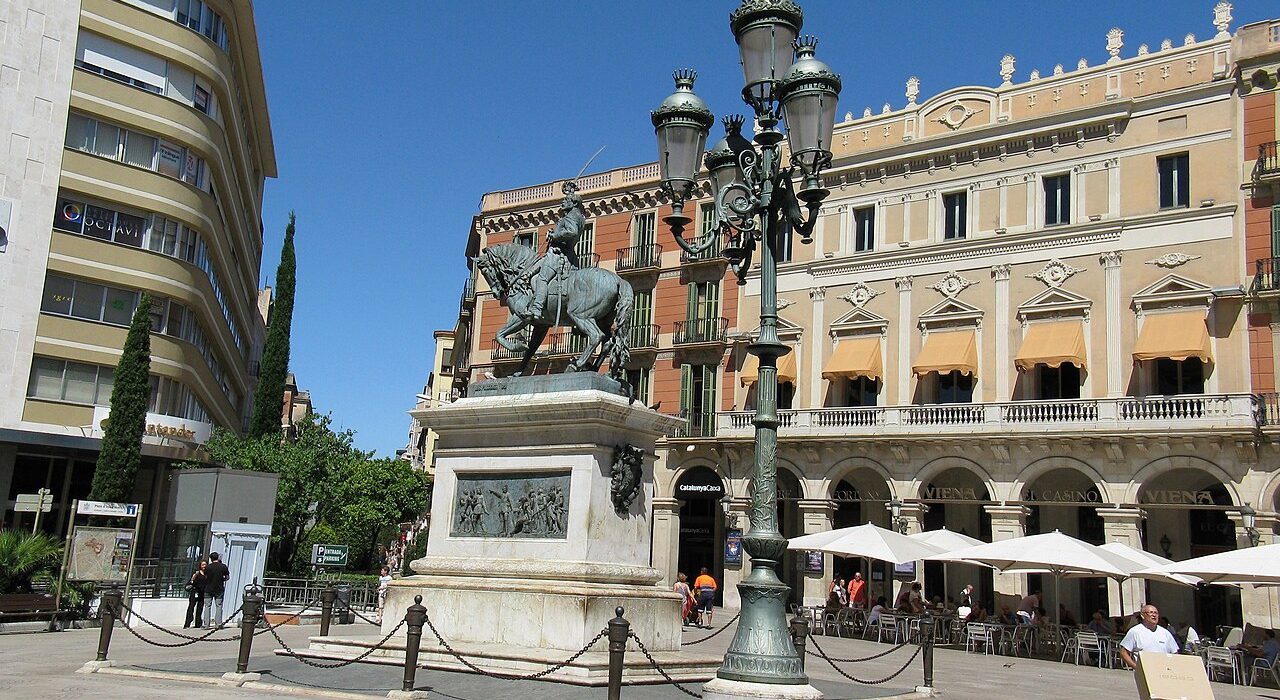
Monument to General Prim
This monument is an essential tribute to General Juan Prim y Prats, a key figure in 19th-century Spanish politics born in this city. The statue, imposing and detailed, stands as a reminder of the historical weight Reus carried in the conflicts and changes of government of the era. When visiting, note the quality of the sculpture and its strategic location, which helps you understand the importance of the figure in the local context. It is a must-stop for lovers of military and political history, situated at a nerve center of the city.
Monument to Pere Mata i Fontanet
Dedicated to the psychiatrist and politician Pere Mata, this monument pays tribute to one of the most brilliant intellectuals the city has produced. The work not only celebrates his public figure but also invites reflection on his contribution to science and Catalan society of his time. When observing the monument, pay attention to the details that allude to his profession and legacy, artistically integrated into the structure. It is a point of cultural interest that connects Reus’s intellectual past with the present.
Museu d’Art i Història de Reus (Reus Museum of Art and History)
This museum is the guardian of local memory, housing a collection that spans from prehistory to the present day of the region. Inside, you will find archaeological pieces, works of art, and documents that narrate the evolution of Reus over the centuries. It is the ideal place to contextualize everything you will see on the streets, offering a deep and verified vision of the urban and social development. Set aside at least an hour to tour its rooms and appreciate the richness of Reus’s heritage.
CT Art Gallery
CT Art Gallery presents itself as a contemporary space dedicated to exhibiting current art and high-quality temporary exhibitions. Unlike the historical museums, here the focus is on living creation, offering a window into the artistic trends of the moment. It is a meeting point for lovers of modern art, where the curation stands out for its careful selection of works. Visiting this gallery will allow you to see a more avant-garde and dynamic facet of local culture.
Constantí Art
Constantí Art is another of the cultural spaces that enrich the city’s museum offerings, focused on the promotion and exhibition of artistic works. This museum or gallery helps diversify the cultural landscape, offering alternatives to the more traditional circuits. It is recommended for those travelers seeking to delve into the local art scene beyond the purely historical. Its visit perfectly complements a cultural route through the center of Reus.
Other points of interest
- La Galeria Antoni Pinyol offers a private art collection of great significance in the region.
- Anquin’s is a museum space that adds diversity to the city’s cultural offering.
- The sculpture “El Condesito” pays tribute to the painter Marià Fortuny i Marsal (1838-1874).
- El Arbre Raccoon is a unique monument that draws attention for its design.
- The Monument a Gaudí celebrates the birth of the most universal modernist architect in this city.
- La Senyora dels Anissos is a monument in memory of Maria Sans, who sold aniseed water at the Boca de la Mina.
- La Fumera del Forn del Llevat is an industrial relic turned into a monument.
- The figure of Gaudí nen represents the architect in his childhood.
- The Monument a la Dona Treballadora recognizes the role of women in society.
- Bartrina is a tribute to the poet and journalist Joaquim Maria Bartrina.
- The Estatua de la Pastoreta is an emblematic figure in the urban landscape.
- El Nen de les Oques is another sculpture that forms part of the city’s street art heritage.
- The Estatua de Santa Clara d’Assís adds a religious and artistic touch to the city.
🍂 Otoño
Si visitas Reus en otoño, aún podrás aprovechar el buen tiempo hasta octubre antes de que lleguen las lluvias. Es la temporada ideal para degustar los productos de la cosecha local en sus restaurantes. Lleva siempre un paraguas pequeño en la mochila por si acaso.
What to do in Reus
Reus offers vibrant cultural activities and unique gastronomic experiences that define its festive and traditional character. Beyond visiting monuments, the city is best experienced by taking part in its traditions and wandering through its charming neighborhoods.
If you visit the city in June, don’t miss the Fiesta Mayor de Sant Pere (Feast of Saint Peter), when the castells (human towers) and the Seguici Festivo (festive procession) take over the streets in honor of the patron saint. In September, the Fiesta Mayor de Misericòrdia (Feast of Our Lady of Mercy) closes out the summer with a massive pilgrimage and unforgettable fireworks. For lovers of all things artisanal, the Mercadal in January revives the medieval market tradition with ancient crafts. You can also immerse yourself in sustainability at the Fira d’Agenda 2030 in October or enjoy music and light at the Gaudí Gaudeix festival.
Reus in one day: express itinerary
If you’re short on time, this route will let you see the essentials of the city in one intense but rewarding day.
- 10:00 AM – Old Town: Start by getting lost in the pedestrian streets of the Centre Històric to admire the modernist architecture and vibrant atmosphere.
- 11:30 AM – Monument a Gaudí and Casa Navàs: Visit the monument to the architect and, if possible, admire the exterior of Casa Navàs, a crowning work of European modernism.
- 13:30 PM – Vermut de Reus: Stop in the historic center to try the emblematic vermouth, traditionally served with ice and a slice of orange.
- 15:30 PM – Museu d’Art i Història: Spend the afternoon understanding local history by visiting this key museum.
- 18:00 PM – Monument al General Prim: End the day visiting this historic monument before dinner.
Where to eat in Reus: local gastronomy
Where to stay in Reus
Casco Antiguo (Centre Històric)
Es el corazón de la ciudad, famoso por su arquitectura modernista y calles peatonales llenas de comercio. Aquí se concentra la mayoría de los monumentos históricos y el ambiente es vibrante tanto de día como de noche.
Eixample
Zona residencial ordenada que rodea el casco antiguo, caracterizada por edificios modernistas y avenidas amplias. Es una área más tranquila que el centro pero muy cercana a las principales atracciones turísticas.
Mas Abelló
Barrio residencial situado al norte de la ciudad, conocido por albergar el campus universitario y zonas verdes. Es una zona funcional y tranquila, alejada del bullicio turístico del centro.
Pallarols
Área principalmente industrial y de polígonos comerciales en las afueras de la ciudad, donde se encuentran grandes superficies y naves logísticas. No es una zona turística ni cuenta con atractivo histórico o cultural para visitantes.
Santa Anna
Barrio tradicional ubicado cerca del centro que combina zonas residenciales con pequeños comercios locales. Ofrece una visión auténtica de la vida cotidiana en Reus sin la masificación del casco antiguo.
How to get to Reus
The city has rail connections and is very close to the airport, making access easy from different points.
| Medio | Duración | Precio aprox. | Frecuencia |
|---|---|---|---|
| Tren (Estación Reus) | Variable según origen | Variable | Regular (sin AVE) |
| Avión (Aeropuerto de Reus) | Inmediato (si vuelas directo) | Variable | Estacional (récord histórico en verano) |
How to get around Reus
To get around the city, the main option is the urban bus, which connects the different neighborhoods and points of interest. Since the Old Town is largely pedestrianized, many of the main attractions can easily be explored on foot, enjoying the atmosphere of the streets.
Weather in Reus
Best time to visit Reus
Day trips from Reus
Reus is strategically located in the province of Tarragona, making it a perfect base for exploring other cities in the region. You can easily visit nearby cities in the region to complement your trip, enjoying the coast or other important historic centers that form part of the same geographical and cultural environment of Baix Camp and its surroundings.
Fun facts about Reus you didn’t know
Reus hides fascinating secrets that go beyond its architecture. Did you know it is known as the ‘Ciutat dels Ganxets’ (City of the Crochet Hooks)? Its crochet tradition, declared an Intangible Cultural Heritage Asset in 2019, boasts more than 300 years of history and even has a museum dedicated to it.
There is a historical debate about the birth of Antoni Gaudí, who was officially born in Reus on June 25, 1852, although the neighboring town of Riudoms also claims this honor. The city has one of the most important Modernista ensembles in Catalonia, with more than 40 listed buildings.
A surprising fact is that Reus was a pioneer in Spain in installing electric public lighting in 1888, ahead of many larger cities just a few years after the invention of the light bulb. Additionally, during the Civil War, it suffered one of the most devastating bombings on March 16, 1938, a tragic event that marked its recent history.
Vermut de Reus (Reus vermouth) has enjoyed international fame since the 19th century, being exported to more than 70 countries, and the city is home to Reus Airport, which in the 1960s and 70s came to surpass provincial capital airports in passenger traffic.
Who Reus is for
Reus is an ideal destination for lovers of history and architecture, especially Modernisme, as well as for foodies who want to enjoy vermouth culture and Catalan gastronomy. It is also perfect for families looking for a safe environment with cultural activities, and for travelers who prefer to avoid the tourist crowds of Barcelona without giving up artistic beauty.
💡 ¿Sabías que...?
- ● Reus es conocida como la 'Ciutat dels Ganxets' porque su tradición de ganchillo, declarada Bien de Interés Cultural Inmaterial en 2019, cuenta con más de 300 años de historia documentada y un museo dedicado exclusivamente a esta técnica textil. (Generalitat de Catalunya / Ayuntamiento de Reus)
- ● El arquitecto modernista Antoni Gaudí nació en Reus el 25 de junio de 1852, aunque existe una disputa histórica menor con la localidad vecina de Riudoms sobre el lugar exacto de su nacimiento dentro de la comarca del Baix Camp. (Fundació Catalana Gaudí / Wikipedia)
- ● Reus posee uno de los conjuntos modernistas más importantes de Cataluña, con más de 40 edificios catalogados, destacando la Casa Navàs (1901), considerada una de las obras cumbre del modernismo europeo por conservar casi intacta su decoración interior original. (UNESCO (Lista Indicativa) / Ayuntamiento de Reus)
- ● La etimología del nombre 'Reus' proviene probablemente del latín 'Reddis', que hace referencia a una antigua aldea romana o asentamiento situado en la encrucijada de caminos hacia Salou y Tarragona, mencionado ya en documentos del siglo X como 'Riudecans' o variantes similares antes de fijarse como Reus. (Institut d'Estudis Catalans / Enciclopèdia Catalana)
- ● Durante la Guerra Civil Española, Reus sufrió uno de los bombardeos aéreos más devastadores de Cataluña el 16 de marzo de 1938, donde aviones italianos de la Legión Cóndor lanzaron toneladas de explosivos causando cientos de víctimas en pocas horas. (Arxiu Històric Comarcal de Reus / Memoria Històrica)
- ● Reus fue pionera en España en la instalación de alumbrado público eléctrico en 1888, apenas unos años después de la invención de la bombilla comercial, adelantándose a muchas otras ciudades españolas de mayor tamaño. (Museu de la Ciutat de Reus / Crónicas históricas locales)
- ● La ciudad alberga el Aeropuerto de Reus (REU), que en la década de 1960 y 1970 experimentó un récord de tráfico turístico masivo procedente del norte de Europa, llegando a superar en número de pasajeros a aeropuertos de capitales de provincia en esa época estival. (AENA / Estadísticas históricas de tráfico aéreo)
- ● El Vermut de Reus tiene denominación de origen propia y fama internacional desde el siglo XIX, siendo exportado a más de 70 países y contando con bodegas centenarias como Yzaguirre, fundada en 1884, que mantienen métodos tradicionales de maceración. (Consejo Regulador de Vinos de Tarragona / Historia del Vermut)
Frequently asked questions about Reus
How many days do I need to see Reus?
With one full day you can see the must-sees such as the Old Town and the main monuments, but 2 or 3 days are recommended to enjoy the museums, the gastronomy and the local festivals at a relaxed pace.
What is the best time of year to visit Reus?
The best time is from April to October, taking advantage of average summer temperatures of 24.8°C and avoiding the coldest months, as well as coinciding with festivals such as Sant Pere or Misericòrdia.
How do I get to Reus from Madrid?
You can get there by train to Reus station (no direct AVE, usually with a change in Tarragona or Barcelona) or fly to Reus Airport if seasonal connections are available.
Is Reus an expensive city to visit?
Reus offers options for every budget, from residential neighbourhoods such as Mas Abelló to the historic centre. The local gastronomy, such as vermut and tapas, usually has reasonable prices compared with major capitals.
Where can I find up-to-date official information?
For exact opening hours, ticket prices and the full events calendar, I recommend checking the official Reus tourism website.