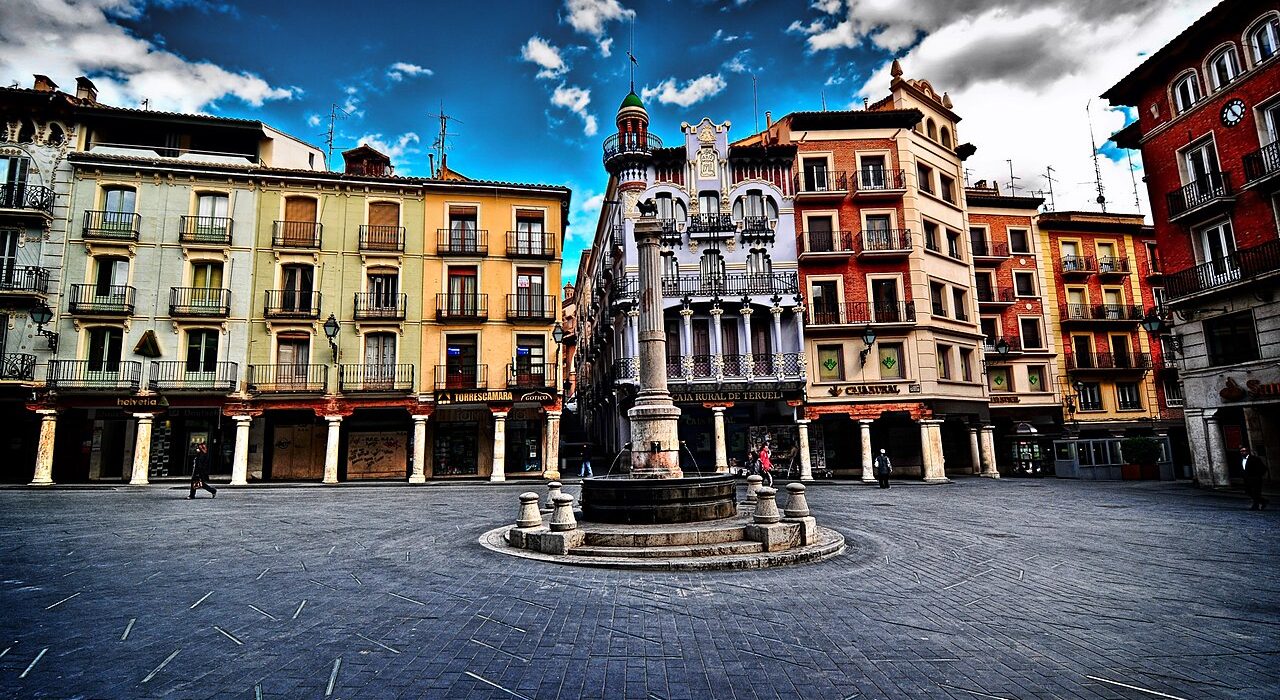
Teruel
AragónClimate
Forget for a moment the idea that inland Spain is all flatlands and heat; here, at over 900 meters in altitude, the air is different and history can be felt in every exposed brick. Teruel is not just a stop on the map, it is the least populated provincial capital in the country with a density of Mudéjar art that will have you constantly looking up as you walk through its medieval streets. Between legends of tragic love and the bones of giant dinosaurs, this city of 35,000 inhabitants holds secrets that defy what you expect to find in southern Aragon.
The must-seesWhat to see in Teruel: the essentials
Teruel Cathedral (Catedral de Santa María de Mediavilla)
This building is not just a church; it is a fascinating blend of styles that began as a Romanesque parish in the 12th century, specifically around 1171. What you really need to look for is its tower, built in 1257, a masterful example of the evolution towards Mudéjar, along with the interior coffered wooden ceiling that preserves original paintings of medieval characters and trades. To visit it properly, you must check the opening hours at the tourist office, as access includes the tower climb and requires prior arrangement.
San Martín Tower
Built in the 14th century, this tower has become the city’s visual icon thanks to its unmistakable decoration of green and white glazed ceramic. It is part of the ensemble declared a UNESCO World Heritage Site in 1986, and its silhouette is so distinctive that you can observe it from multiple points in the historic center as you wander through the streets.
San Pedro Cloister
Belonging to the group of preserved Mudéjar cloisters in Aragon, this 14th-century monument is attached to the side of the church. It stands out visually for its elegant brick arches and columns, and its visit is included in the general admission to the Iglesia de San Pedro (Church of San Pedro), which is a Site of Cultural Interest and a World Heritage Site.
Mausoleum of the Lovers (Mausoleo de los Amantes)
Built in the 13th century in what was once the old Jewish quarter, this construction houses the mummified bodies of Isabel de Segura and Juan Martínez de Marcilla, the protagonists of the city’s most famous legend. The Mudéjar complex is architecturally valuable for its rib-vaulted nave and polygonal apse, and entry is through the ticket office of the Amantes complex, respecting the established schedule.
Dinópolis (Dinosaur Park)
Teruel is known as the cradle of dinosaurs, and this cultural, scientific, and leisure park, inaugurated in 2001, is the definitive proof. It allows you to journey through the prehistoric world via recreations and real fossils, making it a highly recommended plan, especially for family visits, to understand why this land holds such important paleontological remains.
Other points of interest
Beyond the major monuments, the Museo Provincial (Provincial Museum) researches and disseminates Teruel’s cultural heritage, while the Teruel City Hall, a neoclassical building in the Plaza de la Catedral, marks the starting point of the Mudéjar skyline. You cannot miss the Acueducto de los Arcos (Los Arcos Aqueduct), nor a walk through the Conjunto Histórico (Historic Quarter), protected as a Site of Cultural Interest, where medieval traces are evident in every square. The Murallas de Teruel (Walls of Teruel), with the Puerta de la Traición (Gate of Betrayal), preserve defensive remains and legends of the Christian conquest, as do the gateways of Daroca and San Miguel. Other monuments such as the Cuesta de la Bajada, the sculptures of El Toro and El Vaquillero, or the vestiges of the Civil War complete the urban landscape, along with curious landmarks like the milestones on the N-234 and N-330 roads.
🍂 Otoño
Si visitas Teruel en otoño, notarás cómo las temperaturas bajan y el ambiente se vuelve más tranquilo y auténtico, con menos turistas por sus calles. Es una buena ocasión para recorrer la Torre de San Pedro y el Museo Provincial con calma, sin las prisas del verano. Mi consejo: consulta la previsión antes de salir, porque las lluvias aumentan en esta época y conviene llevar paraguas y algo de abrigo.
What to do in Teruel
Teruel offers specific activities ranging from historical immersion in its neighborhoods to participating in festivals declared of National Tourist Interest. You can stroll through the Centro Histórico (Historic Center) to admire the Mudéjar architecture and enjoy the nightlife in its tapas bars, or visit the Ensanche (city expansion district) to shop in fashion boutiques and see Modernista architecture. If you’re looking for tranquility, the Barrio de San Julián with its aqueduct or El Arrabal on the other side of the Turia River offer relaxed walks away from the hustle and bustle. Throughout the year, the calendar is filled with events such as Las Bodas de Isabel de Segura (The Wedding of Isabel de Segura) in February, when the city transforms into a 13th-century town, or the Feria del Jamón (Ham Fair) in September.
Teruel in one day: express itinerary
If you’re short on time, this route will allow you to see the essentials of the capital of Mudéjar without rushing too much:
- 10:00 AM – Plaza de la Catedral: Start here, in the main nucleus of the historic complex, to see the façade of the Town Hall and prepare for the visit to the Catedral de Santa María de Mediavilla.
- 11:30 AM – Torre de San Martín and Claustro de San Pedro: Walk through the old town to admire the glazed ceramics of the tower and the arcades of the cloister, both World Heritage Sites.
- 13:30 PM – Mausoleo de los Amantes (Lovers’ Mausoleum): Visit the old Jewish quarter to learn about the tragic love story and see the mummified remains in the 13th-century Mudéjar complex.
- 16:00 PM – Dinópolis: Spend the afternoon at this science park to see fossils and dinosaur recreations, ideal for resting from the urban walk.
- 20:00 PM – Tapas crawl in the Centro Histórico: End the day in the old town bars trying a regañao or migas turolenses.
Where to eat in Teruel: local gastronomy
Where to stay in Teruel
Centro Histórico (Casco Antiguo)
El corazón medieval de Teruel, donde se concentra la impresionante arquitectura Mudéjar, declarada Patrimonio de la Humanidad. Es una zona vibrante llena de bares de tapas, restaurantes y tiendas de artesanía, con un ambiente animado día y noche.
Ensanche
La zona moderna que rodea el casco antiguo, desarrollada a principios del siglo XX. Es el centro administrativo y comercial de la ciudad, con una mezcla de arquitectura modernista, tiendas de moda y las principales franquicias.
Barrio de San Julián
Un barrio residencial tranquilo situado junto al centro, ideal para experimentar la vida local. Es conocido por su imponente acueducto renacentista y ofrece un ambiente más relajado a pocos pasos del bullicio turístico.
El Arrabal
Uno de los barrios más antiguos y con más encanto, situado al otro lado del río Turia. Ofrece una atmósfera de pueblo, con calles estrechas y casas tradicionales, perfecto para un paseo tranquilo lejos de las zonas más concurridas.
Barrio de San León
Una zona residencial moderna y funcional, sede del Hospital General y de varias instalaciones deportivas. Aunque carece del atractivo monumental de otras zonas, es una buena opción para estancias más largas o para quienes buscan la comodidad de un barrio con todos los servicios.
How to get to Teruel
The connection to the city is simple, although it requires planning depending on your point of origin:
| Medio | Duración | Precio aprox. | Frecuencia |
|---|---|---|---|
| Tren | Variable según origen | Variable | Diaria (Estación de Teruel, sin AVE) |
| Autobús | Variable según origen | Económico | Regular |
| Coche | Depende de la ruta | Gasolina + Peajes | Libre (Acceso por N-234, N-330, etc.) |
How to get around Teruel
The historic center is perfectly walkable, but for longer distances or outer neighborhoods, the city has an urban bus service. Given the topography and the altitude of more than 900 meters, walking is the best way to appreciate the details of the architecture, but the bus is useful for reaching areas like Dinópolis or the residential neighborhoods if you don’t want to get tired.
Weather in Teruel
Best time to visit Teruel
Day trips from Teruel
Teruel serves as an excellent base for exploring other cities in the region. Located in southern Aragon, in the central-eastern part of the Iberian Peninsula, you have access to various points of interest in the province and neighbouring autonomous communities. Although the guide focuses on the capital, its strategic location allows you to organise outings to discover the heritage of the autonomous community in greater depth.
Curious facts about Teruel you didn’t know
Did you know that Dinópolis is home to the largest dinosaur in Europe? The Turiasaurus Riodevensis, discovered in 2004, measured between 30 and 38 metres long and weighed around 40–48 tonnes, making Teruel’s palaeontological collection one of the most important on the continent.
The legend of the Lovers of Teruel (Los Amantes de Teruel) is not just a story; their mummified remains, Isabel de Segura and Diego de Marcilla, are actually preserved in the Mausoleum beneath a sculpture by Juan de Ávalos, bearing witness to a tragic love story from the 13th century.
Teruel holds the title of the coldest provincial capital in Spain. This is due to its altitude of over 900 metres above sea level and its continental climate, which causes the harsh winters that locals mention with pride and visitors face with a warm coat.
The city’s name is an etymological mystery: one popular theory suggests it comes from the union of ‘Toro’ (bull) and ‘El’ (a star) that guided the founders, while another hypothesis links it to ‘Turba’, an ancient Iberian settlement.
Who is Teruel for
Teruel is a versatile destination that is a perfect fit for history and architecture lovers, thanks to its concentration of UNESCO World Heritage Mudejar art. Families will find an educational and fun plan in Dinópolis and the legend of the Lovers, while foodies will not want to leave without trying the D.O.P. Teruel Ham (Jamón de Teruel) and Ternasco (roast young lamb). It is also ideal for backpackers and couples seeking quiet cultural tourism, away from the crowds, with a varied range of accommodation from the historic centre to residential neighbourhoods like San Julián.
Frequently Asked Questions about Teruel
How many days do I need to see Teruel?
With an average stay of 1.99 nights according to the INE, you can see the essentials in 2 days. One day is enough for the historic center (Cathedral, Towers, Mausoleum) and another for Dinópolis and museums, although if you want to enjoy the gastronomy and atmosphere at a relaxed pace, 3 days is ideal.
What is the best time of year to visit Teruel?
The best time is from June to September, with average summer temperatures of 21.5°C. If you prefer cultural events, February (Bodas de Isabel de Segura) and July (Fiestas del Ángel) are vibrant months, although the winter weather can be very cold with averages of 4.6°C.
Where can I find updated official information?
To check exact monument opening times, ticket prices, and the full events calendar, I recommend visiting the official Teruel tourism website, which is the most reliable source for planning your visit.
Is Teruel a tourist city?
Yes, it receives 165,706 travelers annually according to INE data, with 16% from abroad. Although it is the least populated provincial capital (35,000 inhabitants), its UNESCO heritage and events like Las Bodas de Isabel de Segura attract significant cultural tourism.