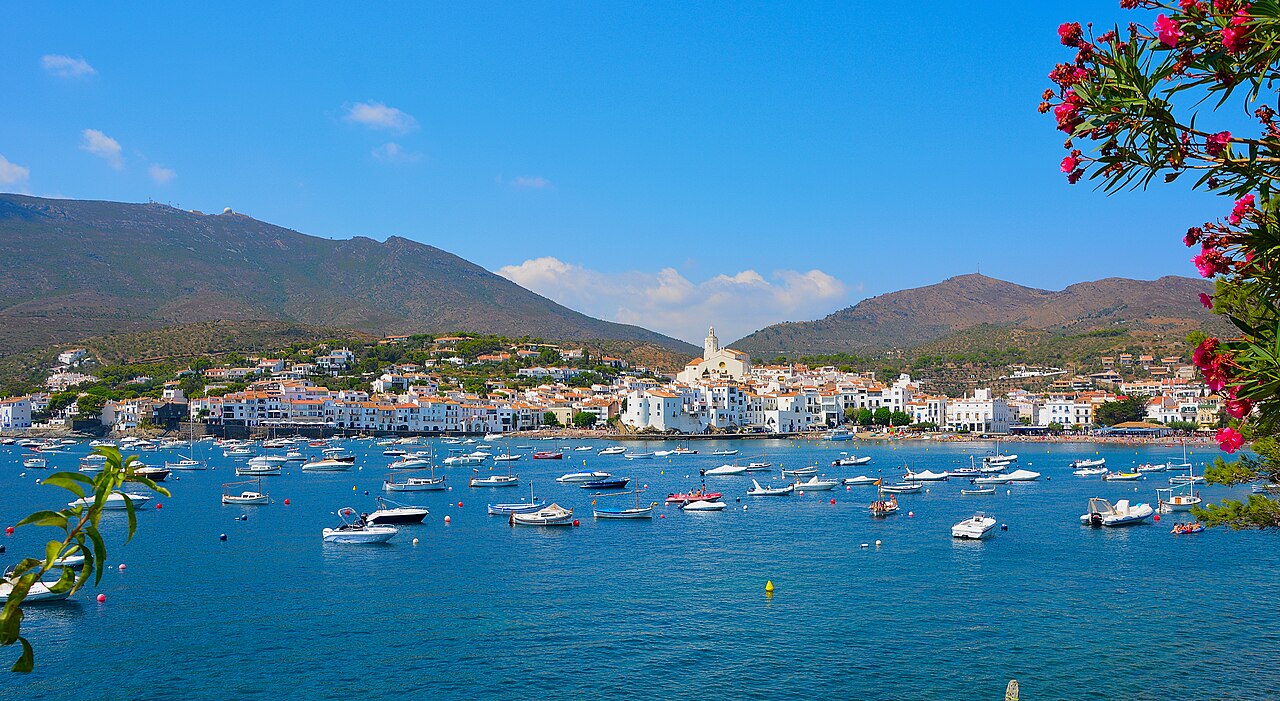
Cadaqués
CataluñaClimate
Being the first place in mainland Spain to see the sun rise every morning is a privilege unique to this corner of Cap de Creus, where light has enchanted artists for decades. With just 2,800 inhabitants, this municipality in Girona retains an intimate and authentic charm, far from the crowds, inviting you to get lost in its white streets and enjoy a natural environment protected since 1998.
The must-seesWhat to See in Cadaqués: The Essentials
Cadaqués offers a unique blend of artistic heritage and wild nature that you should explore at your own pace. Here are the key spots you cannot miss, based on verified local information.
Casa-Museu Salvador Dalí
This monument dedicated to the artist is located on the seafront promenade and is the work of Catalan sculptor Josep Plandiura, representing Dalí’s figure in bronze as a tribute to his eternal connection with the town. It is a common tourist meeting point with free access year-round, ideal for starting to feel the genius’s footprint before delving into his world. Although it is an outdoor monument, it symbolizes the artistic presence that permeates every corner of the locality.
Far del Cap de Creus
This area protects a set of rocky and hidden coves within the natural park, standing out for its transparent waters and typical Mediterranean vegetation of the zone. It includes emblematic places such as Cala Jóncols and Cala Culip, accessible mainly via coastal hiking, although some require special authorization during high season. It is the perfect place to connect with the purest nature at the easternmost tip of the Alt Empordà region.
Quadre de Cadaqués
This is the main pebble and sand beach located in the town’s bay, bathed by the crystal-clear waters of the Mediterranean that have inspired so many painters. Its historical setting is directly linked to the residence of Salvador Dalí and the old artistic colony, featuring basic services such as showers and access for people with reduced mobility. The official swimming season runs from June to September, months during which lifeguards are also on duty to ensure bather safety.
Blanco Mora
This museum space is part of the city’s rich cultural offer, complementing the artistic experience that defines Cadaqués.
Museu Dali
As a key reference in the locality, this museum delves into the work and legacy of the most universal surrealist artist within the context of the town.
🍂 Otoño
Si visitas Cadaqués en otoño, encontrarás temperaturas agradables y un ambiente mucho más relajado tras el bullicio estival. Es una época perfecta para saborear la gastronomía local y descubrir senderos del parque natural del Cabo de Creus con colores espectaculares. Un consejo: lleva siempre un chubasquero ligero en la mochila, porque el tiempo puede cambiar rápidamente y la tramontana puede aparecer sin avisar.
What to Do in Cadaqués
Cadaqués offers cultural and leisure activities centered on its seafaring history and vibrant summer life. In addition to enjoying the landscape, you can immerse yourself in local traditions by visiting the Weekly Market held every Monday in Sa Riera or Riera Sant Vicenç, where you will find food and textile products. If you travel in August, do not miss the Feria de los Indianos (Fair of the Indians), which transforms the town with white suits and Cuban rhythms paying homage to emigrants, or the Fiesta Mayor de Verano (Summer Main Festival) in September, the most important annual celebration featuring a street party and traditional dance.
Cadaqués in a day: express itinerary
If you’re short on time, this plan lets you see the essentials without rushing, making the most of the light and attraction opening hours.
- 09:00 – Casa-Museu Salvador Dalí: Start your day on the seafront promenade by viewing the bronze monument to Josep Plandiura, an ideal meeting point to get your bearings.
- 11:00 – Carrer de Es Call: Stroll along this historic street within the Historic-Artistic Ensemble to see the original ‘rastell’ pavement made of vertically placed slate stones.
- 13:30 – Quadre de Cadaqués: Dedicate the early afternoon to the main beach to enjoy the crystal-clear waters and the bay’s atmosphere before peak swimming hours.
- 17:00 – Balcón de la Iglesia de Santa María: Climb up to the elevated square beside the 16th-century Gothic church to take in panoramic views of the bay and the whitewashed houses; highly recommended at sunset.
- 20:00 – Paseo Marítimo de la Riba des Poal: End your day walking along this traditional promenade to see the noraix (stone fishing ramps), remnants of the area’s fishing heritage, as the sun sets.
Where to eat in Cadaqués: local gastronomy
Where to stay in Cadaqués
El Casco Antiguo
Zona más encantadora y popular con callejuelas empedradas, casas blancas y proximidad al paseo marítimo.
Portlligat
Cala conocida por albergar la Casa-Museo de Salvador Dalí, ideal para un paisaje tranquilo y cultural.
How to get to Cadaqués
Access to Cadaqués combines high-speed train options with road or bus connections, depending on your point of origin.
| Medio | Detalles | Conexiones |
|---|---|---|
| Tren (AVE) | Estación de Figueres Vilafant. Requiere transbordo a autobús. | Madrid, Barcelona, Valencia, Zaragoza, Bilbao, Lleida, Málaga, Perpignan, París, Lyon, Marsella. |
| Autobús | Estación de Autobuses de Cadaqués. Compañías SARFA S.L. y BlaBlaCar. | Conexión directa desde Figueres y otras ciudades. |
| Avión | Aeropuerto de Girona-Costa Brava (GRO). | Situado a 60.4 km de la localidad. |
| Coche | Vía carreteras AP-7, C-260, GI-614, N-260, GI-613. | Acceso directo al municipio. |
Getting around Cadaqués
The town center is very walkable, featuring a pedestrianized core that makes exploring the historic streets on foot easy. For longer distances or specific access points, the municipality offers an urban bus service connecting the various points of interest.
Weather in Cadaqués
Live webcam — Roses*
Cadaqués* The nearest webcam to Cadaqués is in Roses, 8.6 km away.
Source: Windy Webcams
Best time to visit Cadaqués
Day trips from Cadaqués
If you decide to explore the surroundings, the city of Girona is the primary destination for a day trip from Cadaqués. Located in the same province, it offers an interesting contrast with its historical and urban heritage, allowing you to complete your experience in Catalonia with a top-tier cultural visit just a short distance away.
Curiosities About Cadaqués You Didn’t Know
Did you know that Cadaqués is the easternmost town on the Iberian Peninsula? Its location on Cap de Creus makes it the first place in mainland Spain to see the sunrise each day, a tradition celebrated en masse at the lighthouse on January 1.
Salvador Dalí not only visited the town but lived and worked in a house in Portlligat Bay from 1930 until 1982. The residence took shape over 40 years as he bought and joined several fishermen’s huts, creating a labyrinthine structure that the artist himself described as a ‘biological structure’.
The town’s history includes turbulent episodes, such as in 1543, when the famous Ottoman corsair Barbarossa attacked and sacked Cadaqués. During the assault, he set fire to the church and destroyed the parish archive, erasing an important part of the town’s documented history.
The name ‘Cadaqués’ has a very descriptive etymology: it comes from ‘Cap de Quers’ or ‘Cap d’Aques’, meaning ‘Cape of Rocks’. This description honors the rocky, rugged landscape that characterizes the entire Cap de Creus peninsula.
Cadaqués belongs to Cap de Creus Natural Park, which was declared Catalonia’s first land-sea natural park in 1998. It protects a vast area of 10,386 hectares of land and 3,090 hectares of sea.
Cinema has also left its mark here: part of the adventure film ‘The Light at the Edge of the World’ (1971), starring Kirk Douglas and Yul Brynner and based on a novel by Jules Verne, was filmed in the rugged landscapes of Cap de Creus.
If you look down while walking through the oldest streets, you’ll see the ‘rastell’. This handcrafted cobblestone pavement is made with stones gathered from the shoreline, laid in a herringbone pattern to create a durable surface with excellent drainage.
Who Is Cadaqués For?
This destination is ideal for couples and art lovers seeking inspiration in unique landscapes, as well as foodies interested in authentic seafood cuisine. It’s also perfect for families who enjoy nature and gentle hiking, although its tranquil atmosphere and prices geared toward cultural tourism may be less appealing to backpackers looking for intense nightlife or very tight budgets.
💡 ¿Sabías que...?
- ● Cadaqués es el pueblo más oriental de la Península Ibérica. Su ubicación en el Cap de Creus hace que sea el primer lugar de la España peninsular en ver el amanecer cada día. (Instituto Geográfico Nacional)
- ● Salvador Dalí vivió y trabajó en una casa en la bahía de Portlligat desde 1930 hasta 1982. La residencia se formó a lo largo de 40 años mediante la compra y unión de varias barracas de pescadores, creando una estructura laberíntica que el propio artista describió como una 'estructura biológica'. (Fundación Gala-Salvador Dalí)
- ● En 1543, el famoso corsario otomano Barbarroja atacó y saqueó Cadaqués. Durante el asalto, incendió la iglesia y destruyó el archivo parroquial, borrando una parte importante de la historia documentada del pueblo. (visitcadaques.org)
- ● La etimología más aceptada del nombre 'Cadaqués' proviene de 'Cap de Quers' o 'Cap d'Aques', que significa 'Cabo de Rocas'. Esta descripción hace honor al paisaje rocoso y escarpado que caracteriza toda la península del Cap de Creus. (Generalitat de Catalunya)
- ● El Parque Natural del Cap de Creus, al que pertenece Cadaqués, fue el primer parque marítimo-terrestre declarado en Cataluña (1998). Protege 10.386 hectáreas terrestres y 3.090 hectáreas marinas. (Gencat.cat)
- ● Una tradición única de Cadaqués es recibir el Año Nuevo en el faro del Cap de Creus. Cientos de personas se congregan el 1 de enero antes del alba para ser los primeros de la península en ver el primer sol del año, acompañado de sardanas y chocolate caliente. (Ayuntamiento de Cadaqués)
- ● Parte de la película de aventuras 'The Light at the Edge of the World' (1971), protagonizada por Kirk Douglas y Yul Brynner y basada en una novela de Julio Verne, fue rodada en los escarpados paisajes del Cap de Creus. (IMDb / Catalunya Film Commission)
- ● El pavimento típico de las calles más antiguas del pueblo se llama 'rastell'. Este empedrado artesanal está hecho con piedras extraídas de la orilla del mar, colocadas en un patrón de espiga para crear una superficie resistente y con buen drenaje. (Ayuntamiento de Cadaqués)
Frequently Asked Questions About Cadaqués
How many days do I need to see Cadaqués?
In one day you can see the essentials like the Dalí monument and Quadre Beach, but at least 2 or 3 days are recommended to explore Cap de Creus Natural Park and enjoy the local gastronomy at a leisurely pace.
When is the best time to visit Cadaqués?
The best time is from May to September, when the average summer temperature reaches 22.9°C, allowing you to enjoy the swimming season that runs from June to September.
How do I get to Cadaqués from Madrid?
You can take an AVE train from Madrid to Figueres Vilafant station, which has direct services, and then continue by bus to the Cadaqués Bus Station.
Is there a market in Cadaqués?
Yes, the Weekly Market is held every Monday in Sa Riera or Riera Sant Vicenç, offering food products, textiles, and other items.