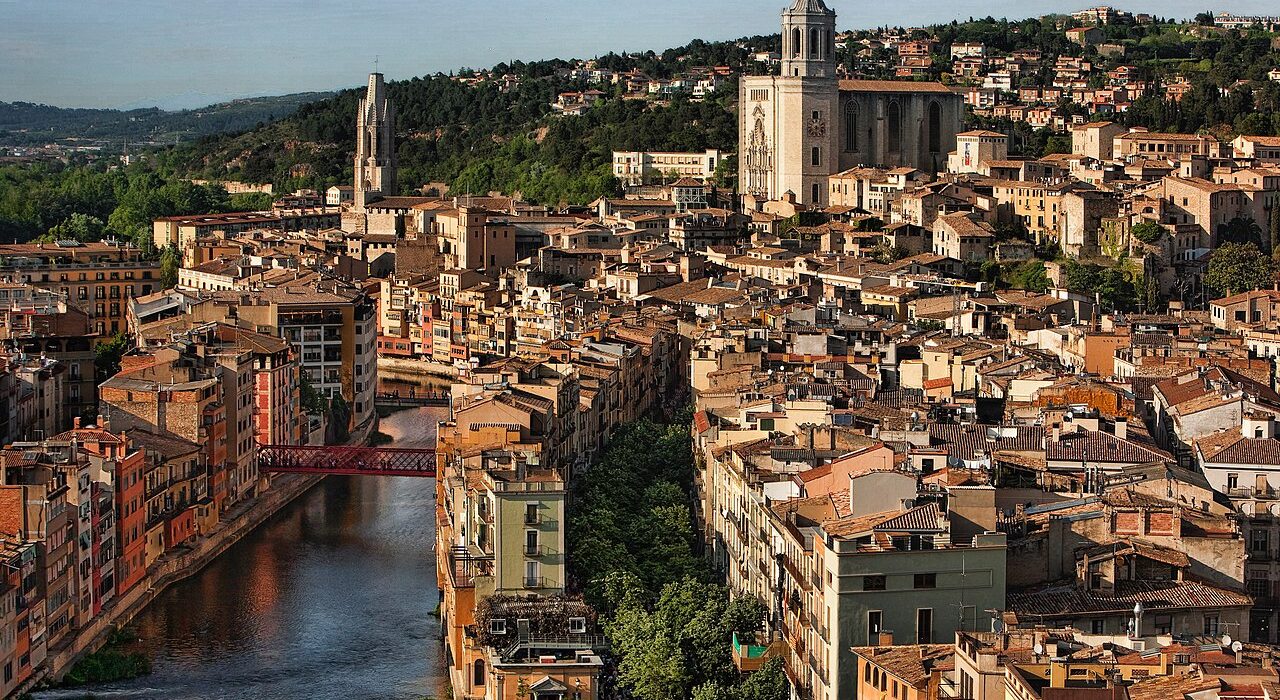
Cadaqués → Girona
75 kmLeaving behind the blinding white houses of Cadaqués to enter the golden stone realm of Girona is one of the most pleasant landscape transitions on the Costa Brava, a journey that combines the serenity of the sea with the vitality of a monumental city in just about an hour’s drive.
How to get from Cadaqués to Girona: a quick summary
The fastest way to make the trip is by private car, covering the 75 km in just 1 hour, while the most economical and relaxed option is the direct bus operated by Moventis Sarfa.
If you travel on your own schedule and want the flexibility to explore the surrounding area, the car is your best ally, allowing you to enjoy the Autovía del Nordeste (Northeast Highway) without worrying about tolls. On the other hand, if you prefer to avoid driving on mountain roads or simply want to save on fuel and parking, the bus offers a direct and reliable connection. There is no direct train option from the origin, so your choice essentially comes down to these two modes of ground transportation. For the backpacker or anyone who doesn’t want to deal with summer traffic, bus line 4 is the definitive solution, although it requires almost double the time of a private vehicle.
By car from Cadaqués to Girona
The route by private vehicle connects the two points in exactly 1 hour of driving over a total distance of 75 kilometers.
Leaving Cadaqués, you will join the road network that leads directly to the A-2: Autovía del Nordeste (Northeast Highway). It is essential to know that this section of the highway is completely free, meaning no tolls, which is excellent news for your wallet at the end of the trip. Although the distance is relatively short, driving through this area of the Costa Brava is usually very pleasant, allowing you to enjoy changing views as you leave the secluded coast of Cap de Creus behind and head into the interior of the province.
The fact that the estimated time is only 1 hour makes this one of the most efficient routes in the area, ideal for weekend getaways or business transfers. Since you don’t have to stop at toll booths, the flow of driving is continuous. Keep in mind that, as it is a major highway, the asphalt is usually in optimal condition, facilitating a comfortable journey for both the driver and passengers. Just make sure you have a full tank before leaving Cadaqués, as options for refueling can be more limited on the initial stretches of the route to the A-2.
By bus from Cadaqués to Girona
There is a direct bus service operated by Moventis Sarfa, specifically line 4, which makes the journey in 110 minutes.
This is the only viable public transport option if you do not have your own vehicle, since, as mentioned, there is no train station in Cadaqués and no direct rail connections. Moventis Sarfa is a well-known operator in the region, guaranteeing a certain standard of safety and regularity in the service. The ticket price ranges from €10 to €17, depending on how far in advance you book or the season in which you travel, making it a very competitive option compared to the cost of fuel and vehicle wear and tear if you are traveling alone.
You should keep in mind that the bus journey takes 110 minutes, almost double the time of the car. This is due to the intermediate stops the line makes to pick up and drop off passengers in the various towns along the route. Despite being slower, the bus allows you to completely disconnect from the journey: you can read, listen to music, or simply sleep while someone else does the driving. It is advisable to arrive at the bus stop early, especially in high season, as demand for line 4 can be considerable.
Recommended stops along the way
If you decide to drive or simply want to know the key points the route to Girona passes through, these are the verified towns you shouldn’t miss.
Roses
Roses is one of the first significant stops if you head away from the Cadaqués coast, known for its large bay and its historical and tourist importance.
Being on the route to Girona, Roses acts as a natural link between the Alt Empordà region and the rest of the province. It’s a place where the sea remains the main feature, but with a larger, more urban infrastructure than the smaller villages on the cape. Stopping here allows you to stretch your legs along a wide seafront promenade or visit its citadel (Ciutadella de Roses), a historic vestige that dominates the entrance to the port. It’s an ideal stop for a coffee before heading further inland or continuing along the coast.
l’Escala
l’Escala is a coastal town famous for its gastronomy, especially its anchovies, and for being the gateway to the ruins of Empúries.
Strategically located on the route, l’Escala offers a perfect contrast between traditional seafaring life and modern tourism. While not the final destination, it’s an excellent stopping point if you’re travelling by car and want to enjoy a quality lunch based on seafood. The town exudes a tranquil yet vibrant atmosphere, and its geographical position makes it a privileged viewpoint over the Gulf of Roses. It’s one of those places where time seems to slow down, perfect for a brief pause on your 75 km route.
Torroella de Montgrí
Torroella de Montgrí stands out for its location next to the River Ter and its proximity to the Medes Islands, making it a natural and heritage enclave of the highest order.
This stop introduces you to the essence of the Baix Empordà region. Unlike purely coastal towns, Torroella combines proximity to the sea with the richness of the wetlands and the imposing presence of the Montgrí massif. The castle that crowns the village is visible from afar and serves as a guide for approaching travellers. Stopping here is recommended for those interested in nature and medieval history, offering a different perspective of the Empordà landscape before reaching the provincial capital.
la Bisbal d’Empordà
la Bisbal d’Empordà is known worldwide as the ceramics capital, offering a unique cultural experience full of pottery shops and artisan workshops.
Located inland, this stop breaks the monotony of the coastal landscape to immerse you in Catalan craft tradition. Its streets are filled with shops displaying and selling the area’s famous pottery, making this stop a perfect opportunity to purchase authentic, handmade souvenirs. The old town of la Bisbal is charming and well worth a leisurely stroll. It’s an undeniable cultural highlight on the route to Girona, proving that the Empordà region is not just about beaches, but also about art and fire.
Figueres
Figueres is the most important city in the Alt Empordà region and is world-famous for housing the Dalí Theatre-Museum.
If there’s one unmissable stop on this list, it’s Figueres. Located on the route, it’s the largest communications hub before reaching Girona. The presence of Salvador Dalí permeates the entire city, and although a full visit to the museum requires hours, simply strolling through its streets and seeing the unique architecture of the theatre is an experience in itself. It’s the perfect place for a longer stop, perhaps for lunch or to visit an art gallery. Its strategic position makes it the cultural heart of the area the road passes through on the way to your final destination.
Where to sleep in Girona
To stay overnight in Girona, the most recommended areas are the Old Town (Barri Vell) to soak up the history, and the Eixample for greater comfort and modern services.
As for accommodation types, the city offers a wide variety to suit different budgets. You can find everything from luxury boutique hotels set in restored historic buildings to budget-friendly hostels ideal for solo travelers. Tourist apartments are also very popular, offering a more flexible stay, especially if you are traveling with family or in a group. Price ranges in Girona vary; in low season you can find very competitive deals, while in high season or during events such as Temps de Flors (Flower Festival), prices can rise considerably. We recommend booking in advance to secure the best value for money, regardless of the area you choose.
Frequently asked questions about the Cadaqués-Girona route
How long does it take to get from Cadaqués to Girona?
Travel time depends on the means of transport: by car it takes exactly 1 hour, while the bus journey takes 110 minutes.
Which is cheaper, the train or the bus?
The bus is the only direct public transport option, with a price between €10 and €17, as there is no direct train or station in Cadaqués.
Is it worth renting a car?
Yes, it is worth it if you value speed (1h compared to 110 min by bus) and want to make free stops in places like Figueres or Roses, as well as avoiding transfers.
When is the best time to travel?
It is recommended to travel avoiding peak summer hours to enjoy the Autovía del Nordeste (Northeast Highway) without traffic, although the route is viable all year round.