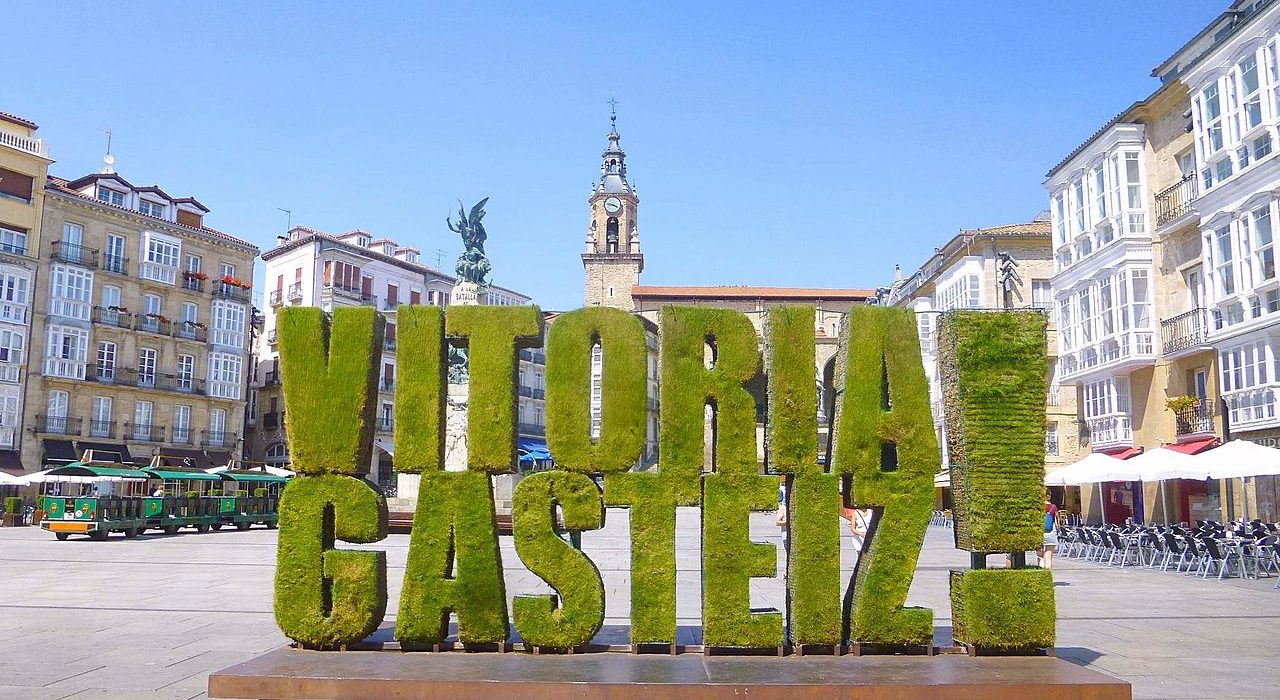
How to get from Logroño to Vitoria-Gasteiz: a quick summary
The total distance for traveling from Logroño to Vitoria-Gasteiz is 90 kilometers, a journey that can be completed in approximately 1 hour if you choose the most flexible and direct option: a private car. This trip connects two provincial capitals in northern Spain, linking the wine-making fame of La Rioja with the administrative and ecological capital of the Basque Country. For travelers seeking autonomy and speed, a private vehicle is the top recommendation, as it allows you to manage departure and arrival times at your convenience without relying on external schedules.
However, not all travelers have access to a car or prefer to avoid driving. In such cases, the confirmed viable alternative is the bus, which offers a direct connection between both cities. It is important to note that, unlike other routes in Spain, there is no direct train connection for this specific stretch, ruling out rail transport for those seeking travel by train. Therefore, your choice essentially boils down to two options: the speed and comfort of a car, or the economy and relaxation of the bus. If you are traveling in a group or with bulky luggage, the car remains the winning option, while for solo travelers or those on a tight budget, the bus is the practical solution.
Driving from Logroño to Vitoria-Gasteiz
Driving from Logroño to Vitoria-Gasteiz involves covering a distance of 90 km, which takes an estimated 1 hour under normal traffic conditions. Since we lack verified data on the specific names of roads or highways for this particular route, we will focus on the general driving experience in this area of northern Spain. The journey is relatively short, making it ideal for a morning trip or even as part of a broader itinerary covering several cities.
With no confirmed information regarding tolls on this specific section, you can assume that the cost of the trip will primarily consist of fuel and vehicle wear. Driving in this region is usually smooth, passing through landscapes that gradually change from the vineyards of La Rioja to the greener, more urban areas of Álava. It is essential to stay attentive on the road; although it is only a one-hour trip, weather conditions in the north can vary, especially during the winter months. To optimize your journey, it is recommended to start with a full tank of fuel and check your tire condition before departing, ensuring a safe drive throughout the 90-kilometer route.
The main advantage of making this trip by car is flexibility. You can stop if needed, adjust your speed according to traffic flow, and arrive directly at your destination in Vitoria without having to make transfers. Furthermore, the 1-hour travel time is short enough not to be tiring, yet long enough to disconnect from the city of origin and prepare for your arrival at the new destination. If you are traveling with family or friends, the car allows you to share the travel experience, making stops to stretch your legs or enjoy conversation during the hour-long journey.
By train from Logroño to Vitoria-Gasteiz
Currently, there is no direct train connection allowing travel from Logroño to Vitoria-Gasteiz without making complex changes or combinations that are not verified in the official data for this route. This means that if your intention is to use the railway as the main mode of transport for this specific journey, you will face the limitation that there is no operational service linking both stations in a linear and straightforward manner. The absence of this direct rail option is a key factor when planning your travel logistics, as it eliminates the possibility of enjoying the comfort of the train for this particular trip.
In situations where there is no direct train, travelers usually have to look for multimodal alternatives; however, based strictly on the data provided for this guide, the train option is ruled out as a practical solution for going from point A to point B. This contrasts with other routes in Spain where the train takes center stage, forcing the traveler to focus on road options. The non-existence of this direct line simplifies decision-making: you do not need to compare train ticket prices or departure times, as the option is unavailable. Therefore, any planning that includes the train would require deviating from the direct route or using different modes of transport to complete the final leg.
By bus from Logroño to Vitoria-Gasteiz
The direct bus between Logroño and Vitoria-Gasteiz is line 9 operated by Alavabus, the provincial network of Álava, which crosses the Rioja Alavesa region in approximately 1h 10min. Pay attention to the schedules: there are only about 4 daily services per direction (the first around 6:30 and the last after 21:00), so it is advisable to plan using the updated timetable at alavabus.eus.
The fare is economical (approximately €3–7) and is paid upon boarding or using the system’s transport cards. It connects the bus stations of both cities.
Recommended stops along the way
In the verified information provided for this route, no specific recommended stops between Logroño and Vitoria-Gasteiz are listed. This indicates that the 90-kilometer journey is best conceived as a continuous point-to-point transfer, without intermediate points of interest officially recognized in this guide’s data. The absence of listed stops suggests that the focus of the trip is on the origin and destination, and that the road itself is a quick transit through the geography separating La Rioja from Álava. However, this does not prevent travelers from deciding on their own to stop if they spot something of interest, though there are no formal recommendations that must be strictly followed.
With no verified stops available, the most efficient travel strategy is continuity. Given that the total driving time is only 1 hour, stopping could break the rhythm of the journey and unnecessarily extend the duration of the trip. For many travelers, especially those on a tight schedule, knowing that there are no mandatory or recommended stops is an advantage, as it simplifies planning: you only need to worry about leaving Logroño and arriving in Vitoria. If you are traveling with children or need to take a break for personal comfort, you will find generic service areas, but there are no specific tourist or gastronomic locations listed that warrant a detour or a scheduled stop on this particular itinerary.
Where to sleep in Vitoria-Gasteiz
To spend the night in Vitoria-Gasteiz, it is recommended to look for accommodation in the city’s central areas or in well-connected neighborhoods that provide easy access to the main points of interest. Vitoria is a city that combines a well-preserved historic quarter (casco histórico) with modern zones, so your choice of lodging will depend on whether you want to be close to the cathedral and old squares or prefer the tranquility of residential areas with good services. As no specific hotel names are available in the data, the recommendation focuses on typology and strategic location. Travelers can opt for mid-range hotels, which usually offer a good balance between price and comfort, or look for tourist apartments if traveling in a group and needing more space.
Regarding price ranges, these will vary depending on the season and the category of the establishment, but Vitoria-Gasteiz usually offers competitive options compared to other provincial capitals. It is advisable to book in advance, especially if traveling during the best time of year, to ensure availability in the most sought-after areas. The city is known for its urban planning and green spaces, so staying near parks or pedestrian zones can significantly enhance the visitor experience. Regardless of the chosen area, the city is compact and walkable, meaning that even if you stay some distance from the center, you can get around easily.
The variety of accommodation in Vitoria allows adaptation to different budgets. From more economical options ideal for backpackers or travelers passing through, to establishments offering greater comfort for those seeking a more relaxed stay. The key is to define what is a priority for you: proximity to historical monuments or tranquility to rest after the 90-kilometer journey from Logroño? Both options are viable, and the city has a hotel infrastructure capable of satisfying both needs without resorting to unverified specific names.
Where to eat en route
Since the gastronomic data for the route does not provide specific information on typical dishes or restaurants located along the 90-kilometer stretch, no concrete culinary specialties can be described for this road segment. The absence of this data implies that the trip should be planned considering that the main gastronomic experience will take place at the destination, Vitoria-Gasteiz, or at the point of origin, Logroño. This is common on short one-hour journeys, where driving time does not invite long stops for meals, but rather a quick transfer between two important gastronomic hubs.
However, this does not mean the traveler must go hungry. The practical recommendation is to take advantage of arriving in Vitoria to enjoy its wide and varied culinary offer, or to eat in Logroño before departing if the schedule allows. As there is no data on average prices per person along the route, it is difficult to establish an exact budget for an intermediate stop, so the most sensible approach is to budget for a full meal in the destination city. Vitoria-Gasteiz is famous for its pintxos (Basque tapas) and Basque cuisine, so saving your appetite until you arrive may be the best culinary strategy for this trip.
If you need to eat during the one-hour journey, the safest option is to choose quick-service alternatives or bring provisions from the starting point, as there are no verified restaurants listed along the way. This approach avoids setbacks and ensures no time is wasted looking for establishments not confirmed in the guide. The priority on this short trip is mobility, so gastronomy becomes a complement best enjoyed at leisure once the 90-kilometer displacement has been completed.
Best time to take this trip
The best time to travel from Logroño to Vitoria-Gasteiz is during spring and autumn, seasons that offer the most favorable conditions for both driving and sightseeing. During these months, the climate in northern Spain is usually mild, avoiding the extreme temperatures common in summer or the intense cold and possible snowfalls of winter. Traveling in spring allows you to enjoy the green, flowery landscapes characteristic of the Álava and La Rioja regions, while autumn offers a palette of warm colors and an especially pleasant atmosphere for exploring the cities.
Choosing these seasons has practical advantages for drivers. In spring and autumn, the likelihood of encountering adverse weather conditions that could hinder driving the 90 km is lower than in the depths of winter. Furthermore, daylight hours are sufficient to complete the journey with good visibility, even if departing early or arriving late. For tourists, these periods coincide with vibrant cultural and social activity in both cities, without the overcrowding sometimes experienced during the summer months. It is a perfect balance between climatic comfort and tourist experience.
If traveling by car, spring and autumn are also ideal for enjoying the drive without the stress of excessive heat inside the cabin or the need to use heating at full capacity. The 90 kilometers are covered more pleasantly when the outside temperature is mild. Additionally, these seasons tend to be less crowded on main roads compared to summer school holiday periods, which can help ensure the 1-hour travel time is met more accurately and without unexpected traffic delays.
Frequently asked questions about the Logroño-Vitoria-Gasteiz route
How long does it take to get from Logroño to Vitoria-Gasteiz?
The estimated time to complete the journey is 1 hour by car, covering a distance of 90 kilometers. If you choose the bus, the duration is similar, although it may vary slightly depending on traffic and stops on the confirmed direct line.
Is the train or the bus cheaper?
As no verified direct train connection exists for this route, a price comparison is not applicable. The available and economical public transport option is the direct bus, which presents itself as the viable alternative to the cost of fuel and car maintenance.
Is it worth renting a car?
Renting a car may be worthwhile if you value the flexibility of covering the 90 km route in exactly 1 hour at your own pace without relying on bus schedules. However, given that there are no official recommended stops along the route, the advantage of having a car for sightseeing en route is limited, with the main benefit being the comfort of point-to-point transfer.
When is the best time to travel?
According to verified data, the best time to travel is in spring and autumn. These seasons offer a mild climate ideal for driving and allow you to enjoy the area’s landscapes with pleasant temperatures, avoiding the climatic extremes of other times of the year.
📍 También te puede interesar
Qué ver en Logroño →
Qué ver en Vitoria-Gasteiz →