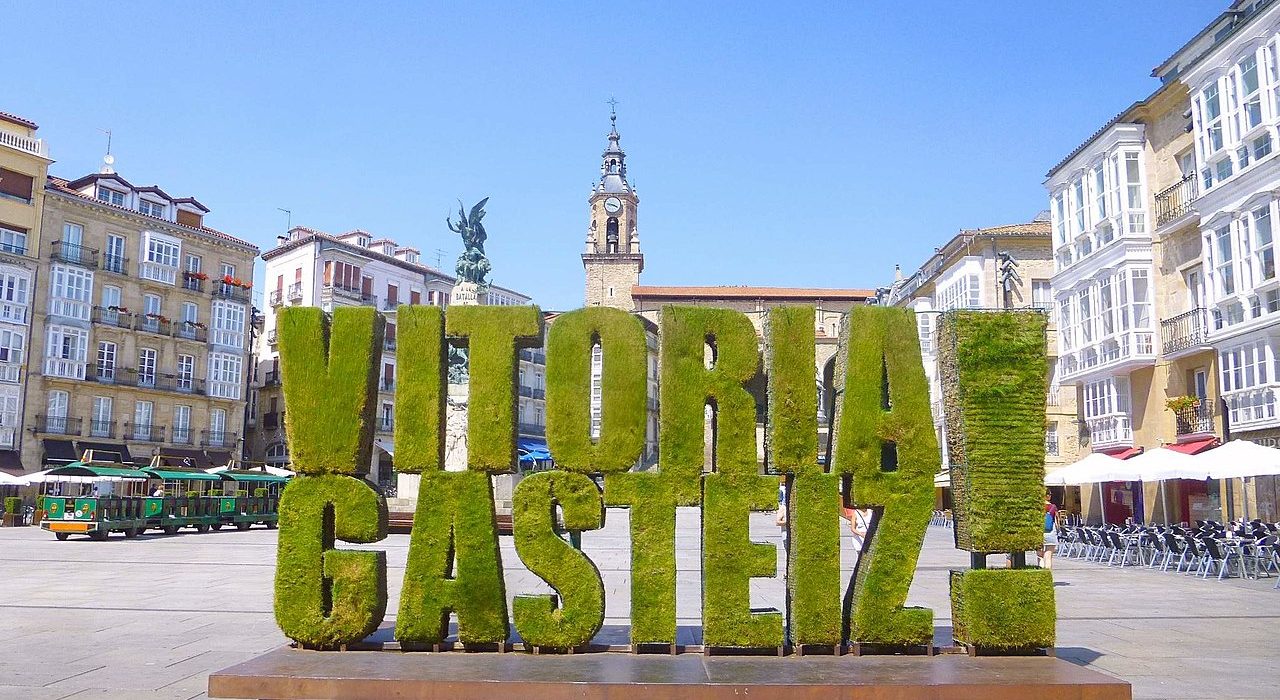
Bilbao → Vitoria-Gasteiz
65 kmLeaving Bilbao for Vitoria-Gasteiz is far more than a simple transfer between two provincial capitals; it is a short yet intense journey that lets you witness how the lush, humid landscape of the Biscay coast gently gives way to the more open and serene Alava plateau. In under an hour, the road treats you to a succession of valleys, medieval bridges, and a sense of freedom only found behind the wheel, turning these 65 kilometers into one of the most pleasant and quickest routes in northern Spain.
How to get from Bilbao to Vitoria-Gasteiz: quick summary
The most efficient and recommended way to travel from Bilbao to Vitoria-Gasteiz is undoubtedly by private or rental car, due to the lack of a direct rail connection between the two cities. Although road transport is the dominant option, it is crucial to know that no direct train covers this route, eliminating rail travel for those seeking comfort without driving. For travelers who value flexibility and wish to use the journey to visit charming towns, a private vehicle is the only logical choice, allowing spontaneous stops in intermediate localities such as Durango or Laudio. If you rely on public transport, you will need to look for bus alternatives; however, the sense of freedom and the panoramic views along the Cantabrian Motorway make driving the preferred experience for most tourists and locals alike.
Driving from Bilbao to Vitoria-Gasteiz
Driving from Bilbao to Vitoria-Gasteiz is a smooth and fast experience, completed in approximately 45 minutes thanks to a network of modern, toll-free motorways. The main route begins by taking the A-8 or Autovía del Cantábrico (Cantabrian Motorway), a high-capacity road with no tolls that quickly whisks you out of the Bilbao metropolitan area heading east. This highway is renowned for its excellent pavement conditions and for crossing some of Biscay’s greenest valleys, offering safe driving even on the region’s frequently rainy days. Along the way, the A-8 connects you to the A-1 or Autovía del Norte (Northern Motorway), another vital toll-free artery that provides direct access to the Alava capital. For drivers preferring to avoid heavier traffic sections or seeking a more local route, the N-622 presents a viable alternative, also toll-free; while it may add a few minutes to the total 45-minute journey, it offers a closer perspective on daily life in the towns it traverses. It is worth noting that since none of these roads (A-8, A-1, and N-622) have tolls, the trip cost is limited exclusively to fuel, making this one of the most economical intercity routes in the region.
Recommended stops along the way
Although the journey is short, the area’s cultural and scenic richness invites several strategic stops to break up the trip and discover the essence of the interior Basque Country.
Arrigorriaga
Right at the exit gates of Bilbao, Arrigorriaga presents itself as the first logical stop to stretch your legs before heading onto the motorway. This municipality, located in the Greater Bilbao region, is historically known as the setting for medieval battles, although today it functions primarily as a transition zone between the industrial city and the valley. Stopping here allows you to observe traditional Basque architecture coexisting with modern activity, and it is an excellent spot for a quick coffee before continuing the total 65 km of the journey.
Galdakao
Continuing the route, we find Galdakao, an enclave that stands out for its strategic location in the valley. Unlike other more touristy spots, Galdakao offers an authentic glimpse into the residential and commercial life of the area. It is a recommended stop if you need to refuel or look for basic services, as it boasts good urban infrastructure. Its proximity to Bilbao makes it a natural extension of the capital, but with a slightly more relaxed pace of life, ideal for a brief pause without straying too far from the main route towards Vitoria.
Amorebieta
Amorebieta, officially Amorebieta-Etxano, is one of the most interesting stops from a scenic perspective, situated at the confluence of several rivers. By stopping here, travelers can appreciate how the geography opens up slightly, offering broader views than in the narrow initial valley. It is a municipality with a well-kept town center and green areas that invite a short 10 or 15-minute walk. The sense of tranquility in Amorebieta contrasts with the bustle of Bilbao, marking the real start of the journey inland and serving as a reminder of the region’s hydraulic wealth.
Durango
Without a doubt, Durango is the jewel of this route and the unmissable stop you cannot afford to skip. This historic town possesses a charming old quarter, full of arcades (soportales), palaces, and an atmosphere that seems frozen in time. Stopping in Durango is not just a logistical matter, but a cultural one; it is the perfect place to have lunch, buy local products, or simply get lost in its cobblestone streets. The architecture of Durango reflects the importance this locality held in the past, and its halfway location makes it the ideal rest point before tackling the final stretch towards Vitoria-Gasteiz.
Laudio / Llodio
Already on the final straight, before fully entering Álava, we find Laudio (Llodio). This municipality marks the definitive transition towards the Alavese geography and is known for its industrial heritage and green spaces. Stopping in Laudio offers the opportunity to see how the landscape changes subtly, preparing for the plains of Vitoria. It is a strategic point for those traveling in the autumn months, as the tones of the vegetation in this area of the Nervión valley are especially photogenic, providing a perfect scenic finale before reaching the journey’s destination.
Where to Stay in Vitoria-Gasteiz
Upon arriving at your destination, your choice of accommodation will depend on whether you seek to be in the heart of the action or prefer the tranquility of the outskirts. The most recommended area for tourists is the Casco Medieval (Medieval Quarter), where you can find charming hotels and guesthouses that allow you to walk to Plaza de la Virgen Blanca and the main monuments. This area usually offers mid-to-high price ranges, ideal for those who want to experience the city to the fullest. On the other hand, the Ensanche is the modern part of the city, characterized by larger buildings and wide streets; here, the hotel offering is more varied, with standard hotel chains that often provide more competitive price ranges and parking facilities, something very important to consider if you have made the journey by car. For travelers on a tighter budget, peripheral areas well-connected to the center offer more economical options, although they will require the use of a vehicle or urban transport to get around. In general, Vitoria-Gasteiz is a very safe and walkable city, so staying near the center is almost always the best investment to make the most of your visit.
Frequently Asked Questions about the Bilbao-Vitoria-Gasteiz Route
How long does it take from Bilbao to Vitoria-Gasteiz?
The estimated driving time is exactly 45 minutes, provided traffic is fluid and the main A-8 and A-1 motorways are used. This duration may vary slightly depending on stops you make in intermediate towns or weather conditions, which can be changeable in northern Spain.
What is cheaper, the train or the bus?
This comparison is not possible in terms of a direct train, as there is no train line connecting Bilbao directly with Vitoria-Gasteiz. Therefore, the most economical option will depend exclusively on the bus fares available at the time and the fuel cost of your vehicle, with the car being a very competitive option since there are no tolls on the route.
Is it worth renting a car?
Yes, it is absolutely worth renting a car if your goal is to enjoy the recommended stops along the route such as Durango, Amorebieta, or Laudio. The flexibility offered by a private vehicle to stop at these points of interest, combined with the 45-minute speed of the journey, makes it the superior option compared to relying on public transport schedules that might not cover all these localities.
When is the best time to travel?
The best time to make this trip is during spring or autumn, when the landscape of the 65-kilometer route is at its peak of color and the temperature is pleasant for getting out of the car at stops. However, as it is a short route and mostly via motorway, it is perfectly passable throughout the year, even in winter, thanks to the good maintenance of the A-8 and A-1 roads.
📍 También te puede interesar
Qué ver en Bilbao →
Qué ver en Vitoria-Gasteiz →