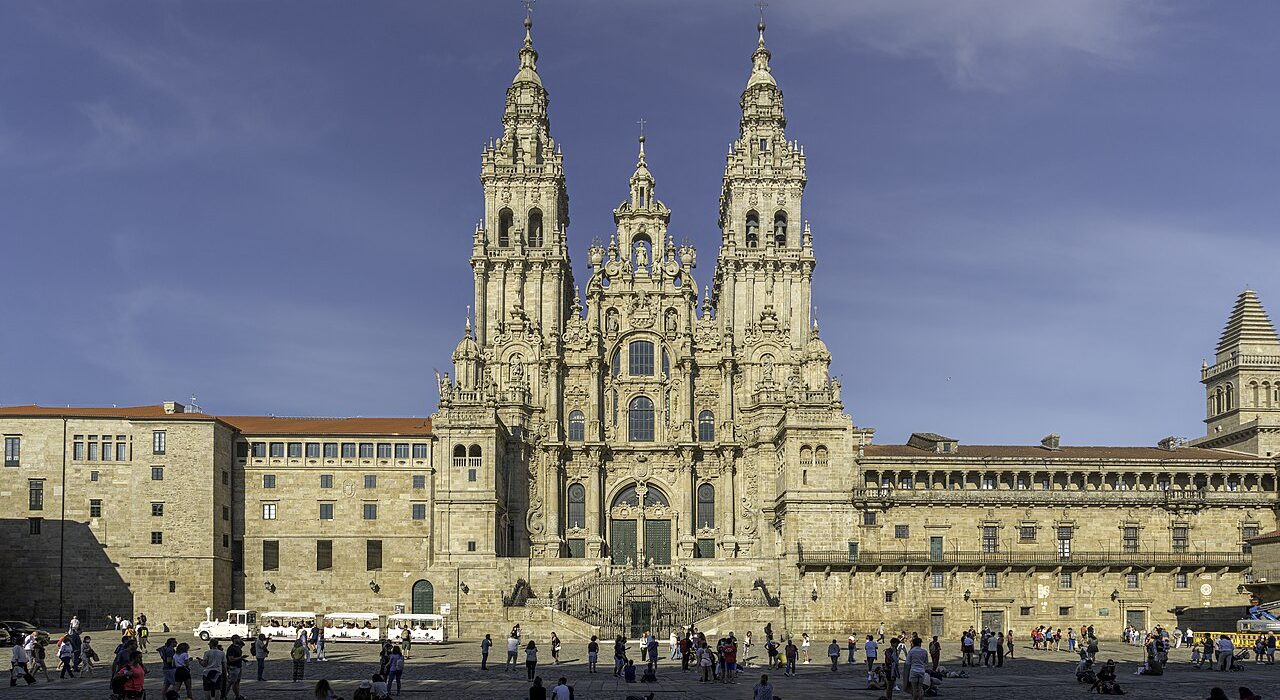
Santiago de Compostela
GaliciaClimate
Daily budget
Contrast the solemnity of a city that has welcomed pilgrims for centuries with the vibrant university life pulsating through its cobblestone streets. Here, history is not merely a memory etched into granite walls, but the daily backdrop for 96,000 residents living among UNESCO World Heritage monuments and modern government institutions. Santiago de Compostela welcomes you not just as a tourist destination, but as the living capital of Galicia, where the scent of incense mingles with the bustle of terraces in the Old Town (Casco Antiguo).
The must-seesWhat to see in Santiago de Compostela: the essentials
The old town of Santiago has been a UNESCO World Heritage Site since 1985, and its heart beats around monuments that have defined the history of Christianity. Below, I detail what you cannot miss, based strictly on what the city offers.
Santiago de Compostela Cathedral
This temple is the final destination of the Camino de Santiago and a fundamental place of pilgrimage, standing out for an impressive mix of Romanesque, Gothic, and Baroque styles recognized by UNESCO since 1985. Inside, be sure to look for the Pórtico de la Gloria (Portico of Glory) and the crypt, elements that narrate the story of the apostle. Visiting hours are from 09:00 to 20:00, giving you all day to admire its façade and interior without rushing.
Pórtico de la Gloria (Portico of Glory)
This masterpiece by Master Mateo was completed in 1188 and is considered one of the greatest works of European Romanesque art. Located in the western narthex of the Cathedral, it once welcomed pilgrims and interprets passages from the Apocalypse, complemented by a crypt and tribune that you must see. Access requires advance booking for a guided tour or entry to the Museum, with a variable fee subject to conservation needs, so plan your visit ahead of time.
Capela de Ánimas (Chapel of Souls)
This is an 18th-century Neoclassical chapel dedicated to the Souls in Purgatory, built between 1784 and 1788 by Juan López Freire. Located on Rúa Casas Reais, one of the streets in the historic center, it is maintained by the General Brotherhood of Souls founded in 1655. Keep in mind that visiting hours are limited, generally in the mornings, so it is best to arrive early.
Casa da Parra
This is a late 17th-century Baroque palace designed by Domingo de Andrade, featuring a façade adorned with sculpted grape clusters and a monumental chimney that exemplifies civil architecture in Compostela. Situated in Praza da Quintana de Vivos within the historic quarter near the Cathedral, it offers free exterior viewing. Interior access is limited, but the façade alone justifies the stop.
Palacio de Raxó
Although the municipal tourist guide includes it in the route, it is important to know that this historic building is located in the municipality of Poio, province of Pontevedra, near the Ría de Pontevedra, and not in Santiago de Compostela. It stands out for its traditional Galician architecture linked to local nobility, gardens, and natural surroundings, but it does not house the Presidency of the Xunta. Access is subject to private availability or specific cultural events, with no regular guided tours.
Other points of interest
- Hostal dos Reis Católicos: A 16th-century building commissioned by the Catholic Monarchs in 1499 as a pilgrims’ hospital, now a national parador and considered one of the oldest operating lodging houses in the world.
- Arco de Mazarelos (Mazarelos Arch): The only remaining gate of Santiago’s ancient medieval wall, dating from the 13th century and visible from the outside free of charge.
- Puerta Santa (Holy Door): A ceremonial door located at the rear of the Cathedral that opens only during Holy Jacobean Years to allow pilgrims to obtain the jubilee indulgence.
- Rúa Nova: One of the most emblematic medieval streets in the historic center, featuring arcades and historical buildings from the 15th–18th centuries that connect Plaza del Obradoiro with other areas.
- Plaza del Obradoiro: The central monumental square of Santiago, surrounded by the Cathedral, the Hostal dos Reis Católicos, and the Pazo de Raxoi.
- Plaza de la Quintana: A historic square divided into Quintana de Vivos and Quintana de Muertos, situated adjacent to the eastern façade of the Cathedral and a traditional venue for cultural events.
- Plaza de O Toural: A historic square that once served as a livestock market and water supply point, featuring stately homes from the 18th century including the Pazo de Bendaña.
- Monte do Gozo: An iconic spot for pilgrims offering the first views of the Cathedral and panoramic vistas of the city.
- Museo do Pobo Galego: Housed in the convent of Santo Domingo de Bonaval, this museum explores the culture, history, and traditions of Galicia.
- Mercado de Abastos: A vibrant traditional market where you can find fresh local produce and seafood while experiencing Galician gastronomy.
- Parque de la Alameda: A beautiful urban park offering the best panoramic views of the Cathedral and a popular place to relax.
🍂 Otoño
En otoño las lluvias aumentan y el ambiente se vuelve místico, siendo la temporada perfecta para disfrutar de la gastronomía local. Viste capas impermeables y calzado cómodo para resistir los días húmedos mientras exploras las tabernas.
What to do in Santiago de Compostela
Santiago de Compostela offers specific activities ranging from immersion in local festivals to exploring neighborhoods with lively nightlife. You can dive into the Fiestas del Apóstol Santiago in July, which last approximately two weeks in honor of the patron saint, or enjoy the Fiestas de la Ascensión in May, the second most important celebration, featuring concerts and cultural events. If you visit in February or March, the traditional Galician Entroido (Carnival) will surprise you with parades and the “Xenerais da Ulla.” For daily leisure, the San Pedro Quarter is ideal for tourists and nightlife thanks to its bohemian atmosphere, while the New Town (O Ensanche), filled with shops and restaurants, offers a lively social scene both day and night.
Santiago de Compostela in one day: express itinerary
If you are short on time, this route allows you to see the essentials without getting lost, taking advantage of the compact layout of the Old Town.
- 09:00 – Plaza del Obradoiro: Start at the central monumental square to admire the Cathedral’s façade and the Hostal dos Reis Católicos at dawn.
- 10:00 – Santiago de Compostela Cathedral: Visit the interior (09:00–20:00) to see the mix of architectural styles and, if you have booked, the Pórtico de la Gloria.
- 12:30 – Rúa Nova and Plaza de la Quintana: Stroll along this emblematic medieval street and reach the historic square adjacent to the eastern façade of the Cathedral.
- 13:30 – Casa da Parra: Stop at Praza da Quintana de Vivos to observe the Baroque façade adorned with sculpted grape clusters.
- 15:00 – Mercado de Abastos: End your day at this vibrant market to buy fresh products or enjoy a typical meal before heading to Parque de la Alameda for panoramic views.
Where to eat in Santiago de Compostela: local gastronomy
Where to sleep in Santiago de Compostela
Casco Antiguo (Zona Vella)
El corazón histórico de la ciudad, donde se encuentra la Catedral y un laberinto de calles empedradas llenas de encanto y monumentos.
Zona Nueva (O Ensanche)
El área comercial y moderna de Santiago, repleta de tiendas, restaurantes y con una animada vida social tanto de día como de noche.
Barrio de San Pedro
Un barrio tradicional y vibrante que constituye la última etapa del Camino Francés, conocido por su ambiente bohemio y sus bares.
Barrio de Conxo
Una zona residencial tranquila al sur del centro, perfecta para familias o viajeros que buscan alojamiento a un precio más asequible.
How to get to Santiago de Compostela
The city has a train station called Santiago de Compostela – Daniel Castelao, although it is important to note that, according to available data, it does not have a direct AVE connection. Nearby cities such as A Coruña, Vigo, and Madrid serve as connection points or excursion bases, but the aforementioned station is used for direct train access.
| Medio | Estación / Punto | Nota |
|---|---|---|
| Tren | Santiago de Compostela – Daniel Castelao | Sin AVE |
| Excursión | A Coruña, Vigo, Madrid | Ciudades cercanas listadas para conexión |
How to get around Santiago de Compostela
To get around the city, the available urban transport is the city bus. Since the Old Town is largely pedestrianized (such as Rúa Nova), many attractions can be visited on foot, but the bus will connect you to more distant areas like Monte do Gozo or the Conxo neighborhood.
Weather in Santiago de Compostela
Best time to visit Santiago de Compostela
Day trips from Santiago de Compostela
If you have extra time, the nearby cities listed are excellent destinations. A Coruña lets you see the Tower of Hercules (Torre de Hércules) and its seaside promenade; Vigo offers access to the estuary and nature; and Madrid, although farther away, is listed as a nearby city for connections. These excursions complement the Compostelan experience with other Galician or national settings.
Facts about Santiago de Compostela you didn’t know
Did you know that the Botafumeiro in the Cathedral is one of the largest censers in the world? It weighs 53 kg and measures 1.50 meters, requiring eight men, the ‘tiraboleiros’, to reach speeds of up to 68 km/h.
Although the official destination is Santiago, traditionally many pilgrims continue their journey to Cape Finisterre, considered in antiquity as the ‘end of the known world’, where they burn their clothes as a symbol of purification.
The most popular etymology of ‘Compostela’ is ‘Campus Stellae’ (Field of the Star), based on the legend of the hermit Pelayo guided by a star to the Apostle’s tomb in the 9th century.
The movie ‘The Way’ (2010), starring Martin Sheen, was filmed entirely on real locations along the Camino and triggered a massive increase in pilgrims, especially from the United States.
Surprising fact about the region: In Galicia lies the only river in continental Europe that flows into the sea through a waterfall, the Xallas River at the Ézaro waterfall.
Who is Santiago de Compostela for?
This city is perfect for history and culture lovers, given its UNESCO World Heritage status and its 903,195 annual visitors (INE). It is also ideal for foodies wanting to try Galician cuisine in markets and Michelin-starred restaurants, as well as for pilgrims or spiritual travelers. Budget-conscious travelers will find options in hostels and the Conxo neighborhood, while those seeking luxury have 5* hotels and starred restaurants.
💡 ¿Sabías que...?
- ● La Torre de Hércules, en A Coruña, es el único faro de origen romano que ha estado en funcionamiento ininterrumpido desde su construcción en el siglo I d.C. hasta la actualidad. Fue declarado Patrimonio de la Humanidad por la UNESCO en 2009. (UNESCO)
- ● El Paseo Marítimo de A Coruña es el más largo de Europa, con una longitud de más de 13 kilómetros que bordean la ciudad. A lo largo de su recorrido, se pueden encontrar farolas de diseño modernista y vistas panorámicas del Atlántico. (Turismo de A Coruña)
- ● La etimología más popular de 'Compostela' es 'Campus Stellae' (Campo de la Estrella), en latín. La leyenda cuenta que el ermitaño Pelayo fue guiado por una estrella en el cielo nocturno hasta el lugar exacto donde se encontró la tumba del Apóstol Santiago en el siglo IX. (Diversas fuentes históricas)
- ● El Botafumeiro de la Catedral de Santiago es uno de los incensarios más grandes del mundo, con un peso de 53 kg y una altura de 1,50 metros. Se necesitan ocho hombres, conocidos como 'tiraboleiros', para ponerlo en movimiento, alcanzando velocidades de hasta 68 km/h. (Catedral de Santiago)
- ● Aunque la meta oficial es Santiago, tradicionalmente muchos peregrinos continúan su viaje hasta el cabo Finisterre (Finis Terrae), considerado en la antigüedad como el 'fin del mundo conocido'. Allí, queman sus ropas o botas como símbolo de purificación y renacimiento. (Tradición del Camino de Santiago)
- ● Amancio Ortega, fundador del imperio Inditex (Zara) y una de las personas más ricas del mundo, abrió su primera tienda Zara en 1975 en una céntrica calle de A Coruña. La sede mundial de la compañía permanece en el cercano municipio de Arteixo, convirtiendo a Galicia en un centro global de la moda rápida. (Forbes, Inditex)
- ● La película 'The Way' (2010), dirigida por Emilio Estévez y protagonizada por su padre Martin Sheen, fue rodada íntegramente en localizaciones reales del Camino de Santiago. Su éxito internacional provocó un aumento masivo en el número de peregrinos, especialmente procedentes de Estados Unidos. (IMDb)
- ● En Galicia se encuentra el único río de Europa continental que desemboca en el mar a través de una cascada. El río Xallas se precipita directamente al Océano Atlántico desde una altura de 40 metros en la cascada de Ézaro, en la Costa da Morte. (Turismo de Galicia)
Frequently asked questions about Santiago de Compostela
How many days do I need to see Santiago de Compostela?
With an average stay of 1.67 nights according to the INE, you can see the essentials in 1 or 2 days, visiting the Cathedral, the Old Town, and the Abastos Market.
Is Santiago de Compostela expensive?
It depends on your choice: a hostel costs €18-45/night, a 3* hotel between €50-90, and an average meal ranges from €12-25, making it accessible for various budgets.
When is the best time to visit Santiago de Compostela?
The best time is from June to September, with average summer temperatures of 19.1°C, avoiding the high annual precipitation of 1,526.6 mm typical of other seasons.
How do I get to Santiago de Compostela from Madrid?
You can arrive by train at the Santiago de Compostela – Daniel Castelao station (no direct AVE according to data) or use Madrid as a connection point listed among the nearby cities.
🗺️ Rutas desde Santiago de Compostela
- How to Get from Santiago de Compostela to Madrid: Distance, Train, Bus & Car
- How to Get from Madrid to Santiago de Compostela: Distance, Train, Bus & Car
- How to Get from Vigo to Santiago de Compostela: Distance, Train, Bus & Car
- How to Get from Santiago de Compostela to Vigo: Distance, Train, Bus & Car
- How to Get from Santiago de Compostela to A Coruña: Distance, Train, Bus & Car
- How to Get from A Coruña to Santiago de Compostela: Distance, Train, Bus & Car