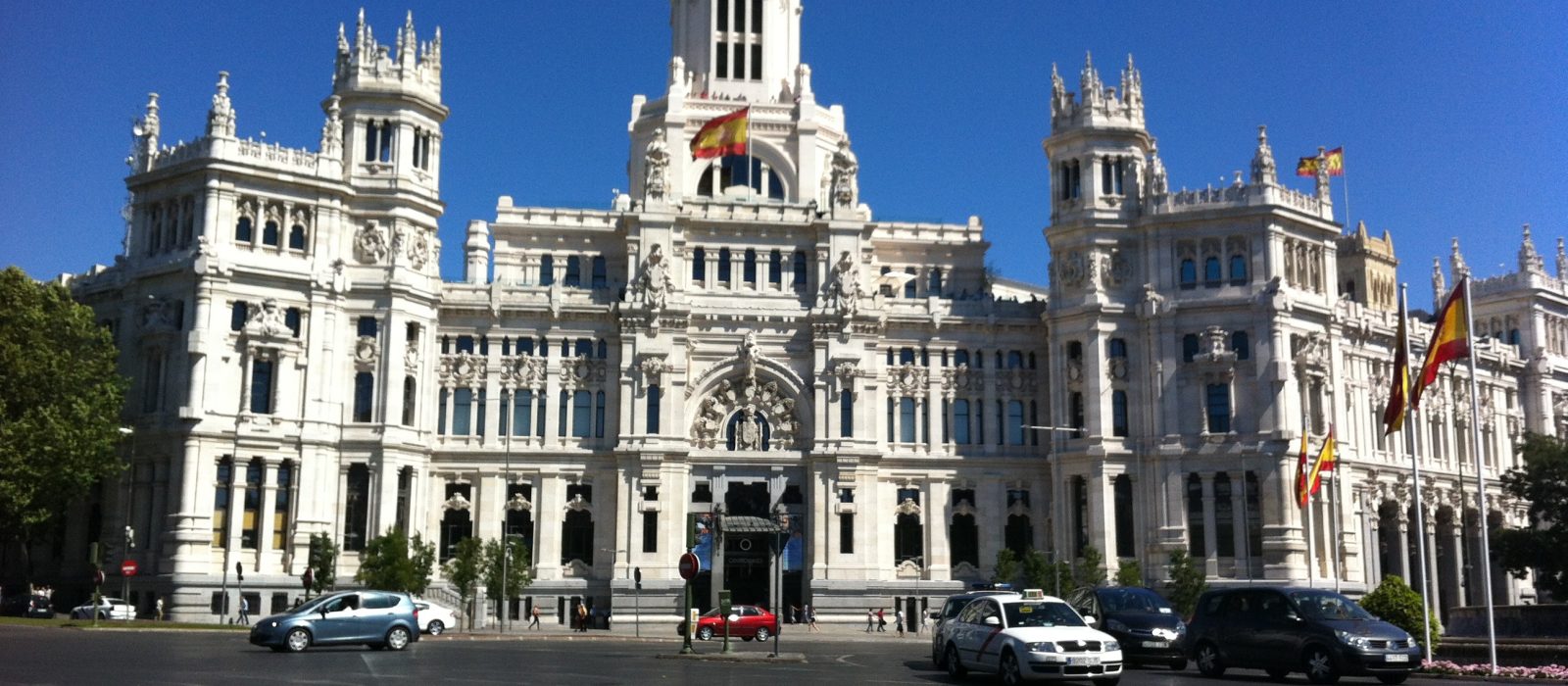
Santiago de Compostela → Madrid
615 kmLeaving behind the fine Galician rain to venture into the Castilian meseta (central plateau) is one of the most dramatic and fascinating landscape shifts you can experience on the Iberian Peninsula. This journey is not just a 615-kilometer transfer; it’s a trip that takes you from the spirituality of the Camino to the vibrant bustle of the capital, whether you’re gliding through the clouds at 300 km/h on the AVE high-speed train or uncovering hidden history along the back roads.
How to Get from Santiago de Compostela to Madrid: Quick Overview
The fastest and most comfortable way to travel from Santiago de Compostela to Madrid is undoubtedly the AVE train, which covers the distance in just 3 hours, although driving offers total freedom to explore stops along the way and the bus is the most economical alternative for tight budgets. If you prioritize time and comfort, the train is unbeatable with its 7 daily services; if you’re looking for flexibility to go sightseeing en route, a car is your best bet; and if price is your only concern, the bus connects the two cities for a minimal cost.
Driving from Santiago de Compostela to Madrid
The total road distance between Santiago de Compostela and Madrid is 615 km, with an estimated driving time of 6 hours and 15 minutes without stops. To make this journey, the verified, toll-free motorway network you’ll use is mainly composed of the A-52 and the A-6, which act as the backbone of the northwest connection, although the list of available and verified roads for this route or its nearby alternatives includes an extensive free network.
When leaving Santiago, you’ll take the A-54 (Autovía Lugo-Santiago de Compostela) to pick up initial speed. The main route is sustained by the A-52 (Autovía de las Rías Baixas), which will allow you to advance quickly inland. Subsequently, the connection is made via the A-6 (Autovía del Noroeste), the historic and direct route that crosses the provinces of Lugo, Ourense, Zamora, and León until reaching the capital.
It’s important to highlight that all the main roads listed for this connection are toll-free motorways, making the car journey very cost-effective in terms of tolls. In addition to the main routes mentioned, the verified infrastructure for travel in this area includes the A-66 (Autovía Ruta de la Plata), the A-50 (Autovía Ávila-Salamanca), and the A-62 (Autovía de Castilla), which can serve as alternatives or connecting routes depending on your exact point of departure or tourist detours. Other radial and connecting motorways that form part of the verified toll-free network are the A-5 (Autovía del Suroeste), the A-11 (Autovía del Duero), the A-2 (Autovía del Nordeste), the A-3 (Autovía del Este), and the A-4 (Autovía del Sur). The available infrastructure data also includes the N-623 (Burgos to Santander), the N-122 (Zaragoza to Portugal via Zamora), the A-1 (Autovía del Norte), and the A-73. As all these are toll-free roads, the only variable cost will be the fuel to cover those 615 km.
By train from Santiago de Compostela to Madrid
There is a direct train between Santiago de Compostela and Madrid operated by Renfe, the fastest option with a journey time ranging from 180 to 205 minutes. The frequency of this service is very high, with a total of 7 daily trains covering the demand, allowing great time flexibility for the traveler. The first train leaves at 5:47 in the morning, ideal for those who want to make the most of the day in the capital, while the last train leaves at 20:05, perfect for those who prefer a relaxed departure after work or breakfast.
As for the types of service available, you can choose between the classic AVE, with 4 trains per day completing the journey in exactly 180 minutes, or the AVLO, Renfe’s low-cost train, with 3 daily frequencies and a slightly longer duration of 182 minutes. The origin station is Santiago de Compostela, conveniently located near the city center, and the destination station is Madrid-Chamartín-Clara Campoamor, an excellent transport hub that quickly connects you with the metro and the rest of the city.
By bus from Santiago de Compostela to Madrid
There is a direct bus service between both cities, offered by companies such as ALSA and Interurbana De Autocares, with a journey duration of 510 minutes. This option is significantly slower than the train or car, as it exceeds 8 hours of travel, but it stands as a viable alternative for those who do not drive and are looking to save on the ticket. The price of bus tickets varies considerably depending on how far in advance you book and demand, ranging between 28€ and 61€.
Although the travel time is long, the bus allows you to work or rest during the journey without the stress of driving. The verified companies, ALSA and Interurbana De Autocares, usually offer services with basic amenities to make the more than 8 hours on the road more bearable. It is the recommended option if your absolute priority is saving money and you don’t mind investing more time in the journey.
Recommended stops along the way
The recommended and verified stops to make on this route include historical and scenic destinations in the region, specifically Viseu, Braga, Vila Real, Bragança, Lamego, Mangualde, and Tondela. Although the direct route is fast, stopping at these points greatly enriches the travel experience, allowing you to discover the local culture and architecture before reaching your final destination.
- Viseu: A city with a charming historic center and an imposing cathedral that deserves a pause to walk and enjoy the tranquility.
- Braga: Known as the city of archbishops, it offers top-tier religious and cultural heritage, ideal for an in-depth cultural visit.
- Vila Real: Located in a vineyard area, it is perfect for wine lovers and the natural landscapes of northern Portugal.
- Bragança: A border city with an impressive historic castle dominating the landscape, offering a strategic and monumental stop.
- Lamego: Famous for its baroque staircase and wine production, it is a visually striking place to stretch your legs.
- Mangualde: An interesting midpoint that combines ancient history with contemporary local life.
- Tondela: Offers a relaxed atmosphere and is a good place to rest before continuing the final leg of the journey.
Where to sleep in Madrid
Madrid boasts a vast accommodation offer to suit all budgets, with the areas near Chamartín station or the Historic Centre being the most recommendable depending on your means of transport. If you arrive on the AVE train at Chamartín, sleeping in the vicinity of this station (Tetuán or Chamartín neighbourhoods) will save you transfer time with your luggage and connect you quickly via metro to Gran Vía or Sol. On the other hand, if sightseeing is your priority, the Centre (Sol, Ópera, Malasaña) is the most vibrant area, although prices tend to be higher.
Regarding accommodation types, you will find everything from budget hostales (guesthouses) ideal for backpackers to luxury 5-star hotels. Price ranges vary dramatically: a hostal can cost from €25 a night, while a mid-to-upper-range central hotel can range between €100 and €200 or more. There are no specific verified hotel names in the data, but the city offers options for every traveller profile across all districts.
Frequently asked questions about the Santiago de Compostela-Madrid route
How long does it take from Santiago de Compostela to Madrid?
The time depends on the chosen means of transport: by car it takes 6 hours and 15 minutes, by AVE train between 180 and 205 minutes (approx. 3 hours), and by bus the journey lasts 510 minutes (8 hours and 30 minutes).
Which is cheaper, the train or the bus?
Generally, the bus is cheaper, with prices ranging between €28 and €61, while the AVE train, although faster, usually has higher fares except for specific promotions, given that the bus is the budget option par excellence.
Is it worth renting a car?
Yes, it is worth it if you plan to go sightseeing at the recommended stops such as Viseu, Braga or Bragança, as the car gives you total freedom to explore these areas that the train does not cover directly, besides avoiding internal transfers in Madrid.
When is the best time to travel?
Thanks to the high frequency of 7 daily trains (from 5:47 to 20:05), you can travel at any time of the day; however, travelling on weekdays usually means less congestion on the roads and better price availability on buses.
📍 También te puede interesar
Qué ver en Santiago de Compostela →
Qué ver en Madrid →