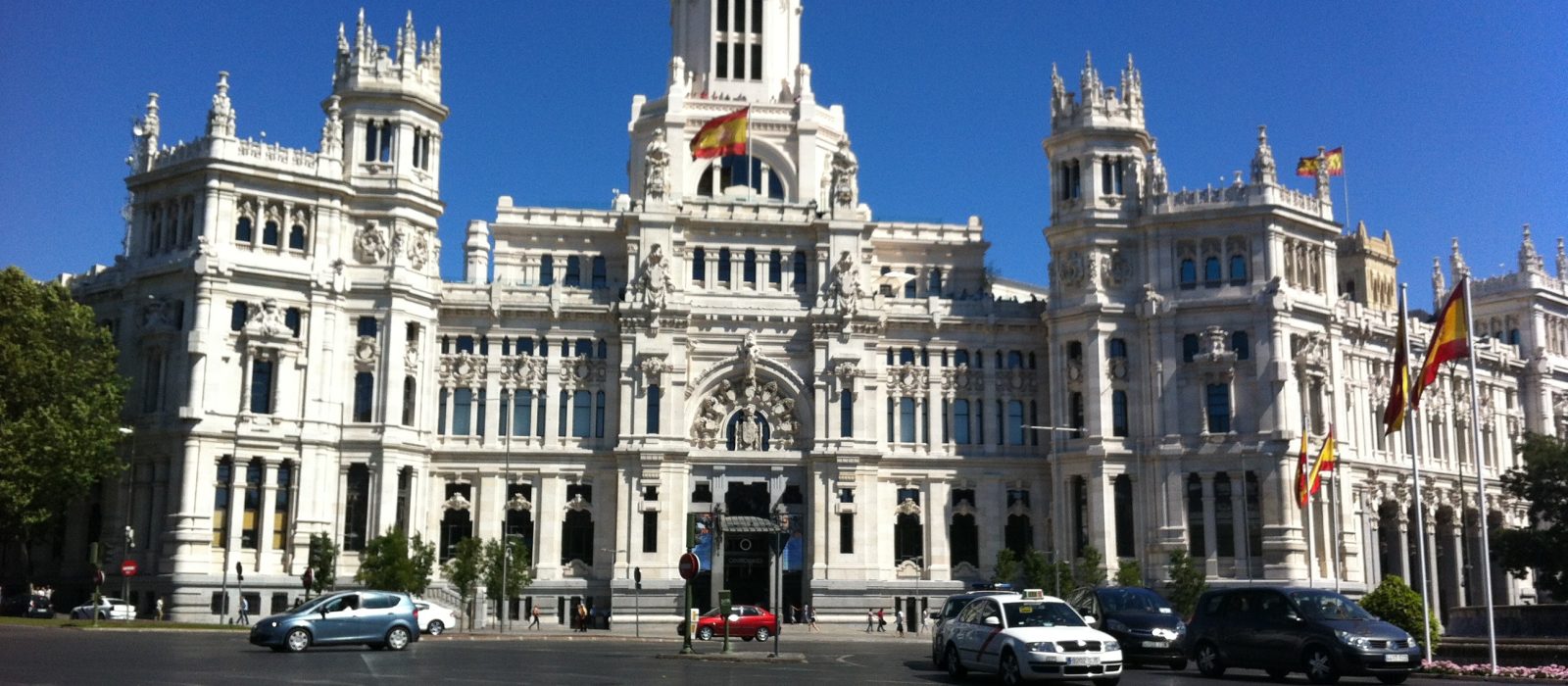
Salamanca → Madrid
212 kmLeaving behind the golden stone of Salamanca to venture into the heart of the Castilian plateau is an experience that combines the tranquility of the rural landscape with the imminent energy of the capital. This journey is not just a 212-kilometer transfer; it is a bridge between two worlds, where the speed of the high-speed train competes with the freedom of driving on toll-free highways, offering the traveler the chance to stop at historic landmarks such as Segovia or the majestic Monasterio de El Escorial (El Escorial Monastery) before reaching their final destination.
How to get from Salamanca to Madrid: quick overview
The best way to travel from Salamanca to Madrid depends entirely on whether you prioritize speed, budget, or flexibility for sightseeing along the way. If you are looking for maximum speed and comfort, Renfe’s ALVIA train is the undisputed option, covering the distance in just 97 minutes. On the other hand, if your goal is to save money without sacrificing too many comforts, the Monbus bus offers very competitive fares between 14 and 16 euros. Finally, if you prefer to have full control of your schedule and plan to visit several mountain villages, driving your own car is the most versatile alternative, taking advantage of a completely free highway network.
By car from Salamanca to Madrid
Driving from Salamanca to Madrid is a simple and economical route covering 212 kilometers in approximately 2 hours and 15 minutes via toll-free highways. The main route begins by taking the A-66 (Autovía Ruta de la Plata), a wide and well-maintained road that takes you out of Salamanca heading south. Shortly after, the natural connection is made via the A-50 (Autovía Ávila-Salamanca), which crosses open landscapes characteristic of the province of Ávila. Once past this section, the road connects with the A-6 (Autovía del Noroeste), the main artery that leads directly into the capital. It is important to note that the entire journey is on toll-free roads, eliminating additional costs beyond fuel. Other highways such as the A-62 (Autovía de Castilla) or the A-5 (Autovía del Suroeste) form part of the surrounding network, but the A-66/A-50/A-6 combination is the most direct and fluid standard route for this specific trip.
By train from Salamanca to Madrid
The train is the fastest option for traveling from Salamanca to Madrid, with services operated exclusively by Renfe connecting Salamanca station with Madrid-Chamartín-Clara Campoamor. There are two main types of service depending on the traveler’s urgency: the ALVIA train, which is the fastest with only 5 daily frequencies and a travel time of 97 minutes, and the MD (Media Distancia) train, which offers 8 frequencies per day with a duration of 158 minutes. In total, there are 13 daily trains available, with a schedule that starts early at 5:47 in the morning and ends with the last train at 20:01. This high frequency allows business travelers or tourists to plan their day with precision, arriving in the financial and transport hub of Madrid in under two hours.
By bus from Salamanca to Madrid
The bus is the most economical alternative for traveling from Salamanca to Madrid, offering a direct service operated by the company Monbus with a total duration of 145 minutes. This option is ideal for travelers on a tight budget, as prices remain in a very accessible range of between 14 and 16 euros. Although the travel time is longer than the ALVIA train, the price difference can be significant for students or backpackers. The service is direct, meaning no transfers are necessary, and the buses usually have basic amenities to make the two-and-a-half-hour journey as pleasant as possible before arriving at the Madrid bus station.
Recommended stops along the way
If you are travelling by car, the route is dotted with charming towns that deserve a pause to stretch your legs or visit historic monuments before reaching the capital. Below, we detail the verified points of interest along the route:
- Segovia: This is, without a doubt, the star stop of the journey. Strategically located on the route, Segovia offers world-class monumental heritage. It is the perfect place to stop for several hours and admire its famous Roman Aqueduct (Acueducto Romano), one of the best preserved in the world, and stroll through its old town, a UNESCO World Heritage Site.
- San Lorenzo de El Escorial: Just before entering the Madrid metropolitan area, this town is home to the impressive Royal Site of San Lorenzo de El Escorial (Real Sitio de San Lorenzo de El Escorial). It is a must-see for lovers of history and architecture, allowing you to visit the monastery, palace, and gardens in a privileged mountain setting.
- Alpedrete: Located on the southern slope of the Sierra de Guadarrama, Alpedrete is an ideal municipality for a quick technical stop or to enjoy a cooler natural environment. It is known for its proximity to leisure areas and its tranquil atmosphere, far from the hustle and bustle of the big city.
- El Escorial: Often confused with its neighbour San Lorenzo, the municipality of El Escorial complements the visit to the monastery. It offers a different perspective of the area, with traditional squares and a gastronomic offering that invites you to stop for lunch before tackling the last few kilometres to Madrid.
- Villanueva del Pardillo: This town is already on the outskirts of Madrid. It is a useful stop if you are looking to avoid city centre traffic immediately or if you need to refuel and prepare for the final entry into the capital. It is a town that has seen recent growth but still maintains pleasant green areas.
- Torrelodones: Known for being an upscale residential area and for its famous “Piedra del Indio” (Indian’s Rock), Torrelodones is a landmark at the northwestern entrance to Madrid. It is excellent for a coffee stop at one of its many roadside establishments.
- Colmenar Viejo: Located in the northern area, Colmenar Viejo is famous for its cheese and its historical heritage, including the Plaza del Pueblo. It is a slight detour north of the main route (via the A-1/A-6), but highly recommended if you are seeking authentic Castilian charm.
- Moralzarzal: A natural enclave in the Sierra de Guadarrama, Moralzarzal is perfect for travellers seeking nature. It is an ideal stop to breathe fresh air and see the mountains up close before descending towards the Madrid plain.
Where to sleep in Madrid
Madrid offers an immense variety of accommodation, and the choice of area depends on what you are looking for during your visit. For tourists who want to be in the heart of the action, the Sol and Gran Vía areas are the most recommended; here you will find hotels of all categories, from luxury options to budget hostels, with the downside that there may be more nighttime noise. If you prefer a more bohemian atmosphere full of nightlife, the Malasaña neighbourhood is the perfect choice, with numerous tourist apartments and boutique hotels. For business travellers or those seeking tranquillity and good transport connections, the Chamartín area (near the train station) or Salamanca (a luxury shopping district) offer higher price ranges but with greater comfort and security. Prices in Madrid fluctuate enormously depending on the season, but generally, the historic centre tends to be more expensive than the peripheral areas well connected by metro.
FAQs about the Salamanca–Madrid route
How long does it take to get from Salamanca to Madrid?
Travel time varies depending on the means of transport you choose. By car, the journey takes about 2 hours and 15 minutes covering 212 km. By train, the fastest option (ALVIA) takes only 97 minutes, while the bus takes around 145 minutes.
Which is cheaper, the train or the bus?
The bus is significantly cheaper than the train. According to data from the company Monbus, a bus ticket costs between 14 and 16 euros. In contrast, although no exact train price is given, the high-speed ALVIA service and Renfe MD trains usually have fares above this range, especially if not booked well in advance.
Is it worth renting a car?
Yes, renting a car is worth it if you plan to go sightseeing along the way. Since the roads (A-66, A-50, A-6) are all toll-free and there are highly recommended stops such as Segovia and El Escorial (the Royal Monastery of San Lorenzo de El Escorial), a car gives you the freedom to visit these places, which you couldn’t see by going directly by train or bus.
When is the best time to travel?
The best time to travel depends on your means of transport. If you’re going by train, the first service departs at 5:47, ideal for making the most of the day in Madrid, and the last one at 20:01. If you’re driving, it’s advisable to avoid the peak hours for entering Madrid (generally from 8:00 to 9:30 and from 19:00 to 20:30) so that the estimated 2h 15min journey isn’t extended by traffic.
📍 También te puede interesar
Qué ver en Salamanca →
Qué ver en Madrid →