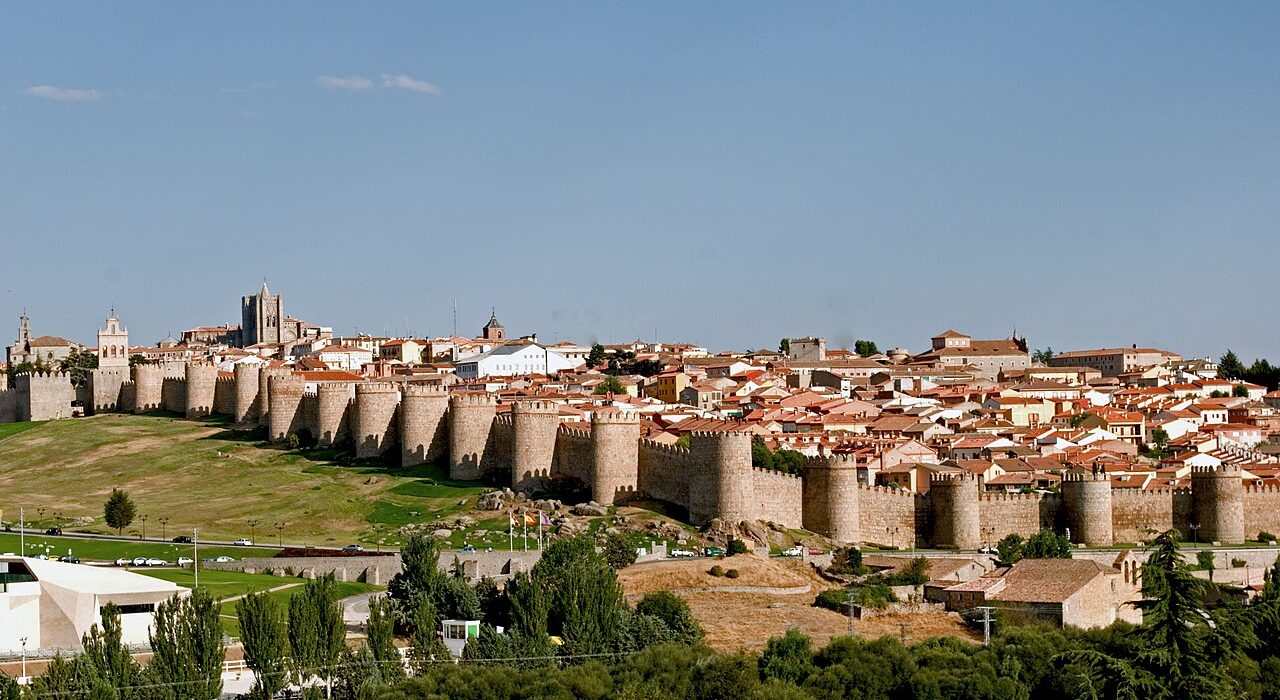
Salamanca → Ávila
104 kmCrossing the plains of Castile from the golden city of Salamanca to the granite fortress of Ávila is a journey that condenses the essence of Spain into just over a hundred kilometres. It is not simply a trip from point A to point B, but a shift in landscape where the River Tormes gives way to the Sierra de Gredos and Renaissance architecture turns into defensive medieval structures, all on a route so quick you barely have time to finish a coffee before the imposing walls of Ávila come into view.
How to get from Salamanca to Ávila: quick overview
The fastest way to travel between these two cities is by train, with journeys of just 65 minutes, although renting a car offers the greatest flexibility for exploring the surrounding countryside at your own pace. If you are looking for the most economical and direct option without worrying about driving, the bus is a solid alternative that connects both urban centres on a regular basis. For the traveller who values total freedom and wants to stop in charming towns such as Peñaranda de Bracamonte, the car is the top recommendation, while the business traveller or the tourist short on time will find Renfe’s MD train their best ally.
By car from Salamanca to Ávila
Driving from Salamanca to Ávila is the most flexible option, covering a distance of 104 km in approximately 1 hour and 5 minutes along a network of modern, toll-free motorways. The main route takes advantage of the direct connection offered by the A-50, known as the Autovía Ávila-Salamanca, which acts as the backbone of this journey. However, depending on your exact departure point in Salamanca or your final destination in Ávila, you may use sections of other major roads such as the A-66 (Autovía Ruta de la Plata), the A-6 (Autovía del Noroeste) or the A-62 (Autovía de Castilla). The highlight of this road trip is that all these motorways are toll-free, meaning the cost of the journey is strictly limited to fuel and vehicle wear and tear, with no last-minute surprises at toll barriers. The landscape along the way is typical of the Castilian plateau, with wide horizons and generally smooth driving that allows you to maintain a constant speed, ideal for those who enjoy the road as part of the travel experience.
By train from Salamanca to Ávila
The train is the fastest means of transport linking Salamanca and Ávila, with journeys ranging between 65 and 86 minutes depending on the specific service. The operator in charge of this connection is Renfe, which offers travellers a total of 8 daily trains, providing a considerable frequency that allows you to plan your day with ease. The services available are MD (Media Distancia) type, which offer a perfect balance between comfort and speed without being as costly as long-distance high-speed trains. The departure station is Salamanca, a historic building that already deserves a visit in its own right, and the destination station is Ávila, located within walking distance of the walled historic centre. The departure schedule is very broad, starting with the first train at 5:47 in the morning, ideal for early risers who want to make the most of the day, and ending with the last service at 20:01, allowing you to enjoy a leisurely dinner in Salamanca before returning. This option is especially recommended for solo travellers or couples who prefer to avoid the stress of traffic and roads.
By bus from Salamanca to Ávila
The bus is the most economical alternative for traveling between these two capitals, with prices ranging from 7.5 to 18 euros depending on how far in advance you book and demand. The company operating this direct service is Avanza, a firm with a strong presence in the region’s intercity transport network. The estimated bus journey time is 90 minutes, slightly longer than by train or car, but offset by the convenience of not having to drive and the chance to rest or work during the trip. As it is a direct service, no transfers are required, which greatly simplifies travel logistics, especially for tourists carrying luggage. Bus frequency tends to adapt to demand, although it is always advisable to check updated schedules on the company’s website, as they may vary seasonally. It is the preferred option for students and budget-conscious travelers who do not want to give up the comfort of a reserved seat and a safe journey.
Recommended stops along the way
If you decide to make the journey by car, there are two verified strategic stops that break up the monotony of the highway and enrich the travel experience with local history and culture. The first must-stop is Santa Marta de Tormes, located just on the outskirts of Salamanca; this town is the first urban center you encounter when leaving the capital of Salamanca province on the east side and serves as a perfect prelude before entering the province of Ávila, offering a tranquil glimpse of riverside life along the Tormes River. The second key stop is Peñaranda de Bracamonte, a historic enclave located halfway that functions as an important communications hub and boasts a remarkable architectural heritage, including a castle-palace that dominates the town. Stopping in Peñaranda not only allows you to stretch your legs, but also to discover the typical architecture of the area and enjoy the local gastronomy in one of its restaurants, turning the simple transfer into a small sightseeing excursion in its own right. Both stops are perfectly connected to the highway network mentioned above, making access easy without complicated detours.
Where to stay in Ávila
For an overnight stay in Ávila, the best option is to look for accommodation within the walled enclosure to experience the medieval atmosphere, or in the immediate vicinity of the walls to make it easier to reach the main monuments on foot. The most sought-after areas tend to be the historic center, where the supply is concentrated in charming hotels, converted former palaces, and traditional guesthouses that preserve the essence of the city. Price ranges can vary significantly depending on the season, being higher on weekends and long holiday weekends, but you can generally find everything from budget guesthouse-style options to mid-to-upper-range establishments. Sleeping within the walls allows you to enjoy the nighttime illumination of the enclosure and the tranquility of the cobbled streets once the day visitors have left. If you are looking for a more rural or peaceful experience, there are also options on the outskirts of the city, although this will mean relying on a car or public transport to get around the center. It is advisable to book in advance, especially if your visit coincides with cultural events or peak tourism seasons.
Frequently asked questions about the Salamanca-Ávila route
How long does it take to get from Salamanca to Ávila?
Travel time varies depending on the mode of transport you choose: by car it takes approximately 1 hour and 5 minutes covering 104 km; by train, the fastest journey takes 65 minutes, although it can extend up to 86 minutes depending on the MD service; and by bus, the estimated duration is 90 minutes.
Which is cheaper, the train or the bus?
Generally, the bus is the most economical known option, with fares ranging between 7.5 and 18 euros depending on the Avanza company. Although we do not have the exact train fare at this time, the bus is usually the low-cost benchmark for this route, while the train offers greater speed at a price that can vary according to demand and how far in advance you book.
Is it worth renting a car?
Yes, it is worth renting a car if you value the freedom to make verified stops along the route such as Santa Marta de Tormes and Peñaranda de Bracamonte, since public transport does not allow these detours. Additionally, as it is a route of only 104 km on toll-free highways (A-50, A-66), the fuel cost is low and the driving time is very short (1h 5min).
When is the best time to travel?
The best time to travel depends on your climate preferences, but as this is an inland route across the meseta (central plateau), spring and autumn usually offer more pleasant temperatures for driving the roads and visiting the recommended stops. Avoiding the temperature extremes of summer or winter can make the experience of driving or waiting at stations more comfortable.
📍 También te puede interesar
Qué ver en Salamanca →
Qué ver en Ávila →