Ávila
Castilla y LeónClimate
Daily budget
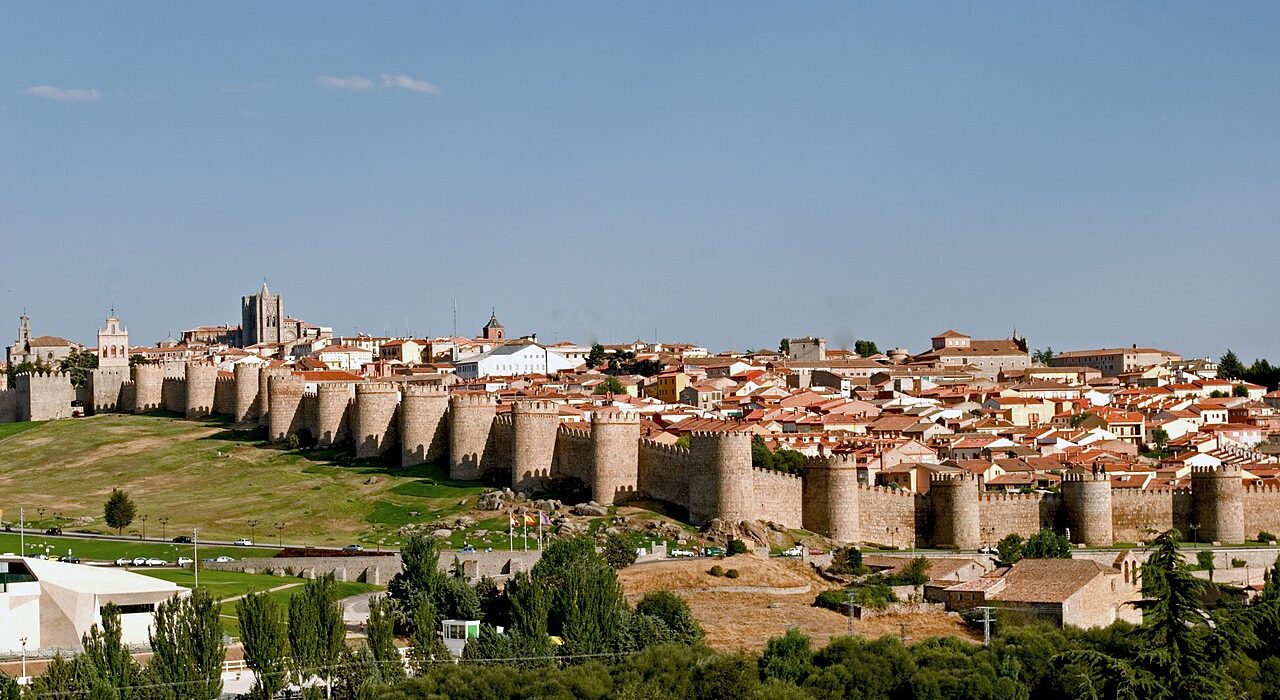
The crisp sound of your footsteps on the cobblestones echoes differently when you walk close to the gray stone of the city walls, which seem to embrace the town to shield it from the cold winds of the Sierra de Gredos. There is nothing quite like watching the morning mist dissipate over the Adaja River while the aroma of firewood and roasted coffee drifts from the terraces of Plaza del Mercado Chico (Little Market Square). Ávila is not just a city; it is a fortress of living stone where history breathes around every corner, and where its altitude of 1,131 meters reminds you that you are in Spain’s highest provincial capital—a unique place where winter paints the rooftops white and summer offers a cool, welcoming refuge.
The must-seesWhat to See in Ávila: The Essentials
Cathedral of the Savior of Ávila
This architectural gem is considered Spain’s first Gothic cathedral, and its design is so unique that its fortified apse, popularly known as the ‘cimorro,’ is embedded directly into the city’s defensive wall itself. Inside, do not miss the valuable cathedral museum, which houses works of sacred art of great historical and religious significance. Declared part of the UNESCO World Heritage Site in 1985, it opens its doors from 10:00 to 20:00 and requires an entrance ticket to access this essential monument.
Basilica of San Vicente
If there is one masterpiece of Romanesque architecture in Spain, it is undoubtedly this basilica, built on the exact spot where, according to tradition, Saints Vincent, Sabina, and Cristeta were martyred. The highlights of your visit should be its spectacular western portico and the cenotaph of the holy martyrs, a sculptural piece of breathtaking beauty. Like the cathedral, it is part of the 1985 UNESCO recognition, and visiting hours are from 10:00 to 19:30, with an entrance ticket required to go inside.
Provincial Museum of Ávila and the City Walls
What truly defines the city’s skyline is its impressive medieval wall, an urban walled enclosure that completely surrounds the old town and is considered one of the best preserved in the world. The most authentic experience is to walk along a long stretch of its ramparts, strolling atop the battlements for privileged views of the city and its surroundings. This site, declared a World Heritage Site, is open from 10:00 to 20:00 and requires an entrance ticket, offering a unique perspective on defensive architecture.
Church of San Pedro
This Romanesque temple, begun in the 12th century and completed in the 13th, presides authoritatively over the Plaza del Mercado Grande (Great Market Square), acting as a historical beacon in the city’s nerve center. Its architecture bears a strong resemblance to the Basilica of San Vicente, featuring a Latin cross floor plan and a larger central nave, as well as a bell tower that marks the urban profile. It holds great historical political importance, as monarchs swore in its atrium to respect the fueros (charters) of Castile; opening hours depend on religious services.
Church of Santiago de los Caballeros
Located outside the walls, this originally 12th-century Romanesque temple was renovated in subsequent centuries, presenting a single, spacious nave and a very characteristic polygonal main chapel. What makes this church unique is its octagonal tower—the only one of its kind in the city—and the abundance of scallop shells in its decoration, revealing its historical link to the Order of Santiago. It preserves decorative elements typical of early Romanesque style and is part of the World Heritage Monument complex.
🍂 Otoño
Si visitas Ávila en otoño, el paisaje se tiñe de colores cálidos y el aire se vuelve más crispado. Aprovecha para hacer rutas de senderismo tranquilas mientras evitas las multitudes principales. No olvides un paraguas pequeño, ya que aunque llueve poco, las tormentas pueden aparecer.
Other points of interest
Beyond the major monuments, the city is dotted with smaller gems that deserve a closer look during your stroll.
- Torreón de los Guzmanes (Guzmanes Tower): A 15th- and 16th-century palace blending Gothic and Renaissance styles, crowned with trefoil battlements and featuring a visitable Renaissance courtyard.
- Plaza del Mercado Chico: The arcaded heart of the historic quarter, home to the Town Hall and the venue for the city’s main festivals.
- Casco Histórico (Historic Quarter): Declared a UNESCO World Heritage Site in 1985, it encompasses the walled city at an altitude of 1,131 meters, with cobblestone streets.
- Puente Adaja (Adaja Bridge): A bridge of Roman origin over the Adaja River, with visible structures dating from the 12th century, built from granite ashlar masonry and defensive cutwaters.
- Los Cuatro Postes (The Four Posts): An emblematic monument located at the entrance to the city.
- Real Monasterio de Santo Tomás (Royal Monastery of Saint Thomas): Former summer residence of the Catholic Monarchs, housing the tomb of Prince Don Juan and three cloisters.
- Palacio de los Velada (Velada Palace): A 16th-century Renaissance palace that currently houses institutional offices.
- Puerta de Santa Teresa (Gate of Saint Teresa): Built over the saint’s birthplace, featuring a Baroque Carmelite church and a relic museum.
- Portada del antiguo Hospital de Santa Escolástica (Façade of the former Hospital of Saint Scholastica): An architectural remnant of historical interest.
- Tomás Luis de Victoria: A monument dedicated to the celebrated composer from Ávila.
- Túmulo Aldeagordillo 22: An archaeological site of interest.
- Santa Teresa-Jornet: A significant religious monument.
- Verraco: A characteristic zoomorphic stone sculpture of the Vetton culture.
What to do in Ávila
Ávila offers specific activities ranging from intensive cultural tourism to immersion in traditional festivals declared of Tourist Interest. You can delve into history during the Medieval Days or the Market of the Three Cultures in September, when the historic quarter transforms to commemorate Christian, Jewish, and Muslim coexistence. If you travel in October, the Festivities of Saint Teresa fill the streets with processions, concerts, and fireworks in honor of the patron saint, while during Holy Week you can experience solemn processions declared of International Tourist Interest against the incomparable backdrop of the city walls. For a more local experience, explore the Mercado Grande area and Paseo del Rastro, a vibrant zone alongside the walls ideal for experiencing local life among shops and bars.
Ávila in one day: express itinerary
If you are short on time, this plan allows you to see the essentials without rushing, taking advantage of the compact nature of the historic quarter.
- 10:00 – City Walls and Cathedral: Start your morning by walking along the ramparts of the walls to understand the city’s defenses, and visit the Cathedral of the Savior to see the apse and the museum.
- 13:00 – Plaza del Mercado Chico: Head down to the heart of the city to see the Town Hall and soak up the atmosphere in the arcaded square before lunch.
- 15:00 – Basilica of San Vicente: After lunch, head outside the walls to admire the pinnacle of Spanish Romanesque architecture and its western portico.
- 17:00 – Puerta de Santa Teresa: End your day by visiting the saint’s birthplace and the relic museum to connect with Ávila’s mystical heritage.
Where to Eat in Ávila: Local Gastronomy
Where to Sleep in Ávila
Casco Antiguo (Intramuros)
El corazón medieval amurallado de la ciudad, donde se encuentran la Catedral, palacios y la mayoría de atractivos turísticos.
Barrio de San Vicente
Zona monumental extramuros que alberga la Basílica de San Vicente, un punto clave del románico español.
Zona del Mercado Grande y Paseo del Rastro
Área vibrante junto a la muralla con abundantes tiendas, bares y restaurantes, ideal para experimentar la vida local.
How to Get to Ávila
The city is well connected by road and train, although it does not have a direct AVE station in the main urban core.
| Medio | Detalles | Compañías / Vías |
|---|---|---|
| Tren | Estación de Ávila (sin AVE), con destinos directos a Madrid. | Renfe |
| Autobús | Estación de autobuses de Ávila con conexiones regulares. | Jiménez Dorado, Avanzabus |
| Coche | Acceso mediante múltiples autovías y carreteras nacionales. | AP-51, AP-6, A-50, A-6, N-110, N-502, N-403, N-501, N-6, N-601 |
| Avión | Aeropuerto más cercano mencionado en datos. | Pelayos de la Presa |
Getting Around Ávila
Once in the city, walking is the most practical option, as the center is pedestrian-friendly and compact. For longer distances or if you have reduced mobility, the city offers an urban bus service connecting different points. Given the density of monuments in the historic center, it is best to leave your car outside the city walls.
Weather in Ávila
Best Time to Visit Ávila
Day Trips from Ávila
If you have extra time, Ávila’s location in Castile and León allows you to visit nearby cities of great historical importance. Segovia is an ideal destination for a day trip, as is Salamanca, both offering architectural heritage complementary to that of Ávila. These nearby cities allow you to complete a cultural route through inland Spain without needing to travel long distances.
Who Is Ávila For?
Ávila is a perfect destination for history and architecture lovers, given its UNESCO World Heritage status and its Romanesque and Gothic monuments. It is also ideal for families seeking a safe, pedestrian-friendly environment, and for foodies interested in high-quality meat and convent-style pastries. With an average stay of 1.49 nights and 308,848 annual visitors (INE), it is a place that combines tranquility with enough cultural offerings to satisfy both domestic and international tourists (20%).
Frequently Asked Questions about Ávila
How many days do I need to see Ávila?
With an average stay of 1.49 nights according to the INE, a weekend is enough to see the main attractions such as the City Walls (Muralla), the Cathedral, and the Basilica of San Vicente, although you might need more time to explore the museums and surroundings at a leisurely pace.
Is Ávila expensive?
It is an affordable destination; an average meal costs between €12-18, and you can find accommodation in hostels from €18-30 per night or 3-star hotels between €50-80, making it accessible for various budgets.
When is the best time to visit?
The best time is from June to September, when the average summer temperature is 20.1°C, avoiding the winter cold that can drop to 4.1°C and the frequent snowfalls.
How do I get to Ávila from Madrid?
You can reach it by train with a direct route from Madrid to Ávila station, or by bus through companies like Jiménez Dorado and Avanzabus from the bus station.
For more practical information on updated schedules, exact entrance fees, and the events calendar, consult the official tourism website of Ávila.