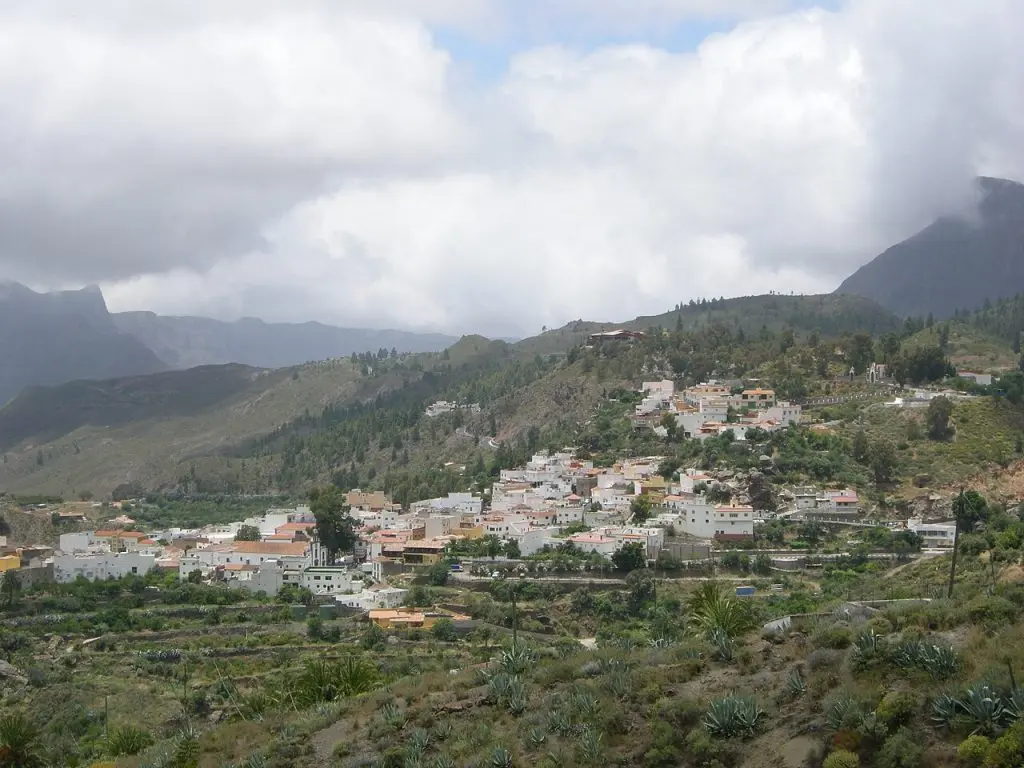
San Bartolomé de Tirajana
CanariasClimate
What to see in San Bartolomé de Tirajana: the essentials
The old town of Tunte, with its white houses topped by traditional roofs and its cobbled streets, is the beating heart of Gran Canaria’s mountainous interior at 27 degrees north latitude. This municipality of 55,000 inhabitants hides far more than beaches: it is a territory where aboriginal heritage, Canarian architecture and volcanic landscapes coexist with the most powerful tourism machinery in the Canary Islands. From the dunes of Maspalomas to the ravines of Pilancones, there is enough here for weeks of exploration.
Pilancones Natural Park
This protected natural area lies in the interior of the municipality and plays a key role in protecting soils and recharging Gran Canaria’s aquifer. Several ravines of great geomorphological interest run southwards through it, including the Barranco de Pilancones (Pilancones Ravine), which gives the park its name. Entry is free and unrestricted, though it is advisable to wear suitable footwear and respect the area’s protection rules, as threatened wildlife species are distributed throughout the territory.
Caldera de Tirajana
This vast volcanic depression stretches between the municipalities of Santa Lucía and San Bartolomé de Tirajana, with the villages of Santa Lucía in the foreground and San Bartolomé in the background. From its viewpoints, such as the Mirador de Las Tederas — the highest of the Santa Lucía viewpoints, very close to the nature classroom of the same name — you get sweeping panoramic views of the landscape of peaks and ravines. The place name comes from the tedera (Bituminaria bituminosa), a Mediterranean plant to which traditional Canarian medicine attributes healing properties. Access is free and unrestricted, with signposted trails for hiking routes.
Necrópolis de Arteara
This archaeological site is the largest aboriginal cemetery on the island of Gran Canaria, both in terms of its size and the number of burials. It covers 137,570 m² and contains 809 tumular structures with individual and collective burials, built with basal stones. The site has an interpretation centre and set opening hours: from October to March, Tuesday to Sunday from 10:00 to 17:00; from April to September, Tuesday to Sunday from 10:00 to 18:00. It is closed every Monday, on 1, 5 and 6 January, 1 May and 24, 25 and 31 December. Visits can be self-guided or guided, with an indicative entry fee of a few euros. For enquiries: 638 810 591 or necropolisdearteara@arqueocanaria.com.
Playa de San Agustín
This highly urbanised beach is sheltered by a promenade lined with vegetation and palm trees, offering swimming conditions with moderate waves. It has sun loungers, parasols, restaurants, lifeguard surveillance, signage, rescue services and adapted accessibility. It holds a Blue Flag and is one of the most established beaches in the municipality, with high visitor numbers in summer.
Museo Etnográfico Casa Los Yánez
The house, located on Calle Antonio Yánez, offers an insight into traditional Canarian domestic architecture with its characteristic courtyards and outbuildings. Opening hours are Monday to Friday from 07:00 to 13:00, and it is closed on Saturdays and Sundays; it is advisable to confirm before visiting. Entry is free or symbolic.
Iglesia de San Bartolomé (Tunte)
Parish church located in the Plaza de Tunte, the municipal capital, where the image of San Bartolomé, the town’s patron saint, is venerated and religious artworks are housed. It is the nerve centre of the August patron saint festivities and forms part of Tunte’s collection of cultural heritage sites. Entry is free during worship hours.
Birthplace of Pancho Guerra
The building retains its traditional Canarian façade and commemorative plaques honouring the renowned Canarian writer and journalist, known for his costumbrist works. It is a cultural point of interest that can be viewed from the outside, included in the heritage routes of Tunte’s old town.
Barranco de Rosiana and Risco Blanco Archaeological Site
An archaeological complex made up of artificial caves and rock shelters used by the ancient Canarians, declared a Site of Cultural Interest. It preserves rock art and dwelling and burial structures linked to the aboriginal Canarian population. Visits are self-guided, though visitors are asked to respect heritage protection regulations.
Mirador del Polvo
One of the municipality’s traditional viewpoints, in the interior of Gran Canaria, listed among the recommended places of interest alongside the Church of San Bartolomé, the Casa de los Yánez Ethnographic Museum and other sites in the historic centre. It is a regular stop for taking in the landscape and for photography.
Tunte (historic centre)
Tunte is the municipal capital, set in the mountainous interior of Gran Canaria, with whitewashed houses with traditional roofs and cobbled streets. Its historic centre is home to the Church of San Bartolomé, the Plaza del Ayuntamiento and Casa Los Yanes, a 19th-century single-family home that now serves as a tourist information point and small ethnographic museum. The ensemble showcases traditional Canarian architecture and way of life.
Maspalomas Lighthouse
Commercial or entertainment establishment.
Maspalomas Dunes Natural Park
Commercial or entertainment establishment.
🍂 Otoño
Si visitas San Bartolomé de Tirajana en otoño, sigues dentro de la mejor época, con temperaturas suaves y menos lluvias que en invierno. Puedes aprovechar para conocer la Necrópolis de Arteara o el casco histórico de Tunte con calma. Lleva una chaqueta fina para las tardes y consulta el parte meteorológico antes de hacer rutas largas.
What to do in San Bartolomé de Tirajana
San Bartolomé de Tirajana offers hiking routes through the Caldera de Tirajana and the Pilancones Natural Park, archaeological visits to the Arteara Necropolis, local produce shopping at the San Fernando Agricultural Market, and a festive calendar that runs from the Traditional Carnival in February to the patron saint festivities in August. The municipality combines sun-and-beach tourism with the rural life of Tunte and Fataga, letting you change scenery in less than half an hour by car.
The leisure offering is structured around three axes: the tourist coast (Playa del Inglés, Maspalomas, San Agustín), the agricultural interior (Tunte, Fataga, Amurga) and the protected natural areas. For those seeking nightlife, Playa del Inglés has the highest concentration of bars, clubs and shopping centres on the island. For those who prefer to relax, San Agustín and Maspalomas offer a slower pace with direct access to Blue Flag beaches.
The festive calendar is a perfect excuse to visit the municipality. The patron saint festivities of San Bartolomé in August fill Tunte with processions, concerts, romerías and street parties. The Traditional Carnival in February tours the neighbourhoods with parrandas, comparsas and tastings of tortillas and buñuelos. And in July, the festivities of Santiago Apóstol and San Bartolomé include a romería and offering in Tunte.
San Bartolomé de Tirajana in one day: express itinerary
This itinerary is designed for those who want to capture the essence of the municipality in a single day, combining heritage, landscape and local gastronomy. A rental car is required to get around between the coast and the interior.
- 09:00 – Tunte (old town): Start the day in the municipal capital. Visit the Church of San Bartolomé, the Plaza del Ayuntamiento and Casa Los Yanes, which serves as a tourist information point and small ethnographic museum. The cobbled streets and whitewashed houses immerse you in Canarian rural life.
- 10:30 – Casa Los Yánez Ethnographic Museum: Take advantage of its opening hours, Monday to Friday from 07:00, to discover traditional Canarian domestic architecture with its characteristic courtyards and outbuildings. Free or nominal admission.
- 11:30 – Caldera de Tirajana: Head up to the Mirador de Las Tederas for panoramic views of the summit and ravine landscape. If you have suitable footwear, you can hike a section of the signposted trails.
- 13:30 – Lunch in Tunte or Fataga: Try the baifo frito or en adobo (fried or marinated kid goat), the queso de Amurga (Amurga cheese) with local honey, or the albaricoque de Tirajana (Tirajana apricot) in season. The restaurants in the rural villages are the best places for traditional cuisine.
- 16:00 – Arteara Necropolis: Spend the afternoon at the most important aboriginal cemetery in Gran Canaria. Walk among the 809 burial structures and visit the interpretation centre to understand the funerary practices of the ancient Canarians. Check opening times before you go: it closes on Mondays.
- 18:30 – Playa de San Agustín: End the day with a swim at this Blue Flag beach, with a palm-lined promenade and moderate waves. It is the perfect contrast between the mountainous interior and the tourist coast.
Where to eat in San Bartolomé de Tirajana: local gastronomy
Where to stay in San Bartolomé de Tirajana
Playa del Inglés
Es el núcleo turístico más famoso y denso del municipio, conocido por su vida nocturna vibrante, grandes centros comerciales y extensa playa de arena dorada. El ambiente es internacional, bullicioso y muy orientado al ocio masivo durante todo el año.
Maspalomas
Zona más exclusiva y tranquila al sur de Playa del Inglés, famosa por sus hoteles de lujo, campos de golf y la Reserva Natural Especial de las Dunas. Ofrece un ambiente más relajado, sofisticado y familiar lejos del ruido de las discotecas.
San Agustín
Urbanización residencial y turística situada al este de Playa del Inglés, caracterizada por ser más silenciosa, familiar y con menor densidad de edificios altos. Es ideal para quienes buscan descanso cerca del mar sin el caos del centro festivo.
Arguineguín
Conocida como la ciudad de los noruegos, es una zona costera muy tranquila con un clima excepcionalmente estable y una gran comunidad de residentes europeos jubilados. El ritmo es lento, con pocos hoteles grandes y más apartamentos turísticos.
Puerto de Mogán
Un pintoresco pueblo pesquero y deportivo en el suroeste, famoso por sus canales llenos de flores, casas blancas y estilo arquitectónico tradicional canario. Combina un puerto deportivo activo con una atmósfera de village mediterráneo muy fotogénica.
San Bartolomé de Tirajana (Casco)
El casco histórico y administrativo situado en el interior, lejos de la costa, que conserva la arquitectura tradicional canaria y la iglesia parroquial del siglo XVI. Ofrece una visión auténtica de la vida local rural y agrícola, sin presencia turística de sol y playa.
How to get to San Bartolomé de Tirajana
The nearest airport is Gran Canaria Airport (LPA), located 19 km from the municipality. From there, the connection to the tourist centres of San Bartolomé de Tirajana is by road, by rental car, taxi or urban bus.
| Medio | Duración | Precio aprox. | Frecuencia |
|---|---|---|---|
| Avión (Aeropuerto de Gran Canaria LPA) | 19 km hasta el municipio | Variable según origen | Vuelos nacionales e internacionales |
| Bus urbano | Según ruta desde el aeropuerto o entre núcleos | Económico | Frecuencia regular |
| Coche de alquiler | 20-30 minutos desde el aeropuerto | Medio | Disponible en el aeropuerto |
| Taxi | 20-30 minutos desde el aeropuerto | Medio-alto | Disponible en el aeropuerto |
Getting around San Bartolomé de Tirajana
The municipality has an urban bus service connecting the main tourist and rural centres. To travel between the coast (Playa del Inglés, Maspalomas, San Agustín) and the interior (Tunte, Fataga, Arteara), a rental car is the most flexible option, as it lets you reach the viewpoints, archaeological sites and natural parks without depending on timetables. The GC-60 and GC-65 roads cross the municipality and link the main points of interest.
Weather in San Bartolomé de Tirajana
Live webcam — Tejeda*
San Bartolomé de Tirajana* The nearest webcam to San Bartolomé de Tirajana is in Tejeda, 8.7 km away.
Source: Windy Webcams
Best time to visit San Bartolomé de Tirajana
Day trips from San Bartolomé de Tirajana
San Bartolomé de Tirajana is an excellent base for exploring the south and interior of Gran Canaria. The towns and villages of the region offer striking contrasts within just a few kilometres: from the cliffs and marinas of the southwest to the farming villages of the highlands.
- Santa Lucía de Tirajana: Shares the Caldera de Tirajana with San Bartolomé and offers viewpoints such as Las Tederas, with panoramic views over peaks and ravines. Its old town preserves traditional Canarian architecture.
- Fataga: A rural village within the municipality itself, on the GC-60 road, famous for its palm groves and ravine landscapes. It is a must-stop on the route to the Necrópolis de Arteara (Arteara Necropolis).
- Puerto de Mogán: A short drive from the coast, this fishing and sailing village stands out for its flower-filled canals, white houses and traditional Canarian architectural style. Ideal for a meal of fresh fish.
- Arguineguín: A quiet coastal area with exceptionally stable weather and a large community of retired European residents. Perfect for a seafront stroll without the crowds.
Fascinating facts about San Bartolomé de Tirajana you didn’t know
The name is a hybrid of the religious and the indigenous. San Bartolomé comes from the apostle whose feast day is celebrated on 24 August, while Tirajana is an indigenous legacy that gives its name to the caldera and the municipality. That dual root sums up the identity of the place: Christian and pre-Hispanic at once.
Maspalomas was a world pioneer in apartments and bungalows. The municipality is home to the world’s first destination to offer apartments and bungalows, which rose to the top of the tourism industry from the 1960s onwards. A model of accommodation was invented here that was later replicated across the globe.
It was granted the title of Villa in 1894. Long before mass tourism arrived, San Bartolomé de Tirajana was already recognised as a centre in its own right. Today it is the main tourist hub of the Canary Islands, with 1,841,825 travellers a year (INE), of whom 82% are foreign and the average stay is 7.19 nights.
Who San Bartolomé de Tirajana is for
San Bartolomé de Tirajana is a destination for all types of travellers, but it shines especially for those looking to combine beach, nature and heritage in a single trip. Families will find in San Agustín a quiet resort with a Blue Flag beach and adapted accessibility. Couples will enjoy Maspalomas and Arguineguín, with luxury hotels, golf courses and a more relaxed pace. History and archaeology lovers have two unmissable visits in the Necrópolis de Arteara (Arteara Necropolis) and the Yacimiento del Barranco de Rosiana (Rosiana Ravine Archaeological Site). Foodies can browse the Mercado Agrícola de San Fernando (San Fernando Farmers’ Market) and try baifo frito (fried kid goat), Amurga cheese and Tirajana apricots. And hikers have the Caldera de Tirajana and the Parque Natural de Pilancones (Pilancones Natural Park) as great protected natural areas with free, open access.
💡 ¿Sabías que...?
- ● El nombre del municipio proviene del apóstol San Bartolomé, cuya festividad se celebra el 24 de agosto, y de la herencia aborigen de Tirajana. (https://maspalomas24h.com/art/8468/historia-de-gran-canaria-de-donde-viene-el-nombre-de-san-bartolome-de-tirajana)
- ● El municipio alberga el primer destino mundial en oferta de apartamentos y bungalós, Maspalomas, que se situó en la cúspide del turismo a partir de los años sesenta. (https://es.wikipedia.org/wiki/San_Bartolom%C3%A9_de_Tirajana)
- ● El municipio recibió la designación de Villa en 1894 y hoy es el principal centro turístico de Canarias. (https://www.laprovincia.es/gran-canaria/2025/04/25/ocho-kilometros-historia-son-secretos-116742942.html)
Frequently asked questions about San Bartolomé de Tirajana
How many days do I need to see San Bartolomé de Tirajana?
For a full visit combining the essentials —Tunte, Necrópolis de Arteara, Caldera de Tirajana, Parque Natural de Pilancones and a beach such as San Agustín— 3 to 5 days are recommended. With a single day you can do the express itinerary, but you’ll miss the calm of the rural villages and the hiking trails. If your plan includes beach and nightlife in Playa del Inglés, add at least two more days.
What is the best time to visit San Bartolomé de Tirajana?
According to climate data, the best time is from April to November, with an average summer temperature of 23.8°C. Winter records an average of 11.5°C and annual rainfall is 366.3 mm. The August patron saint festivities and the Traditional Carnival in February are the liveliest times, though also the busiest for tourism.
How do I get to San Bartolomé de Tirajana from Madrid?
The most direct option is to fly to Gran Canaria Airport (LPA), located 19 km from the municipality. From Madrid there are regular flights throughout the year. Once at the airport, you can reach San Bartolomé de Tirajana by rental car, taxi or city bus, with a journey of approximately 20-30 minutes by road.
Does the Necrópolis de Arteara have visiting hours?
Yes. From October to March it opens Tuesday to Sunday from 10:00 to 17:00; from April to September, Tuesday to Sunday from 10:00 to 18:00. It remains closed all day on Mondays, on 1, 5 and 6 January, 1 May and 24, 25 and 31 December. The visit can be self-guided or guided, with an indicative entry fee of a few euros. Contact phone: 638 810 591.
What typical dishes should I try in San Bartolomé de Tirajana?
Don’t leave without trying baifo frito or en adobo, young kid goat meat typical of Tunte and Fataga; Amurga cheese, artisanally made from goat’s milk with a texture ranging from tender to cured; and Tirajana apricots, a very sweet local fruit eaten fresh or in jams and liqueurs. The Mercado Agrícola de San Fernando is the best place to buy local produce.