Lugo
GaliciaClimate
Daily budget
Walking along the ramparts of the Roman Walls at sunset, with 2,157 meters of history beneath your feet and views of the Miño River in the distance, is the best way to understand why this city of 99,000 inhabitants is unique in the world. Here, where the Roman past blends with everyday Galician life, you don’t need to seek out distant monuments because the city itself is a living museum declared a UNESCO World Heritage Site.
The must-seesWhat to see in Lugo: the essentials
Lugo concentrates its heritage in a compact historic center where Roman and medieval history coexist on every corner, offering a dense and accessible cultural experience.
Roman Walls of Lugo
This fortification is the only one in the world that preserves its entire 2,157-meter perimeter intact, a feat of military engineering from the late 3rd century AD declared a UNESCO World Heritage Site in 2000. The highlight is the possibility of walking its entire length along the ramparts, accessing it through the ten gates that connect the old town with the modern city. Access is free and permanent, allowing you to enjoy panoramic views of the city and the Miño River at any time of day.
Historic Center of Lugo
The heart of the city houses the Mercado de Abastos (Supply Market), a regionalist architecture building operating since 1928 and the ideal place to try local products such as octopus or Rubia Gallega beef. This space functions as the nerve center of social life in Lugo, open from Monday to Saturday in the mornings with free entry for visitors. It is the perfect starting point to get lost in the cobblestone streets surrounding the Plaza Mayor and the Cathedral.
Camino Primitivo (Lugo section)
This pilgrimage route, declared a World Heritage Site, follows the steps of King Alfonso II the Chaste and makes Lugo a crucial stage located 98 kilometers from Santiago de Compostela. Pilgrims can obtain their stamp at the Cathedral and use the municipal hostels available in the city, in addition to having information offices to manage credentials. The itinerary enters the lands of Lugo through Alto do Acebo and A Fonsagrada, consolidating itself as one of the oldest Jacobean routes.
Cathedral of Santa María de Lugo
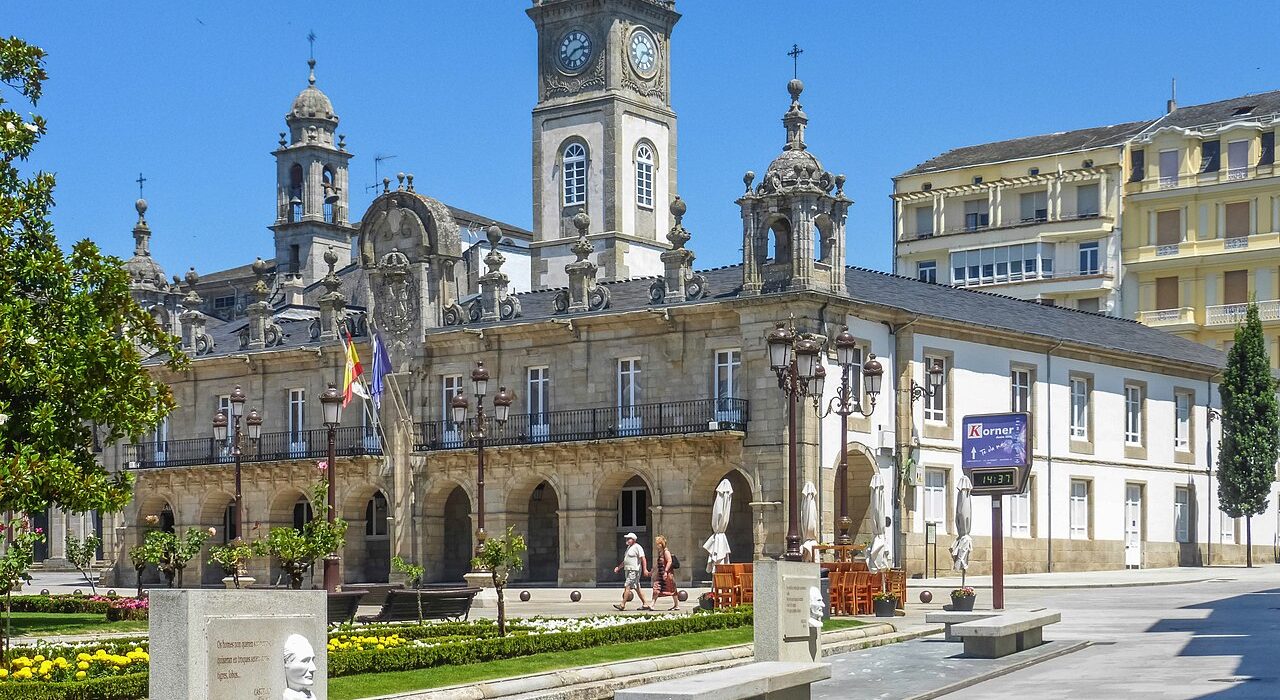
Municipal seat located in the historic center with a neoclassical façade built in the mid-19th century featuring a central clock and ceremonial balconies. This temple enjoys the papal privilege of the permanent exposition of the Blessed Sacrament, a unique fact reflected in the city’s coat of arms that allows viewing the consecrated host 24 hours a day. The Municipal Tourism Office, located in Praza do Campo, manages information and advice on the tourist offer from this historic setting.
Church of San Froilán
18th-century temple dedicated to the patron saint of Lugo, located near the cathedral in the historic center and preserving Baroque altarpieces of great artistic value. Inside rests the image of the patron saint that is processed during the October festivities, making it a point of religious and cultural interest. Entry is free for visitors outside Mass times, allowing you to admire its architecture in tranquility.
Other points of interest
- The Centro Arqueolóxico San Roque offers a deep insight into the historical remains of the area.
- The Convento de San Francisco, a 13th-century foundation, houses the Provincial Museum and a visitable Gothic cloister.
- The Casa de los Mosaicos integrates the remains of the Domus Oceani, a Roman manor house with decorated floors from the 3rd or 4th century AD.
- The Porta da Estación and the Porta do Bispo Izquierdo are prominent monuments that are part of the defensive and urban system.
- The Á República monument and the Cruz Paleocristiá das escaleiras da Porta Nova are historical landmarks visible along the urban route.
- The statues of Simón Bolívar and the Monumeno ó pescador adorn public spaces in the city.
- The Parque del Miño is a 12-hectare riverside green area ideal for leisure next to the Roman bridge.
- The Miradoiro de Blanco Amor offers elevated perspectives of the urban environment.
- The Porta de San Pedro is an ancient defensive tower integrated into the wall with views of the river.
- The Castro da Croa allows you to connect with the pre-Roman origins of the region.
🍂 Otoño
Si visitas Lugo en otoño, prepárate para la lluvia, ya que la precipitación anual es abundante (928.0mm) y se nota sobre todo en esta estación. Es perfecto para visitar el Centro Arqueolóxico San Roque y la Iglesia de San Froilán con calma, en un ambiente más auténtico. Consejo: lleva calzado impermeable y un paraguas resistente para disfrutar del Camino Primitivo de Santiago sin sorpresas.
What to do in Lugo
Lugo offers vibrant cultural activities such as Arde Lucus in June and the San Froilán Festivities in October, in addition to natural experiences in Miño Park and along the Camino de Santiago.
If you visit the city in June, do not miss ‘Arde Lucus’, a historical reenactment festival that transforms the streets into a Roman and Castro culture stage with thousands of participants dressed in period costumes. In October, the San Froilán Festivities, declared a Festival of National Tourist Interest, fill the city with parades, marching bands, and a Medieval Fair culminating in ‘Domingo das Mozas’. For nature lovers, Miño Park allows walking or cycling along riverside paths, while pilgrims can complete the stage of the Primitive Way (Camino Primitivo) by getting their stamp at the Cathedral.
Lugo in one day: express itinerary
To make the most of a 24-hour visit, follow this logical route connecting UNESCO sites with local gastronomy.
- 09:00 – Roman Walls: Start the day walking along the ramparts for the best views and light for photos before the crowds arrive.
- 11:00 – Santa María Cathedral: Visit the temple to see the permanent exhibition of the Blessed Sacrament and the Neoclassical façade.
- 13:30 – Mercado de Abastos: Tour the stalls of local products and taste a tapa of octopus or empanada in the surrounding area.
- 16:00 – Casa de los Mosaicos: Discover the Domus Oceani and the remains of Roman life in Lucus Augusti near the ancient forum.
- 19:00 – Miño Park: End the day with a relaxing walk along the river and the Roman bridge before dinner.
Where to eat in Lugo: local gastronomy
Where to stay in Lugo
Centro Histórico / Casco Antiguo
El corazón de Lugo, rodeado por la Muralla Romana, es un laberinto de calles peatonales con historia en cada esquina. Aquí se encuentran los principales monumentos, plazas vibrantes y una animada vida de tapas. Es ideal para sumergirse en la cultura y la gastronomía local.
Zona de la Muralla Romana
Esta zona abarca la emblemática Muralla Romana, Patrimonio de la Humanidad, que encierra el casco antiguo. Caminar sobre la muralla ofrece vistas panorámicas de la ciudad y sus alrededores, conectando con la historia milenaria de Lugo. Es una experiencia única y accesible para todos.
Parque Rosalía de Castro y alrededores
Considerado el 'pulmón verde' de Lugo, este parque ofrece un oasis de tranquilidad con árboles centenarios, estanques con aves y hermosas rosaledas. Es perfecto para relajarse, dar un paseo o disfrutar de un momento de calma cerca del centro. Dispone de zonas de juego para niños.
Ribera del Miño / Zona del Puente Romano
Ubicada a lo largo del río Miño, esta área destaca por su entorno natural y el histórico Puente Romano, hoy peatonal. Ofrece senderos para caminar o andar en bicicleta, balnearios de origen romano y un ambiente sereno alejado del bullicio urbano. Ideal para el ocio al aire libre.
Barrio da Milagrosa
Un barrio auténtico y vibrante, conocido por su diversidad cultural y su rica oferta gastronómica local. Aquí se encuentra el Parque da Milagrosa, un espacio verde con instalaciones deportivas, y la proximidad a la Muralla Romana lo hace accesible. Es una excelente opción para vivir una experiencia más local y probar la cocina gallega.
How to get to Lugo
The city has rail and bus connections, with the train being a comfortable option although there is no direct high-speed (AVE) service at the current station.
| Medio | Duración | Precio aprox. | Frecuencia |
|---|---|---|---|
| Tren (Estación de Lugo) | Variable según origen | Según Renfe | Diaria |
| Autobús | Variable según origen | Económico | Regular |
Getting around Lugo
Urban transport in Lugo is mainly carried out via an urban bus network connecting the different neighborhoods with the historic center.
Given that the historic center is compact and pedestrianized in many areas, walking is the best way to move between main attractions such as the Walls and the Cathedral. For longer distances or to reach areas like Miño Park from the center, the urban bus offers efficient coverage.
Weather in Lugo
Best Time to Visit Lugo
Day Trips from Lugo
From Lugo, it is possible to take day trips to other cities in the region to enhance your tourist experience in Galicia.
The city’s location within the province of Lugo facilitates access to various points of interest within the autonomous community, allowing you to combine urban sightseeing with the natural surroundings of the Terras do Miño Biosphere Reserve.
Lugo Facts You Didn’t Know
Did you know that the Roman Walls of Lugo (Muralla romana de Lugo) are the only fortification of their kind in the world to remain entirely intact? Their perimeter exceeds 2 kilometers and can be walked in its entirety, a unique feat in Roman military engineering.
The city’s name derives from ‘Lucus Augusti’, meaning ‘The Sacred Grove of Augustus’, given by its founder Paulus Fabius Maximus in 25 BC, making it the oldest city in Galicia.
The Cathedral of Saint Mary (Catedral de Santa María) holds a unique papal privilege: the permanent exposition of the Blessed Sacrament 24 hours a day, a fact so significant that it appears on the city’s coat of arms.
Ángel Castro Argiz, father of Cuban leaders Fidel and Raúl Castro, was born in 1875 in Láncara, a municipality in the province of Lugo, before emigrating to Cuba in the late 19th century.
Every June, thousands of people dress in period costumes for ‘Arde Lucus’, transforming the city into a grand historical stage showcasing Roman and Castro culture, declared a Festival of International Tourist Interest.
Much of the upper course of the Miño River is protected as the ‘Terras do Miño’ Biosphere Reserve by UNESCO since 2002, covering 39% of the provincial area.
During the Roman Empire, Lucus Augusti was one of the three administrative capitals of Gallaecia, alongside Braga and Astorga, serving as the center of the Conventus Lucensis judicial district.
Although it has not been the setting for major international productions, Lugo and its province have appeared in Spanish series such as ‘El desorden que dejas’.
Who Is Lugo For?
Lugo is an ideal destination for history and culture lovers seeking authenticity, as well as for foodies interested in Galician cuisine and pilgrims on the Camino de Santiago.
With an average stay of 2.07 nights and 178,968 annual visitors (INE), the city offers a tranquil yet lively atmosphere, perfect for couples seeking romance along the banks of the Miño or families enjoying parks like Rosalía de Castro Park. Its compact size and free access to sites like the City Walls make it highly accessible for all budgets.
Frequently Asked Questions about Lugo
How many days do I need to see Lugo?
With an average stay of 2.07 nights according to the INE, two days are enough to explore the Muralla (Walls), the Catedral (Cathedral), and enjoy the local gastronomy without rushing.
Is Lugo expensive?
No, it is an affordable destination; an average meal costs between €12 and €18, hostels range from €18 to €30 per night, while 3-star hotels are between €50 and €80.
What is the best time to visit Lugo?
The best time is from June to September, when the average summer temperature is 19.1°C, avoiding the colder winters with averages of 6.9°C.
How do I get to Lugo from Madrid?
You can reach it by train from Lugo Station (no direct AVE) or by bus, checking current schedules and prices with Renfe or transport companies.
Where can I find updated official information?
To expand on practical information regarding schedules, tickets, and events, you can consult the official tourism website of Lugo.