Ourense
GaliciaClimate
Daily budget
The white steam rising from the thermal springs in the heart of the historic center sets the rhythm of this city, mingling with the unmistakable aroma of paprika and olive oil that permeates the pedestrian streets. Walking here is to feel how the hot water, flowing at over 60 degrees from deep underground, has shaped not only the landscape but also the character of its 105,000 inhabitants. You don’t need the beach to unwind; here, the Miño River and its *burgas* (thermal springs) are Galicia’s true inland sea.
The must-seesWhat to See in Ourense: The Essentials
As Burgas
This monument is the beating heart of the city, where water emerges at over 60°C from underground aquifers more than a kilometer deep. Its history dates back to Roman times, as archaeological remains show that they settled here, giving rise to the city. The area is divided into the 19th-century Burga de Abaixo, the central esplanade with a pool, and the 17th-century Burga de Arriba. Access to the fountains is free and allows you to touch the thermal water, one of the city’s three traditional treasures.
Cathedral of San Martiño
Construction began in the 12th century in Romanesque and Gothic styles, and the historic center is structured around it. Inside, you can admire the Pórtico del Paraíso (Portico of Paradise), the Capilla del Santo Cristo (Chapel of the Holy Christ), and the main altarpiece. Access to the temple is free during worship hours, while the full tourist visit may be subject to a fee.
Cloister of San Francisco
Originally built in the 13th century, this convent houses a 16th-century Renaissance cloister considered one of the finest in Galicia. It was declared a Historic-Artistic Monument in 1931 and is located in the old town, near the cathedral. It currently functions as a cultural center and venue for temporary exhibitions.
Former Bishop’s Palace
Construction began in the 12th century as a palace-fortress and it was declared a Historic-Artistic Monument in 1931. It represents the most complete Romanesque civil monumental complex in Ourense, although it combines Roman, Gothic, Renaissance, and Baroque elements. It houses the Provincial Archaeological Museum.
Church of Santa María Nai
Its 18th-century Baroque façade conceals a medieval church probably built on the site of the former cathedral, with remains of columns and capitals from the 5th or 6th century. Reconstructed in 1084 and 1772, it features a staircase connecting the Plaza de la Magdalena with the Plaza Mayor and a Churrigueresque altarpiece inside.
Church of Santa Eufemia
Located in the historic center of Ourense, close to the Plaza Mayor and the Cathedral, it stands out for its façade designed by Fray Plácido Domingo.
Chapel of Nuestra Señora de los Remedios
Declared a National Historic-Artistic Monument in 1961 along with the Roman Bridge, it was founded in 1522 by the Méndez Montoto family and houses the image of the Virgen de los Remedios.
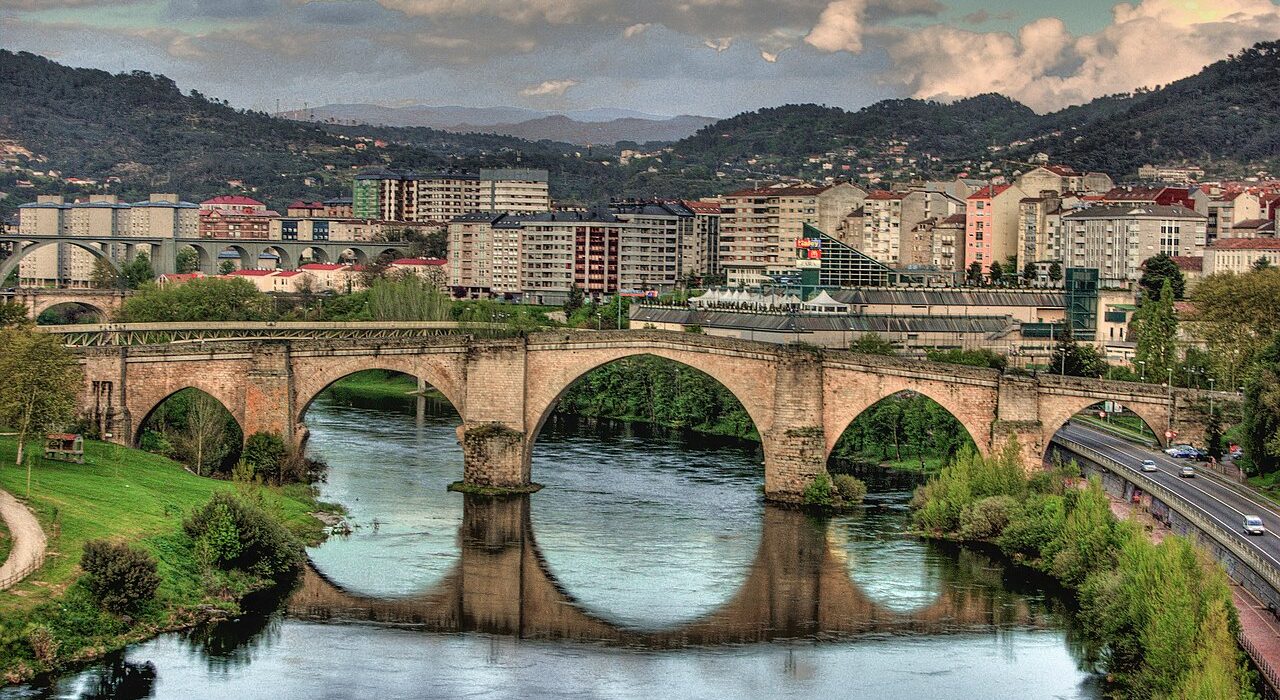
Roman Bridge
Although tradition dates it to the time of Trajan, its structural features suggest it is closer to the time of Augustus, having been built in the 1st century as part of the Vía Nova.
Plaza Mayor
The Plaza Mayor, formerly known as Plaza del Campo, has been the heart of the historic center for centuries and is one of the few main squares in Europe with a slightly sloping floor.
A Chavasqueira Thermal Baths
Located on the banks of the Miño River, these are among the city’s free thermal waters, allowing you to enjoy a Zen-like bath in a natural setting alongside the river.
🍂 Otoño
Si visitas Ourense en otoño te espera un ambiente más tranquilo y con menos turistas, perfecto para saborear la ciudad con calma. Las temperaturas bajan progresivamente y las hojas tiñen de tonos cálidos las calles alrededor de la Iglesia de Santa María Nai y el Claustro de San Francisco. Un consejo práctico: aprovecha las tardes suaves para visitar las termas, ya que el calor del agua contrasta genial con el fresco otoñal.
What to Do in Ourense
Ourense offers unique experiences centered on its thermal wealth, traditional gastronomy, and local festivals. You can soak in the free pools along the Ruta Termal (Thermal Route), browse the stalls at the Mercado de Abastos (Food Market) to sample fresh produce, or take part in the Magosto on November 11 to celebrate the traditional festival in honor of San Martiño by roasting chestnuts.
Ourense in a day: express itinerary
If you’re short on time, this plan lets you see the essentials without rushing, taking advantage of how walkable the city is.
- 10:00 AM – As Burgas: Start the day by touching the water that flows at 60ºC and understanding the city’s Roman origins.
- 11:30 AM – Cathedral of San Martiño: Visit the Pórtico del Paraíso (Portico of Paradise) and the Capilla del Santo Cristo (Chapel of the Holy Christ) in the heart of the old town.
- 13:30 PM – Plaza Mayor and Lunch: Stroll through the sloping, arcaded main square and eat pulpo á feira (Galician-style octopus) in the Casco Vello (Old Town).
- 16:00 PM – Roman Bridge and Capilla de los Remedios: Cross the city’s symbol, built in the 1st century, and visit the 16th-century chapel.
- 18:00 PM – A Chavasqueira Hot Springs: End the day relaxing in a free thermal bath next to the Miño River.
Where to eat in Ourense: local gastronomy
Where to stay in Ourense
Casco Vello
El corazón histórico y gastronómico de Ourense. Sus calles peatonales de piedra están repletas de bares de tapas (conocidos como 'os viños'), restaurantes y edificios monumentales que crean un ambiente vibrante tanto de día como de noche.
Centro / Ensanche
La zona moderna y comercial de la ciudad, que se extiende alrededor del Parque de San Lázaro. Es el núcleo de las compras, con franquicias y comercio local, especialmente en la rúa do Paseo, la principal arteria comercial.
A Ponte
Situado al otro lado del río Miño, este barrio debe su nombre al histórico Puente Romano (Ponte Vella) que lo conecta con el centro. Es un área funcional que alberga la principal estación de tren y ofrece un acceso rápido a la ruta termal.
Riberas del Miño (Ruta Termal)
No es un barrio residencial, sino una zona natural a lo largo del río Miño dedicada al ocio y el relax. Es el principal atractivo de Ourense, conectando varias pozas termales gratuitas al aire libre a través de un agradable paseo peatonal.
San Francisco
Un barrio tranquilo y residencial en una de las colinas de la ciudad, junto al Casco Vello. Ofrece vistas panorámicas y es conocido por su gran parque, su convento y el cementerio, siendo una opción más sosegada cerca del centro.
How to get to Ourense
The city is well connected mainly by train and road, although it is important to know that the train station does not have direct AVE high-speed services according to available data.
| Medio | Duración | Precio aprox. | Frecuencia |
|---|---|---|---|
| Tren | Variable según origen | Variable | Estación de Ourense (sin AVE) |
| Bus | Variable según origen | Variable | Conexión regional |
How to get around Ourense
Urban transport is mainly provided by city bus. However, since the main attractions such as As Burgas, the Cathedral, and the Plaza Mayor are located in the Casco Vello, the city is very walkable and many areas are pedestrianized.
Weather in Ourense
Best time to visit Ourense
Day trips from Ourense
From Ourense you can explore other cities in the region. The city’s location in southeastern Galicia, as the capital of the province of the same name, makes it a strategic starting point for discovering the surrounding area and the valleys of the Miño, Sil, and Limia rivers.
Curious facts about Ourense you didn’t know
Ourense is known as the ‘Thermal Capital of Galicia’ and is one of the cities with the greatest thermal wealth in Europe, with springs that flow at between 60 and 67 °C with a flow rate of around 300 liters per minute.
The name ‘Ourense’ most likely comes from the Latin ‘Auriense’, meaning ‘the city of gold’, due to the deposits of this precious metal found in the Miño River in ancient times.
The Catedral de San Martiño (Cathedral of Saint Martin) houses a famous 14th-century carving of the Santo Cristo (Holy Christ); according to popular tradition, this figure’s hair and nails continue to grow.
Ourense is the only one of Galicia’s four provinces without a coastline, defined by its inland geography and mountain systems.
Every November 11, the Magosto festival is celebrated, a traditional festivity in honor of San Martiño (Saint Martin), where the custom is to roast chestnuts on bonfires accompanied by new wine.
Who Ourense is for
Ourense is ideal for history lovers who want to see Roman and medieval remains, foodies seeking the best Galician gastronomy, and travelers who enjoy thermal relaxation. It’s perfect for couples looking for a romantic weekend with thermal baths, families needing open spaces like the Parque de San Lázaro (San Lázaro Park), and backpackers who appreciate the authenticity of an uncrowded city.
Frequently asked questions about Ourense
How many days do I need to see Ourense?
1 or 2 days is enough to see the main attractions like As Burgas, the Cathedral, and enjoy the thermal baths, although you might need more time to explore the gastronomy and museums in depth.
Is Ourense expensive?
Not particularly. An average meal costs between €12-25, and you can find accommodation from €18-35 in hostels or €50-80 in 3-star hotels, making it affordable.
What is the best time of year to visit Ourense?
The best time is from June to September, when average summer temperatures reach 19.4°C, ideal for outdoor and thermal activities.
How do I get to Ourense from Madrid?
You can arrive by train from Ourense station (keep in mind there is no direct AVE according to the base data) or by bus, although times and prices vary depending on the company and the season.
For more practical information on schedules, tickets, and cultural agenda, check the official Ourense tourism website.