Badalona
CataluñaClimate
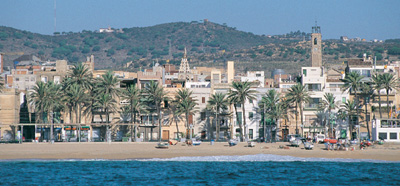
Setting foot in this coastal city means coming face to face with Roman history even before reaching the Catalan capital, as you walk over archaeological remains dating back to 100 BC. Here, Catalonia’s oldest fishing tradition blends with a dynamic urban atmosphere where 225,000 residents keep the essence of the Mediterranean alive amid modernist streets and golden sandy beaches. It is not just a stopover destination, but a place with its own identity where the history of Baetulo comes to life on every corner of the old town.
The must-seesWhat to see in Badalona: the must-sees
Badalona offers a unique concentration of historical and cultural heritage that goes beyond what you might expect for a city of its size, featuring monuments that have withstood the passage of centuries.
Mare de Déu de Montserrat
This historic building in Badalona is an architectural landmark that captures local devotion and artistry in a single imposing structure. When you visit, you will notice the solidity of its construction and the surrounding environment, which invites quiet reflection away from the coastal bustle. It is a spiritual and cultural meeting point that deserves a stop to appreciate its façade and how it blends into the city’s urban fabric.
Vil·la romana de l’Estrella
This archaeological site in Spain holds the prestigious UNESCO designation, which guarantees its incalculable value for world history. What stands out here are the preserved structures that allow you to visualize how the Romans lived on this coast two millennia ago. It is a must-stop for any archaeology lover, offering a direct window into the imperial past on Catalan soil.
Sant Roc
As a historic building in Badalona, Sant Roc represents a key piece of the town’s religious and civil heritage. Its importance lies in its age and in how it has borne witness to the evolution of the neighborhood that houses it. When visiting, pay attention to the construction details that have allowed it to remain standing as a symbol of historical resilience.
Monument a Lluís Companys
This monument pays tribute to a crucial political figure, blending into the urban landscape as a reminder of Catalonia’s historical memory. It stands out for its location and for the solemnity it conveys to passersby who stop to observe it. It is a point of interest that connects the city’s present with its most recent political and social past.
Sant Pau
This church in Badalona is a clear example of the religious architecture that has shaped the identity of the neighborhoods where it stands. What stands out is its commanding presence on the local skyline and the tranquility felt inside. It is an ideal place to understand the spiritual and community dimension that religion has played in the city’s development.
Other points of interest
Besides the must-sees, the city has an extensive network of places that deserve a quick mention on your route.
- The Badalona Museum safeguards the historical legacy of the province in a space dedicated to local culture.
- Baetulo is the ancient Roman name that today identifies a key monument in the city’s founding history.
- The Estraperlo Club del Ritme is a monument that evokes the jazz era and the city’s clandestine past.
- Plaça de la Vila functions as the administrative and social heart where several important streets converge.
- Plaça de Trafalgar and Plaça de Barberà are public spaces that structure neighborhood life in their respective areas.
- Plaça Roja is another urban meeting point with its own identity within the city map.
- The Teatro Principal is Badalona’s theater par excellence, a historic building that has hosted countless performances.
- Teatre Zorrilla and Teatre Blas Infante complete the performing arts scene with their own architectural histories.
- Ermita de la Miranda offers a corner of peace, as do the monuments to Sant Sebastià and Santa Clara.
- Casa dels Dofins and Casa de l’Heura are examples of residential architecture with heritage value.
- The Garden of Quintus Licinius is an archaeological site that complements the city’s Roman offerings.
- Farmàcia Hereus Torras Surroca stands out as a unique monument to local commercial history.
- The monuments to Salvador Allende and Ernesto ‘Che’ Guevara show the city’s international outlook.
- Jardins d’Ernest Lluch – Cementiri Vell are a green space with historical and memorial significance.
- Torre Vella and Xemeneia de l’antiga fàbrica C.E.L.O. are industrial and defensive landmarks in the landscape.
- The Memorial to Pompeu Fabra and the Monument to Evarist Arnús i de Ferrer honor cultural and economic figures.
- Cau d’en Genís and Theolongo Bacchio are monuments with names that spark the visitor’s curiosity.
- The Monument to Francesc Macià and the sculptures to Camaron, Manolo Escobar, and Antonio Mairena fill the streets with art.
- The sculpture Cada Barri pays tribute to the neighborhoods of la Salut, Llefià, el Congrés, and Sant Roc.
- Other works such as Contrapunt, Línia de la Verneda, Les Cultures, and the mural map of the Patronato Municipal de la Vivienda decorate public space.
- Cooperativa de Tramvies and the tribute To Llorenç Serra close this list of urban points of interest.
- Finally, the work “On és bada l’ona” and the monument To Women add layers of artistic meaning to your stroll.
🍂 Otoño
Si visitas Badalona en otoño, las temperaturas bajan suavemente y puede haber alguna lluvia ocasional. Es un momento encantador para explorar su gastronomía y museos, así que lleva siempre un paraguas en la mochila.
What to do in Badalona
Badalona offers specific activities focused on film culture, enjoying the historic neighborhoods, and Mediterranean coastal life.
If you visit the city at the right time, you cannot miss the FILMETS Badalona Film Festival, an event that transforms the city into an open-air film set. For a more local experience, getting lost in the streets of Dalt la Vila will let you soak up the medieval atmosphere while you look for the famous Roman Baths. If you prefer to relax, the La Platja area is ideal for spending the day sunbathing or practicing water sports, while the neighborhoods of Manresà and Sistrells offer quiet strolls through green areas far from the tourist crowds.
Badalona in a day: express itinerary
If you’re short on time, this plan lets you cover the city’s essentials in one intense but rewarding day.
- 09:00 – Dalt la Vila: Start your day in the old town to visit the Badalona Museum and the Roman Baths in the morning light, avoiding the crowds.
- 11:30 – Vil·la romana de l’Estrella: Spend an hour at this UNESCO site to understand the importance of Baetulo in Roman history.
- 13:30 – Centre and Plaça de la Vila: Head down to the administrative heart of the city to see the Modernista architecture and do some shopping around the Town Hall.
- 15:00 – Lunch in La Platja: Make your way to the coastal area for fresh fish right by the sea.
- 17:00 – Seafront Promenade and Monuments: End the day with a walk along the beach, visiting the Monument a Lluís Companys and enjoying the sunset near the marina.
Where to eat in Badalona: local gastronomy
Where to stay in Badalona
Centre
Es el corazón histórico y administrativo de la ciudad, donde se concentran los principales servicios, comercios y la vida cotidiana. El ambiente es urbano y dinámico, con una mezcla de arquitectura modernista y edificios contemporáneos cerca del Ayuntamiento.
Dalt la Vila
Corresponde al casco antiguo de Badalona, situado sobre una pequeña colina con calles estrechas y empinadas de origen medieval y romano. Es la zona con más encanto histórico, hogar del Museo de Badalona y las famosas Termas Romanas.
La Platja
Zona costera que abarca el paseo marítimo y la extensa playa de arena, muy frecuentada en verano por familias y deportistas. Ofrece un ambiente relajado con numerosos chiringuitos, restaurantes de pescado y acceso directo al mar.
Manresà
Barrio residencial tranquilo ubicado en la parte alta de la ciudad, conocido por albergar el Hospital Universitari Germans Trias i Pujol (Can Ruti). Es una zona alejada del ruido turístico, con amplias zonas verdes y un carácter principalmente local.
Sistrells
Área moderna en expansión situada al norte, caracterizada por nuevos desarrollos residenciales y grandes parques urbanos diseñados para el ocio familiar. Es una zona menos densa que el centro, ideal para paseos tranquilos lejos del bullicio.
How to get to Badalona
Reaching the city is easy thanks to its integration into the transport network of the province of Barcelona.
| Medio | Duración | Precio aprox. | Frecuencia |
|---|---|---|---|
| Tren (Estación Pep Ventura) | Depende del origen (sin AVE) | Económico | Regular |
| Bus Urbano | Variable según ruta | Económico | Frecuente |
How to get around Badalona
Once in the city, the main option for getting around is the urban bus, which covers the different areas from the centre to the residential neighbourhoods. Given the size of the city and the distribution of its attractions, such as the distance between Dalt la Vila and the Sistrells area, the bus is the most practical way to connect the points of interest without needing your own car.
Weather in Badalona
Best time to visit Badalona
Day trips from Badalona
Located in the Barcelonès region and within the province of Barcelona, Badalona serves as a perfect base for exploring other cities in the area. Its strategic position provides easy access to nearby urban centers, making the most of the transport network to discover the diversity of the Catalan coast and inland areas without having to change accommodation.
Things you didn’t know about Badalona
Did you know that Badalona was founded by the Romans around 100 BC under the name Baetulo? It was one of the most important Roman settlements on the Catalan coast, even before Barcelona, which explains the archaeological richness you can still walk on today.
Technology arrived early in this city: in 1897, Spain’s first electric tram was inaugurated in Badalona. This preceded giant cities like Madrid or Barcelona in implementing this electric traction technology, marking a milestone in the history of national transport.
Hollywood cinema has a Badalona secret: American actor James Dean shot scenes from his film ‘Giant’ (1956) in the city’s wine cellars. Specifically, he filmed at the old Bodega Cooperativa (Cooperative Winery), pretending to be in Texas while actually in Catalonia.
The most fiery festival is the Cremada del Dimoni (Burning of the Devil), officially started in 1955 although with earlier roots. It consists of burning a devil effigy on the eve of Sant Joan (St. John’s Eve) and gathers thousands of people on the beach in a celebration that blends tradition and fire.
The name ‘Badalona’ comes from the Latin ‘Baetulo’, which in turn probably derives from the Iberian root ‘bae’ or ‘bai’. This root is related to water or the Besós River that borders the city, linking its linguistic identity to its river geography.
In the museum world, the sculpture ‘La Venus de Badalona’ (The Venus of Badalona), found in 1934, is a gem. It is a marble statue about 40 cm tall dating from the 1st century BC, considered the masterpiece of the local museum and a symbol of the classical beauty found in these lands.
Finally, the city boasts one of the best-preserved Roman baths in the Iberian Peninsula. Discovered in 1955 under the Les Termes neighborhood, they date from the 2nd century AD and are an exceptional testimony to luxury and daily life in antiquity.
Additionally, Badalona has the oldest continuously operating fishing port in Catalonia. With records of port activity dating back to medieval and Roman times, it is a place where history is eaten fresh every day.
Who is Badalona for
Badalona is an ideal destination for families looking to combine culture and beach, as well as for history lovers who want to explore the Roman past without the crowds of the capital. It is also perfect for foodies interested in authentic seafood gastronomy and for travelers who appreciate a dynamic urban atmosphere with touches of residential tranquility in its upper neighborhoods.
💡 ¿Sabías que...?
- ● Badalona fue fundada por los romanos alrededor del año 100 a.C. con el nombre de Baetulo, siendo uno de los asentamientos romanos más importantes de la costa catalana antes que Barcelona. (Museu de Badalona)
- ● En 1897 se inauguró en Badalona el primer tranvía eléctrico de España, precediendo a ciudades como Madrid o Barcelona en la implementación de esta tecnología de tracción eléctrica. (Archivo Histórico de Badalona)
- ● La ciudad cuenta con una de las termas romanas mejor conservadas de la Península Ibérica, descubiertas en 1955 bajo el barrio de Les Termes, que datan del siglo II d.C. (Museu de Badalona)
- ● El nombre 'Badalona' proviene del latín 'Baetulo', que a su vez deriva probablemente de la raíz ibérica 'bae' o 'bai', relacionada con el agua o el río Besós que limita la ciudad. (Institut d'Estudis Catalans)
- ● La tradición de la Cremada del Dimoni, iniciada oficialmente en 1955 aunque con raíces anteriores, consiste en quemar un muñeco del diablo la víspera de Sant Joan y reúne a miles de personas en la playa. (Ayuntamiento de Badalona)
- ● El actor estadounidense James Dean rodó escenas de su película 'Gigante' (1956) en las bodegas de vino de Badalona, específicamente en la antigua Bodega Cooperativa, simulando ser Texas. (Filmoteca de Cataluña)
- ● Badalona posee el puerto pesquero más antiguo de Cataluña en funcionamiento continuo, con registros de actividad portuaria que se remontan a la época medieval y romana. (Port de Badalona)
- ● La escultura 'La Venus de Badalona', hallada en 1934, es una estatua de mármol de unos 40 cm de altura datada en el siglo I a.C., considerada la obra maestra del museo local. (Museu de Badalona)
Frequently asked questions about Badalona
How many days do I need to see Badalona?
With an express one-day itinerary you can cover the 4-5 main attractions such as the Museum, the Roman Baths (Termas) and the coastal area. However, to enjoy the local gastronomy and explore neighborhoods like Manresà or Sistrells at a leisurely pace, 2 or 3 days are recommended.
What is the best time of year to visit Badalona?
According to climate data, the best time is from May to October, when the average summer temperature is 23.9°C. This allows you to enjoy the beach and outdoor events such as FILMETS with greater comfort.
How do I get to Badalona from Madrid?
You can get there by train to Pep Ventura station, although keep in mind that this station does not have direct AVE services, so you will likely need to change trains in Barcelona.
What transport is available within the city?
The main urban transport is the city bus, which connects the different neighborhoods from the Centre to the more residential areas such as Sistrells.
Is Badalona a large city?
Yes, it has a population of 225,000 inhabitants, making it the fourth most populated city in Catalonia and a significant urban center within the province of Barcelona.