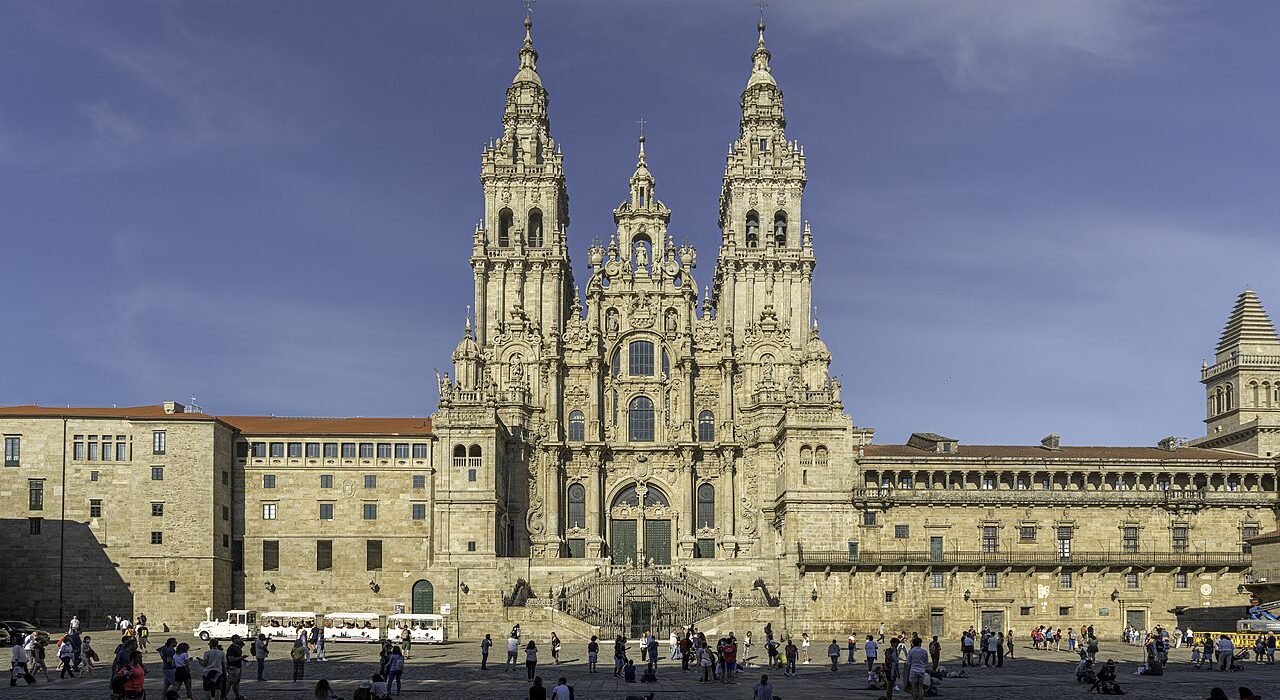
A Coruña → Santiago de Compostela
75 kmImagine leaving the Atlantic mist of the Herculean city and, in less than an hour, finding yourself immersed in the golden stone and scent of incense of the Galician capital. This journey is not just a 75-kilometer transfer; it is a swift trip through the heart of Galicia, where modern highway infrastructure blends with the millenary history awaiting at the end of the road.
How to get from A Coruña to Santiago de Compostela: quick summary
The best option for traveling from A Coruña to Santiago de Compostela depends on whether you prioritize absolute speed, cost savings, or freedom of movement. If you seek maximum speed and comfort without worrying about traffic, the train is unquestionably the winning choice, with services covering the distance in just 29 minutes. On the other hand, if your goal is to save money and you don’t mind a slightly longer journey, the bus offers a direct and economical connection at a very competitive price. Finally, driving is the perfect choice for travelers who want total control over their schedule and plan to explore intermediate towns like Arteixo or Ordes before reaching their destination.
Driving from A Coruña to Santiago de Compostela
Driving from A Coruña to Santiago de Compostela is a smooth and fast experience, taking approximately 50 minutes to cover the 75-kilometer distance. The route is perfectly signposted and uses modern infrastructure that greatly facilitates driving, eliminating the tricky curves of old national roads. Upon leaving A Coruña, you will merge onto the A-6, known as the Autovía del Noroeste (Northwest Motorway), a high-capacity toll-free highway, which is a great advantage for your wallet. This motorway will take you southeast, crossing a landscape that gradually changes from the coast to the green, mountainous interior.
You will then connect with the A-54, the Autovía Lugo-Santiago de Compostela (Lugo-Santiago de Compostela Motorway), which is also toll-free and will lead you directly to the outskirts of the destination city. With no toll costs on either of these two main routes (A-6 and A-54), the travel expense is reduced exclusively to fuel and vehicle wear. It is an ideal route for drivers who value predictability, as the 50-minute travel time remains quite consistent outside of very specific peak hours. Additionally, upon arriving in Santiago, you will have the advantage of being able to move freely around the city or head to accommodations that may be located on the outskirts, something public transport does not always allow with the same ease.
By train from A Coruña to Santiago de Compostela
The train is, without a doubt, the fastest and most frequent mode of transport connecting A Coruña with Santiago de Compostela, operated entirely by Renfe. The rail service on this corridor is exceptionally extensive, with a frequency reaching 46 trains per day, meaning you practically have a train available almost every hour from early morning until late at night. The operating hours are very broad, with the first train departing at 4:29 in the morning and the last one at 22:10, thus covering the needs of both early risers and night owls alike.
Regarding the types of trains available, Renfe offers an impressive variety adapted to different speed and comfort needs. For travelers seeking maximum speed, there are high-speed services such as the AVE, AVLO, and ALVIA, which complete the journey in a record time of 29 minutes. Specifically, there are 4 AVE services per day, 3 AVLO services, and 1 ALVIA service that meet this ultra-fast schedule. Additionally, the AVANT service, very popular for its value-for-money on medium-distance routes, features 14 daily trains that also make the trip in 29 minutes. If you prefer more traditional yet still fast options, the MD (Media Distancia) train offers 15 daily services with the same duration of 29 minutes. For those who prefer a more leisurely or regional journey, the REGIONAL train covers the route in 36 minutes with 9 frequencies per day. All these options depart from A Coruña station and arrive directly at Santiago de Compostela station, located very close to the city center.
By bus from A Coruña to Santiago de Compostela
The bus represents the most economical option for traveling between these two cities, with a journey duration of approximately 60 minutes. The company responsible for operating this direct service is Monbus, a firm with extensive experience on Galician routes that guarantees a reliable connection between the provincial capital and the autonomous community’s capital. Although the travel time is slightly longer than by car or high-speed train (60 minutes compared to the 29–50 minutes of other options), the difference is minimal and often offset by the savings on the ticket cost.
Bus ticket prices range between 5 and 10 euros, making it a very attractive alternative for students, budget-conscious travelers, or tourists who do not need the extreme flexibility of a car. As it is a direct service, you will not have to make transfers or worry about changing stations, since the bus will take you from the origin point in A Coruña directly to the final destination in Santiago. It is a comfortable option where you can relax, watch the scenery through the window, or get some work done during that hour of travel, without the stress of driving or the need to find parking upon arriving in a city with a complex historic center.
Recommended stops along the way
If you decide to make the journey by car, the route offers several interesting opportunities to stop and break up the monotony of the drive, even though the total distance is short. The first logical and recommended stop is Arteixo. Located very close to the start of the route, Arteixo is internationally known as the headquarters of major business groups, but it also possesses its own charm as a fishing and industrial town. Stopping here allows you to stretch your legs just after leaving the metropolitan area of A Coruña and observe the transition from the city to a more open environment.
Continuing along the A-6, the next strategic stop is Ordes. This town acts as a crucial midpoint on the journey and serves as the gateway to the inland regions. Ordes is a perfect place for a technical break, to grab a coffee, or even to enjoy the local gastronomy if your trip coincides with lunchtime. Its location on the route makes it an important geographical landmark before entering the final stretch toward Santiago.
Finally, before reaching the destination city, you will find O Milladoiro. This stop is almost mandatory due to its symbolic and geographical significance, as O Milladoiro is traditionally considered the antechamber to Santiago de Compostela (the Holy City). Stopping here offers the first panoramic views that anticipate your arrival in the holy city. It is the ideal spot to prepare your camera or simply take a deep breath before venturing into the urban bustle of Santiago, marking the end of the road journey.
Where to stay in Santiago de Compostela
To choose where to stay in Santiago de Compostela, the best option is to look for accommodations located in areas near the Cathedral and the historic center, as this will allow you to explore the city on foot without relying on transport. The historic center is the most sought-after area for tourists due to its magical atmosphere, cobblestone streets, and proximity to the main monuments. However, as it is a very busy area, prices can vary significantly depending on the season and how far in advance you book.
In terms of accommodation types, the city offers a wide range, from luxury hotels and historic paradores (state-run hotels) to more budget-friendly guesthouses and tourist apartments. If you are looking for an immersive experience, boutique hotels in restored buildings within the monumental zone are an excellent choice, although they tend to fall in the mid-to-high price range. For budget-conscious travelers, there are hostels and guesthouses on the streets adjacent to the center that offer basic amenities at a lower cost. It is also possible to find accommodation on the outskirts of the city, near the train station or the highway, which can be more convenient if you are traveling by car and prefer to avoid the restricted traffic zones in the center, though you will miss the magic of waking up in the heart of the city.
Frequently Asked Questions about the A Coruña-Santiago de Compostela Route
How long does it take to travel from A Coruña to Santiago de Compostela?
Travel time varies depending on the chosen mode of transport. By car, the 75 km journey takes approximately 50 minutes. By train, duration depends on the service type: high-speed and medium-distance trains (AVE, AVLO, AVANT, MD, ALVIA) take just 29 minutes, while the REGIONAL train takes 36 minutes. By bus, the estimated travel time is 60 minutes.
Which is cheaper, the train or the bus?
Generally, the bus is the most economical option. According to data from the company Monbus, bus ticket prices range between €5 and €10. In contrast, train fares operated by Renfe are not specified within a fixed range in the provided data; however, high-speed services (AVE, AVLO) and the multiple daily departures usually have dynamic pricing that can exceed bus costs, especially if tickets are not purchased in advance.
Is it worth renting a car?
Renting a car is worthwhile if you plan to make stops along the route such as Arteixo, Ordes, or O Milladoiro, or if you need mobility upon arriving in Santiago to visit surrounding areas. However, if your sole objective is to get from point A to point B quickly, the train is superior in speed (29 minutes versus 50 minutes by car) and saves you the hassle of parking. Additionally, the A-6 and A-54 highways are toll-free, which reduces the cost of driving, but the train remains faster.
When is the best time to travel?
The best time to travel depends on your preferences, but train frequency data indicates high availability year-round with 46 daily trains. The first train departs at 4:29 and the last at 22:10, offering great flexibility. To avoid crowds and enjoy recommended stops like O Milladoiro peacefully, it is suggested to travel on weekdays or avoid dates of major religious festivities in Santiago, although the 50-minute car route is quick at any time.
📍 También te puede interesar
Qué ver en A Coruña →
Qué ver en Santiago de Compostela →